
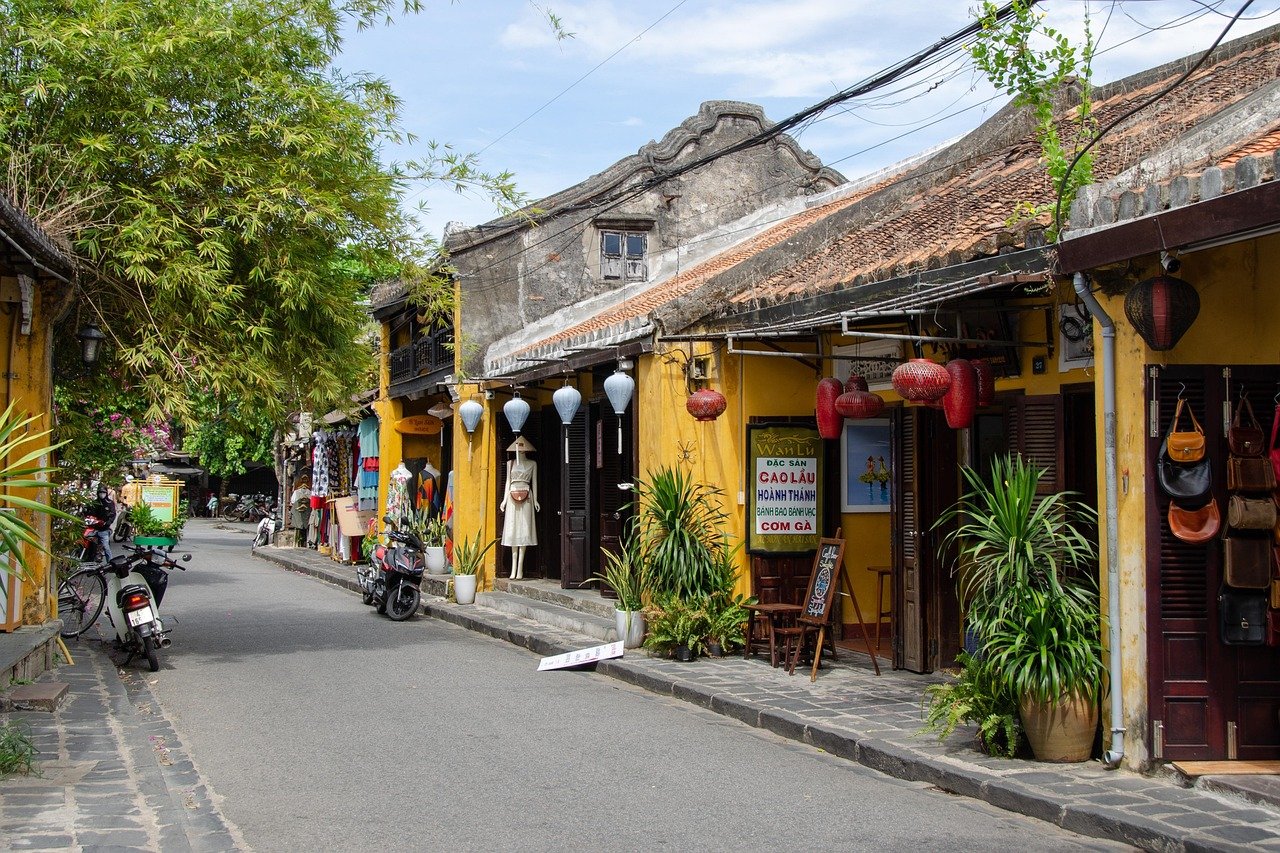
What makes a small Vietnamese town, barely a few blocks wide, draw millions of visitors from around the world? The answer sits along the Thu Bon River in central Vietnam, where yellow-walled shophouses, silk lanterns, and wooden bridges have survived wars, floods, and the pull of modern tourism. Hoi An is that rare place where the past is not fenced off behind glass. People still live, work, cook, and sew inside a UNESCO-listed old town. That living quality is exactly what makes a visit memorable, and also what makes smart planning matter.
A Port Town That Time Forgot
Hoi An was once one of Southeast Asia’s busiest trading ports. From roughly the 15th to the 19th centuries, merchants from China, Japan, the Netherlands, and beyond anchored here. Europeans knew the place as Faifo. The town’s street plan, tube houses, clan temples, and assembly halls still carry that layered history, blending Vietnamese, Chinese, and Japanese influences into a single compact grid.
The port’s decline is usually blamed on the silting of the Thu Bon River estuary, which gradually pushed trade north to Da Nang. Historians debate the exact timing, placing the decline somewhere in the 18th or 19th century. For visitors, that shift turned out to be a gift. Cut off from major commerce, Hoi An stopped growing. Nobody tore down the old shophouses to build factories or highways. In 1999, the old town was inscribed on the UNESCO World Heritage List as an exceptionally well-preserved example of a Southeast Asian trading port.
The most famous landmark, the Japanese Covered Bridge (Chùa Cầu), is traditionally dated to the early 17th century and linked to the town’s Japanese merchant community. Sources disagree on exact dates, with construction commonly cited as beginning in the 1590s and finishing in the early 1600s. The bridge has been restored many times, so what you see today is a palimpsest rather than an untouched original. That is true of much of Hoi An, and it is worth knowing before you arrive with romantic expectations of pure antiquity.
What to Actually See in the Old Town
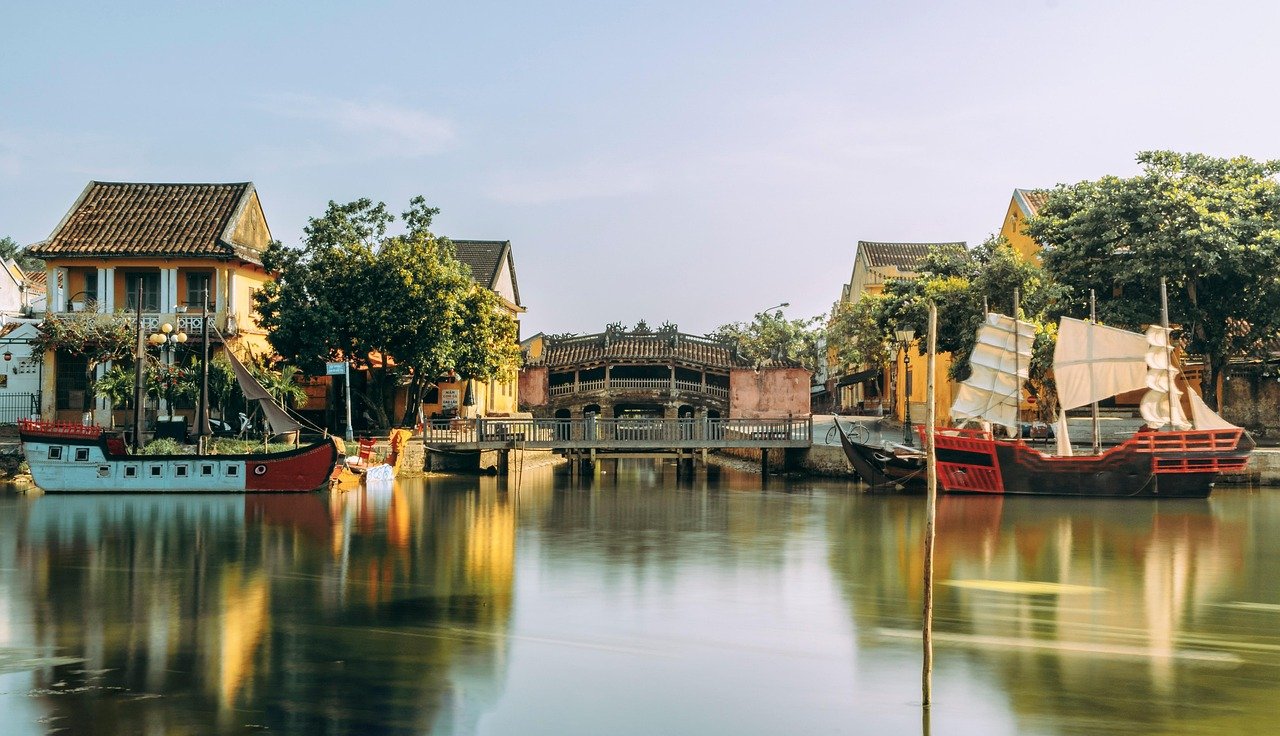
The old town is small enough to walk in a few hours, but rushing it defeats the purpose. Entry to key heritage houses runs on a ticket system, and rules and prices change, so confirm current details locally rather than trusting an outdated blog post.
A practical approach is to pick three or four interiors rather than trying to see everything. The assembly halls built by Chinese communities, including the Fujian, Cantonese, Chaozhou, and Hainan halls, offer the richest architecture and the most context about who lived here and why. Clan temples and merchant houses show how families combined a shopfront, a courtyard, and a living space in one long, narrow building.
Beyond the old town, two side trips stand out. Thanh Ha pottery village sits a short bike ride away and keeps a working craft tradition alive. My Son Sanctuary, the Cham temple complex, lies roughly 40 to 45 kilometers southwest and is a separate UNESCO World Heritage Site, also inscribed in 1999. Many travelers combine Hoi An and My Son in a single trip, and it is worth giving My Son its own morning rather than squeezing it into an afternoon.
Evenings belong to the lanterns. As darkness falls, the old town glows, and boats carry candles on the river. It is genuinely beautiful and genuinely crowded. Anyone who has spent time in Vietnam knows that timing is everything for money and crowds alike; the same principle that governs how Vietnamese money works in daily life applies to planning a visit here. Go early, go late, and know what things cost before you commit.
When to Go and What the Weather Will Do
Hoi An sits low on the Thu Bon River and floods seasonally, most typically from October through December. This is not a rare event. It is a rhythm of life. Residents paint flood markers on building walls to record how high the water has risen in past years, and those marks are one of the most quietly powerful things to notice in town. They tell you more about Hoi An’s relationship with its river than any plaque.
| Season | Typical Conditions | Trade-offs |
|---|---|---|
| February to April | Warm, mostly dry, comfortable | Good conditions, moderate crowds |
| May to August | Hot and humid, sunny | Peak domestic travel, strong heat |
| September to November | Rainy, flood risk rises | Lower prices, some disruption |
| December to January | Cooler, mixed weather | Fewer visitors, unpredictable skies |
The practical tip most first-timers miss: build flexibility into your dates. If you book a rigid itinerary in October, a flood can wipe out your plans for days. Travelers who leave a buffer, or who book late in the dry season, tend to have a far better experience. Check the forecast in the week before you go and be willing to shift a day or two.
Tailors, Lanterns, and the Craft Economy
Hoi An’s reputation for tailoring is well earned, but it comes with a warning. The town has hundreds of tailors, and quality varies enormously. The common mistake is walking into the first shop that calls out to you and ordering a suit for pickup the next morning. What actually works is slower: visit several shops, look at finished garments rather than photos, ask about fabric quality, and allow at least two fittings. A rushed order is how people end up with a jacket they never wear again.
Lantern-making is another craft worth engaging with directly. Workshops let visitors build a lantern from bamboo and silk, and the result is a far better souvenir than anything from a gift shop. Ceramics from Thanh Ha follow the same logic. Buying from the maker, or making something yourself, keeps money in the craft economy that gives the town its character.
This matters more than it might seem. Hoi An’s heritage status brings pressure as well as protection. Tourism revenue funds conservation, but it also strains the town’s fabric. Every visitor who spends deliberately, chooses quality over speed, and respects the fact that people live in these houses contributes to keeping the place intact.
Money, Costs, and the Practical Side
Hoi An is not an expensive destination by international standards, but costs add up quickly if you do not pay attention. The old town ticket, tailoring, boat rides, cooking classes, and day trips to My Son all carry separate prices. Vendors often quote in Vietnamese dong, and the large numbers can confuse newcomers. A few practical habits help:
- Confirm prices before you commit, especially for boat rides and tours.
- Carry small notes for markets and street food.
- Check whether a quoted price is per person or per group.
- Keep a rough mental conversion rate so you can judge value quickly.
- Pay deposits for tailoring in writing, with a pickup date.
Understanding the currency is half the battle. The dong’s denominations take adjustment, and travelers who arrive without a sense of its value tend to overspend or under-tip out of confusion. A little preparation on how the money works and what it is worth saves real money over a week-long stay.
Safety is generally good, but petty theft and scams exist in any tourist hub. Keep bags zipped in crowded night markets, avoid leaving valuables at riverside tables, and use licensed taxis or ride-hailing apps rather than unmarked cars. None of this is unique to Hoi An, but the density of visitors in the old town makes it worth stating plainly.
Getting There and Getting Around
Most visitors arrive via Da Nang, which has an international airport and sits about 30 kilometers north. Transfers take roughly 45 minutes by car. Trains and buses also connect Hoi An’s region to Hue and other central cities, though the town itself has no railway station.
Within Hoi An, bicycles and walking are the best options. The old town is compact and largely closed to cars during peak hours. Rentals are cheap, and cycling to the surrounding rice fields, villages, and beaches is one of the most pleasant ways to spend a morning. The beach at An Bang is a short ride east and offers a completely different pace from the old town.
For travelers extending their trip, Hoi An pairs naturally with Hue to the north and Da Nang to the immediate north. Those planning a longer circuit through the country should also keep an eye on broader travel and security developments, such as the Vietnam APIS breach and its unknown operator, which affects how some travelers think about data and border processes. It is a reminder that practical travel planning now includes digital hygiene alongside currency and weather.
Common Mistakes and What Actually Works
First-hand travel wisdom tends to repeat itself for a reason. Here are the patterns that separate a smooth visit from a frustrating one.
The biggest mistake is treating Hoi An as a day trip from Da Nang. The town’s magic is in its early mornings and late evenings, when the tour buses have gone. Staying at least two nights, ideally three, lets you see the old town at 6 a.m. when locals sweep their doorsteps and the streets are nearly empty.
The second mistake is over-scheduling. Hoi An rewards slowness. A cooking class, a bike ride, a tailor fitting, and an evening walk is a full and satisfying day. Piling on three tours plus a beach trip leaves no room for the town itself.
The third is ignoring the heat. Midday in summer is punishing. The local rhythm, an early start, a long lunch indoors, and a late afternoon return, exists for good reason. Adopt it.
Finally, respect the living town. Lower your voice near homes, ask before photographing people, and remember that the heritage houses are residences as much as attractions. The town’s charm depends on that balance holding.
Conclusion
Hoi An earns its reputation, but not by being a museum. It earns it by being a working town where history, craft, and daily life overlap. The yellow walls and lanterns are the postcard. The flood markers, the tailors’ workshops, and the early-morning quiet are the real thing. Go with flexible dates, budget for the extras, spend deliberately on local crafts, and give the town more than a single rushed afternoon. Do that, and Hoi An will show you why it has survived for centuries, and why it is still worth protecting.
FAQ
Is Hoi An worth visiting?
Yes, for most travelers. The old town is a UNESCO World Heritage Site with genuine architectural depth, strong food, and a craft culture you can participate in. It suits slow travelers best. Anyone who wants a checklist of sights in one day may find it crowded and overpriced.
How many days should you spend in Hoi An?
Two to three nights is the sweet spot. That allows time for the old town, a tailor fitting, a cooking class or craft workshop, and a side trip to My Son or the beach. One day is too rushed to catch the town at its best hours.
When is the best time to visit Hoi An?
February to April generally offers the most comfortable balance of warm, mostly dry weather and manageable crowds. October through December brings flood risk, so flexible dates matter. May to August is hot and busy with domestic travel.
Is Hoi An safe for tourists?
Generally yes. Violent crime is rare, but petty theft and tourist scams do occur in crowded areas. Keep valuables secure, confirm prices upfront, and use licensed transport. The bigger practical risks are heat, flooding in the wet season, and traffic on surrounding roads.
What is Hoi An famous for?
It is known for its well-preserved trading-port architecture, the Japanese Covered Bridge, silk lanterns, tailoring, and its food scene. Nearby attractions include Thanh Ha pottery village and the Cham temples at My Son Sanctuary, a separate World Heritage Site.
Can you visit Hoi An from Da Nang as a day trip?
You can, since the drive takes under an hour. But a day trip misses the town’s best moments, the early mornings and lantern-lit evenings. Staying at least one night, ideally two, gives a far richer experience.



