

What do a cloudy sky, a candle-spattered tablecloth, a 3D-printed jewelry mold, and a lab slide have in common? Each one can involve wax droplets — tiny beads of waxy material that behave very differently depending on where they form. The phrase gets thrown around in atmospheric science, printing, candlemaking, food coating, and microscopy, and it rarely means the same thing twice. That ambiguity trips people up. Someone searching for help with candle spatter lands on a paper about cloud physics and leaves more confused than when they started.
This article sorts out the main senses of the term, explains the physics that ties them together, and gives practical guidance for the situations people actually run into. Whether the reader is troubleshooting a ruined candle, a clogged print head, or a strange artifact on a microscope slide, the answers below should help.
What Are Wax Droplets, Exactly?
At the simplest level, a wax droplet is a small volume of wax bounded by its own surface. That definition covers a molten bead flying off a wick, a solid particle dispersed in a water-based coating, and a supercooled atmospheric particle coated with organic film. What changes across contexts is the state of the wax, the surrounding medium, and what the droplet does next.
Paraffin wax, the most common wax in consumer products, is a mixture of solid straight-chain hydrocarbons roughly in the C20 to C40 range. Its melting range sits at about 46 to 68 °C depending on grade. That relatively low, broad melting range explains a lot of droplet behavior. Molten wax cools fast, skins over at the surface first, then hardens all the way through. Any droplet that lands somewhere cool will start building that skin within seconds.
Because the term has no single canonical definition, context is everything. A useful habit is to ask three questions whenever “wax droplets” appears: What kind of wax? What is it dispersed in or sitting on? And is the droplet the point of the process or an unwanted side effect? Those three answers usually settle which field the writer means.
Wax Droplets in Candles: Spatter, Tunneling, and Safety
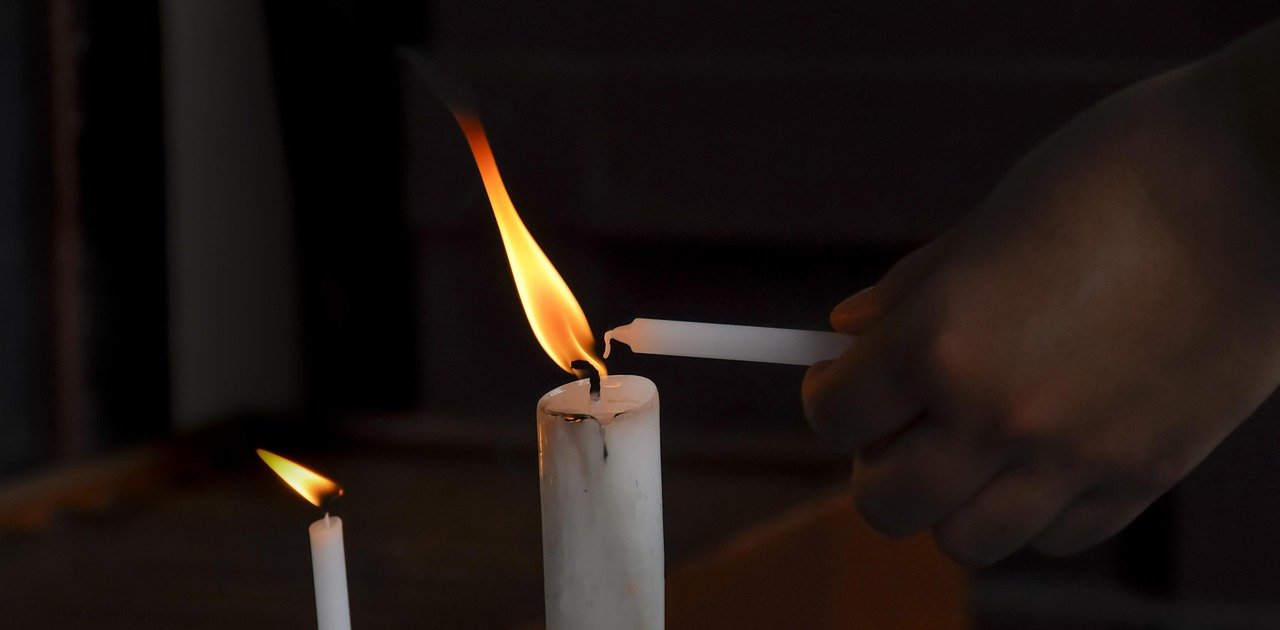
Candle wax droplets are the version most people meet firsthand. Two distinct problems get lumped under the same name.
The first is spatter — molten wax thrown out of the melt pool when a wick is too long, the candle sits in a draft, or something is added to the wax that changes how it burns. A long wick creates a bigger flame, and a bigger flame pulls more wax up and throws it farther. Drafts tilt the flame and do the same thing. Droplets then land on walls, furniture, and skin.
The second is tunneling, where the candle burns down the middle and leaves a ring of unburned wax. That leftover wax can pool, drip, and re-solidify into droplets around the jar. Tunneling usually traces back to a first burn that was too short. Wax has a memory of sorts: the melt pool needs to reach the jar’s edge on the first burn, or the wick will keep carving a narrow channel.
Fire-safety bodies treat wax spatter and overheating as genuine fire risks, not cosmetic annoyances. Practical habits that actually work:
- Trim the wick to about 5 mm before every burn. This single habit prevents most spatter.
- Keep the first burn long enough for the melt pool to reach the edge, typically one hour per 2.5 cm of diameter.
- Burn away from drafts, vents, and open windows.
- Never move a candle while the wax is liquid.
- Extinguish with a snuffer rather than blowing, which is what flings droplets.
The common mistake is treating spatter as a wax-quality problem. In practice it is almost always a wick-length or airflow problem. A cheap candle with a trimmed wick beats an expensive one with a long wick every time. (React vs vue drag drop judge output quality 2027)
Wax Droplets in Emulsions and Coatings
Step into food science or industrial chemistry and wax droplets mean something quite different: discrete wax particles dispersed in water or a solvent, held stable by surfactants. The surfactant sits at the boundary between wax and liquid and keeps droplets from merging. Droplet size and size distribution control how the emulsion looks, how stable it stays, and how it behaves when applied to a surface.
This is the technology behind edible coatings on fruit and confectionery. Waxes such as carnauba and beeswax get applied as fine droplet dispersions to slow moisture loss and add gloss. Smaller, more uniform droplets generally give a smoother, glossier film; large or clumped droplets give a blotchy finish.
Two practical notes for anyone working with these systems. First, temperature control during emulsification matters more than most recipes admit. If the wax phase cools too fast, droplets freeze out at inconsistent sizes and the emulsion turns grainy. Second, shear and surfactant choice are a matched pair. Adding more surfactant will not rescue a process where the shear is too low to break droplets down in the first place.
Supercooled Wax-Containing Droplets in Clouds
Atmospheric science uses the term for supercooled liquid droplets that contain or are coated with organic, waxy material. These droplets can stay liquid well below the normal freezing point, and they matter for two reasons: they influence how ice forms in clouds, and they affect how clouds scatter and absorb light.
The terminology in this field is not fully standardized, and different papers use slightly different definitions. Anyone reading research in this area should check what a specific paper means before comparing results across studies. It is also worth noting that cloud droplets and supercooled water generally are a well-documented topic, so background reading pays off before diving into the specialized literature on organic coatings.
Why should a non-scientist care? Because cloud behavior feeds into weather and climate models. Small changes in how droplets freeze shift when precipitation falls and how much sunlight clouds reflect. The waxy coating is a small piece of a large puzzle, but it is a piece researchers take seriously.
Molten Wax Droplets in Printing and 3D Manufacturing
In inkjet and additive manufacturing, wax droplets usually mean molten wax jetted from a print head and frozen in place on contact. This is the basis of wax-based phase-change printing, including wax support structures used in investment casting and some jewelry and dental workflows.
The physics here is all about impact and solidification. A droplet leaves the nozzle molten, hits a cooler surface, spreads, and freezes within milliseconds. Get the surface temperature wrong and the droplet either balls up instead of spreading or stays liquid too long and bleeds into its neighbors. Both failures show up as poor dimensional accuracy.
Common mistakes in this space:
- Ignoring the substrate temperature. A cold build platform freezes droplets before they bond to the layer below, which weakens the part.
- Letting the wax bath sit too long between jobs. Wax picks up contamination and nozzle clogging follows.
- Assuming droplet size is fixed by the nozzle alone. Viscosity and jetting temperature change droplet volume more than many operators expect.
Anyone comparing droplet-based tooling against other approaches may find the debate over output quality in modern front-end frameworks oddly parallel, since both hinge on how well small discrete units get assembled into a clean final product. If that comparison sounds useful, a look at react vs vue drag drop judge output quality 2027 offers a surprisingly relevant angle on evaluating output quality rather than just tooling. (Measure curtains width drop fullness done right)
Wax Droplets as Microscopy Artifacts
In histology, wax droplets are usually bad news. Paraffin sectioning can leave droplets, folds, and other debris on slides, and those artifacts can be mistaken for real structures or simply obscure the tissue. A droplet sitting over a cell layer can look like a vacuole to an untrained eye.
The fix is mostly technique. Keep the water bath clean, filter the paraffin, and check sections under low power before committing to a protocol. If droplets keep appearing, the floatation bath temperature or the section thickness is usually the culprit. This is a good example of a general rule: when “wax droplets” show up where they are not wanted, look at the process step immediately before, not the wax itself.
A Quick Comparison Across Fields
| Field | What “wax droplet” means | Wanted or unwanted | Main control variable |
|---|---|---|---|
| Candles | Molten spatter or tunneling residue | Unwanted | Wick length and airflow |
| Emulsions and coatings | Dispersed wax particles in liquid | Wanted | Droplet size and surfactant |
| Atmospheric science | Supercooled droplets with waxy coatings | Studied, neutral | Temperature and composition |
| Printing and 3D | Jetted molten wax frozen in place | Wanted | Substrate temperature and viscosity |
| Microscopy | Paraffin residue on slides | Unwanted | Bath cleanliness and technique |
The pattern is clear. When droplets are the product, size and uniformity are the whole game. When they are a byproduct, the fix is upstream in the process.
Practical Troubleshooting: What Actually Works
Across all these fields, a few habits separate people who solve droplet problems from people who keep fighting them.
Measure before adjusting. Droplet problems are size problems, and size problems are measurable. Whether it is a melt pool diameter, an emulsion’s droplet distribution, or a printed layer’s accuracy, get a number first. The same discipline applies to household projects where getting the dimensions right decides the outcome, as anyone who has tackled measure curtains width drop fullness done right can confirm.
Change one variable at a time. Droplet behavior depends on temperature, viscosity, surface energy, and time, and these interact. Changing three settings at once teaches nothing.
Respect the cooling curve. Wax does not freeze instantly. The skin forms first and the core follows, and that gap is where most defects are born. Preheating a substrate, warming a jar, or slowing a cooling rate often fixes problems that no amount of formulation tweaking will touch.
Watch for contamination. Wax picks up dust, water, and old wax. Contaminated wax produces unpredictable droplets, and the fix is filtration and clean tools rather than more additives.
Check the cheap stuff first. Long wicks, cold rooms, dirty baths, and clogged nozzles cause more droplet problems than any exotic material issue.
When Droplets Signal a Bigger Issue
Sometimes a droplet is a symptom. Wax spatter from a candle that keeps overheating can point to a wick that is simply too large for the jar. Grainy emulsion droplets can point to a failing surfactant or a broken temperature profile. Printed wax that will not bond can point to a platform calibration drift.
The useful reflex is to treat the droplet as data. Where did it form? How big is it? What was the temperature? What changed since the last good run? Those four questions resolve most cases faster than any troubleshooting guide.
For readers chasing related practical questions, the same logic of waiting for the right moment and the right conditions applies to plenty of consumer decisions, from when will ps5 price drop to whether a game pass price drop is worth holding out for. Timing and conditions decide outcomes, whether the subject is wax or a console.
Conclusion
Wax droplets are not one thing. They are molten spatter from a neglected wick, engineered particles in a fruit coating, supercooled atmospheric beads, jetted building blocks in a 3D printer, and annoying residue on a lab slide. What unites them is physics: wax melts across a relatively low and broad range, skins over fast, and responds to temperature, surface energy, and time in predictable ways.
The practical takeaway is to name the context before chasing a fix. Once the field is clear, the control variables are usually obvious, and the solutions tend to be simple: trim the wick, control the temperature, clean the bath, measure the droplet. Small habits, applied consistently, prevent most wax droplet problems before they start.
Frequently Asked Questions
What are wax droplets made of?
It depends on the context. Most consumer wax droplets are paraffin, a mixture of straight-chain hydrocarbons in roughly the C20 to C40 range, melting between about 46 and 68 °C. Food and coating applications often use carnauba or beeswax instead. Atmospheric droplets are water droplets containing or coated with organic waxy material.
Why does my candle spit wax droplets?
Almost always because the wick is too long, the candle is in a draft, or both. A long wick feeds a larger flame, which pulls up and throws more molten wax. Trim the wick to about 5 mm before each burn and move the candle away from vents and windows. If spatter continues, the wick may simply be oversized for the jar.
Are wax droplets in clouds the same as candle wax?
No. In atmospheric science, wax droplets are supercooled water droplets that contain or are coated with organic, waxy compounds. They are liquid, not solid wax, and they matter because they influence ice formation and how clouds scatter light. The terminology is not fully standardized, so definitions vary between papers.
How do wax droplets work in 3D printing?
Molten wax is jetted from a print head and freezes on contact with the build surface. The droplet spreads, then solidifies within milliseconds. Accuracy depends mainly on substrate temperature and wax viscosity. If the platform is too cold, droplets freeze before bonding to the layer below and the part comes out weak.
Why do wax droplets appear on microscope slides?
Paraffin sectioning can leave wax droplets, folds, and debris on slides. These are artifacts, not real structures, and they can obscure tissue or be mistaken for features. The usual causes are a dirty floatation bath, contaminated paraffin, or sections cut too thick. Cleaning the bath and filtering the wax resolves most cases.
Can wax droplets in food coatings be avoided?
They are usually intentional, not a defect. Carnauba and beeswax are applied as fine droplet dispersions to slow moisture loss and add gloss to fruit and confectionery. Problems arise when droplets are too large or uneven, which produces a blotchy finish. Better temperature control during emulsification and adequate shear fix most of these issues.



