

What makes a quiet, four-character play about mathematics and grief one of the most talked-about works in modern Broadway history? The answer sits in a single word: Proof. David Auburn’s drama arrived in New York in 2000 with no musical numbers, no celebrity stunt casting, and no spectacle. It had a chalkboard, a porch, and a script about genius, inheritance, and trust. It went on to win the Pulitzer Prize for Drama and the Tony Award for Best Play, and it turned a first-time Broadway playwright into a household name in theater circles. For anyone trying to understand why this play still gets produced in high schools, regional houses, and professional companies year after year, the story of its Broadway run is the best place to start.
What Is Proof, and Why Did It Matter So Much?
Proof is a play by David Auburn about Catherine, a young woman in her twenties who has spent years caring for her father, Robert, a brilliant mathematician whose mind unraveled late in life. After Robert dies, his former student Hal discovers a notebook containing what appears to be a groundbreaking proof. The problem is that no one knows who wrote it. Catherine claims she did. Hal doubts her. Her sister Claire wants to sell the family house and move Catherine to New York. Over the course of the play, the audience has to decide whom to believe.
The play works because it treats mathematical proof as a metaphor for something far more human: how we prove what we feel, what we are capable of, and who we really are. Auburn uses the Riemann Hypothesis as a plot device, a famously unsolved problem in mathematics, to signal just how high the stakes of Robert’s work once were. You do not need to understand the math to follow the story. You only need to understand what it feels like to be doubted.
The Original Broadway Production
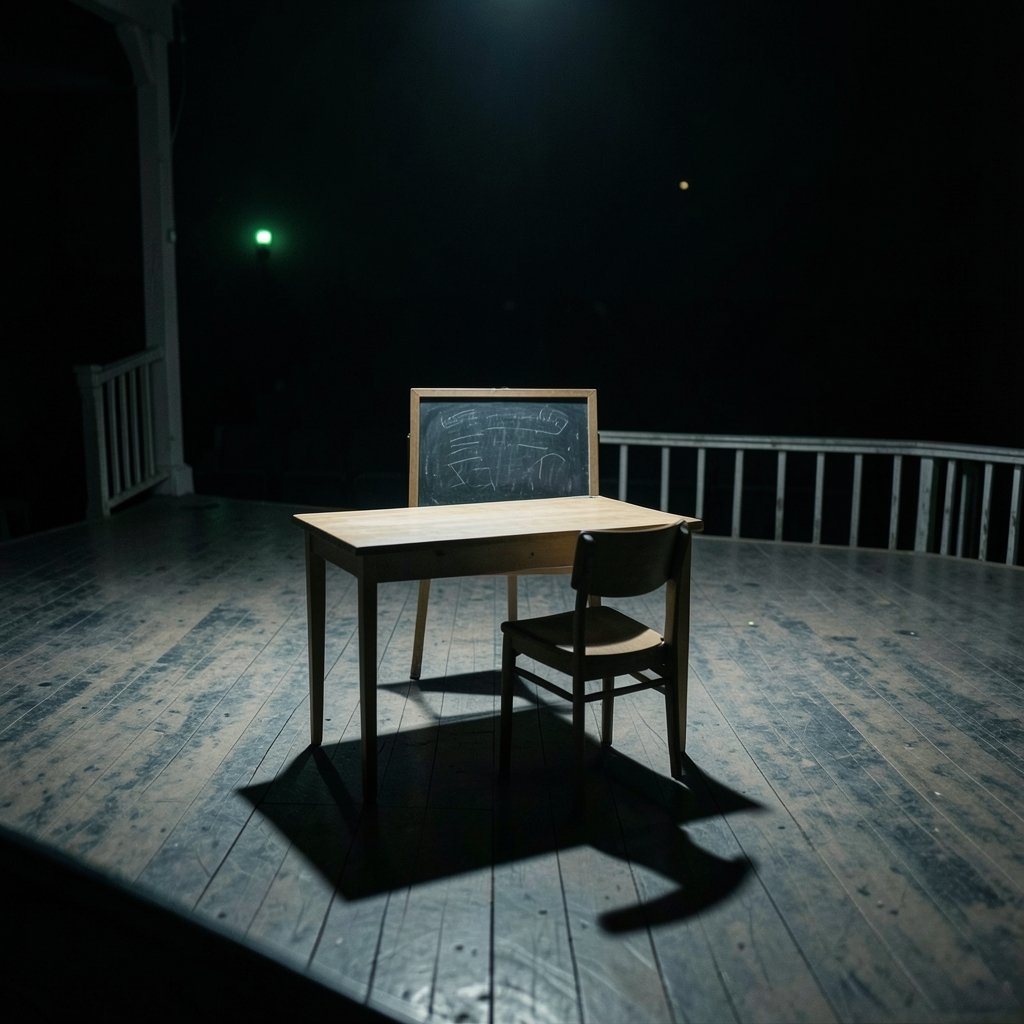
Proof opened at the Walter Kerr Theatre in October 2000 and ran into the summer of 2001, a healthy run for a straight play. The original cast was small and exceptional:
- Mary-Louise Parker as Catherine
- Larry Bryggman as Robert
- Ben Shenkman as Hal
- Johanna Day as Claire
Daniel Sullivan directed. The production won the Tony Award for Best Play, Parker won the Tony for Best Actress in a Play, and Sullivan took Best Direction of a Play at the 2001 ceremony. Earlier that year, the play had already won the Pulitzer Prize for Drama, an honor that essentially guaranteed its place in the American repertoire.
What is striking about that run, in hindsight, is how unflashy it was. The play had no elaborate set changes, no big ensemble, and no marketing hook beyond the writing itself. It succeeded because audiences talked about it afterward. Word of mouth about the final scene, which leaves the central question deliberately unresolved, did more for ticket sales than any advertisement could.
Why the Play Keeps Coming Back
A Broadway run is a moment. A play that lasts is something else entirely. Proof has become a staple of regional theater, community theater, and college drama programs, and for practical reasons as much as artistic ones. It has four characters, a single unit set, and no technical demands. That makes it affordable. But affordability alone does not explain its persistence.
What keeps the play alive is its central ambiguity. Auburn never confirms whether Catherine wrote the proof. Different productions emphasize different possibilities, and audiences leave arguing. That is rare in commercial theater, where tidy resolutions usually win.
For anyone who has ever built a project from scratch, whether a business plan, a portfolio, or a piece of writing, the play’s underlying question resonates. How do you demonstrate that the work is genuinely yours? The same question shows up in technical fields all the time. Consider how much effort goes into making sure a copy of something is authentic and tamper-resistant; the backup immutability explained approach to protecting data is a modern, digital version of the same instinct to prove ownership and integrity. Catherine’s notebook is, in a sense, the original unverified file.
The Film Adaptation and Its Cast
In 2005, Proof became a film directed by John Madden, with Gwyneth Paltrow as Catherine and Anthony Hopkins as Robert. The movie expanded the audience for the play considerably, even though critics were divided on whether the screen version captured the stage production’s tension. Paltrow had originated the role in London before the film, which gave her a deep familiarity with the character.
The film is worth watching for one reason above all: it shows how much of the play’s power lives in what is not said. On stage, silence between characters does enormous work. On film, the camera sometimes fills that silence with close-ups and music, and the result feels different. Neither version is wrong. They simply prove that the same script can carry different weights depending on how it is delivered.
How to Watch Proof Well
If you are seeing Proof for the first time, whether on stage or on screen, a little preparation goes a long way. Here is what actually helps, based on how the play is built:
- Pay attention to the timeline. The play moves between present and past without announcements. If you lose track of whether Robert is alive in a given scene, you will miss the emotional point of the scene.
- Watch the notebook. It is the physical object the entire plot orbits. Notice who touches it, who reads it, and who is kept away from it.
- Do not try to solve the math. The Riemann Hypothesis is background color, not a puzzle to crack. The play is about people, not equations.
- Stay for the ending without expecting a verdict. Auburn deliberately withholds certainty. That is the design, not a flaw.
A common mistake first-time viewers make is treating Hal as a villain or Catherine as a reliable narrator. Both readings collapse under scrutiny. The play is more interesting when you hold doubt and trust at the same time, which is exactly what the characters are forced to do.
The Practical Side of Seeing It
Broadway tickets for straight plays behave differently from musical tickets. Revivals and star-driven productions often sell out early, while original works with lesser-known casts can be easier to get into. If a production of Proof is running near you, the same logic applies: midweek performances are usually cheaper, and straight plays frequently offer rush or lottery tickets that musicals do not.
For people planning a theater trip around a show, the logistics matter as much as the ticket. Anyone mapping out a weekend of performances, meals, and travel would do well to plan a road trip that runs smoothly from day one so the travel does not eat into the actual event. It sounds trivial until you are circling a parking garage twenty minutes before curtain. The same care applies to longer excursions built around a single evening; a road trip planned from day one keeps the focus on the performance rather than the drive.
Proof and the Wider Broadway Landscape
It helps to place Proof in context. The 2000–2001 season was not a golden age for new American plays on Broadway. Musicals dominated the box office, and straight plays often depended on star casting to survive. Proof was an exception: a new American play, by an unknown writer, with a cast of respected stage actors rather than screen names, that ran for months and swept the major awards.
That combination is rare enough that producers still study it. The play proved that a well-written, small-cast drama could compete commercially if the reviews were strong and the word of mouth was genuine. It also demonstrated the value of the Pulitzer Prize as a marketing engine. Winning in April 2001 gave the production a second life just as it might otherwise have been winding down.
The play’s influence shows up in subtler ways too. It helped normalize stories about women in mathematics on mainstream stages, and it gave regional theaters a reliable title that attracts both older subscribers and younger audiences. Drama teachers gravitate toward it because the roles are meaty and the production demands are modest.
What the Play Gets Right About Genius
Most stories about brilliant people focus on the brilliance. Proof focuses on the cost. Robert was a genius, and his genius did not protect him from illness, nor did it make him a good father. Catherine may or may not be a genius, and the play refuses to let that question determine her worth.
That is the quiet radicalism of Auburn’s script. It suggests that the real proof of a person is not a document or a discovery but the everyday evidence of how they treat the people around them. Catherine’s years of caregiving, invisible and unglamorous, count for something the academic world cannot measure. When Hal and Claire debate whether Catherine could have written the proof, they are really asking whether she is the kind of person capable of original thought. The play’s answer is that the question itself is the wrong one.
This is why the play lands so hard with audiences who have cared for aging parents or watched a family member decline. The mathematics is the surface. The grief is the substance.
Common Misreadings to Avoid
A few interpretations circulate widely and miss the mark.
Reading the play as anti-intellectual. It is not. Auburn clearly loves mathematics and treats Robert’s work with respect. The play critiques the academic world’s gatekeeping, not intellectual life itself.
Assuming the ending is a cop-out. The unresolved question is deliberate. Auburn has said in interviews that he wanted the audience to make the judgment, the same way the characters must.
Treating Catherine as passive. She is the most active character in the play. She is the one who makes claims, defends them, and refuses to be managed by her sister. Passivity is Claire’s accusation, not Catherine’s reality.
Avoiding these misreadings makes the play richer, and it explains why directors keep returning to it. There is always another angle to find.
Conclusion
Proof is one of those rare Broadway plays that outlived its own moment. It won the Pulitzer and the Tony, launched David Auburn’s career, and gave Mary-Louise Parker one of the defining roles of her stage life. But its real legacy is simpler: it is a play that trusts its audience to sit with uncertainty. In an era when so much entertainment resolves itself neatly, a story that leaves the central question open feels almost radical. Whether you encounter it on a Broadway stage, in a regional production, or through the 2005 film, the play asks the same thing of you that it asks of its characters. Prove it. And then decide for yourself what proof even means.
Frequently Asked Questions
Who wrote the play Proof?
David Auburn wrote Proof. It was his breakthrough work, and it won the 2001 Pulitzer Prize for Drama along with the Tony Award for Best Play.
Who starred in the original Broadway production of Proof?
The original Broadway cast featured Mary-Louise Parker as Catherine, Larry Bryggman as Robert, Ben Shenkman as Hal, and Johanna Day as Claire. Daniel Sullivan directed, and the production ran at the Walter Kerr Theatre from late 2000 into 2001.
Did Proof win any major awards?
Yes. It won the 2001 Pulitzer Prize for Drama, the Tony Award for Best Play, and the Tony for Best Direction of a Play. Mary-Louise Parker also won the Tony for Best Actress in a Play for her performance as Catherine.
Is the movie Proof based on the Broadway play?
Yes. The 2005 film adaptation was based on Auburn’s play, directed by John Madden and starring Gwyneth Paltrow as Catherine and Anthony Hopkins as Robert. Paltrow had previously played the role on stage in London.
Does the play ever reveal who wrote the proof?
No. The play deliberately leaves the question unresolved. Auburn designed the ending so that the audience must make its own judgment about whether Catherine wrote the proof, mirroring the doubt the characters themselves feel.
Do you need to understand mathematics to enjoy Proof?
Not at all. The mathematics, including the reference to the Riemann Hypothesis, functions as background and metaphor. The play’s real subject is family, grief, trust, and the difficulty of proving what you are capable of, all of which require no mathematical training to appreciate.



