
Quick Answer: What is a yurt?
A yurt is a portable, round dwelling with a wood lattice frame and a felt cover, traditionally built and lived in by nomadic herding families across the steppes of Central Asia. Today you will meet the same basic design in three places: as a working home on the Mongolian and Kazakh grasslands, as a heritage craft studied and protected by cultural organizations, and as a semi-permanent structure on campsites and farm stays far outside Asia.
Related dwellings are not identical. Mongolia’s ger and the Turkic yurt share a family tree but differ in frame details, naming, and custom, so treat the words as cousins rather than perfect synonyms.
Before you book, buy, or build one, check the wall height, the crown ring size, the insulation layers, the cover material, the floor system, and the local permit rules for a round structure.
A Round House That Travels
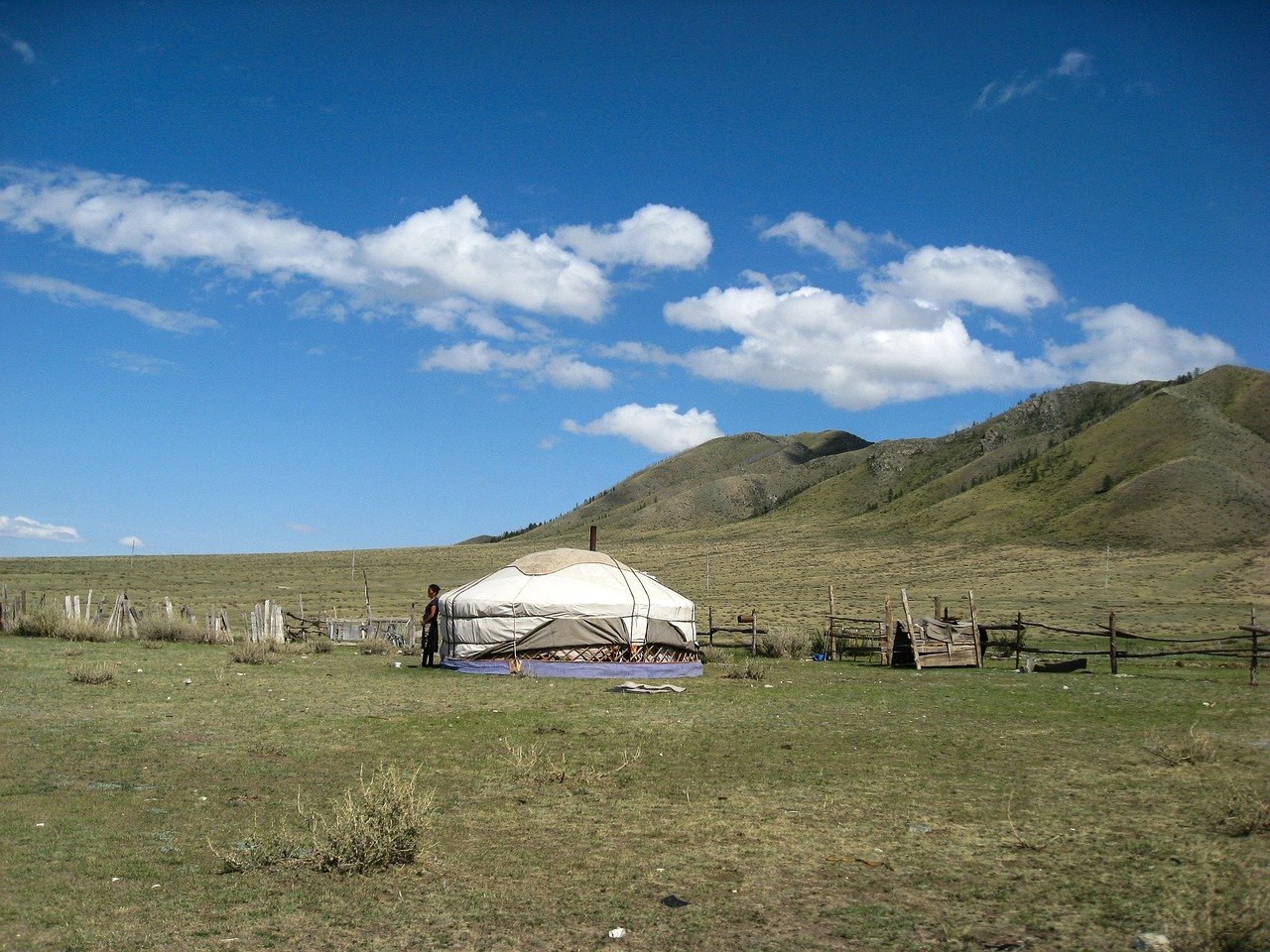
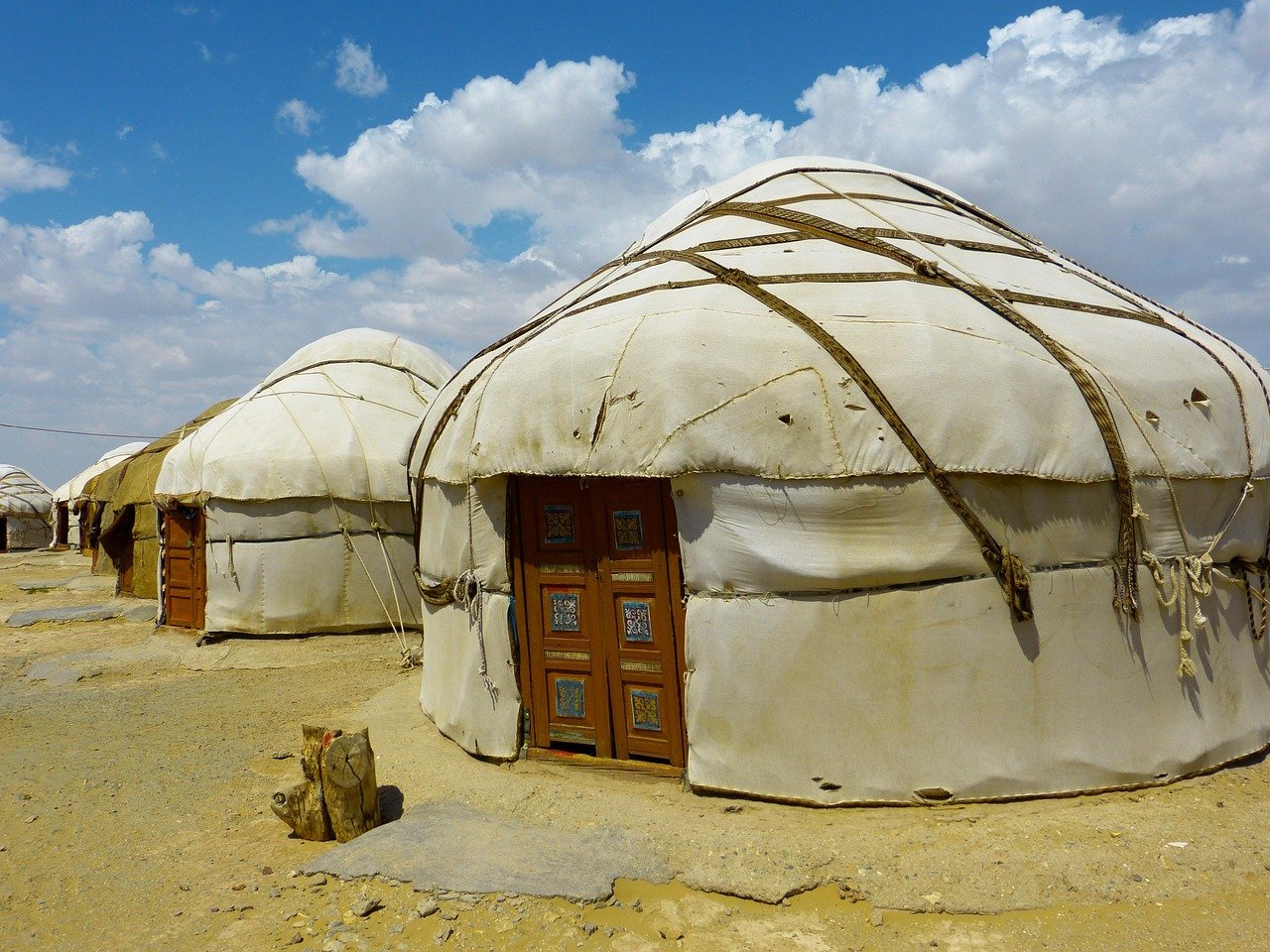
A yurt is a home you can fold onto the back of a camel. It has served that purpose for centuries on the grasslands of Central Asia. The English word comes from a Turkic term meaning homeland or encampment, which points to what a yurt is: a portable home, and a tent that carries a complete idea of home.
The yurt is a round, wood-framed tent covered in felt, used by nomadic herders who move with their animals through the seasons. Its genius is in the geometry. A circle sheds wind from any direction. A cone-shaped roof lets rain run off and smoke escape. And every piece breaks down into bundles a family can carry. Few buildings in human history have solved so many problems with so few parts.
The Anatomy of a Yurt, Piece by Piece
The traditional frame has four main players, and knowing them makes every yurt you see afterward easier to read.
The lattice wall, called kerege in Kazakh, is a grid of bent wooden slats lashed together. It folds flat like a concertina and unfolds into a curving wall. The more lattice sections you add, the bigger the yurt.
The roof poles, or uyk, lean from the top of the wall up to a central ring. They carry the felt roof and give the whole structure its dome-like profile.
The crown ring at the top is the shanyrak. It is the structural keystone, the smoke vent, and the skylight all at once. It is also the emotional center of the building, and we will come back to that.
The door frame gives you a rigid entry point and holds the two ends of the wall together.
The skeleton is covered with felt, made from pressed sheep’s wool. Felt insulates against heat and cold, breathes enough to manage moisture, and stays heavy enough to hold in wind. Canvas or other fabrics often go over the felt as a weather skin. In 2014, UNESCO inscribed the traditional knowledge and skills of making Kyrgyz and Kazakh yurts on its Representative List of the Intangible Cultural Heritage of Humanity; the listing recognized the object, the craft, and the people who carry it.
Why the Shape Works So Well
Nomadic life is not romantic wandering. It is a logistics problem. Herders follow grass and water, and they need shelter that moves with them without a truck and a crane.
A yurt answers that with a few hundred pounds of wood and wool instead of tons of timber and stone. Two or three people can raise one in a few hours. It comes down just as fast. It can be repaired with materials at hand: a split pole, a patch of felt, a new lashing.
The round shape does real work too. Wind slides around a curved wall instead of slamming into a flat one. The low profile and heavy felt hold heat in a cold snap. The central ring gives light and ventilation without a single window.
There is a trade-off, and it is worth naming. Round walls are efficient for wind and inefficient for furniture. Rectangular beds, shelves, and cabinets fit awkwardly against a curve. Yurt dwellers have solved this for centuries with custom-built curved furniture, and anyone adapting a yurt today runs into the same puzzle.
The Shanyrak: A Roof Ring With a Country on It
The shanyrak is the part of the yurt that outsiders most often miss. Structurally it is a wooden ring. Culturally it is a symbol of family, continuity, and the hearth. The image of the shanyrak appears on the national flag of Kazakhstan, which tells you how deeply this building is woven into national identity.
Practically, the shanyrak is also the part that fails first if it is badly made. It takes the compression of every roof pole at once. A cracked or warped crown ring makes the whole roof sag, and no amount of new felt will fix it. If you are inspecting an older yurt, put your hands on the ring before you admire anything else.
Yurt, Ger, Boz Üy, Otau: What’s in a Name?
Related round dwellings carry different names across the region, and those differences involve more than terminology.
| Name | Where it is used | What to know |
|---|---|---|
| Yurt | Turkic Central Asia and the wider English-speaking world | The general English term; from a Turkic word for homeland or encampment |
| Ger | Mongolia | The Mongolian term; closely related structure, distinct craft tradition and customs |
| Boz üy | Kyrgyzstan | The Kyrgyz name for the dwelling |
| Otau | Kazakhstan | A Kazakh term for the dwelling |
The Mongolian ger was inscribed on UNESCO’s Representative List in 2013 for its traditional craftsmanship and associated customs, a year before the Kyrgyz and Kazakh yurt tradition was listed. The two listings are separate for a reason: these are living traditions with their own techniques and rules, not one tradition with two spellings.
Here is where well-meaning articles go wrong. Some sources treat yurt and ger as pure synonyms. Others draw a firm line between them. Usage genuinely varies, including among the people who build them. The honest position is that the structures are close relatives and the words carry different cultural weight, so it pays to use the term the community in question actually uses.
How a Yurt Comes Together
If you ever help raise one, the sequence matters more than the muscle. A typical traditional build runs roughly like this:
- Clear and level the ground, then set the door frame in position as your anchor point.
- Unfold the lattice wall sections and tie them to the door frame, closing the circle.
- Bind the wall at the top with a tension band so the circle holds its shape.
- Raise the crown ring on a support and fit the roof poles between ring and wall.
- Check the ring is centered and the poles are evenly loaded before adding weight.
- Lay the felt roof and wall covers, working from the top down, then secure the outer canvas and ropes.
- Fit the door, then tension everything again once the structure has settled.
The most common beginner mistake is rushing the crown ring. If it sits off-center, the roof poles load unevenly, the covers wrinkle, and the whole building feels wrong. The second most common mistake is skipping the final tensioning pass. Felt and canvas stretch, and a yurt that was tight at noon can be flapping by evening.
Yurts Today: Glamping, Studios, and Working Homes
Modern yurts split into two broad camps, and the gap between them is widening.
The first camp is heritage. Families across Central Asia still build and live in traditional yurts, and craft knowledge passes through apprenticeship rather than manuals. Cultural organizations and tourism programs have helped keep the skills visible.
The second camp is contemporary. Engineered frames, synthetic covers, insulated liners, and even wood stoves have turned the yurt into a semi-permanent structure found on campsites, farms, retreat centers, and back gardens. These versions borrow the shape and spirit of the original while using industrial materials the original never had. A modern glamping yurt may look traditional from a distance and be almost entirely different up close.
Neither camp is fake. They are just answering different questions. One asks how to live well while moving. The other asks how to build something round, distinctive, and comfortable that can sit on a piece of land without a full foundation.
What to Check Before You Buy, Book, or Build
Whether you are reserving a night or ordering a structure for your own land, the same checklist applies. It is short, and it saves a lot of regret.
Wall height. Traditional yurts are low. If you are tall, check the wall height and the headroom near the edges; check the center too.
Crown ring size and quality. A larger ring means more light and more headroom but less structural strength. Ask what wood it is and how it is joined.
Insulation layers. One layer of felt is a tent. Several layers plus a liner is a building. Ask how many.
Cover material. Natural canvas breathes and ages gracefully. Synthetic covers resist water but can trap condensation. Neither is automatically better; it depends on your climate.
Floor and foundation. A platform keeps moisture out and extends the life of everything above it. A yurt straight on wet ground will disappoint you.
Ventilation and heating. The crown ring is your chimney. Confirm that smoke and moisture have somewhere to go before you install a stove.
Permits. A round structure may count as a tent, an accessory building, or a dwelling depending on where you live. Check before you order.
Wind and snow load. Ask the maker for rated limits, and take local conditions seriously. A yurt handles wind well, but snow load is a different problem and needs active management.
The mistake people make most often is judging a yurt by its photograph. Round and felt-covered looks charming in every listing. The differences that matter are in the frame, the layers, and the ring, and none of those show up in a wide-angle shot. Ask for details, or ask to see one in person.
Conclusion
A yurt is a portable round home built from a folding wood lattice, a crown of roof poles, and a heavy felt cover, and it has been the practical answer to nomadic life on the Central Asian steppe for centuries. What makes it worth understanding today is how well the idea survives translation. The same design shows up as a living home, a protected craft tradition, and a modern structure on a hillside campsite. The shanyrak still sits at the center of it all, holding the roof up and carrying a family’s sense of itself. Whether you are curious about the culture behind the shape or weighing one for your own land, the yurt rewards a closer look. The charm is obvious. The engineering is the part worth learning.
Frequently Asked Questions
Is a yurt the same thing as a ger?
They are close relatives, not identical twins. A ger is the Mongolian term for the dwelling, and the traditional craftsmanship of the Mongol ger was inscribed on UNESCO’s Representative List in 2013. The Kyrgyz and Kazakh yurt tradition was listed separately in 2014. The structures share a common design logic, but the craft techniques, customs, and vocabulary differ by region. Some sources use the terms interchangeably; others keep them distinct.
How long does it take to put up a yurt?
A traditional yurt can be raised by a small team in a few hours, which is exactly why it suited communities that moved with the seasons. Modern engineered yurts on prepared platforms can go up faster, but they often need more site preparation beforehand. The realistic answer depends on the size, the number of helpers, and whether the platform is already in place.
Can you live in a yurt all year?
People do, and have for generations, but it takes the right setup. Multiple felt layers, a solid floor platform, a heat source with proper ventilation through the crown ring, and active management of snow on the roof all matter. A single-layer yurt in a cold climate is a summer shelter. The traditional design works because the insulation is thick and the occupants know how to run it.
Why are yurts round?
The circle is a practical answer to hard conditions. Wind flows around a curved wall instead of hitting a flat face, the conical roof sheds rain and snow, and a round plan is structurally efficient with a light frame. The shape also gives you a central hearth and a central skylight at the same time. The cost is furniture: rectangular pieces fit badly against a curved wall.
What is a shanyrak?
The shanyrak is the crown ring at the top of the yurt, where all the roof poles meet. It holds the roof in compression, lets smoke out, and lets light in. It is also a powerful cultural symbol of family and continuity, and its image appears on the national flag of Kazakhstan.
Are modern glamping yurts authentic?
They are honest descendants rather than replicas. Modern versions often use engineered frames, synthetic covers, and insulated liners, which change how the structure performs and how long it lasts. The shape and the central-ring layout remain. If authenticity matters to you, ask specifically about the frame material, the cover fabric, and whether the crown ring is structural wood or a manufactured component.



