

What goat breed has ears so long they nearly drag on the ground, a nose like a Roman emperor, and milk so creamy it turns a simple batch of cheese into something memorable? If you guessed the Nubian goat, you already know the answer. This breed stands out in any pasture, and its looks are only part of the reason. Nubians have earned a loyal following among homesteaders, dairy farmers, and show enthusiasts for one simple reason: they combine personality, hardiness, and some of the richest milk of any goat breed.
Whether you are thinking about adding Nubians to your barn or just curious about the goat behind that distinctive profile, this guide covers where the breed came from, what it is really like to raise, and the practical details that matter before you buy your first doe.
Where the Nubian Goat Comes From
The Nubian was developed in Britain in the late 19th century, generally dated to the 1880s and 1890s. Breeders crossed British goats with lop-eared, short-haired goats imported from North Africa and India. The result was a goat that carried the heat tolerance and size of its African and Asian ancestors but fit the needs of European dairy keepers.
The name itself is a bit of a historical quirk. It refers to Nubia, the region along the Nile in present-day Sudan and southern Egypt, but the breed was not standardized there. The Nubian as we know it is a British creation built on imported genetics.
One naming detail trips up new buyers constantly. In the United States, the breed is registered simply as the Nubian. In the United Kingdom and several other countries, the same breed is often called the Anglo-Nubian. If you are shopping for stock or reading breed literature from different countries, do not assume these are two separate breeds. They are essentially the same animal under different registry names, and naming conventions vary from one herd book to the next.
What Makes the Nubian Look Different
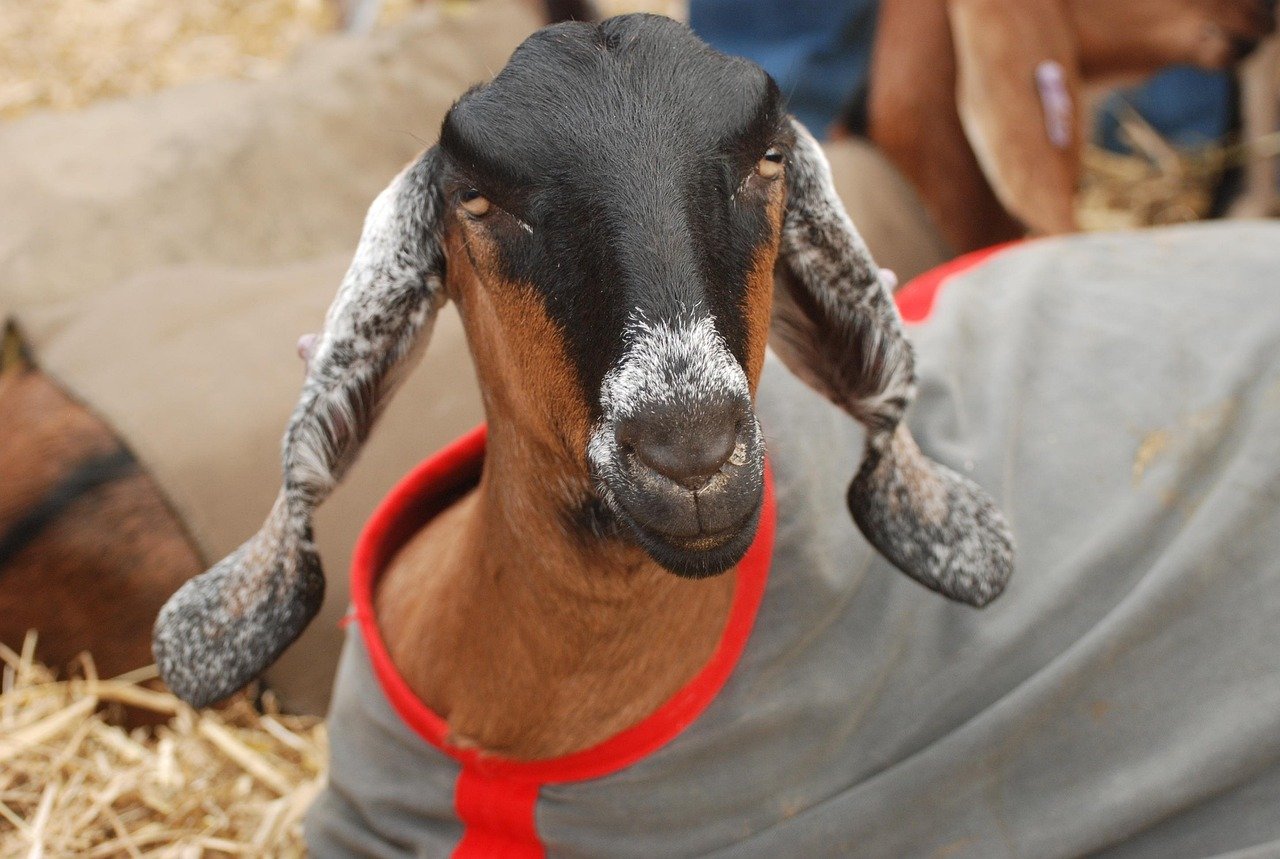
You will not confuse a Nubian with a Saanen or an Alpine. The breed has a look all its own, and breed standards describe it in clear terms.
The most famous feature is the ears. Nubian ears are long, pendulous, and drooping, hanging down alongside the head rather than sticking out sideways. Combined with a Roman nose, a convex profile that bows outward, the breed has an unmistakable face.
The coat is short and glossy, which makes grooming straightforward and helps the goat handle warm weather. Nubians come in almost every color and pattern, so no single color defines the breed.
Size is another differentiator. Nubians are the largest of the standard dairy goat breeds in the United States. Does commonly weigh around 135 pounds, or roughly 61 kilograms, and bucks run heavier still. That extra size matters for handling, fencing, and housing. A Nubian is not a small animal, and a sturdy fence is not optional.
Nubian Milk: Less Volume, More Butterfat
Here is where the Nubian earns its keep in the dairy. Nubian milk is known for higher butterfat than most other dairy goat breeds, often cited in the range of 4.5 to 5 percent. That fat content changes what you can do with the milk. Higher-fat milk makes richer cheese, creamier yogurt, and better soap.
The trade-off is volume. Nubians typically produce less milk per doe than heavy-producing breeds such as the Saanen or the Alpine. A Saanen might flood your milk pail; a Nubian gives you less but with more richness in every quart.
Which approach is better depends entirely on your goals. If you want maximum gallons for fluid milk sales or a large household, a high-volume breed may suit you better. If you want to make cheese, butter, or value-added products where fat matters, the Nubian’s richer milk often wins out. Many small farms keep a mix of breeds for exactly this reason.
It is worth saying plainly that butterfat and yield figures vary by source and by management. Feed, genetics, kidding schedules, and milking routine all move the numbers. Treat published ranges as approximate guides, not guarantees.
Temperament and Handling
Nubians have a reputation for being vocal and outgoing. Walk past a pen of Nubians and you will likely hear about it. Does often greet their people with a loud, insistent bleat, and bucks can be even noisier.
That personality cuts both ways. Many owners find Nubians friendly and easy to bond with, which makes them pleasant to handle and show. Others find the noise and boldness a challenge, especially in a suburban setting with close neighbors. If quiet is a priority, this may not be the breed for you.
The breed’s size means handling requires some planning. A 135-pound doe can be moved by a determined adult, but a mature buck is a serious animal. Sturdy gates, proper halters, and a well-designed handling area are worth the investment.
Hardiness and Climate
The breed’s North African and Indian ancestry is often cited as the reason Nubians tolerate heat better than some European dairy breeds. This is a common claim in breed literature rather than a rigorously tested finding, so treat it as conventional breed lore rather than hard science. Still, plenty of owners in hot climates report that Nubians handle summer better than their Swiss-derived counterparts.
Heat tolerance does not mean neglect. All goats need shade, clean water, and ventilation. Nubians in cold climates need dry shelter and wind protection like any other goat, and their short coats offer less insulation than some breeds.
Dairy and Dual-Purpose Use
The Nubian is primarily a dairy breed, but it is often described as dual-purpose, meaning it can serve for both milk and meat. The breed’s size and hardiness make Nubian crosses common in meat goat production. A Nubian buck crossed with a meat-type doe can add growth and frame to the offspring.
That flexibility is part of the breed’s appeal for small farms. A herd can produce milk from the does and meat from surplus animals or crosses, which spreads the value across more than one income stream.
For purebred dairy operations, the Nubian’s role is more specialized. The breed is one of the standard dairy breeds recognized by the American Dairy Goat Association, which maintains the U.S. herd book and breed standard. Registration matters if you plan to show, sell breeding stock, or track bloodlines. Buyers of registered stock expect papers, and unregistered animals typically sell for less.
Practical Tips for Raising Nubians
New owners often make the same handful of mistakes. Here is what actually works in practice.
Plan for adult size rather than cuteness. Nubian kids are adorable and grow fast. Fencing, shelters, and gates built for smaller breeds may not hold a mature Nubian. Build for the adult animal.
Do not overfeed for volume. Because Nubians produce less milk than high-volume breeds, some owners push grain hard to compensate. That can lead to overweight does and kidding problems. Feed to body condition, not to a target gallon count.
Watch the ears. Long, drooping ears are charming but collect dirt, and they can be vulnerable to frostbite in cold climates. Check them regularly and provide dry bedding.
Respect the noise. Visit a Nubian herd before you buy. Some people love the chatter; some neighbors will not. Know which camp you are in before the goats arrive.
Buy from a breeder who milks. A doe’s production records tell you more than any sales pitch. Ask to see milk weights and butterfat data if the breeder keeps them.
Start with does, not bucks. Bucks are larger, stronger, and often smell strongly during breeding season. Many small farms borrow or lease a buck rather than keep one year-round.
How the Nubian Compares to Other Dairy Breeds
| Trait | Nubian | Saanen | Alpine |
|---|---|---|---|
| Butterfat | Higher, often cited at 4.5 to 5 percent | Lower | Lower |
| Milk volume | Moderate | High | High |
| Size | Largest standard U.S. dairy breed | Large | Medium to large |
| Ears | Long, pendulous, drooping | Upright | Upright |
| Nose profile | Roman, convex | Straight | Straight |
| Typical use | Dairy and dual-purpose | High-volume dairy | High-volume dairy |
The table makes the trade-off clear. Nubians give you richness and presence; Saanens and Alpines give you volume. Neither is wrong. The right choice depends on what you plan to do with the milk and how much space and feed you have.
Buying a Nubian: What to Check
Before you hand over money, look at the animal and the paperwork. A few checks save a lot of regret.
- Confirm registration status if the seller claims it. Ask to see the papers and verify the registry details.
- Check the ears, eyes, and nose for discharge or signs of infection.
- Look at body condition. A ribby doe or an obese doe both signal management problems.
- Ask about kidding history, milk production, and any health issues in the herd.
- Inspect the hooves and the legs. Nubians are heavy animals, and poor leg structure causes trouble later.
- Visit the farm if you can. How the breeder keeps the herd tells you more than any single animal.
For anyone who wants a deeper reference on goat husbandry and breed standards, the breed registry and university livestock resources are the places to start. They publish the standards and registration rules that breeders actually follow, and they are updated as standards change.
Conclusion
The Nubian goat is not the easiest breed to keep and not the highest-volume milker, but it may be the most distinctive. Long drooping ears, a Roman nose, a bold voice, and milk with real richness in every quart make it a favorite on small farms and show circuits alike. The breed’s British origins, its North African and Indian roots, and its dual-purpose value all add up to an animal that rewards owners who plan for its size, respect its personality, and manage its feed carefully. If you want a goat with character and milk with body, the Nubian is hard to beat. If you want quiet and maximum gallons, look elsewhere. Either way, knowing the breed’s real strengths and trade-offs is the best first step before you bring one home.
Frequently Asked Questions
What is the difference between a Nubian and an Anglo-Nubian goat?
They are essentially the same breed under different registry names. The United States registers the breed as the Nubian, while the United Kingdom and several other countries often call it the Anglo-Nubian. Naming conventions vary by registry, so confirm the official name in the herd book you are dealing with.
How much milk does a Nubian goat produce?
Nubians typically produce less volume than high-volume dairy breeds such as the Saanen or Alpine, but their milk carries more butterfat, often cited at 4.5 to 5 percent. Exact yield depends on genetics, feed, kidding schedule, and milking routine, so treat published figures as approximate.
Are Nubian goats good for beginners?
They can be, with preparation. Nubians are friendly and outgoing but vocal, and they are the largest standard dairy breed in the United States, with does commonly around 135 pounds. Beginners should build sturdy fencing and handling facilities sized for a mature animal before bringing one home.
Do Nubian goats handle hot weather well?
The breed’s North African and Indian ancestry is often cited as the reason Nubians tolerate heat better than some European dairy breeds. This is a widely repeated claim in breed literature rather than a rigorously tested finding. Regardless of breed, all goats need shade, clean water, and good ventilation in summer.
What is a Nubian goat’s personality like?
Nubians have a reputation for being loud, bold, and people-oriented. Many owners find them easy to bond with and pleasant to show. The noise and confidence can be a challenge in close quarters with neighbors, so visit a herd before buying.
Are Nubian goats used for meat as well as milk?
Yes. The Nubian is primarily a dairy breed but is often described as dual-purpose. Its size and hardiness make Nubian crosses common in meat goat production, which lets small farms get value from both milk and meat.



