
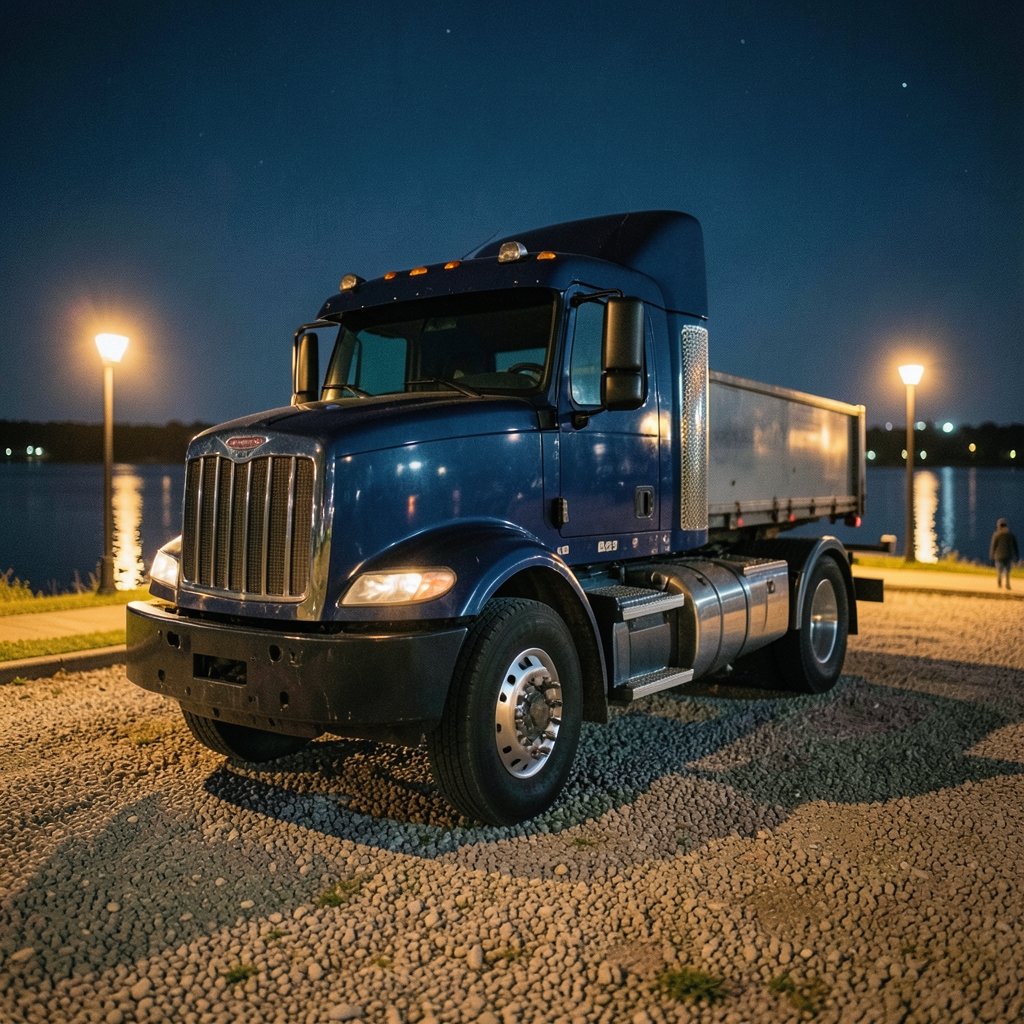
What makes a truck worth buying twice? For a surprising number of North American fleets, the answer is the Kenworth T680. Since 2012, this on-highway tractor has quietly become one of the highest-volume Class 8 trucks on the continent, and it did so without the flashy redesigns some rivals lean on. Instead, it earned its place through aerodynamics, fuel economy, and a spec sheet flexible enough to cover everything from regional day-cab runs to long-haul sleeper work.
This article breaks down what the T680 is, how it has evolved, where it falls short, and what buyers should check before signing. Whether you are spec’ing a new tractor or shopping the used market, the details below are the ones that actually matter.
What the Kenworth T680 Is and Why It Matters
The Kenworth T680 launched in 2012 as the company’s new on-highway flagship, replacing the long-serving T660. The American Trucking Associations’ industry press named it the 2013 Heavy Duty Truck of the Year, a signal that the truck’s design philosophy had reached fleet buyers as well as brochure writers.
That philosophy was simple: cut drag, save fuel. The cab shape, chassis fairings, and overall profile were designed to reduce aerodynamic drag compared with the T660. Kenworth claimed meaningful fuel-economy gains at launch, though independent figures vary widely by spec and duty cycle. That caveat matters. A truck running 80,000 pounds across the plains at 65 mph will post very different numbers than a regional hauler doing short hops with frequent stops.
What the T680 is not is a niche truck. It is a workhorse aimed squarely at the mainstream on-highway market, and its sales volume reflects that. Large fleets buy it in bulk because it is familiar, serviceable, and reasonably efficient. Owner-operators buy it because it can be spec’d to feel like a much more expensive truck.
Design and Aerodynamics: Where the Savings Come From

Aerodynamics is where the T680’s story starts, and it is worth understanding why. At highway speed, a large share of a tractor-trailer’s fuel burn goes into pushing air out of the way. Small reductions in drag compound over hundreds of thousands of miles.
The T680’s cab and fairings were shaped with that in mind. The result is a truck that looks smooth and rounded rather than boxy, and that shape is functional, not cosmetic. Buyers who pair the tractor with well-matched trailer skirts and gap fairings tend to see the biggest real-world gains. Buyers who bolt on accessories without thinking about airflow often wonder why their numbers do not match the marketing.
A practical tip from the shop floor: aerodynamic packages only pay off if they stay intact. Missing fairing panels, torn cab extenders, and bent bumper corners are common on used trucks and quietly cost fuel every mile. Inspect them closely before purchase. If you enjoy digging into how condition and small details drive value in other collectible categories, the same logic applies to coins that are worth money and what actually drives their value — condition is everything, and the same holds for a used tractor.
Powertrain and Spec Options
The T680 has been offered primarily with PACCAR MX-13 and MX-11 diesel engines, and historically with Cummins ISX15 and X15 engines as well. Transmissions are typically Eaton/Fuller or PACCAR automated manual units, which have become the default choice for fleets watching fuel and clutch costs.
Engine availability has changed across model years, and this is one of the biggest traps for used buyers. A truck listed as a “T680” could have any of several engines depending on its build year and original spec. Always verify the actual engine, rating, and transmission against the truck’s documentation rather than trusting a listing headline.
| Configuration | Typical Use | Notes |
|---|---|---|
| Day cab | Regional haul, short routes | Lightest spec, best payload flexibility |
| 52-inch mid-roof sleeper | Regional and shorter overnights | Balance of comfort and weight |
| 76-inch sleeper | Long haul | Most living space, higher weight |
Automated manual transmissions deserve a mention because they change the ownership experience. They reduce driver fatigue, protect the clutch, and usually deliver steadier fuel numbers than an inexperienced manual driver. The trade-off is repair complexity and cost when something fails. Fleets accept that trade readily. Small operators should budget for it.
Body Configurations: Picking the Right Cab
The three main configurations above cover most of the market, and choosing among them is mostly about duty cycle rather than preference.
Day cabs suit regional work where the driver goes home at night. They are lighter and cheaper, and the lack of a sleeper removes weight that could otherwise go into freight. The 52-inch mid-roof sleeper is the compromise choice, offering a place to rest on occasional overnights without the full weight and cost of a large bunk. The 76-inch sleeper is the long-haul standard, with the most living space and the highest curb weight.
A common mistake is over-buying the cab. A regional fleet that specs 76-inch sleepers “just in case” pays for weight and cost on every mile without using the space. The reverse mistake is just as common: an owner-operator who buys a day cab to save money and then discovers that occasional overnight runs are miserable. Match the cab to the actual work, not to the work you imagine.
Zero-Emission and SuperTruck Variants
Kenworth has developed battery-electric and hydrogen fuel-cell versions of the T680, including the T680E battery-electric model and fuel-cell prototypes tied to the U.S. Department of Energy’s SuperTruck programs. PACCAR participated in SuperTruck I (roughly 2010 to 2016) and SuperTruck II (roughly 2016 to 2021), demonstrating Class 8 tractor efficiency gains; the T680 platform was used in related demonstrators.
Two cautions here. First, production availability and volumes for electric variants have been limited and have shifted over time, so anyone quoting current availability should be verified against manufacturer documentation rather than older press releases. Second, SuperTruck demonstrators are research vehicles, not showroom trucks. The technologies they proved often trickle into production slowly and in modified form. Treat announcements with interest but confirm what you can actually order.
Regulatory Context Buyers Should Know
Class 8 tractor fuel economy and emissions are governed by U.S. EPA and NHTSA Phase 2 greenhouse-gas standards for heavy-duty vehicles, finalized in 2016 with later revisions. This matters to buyers for a practical reason: it shapes what manufacturers build and what engines and configurations remain available in any given year.
When a manufacturer claims a fuel-economy improvement, read it against those standards and against your own duty cycle. A percentage gain measured on a test cycle does not automatically translate to your route. The same skepticism is healthy when evaluating any subscription or purchase decision; if you want a model for weighing claimed value against real-world use, this breakdown of whether ChatGPT Plus is worth it in 2026 walks through the math honestly.
What the T680 Costs to Own
Purchase price varies enormously with age, mileage, engine, and cab. Rather than quote figures that go stale, focus on the ownership buckets that actually move the needle:
- Fuel. The largest variable cost. Aerodynamic condition and driving style matter more than badge.
- Maintenance. Automated manual transmissions and modern emissions systems require specialized service. Budget for it.
- Downtime. Parts availability is generally good given the truck’s volume, which is a genuine advantage over low-volume models.
- Resale. High-volume trucks have predictable resale. That cuts both ways: easy to sell, but not scarce.
The volume advantage is real and underrated. A truck that every dealer and independent shop has seen before gets diagnosed faster. That is worth money on a bad Tuesday in February.
Common Mistakes When Buying a Used T680
Used shopping is where most buyers get hurt, and the mistakes repeat.
- Trusting the listing’s engine description. Verify the serial number and build sheet.
- Skipping the aerodynamic inspection. Missing fairings are expensive to replace and cost fuel immediately.
- Ignoring service history on the aftertreatment system. Emissions repairs are among the costliest surprises.
- Buying the wrong cab for the duty cycle. Covered above, and still the most common error.
- Overlooking tire and wheel spec. Wide-base versus duals changes weight, fuel, and replacement cost.
For buyers who enjoy the hunt for hidden value in overlooked places, the mindset is similar to searching for pennies worth money hiding in plain sight — the treasure is real, but only for people who know exactly what to look for and check carefully.
How the T680 Compares in Practice
The T680 competes in the most crowded segment of the North American market. Its strengths are aerodynamic efficiency, broad spec flexibility, strong parts availability, and predictable resale. Its weaknesses are a cabin that some drivers find less comfortable than premium rivals, repair complexity on modern emissions and transmission systems, and the fact that its ubiquity makes it less distinctive.
For fleets, ubiquity is a feature. For owner-operators who want to stand out, it is not. Neither view is wrong; they are different businesses.
Conclusion
The Kenworth T680 has earned its place through consistency rather than spectacle. It is aerodynamic where it counts, flexible enough to cover regional and long-haul work, and common enough that service and parts are rarely a crisis. Its weaknesses are the ordinary weaknesses of modern Class 8 trucks: complex emissions systems, expensive automated transmissions, and repair bills that sting.
Buyers who match the cab and engine to their actual duty cycle, verify specs rather than trusting listings, and inspect aerodynamic condition carefully will get a truck that does exactly what it promises. Buyers who skip those steps will join a long line of people who learned an expensive lesson. The T680 rewards preparation, and that is a fair standard for any truck.
Frequently Asked Questions
When was the Kenworth T680 introduced?
The T680 launched in 2012 as Kenworth’s new on-highway flagship, replacing the T660. It was named the 2013 Heavy Duty Truck of the Year by the American Trucking Associations’ industry press.
What engines does the Kenworth T680 use?
It has been offered primarily with PACCAR MX-13 and MX-11 diesel engines, and historically with Cummins ISX15 and X15 engines. Availability has changed across model years, so buyers should verify the actual engine against the truck’s build documentation rather than a listing description.
What cab configurations are available?
The main options are a day cab, a 52-inch mid-roof sleeper, and a 76-inch sleeper. Day cabs suit regional work, the mid-roof sleeper handles occasional overnights, and the 76-inch sleeper is the long-haul standard.
Does Kenworth make an electric T680?
Kenworth has developed battery-electric and hydrogen fuel-cell versions, including the T680E and fuel-cell prototypes tied to the Department of Energy’s SuperTruck programs. Production availability and volumes have been limited and have shifted over time, so current status should be confirmed with the manufacturer.
Is the T680 good for owner-operators?
It can be, especially with a well-chosen sleeper and engine spec. The main cautions are repair costs on modern emissions and transmission systems, and the fact that the truck’s ubiquity means it will not stand out. Fleets value that familiarity; solo operators may not.
What should I check before buying a used T680?
Verify the engine and transmission against the build sheet, inspect all aerodynamic fairings and cab extenders for damage, review service history on the aftertreatment system, confirm the cab matches your duty cycle, and check tire and wheel spec. These checks catch most of the expensive surprises.



