

What actually fits in a mini tote bag, and why do so many shoppers end up disappointed when theirs arrives? The answer sits in a gap most buyers never notice until the box is open. The label says “mini,” but no rulebook defines what that means. One brand’s mini is another brand’s everyday carry. That single fact explains most of the confusion, returns, and regret that surround this category. (Mini led blooming subtitles actually reduces halo)
This guide looks at the mini tote as a real object: where the format came from, how big it usually is, what it holds, which materials hold up, and the mistakes that trip up even careful shoppers. No hype, no trend-chasing. Just the practical picture. (Evercade nexus vs retroid pocket 6 vs miyoo mini plus which)
Where the tote bag came from, and how “mini” joined the family
The word tote entered English in the 17th century from an African language, often traced to the Kikongo word tota, meaning “to pick up.” It started life as a verb, meaning to carry. The noun, describing a large open bag, only arrived in the 20th century.
The canvas tote most people picture today has a tidy origin story. A well-known American outdoor retailer introduced its canvas boat tote in 1944, adapted from a design used for hauling ice. That design became the template for the modern canvas carry-all. Treat the date as solid, but remember it comes from company history, so it doubles as marketing.
The bigger shift came much later. Reusable bags spread widely after plastic-bag restrictions took effect. Ireland’s 2002 plastic bag levy, charged per bag at checkout, is the standard early example, and many jurisdictions followed through the 2010s. The tote then became both a bag and a statement about how you shop.
The mini tote is the newest chapter. Its 2020s popularity is widely tied to the broader small-bag trend and to luxury houses selling scaled-down versions of their signature totes. Be careful with sales claims here. Specific figures are rarely public, and trend reporting is hard to verify rigorously. What is clear is that the format moved from novelty to mainstream in a few short years.
What “mini” actually means (spoiler: nothing official)
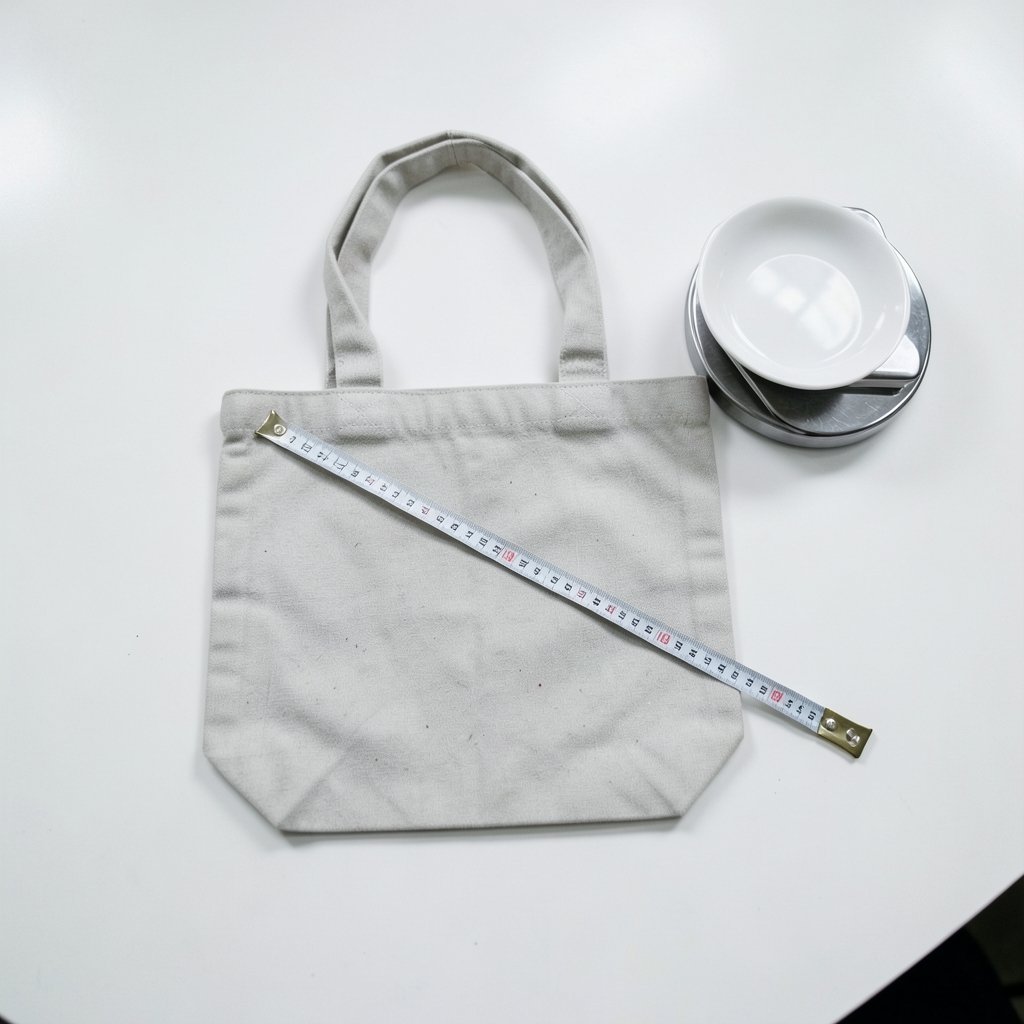
Here is the fact that saves the most money: “mini tote” is a size descriptor, not a standardized category. No industry body or standards organization defines a mini tote’s dimensions. Retail listings typically cluster somewhere around 20 to 30 cm in width, but that is a marketing convention, not a specification.
That matters because bag dimensions and capacity are not regulated consumer information in most markets. Compare that to food, where weights are checked and labeled to a standard. A bag listing can say “mini” and mean almost anything. Buyers who rely on listed dimensions should expect inconsistency between brands, and sometimes between colorways of the same brand.
What actually works in practice is ignoring the label and reading three numbers: width, height, and depth. Then check the handle drop, which is the clearance between the top of the bag and the handle’s peak. A mini tote with a short drop will not fit over a coat shoulder, no matter how roomy the body is.
A useful habit is to measure a bag you already carry and like. Write down its dimensions. Then compare every listing against that number, not against the word “mini.” Shoppers who do this rarely get surprised.
A realistic size map for mini totes
Because there is no official standard, the table below reflects common retail patterns rather than a specification. Use it as a rough orientation, then verify against actual measurements.
| Common label | Typical width range | What it usually holds | Watch out for |
|---|---|---|---|
| Micro or nano tote | Under 20 cm | Phone, cards, keys, lip balm | Will not fit a wallet or sunglasses case |
| Mini tote | Roughly 20 to 30 cm | Phone, small wallet, keys, compact pouch, folded scarf | Tight fit for a full-size wallet or water bottle |
| Small tote | Roughly 30 to 38 cm | Tablet, paperback, pouch, small bottle | Often confused with “mini” in listings |
| Standard tote | Over 38 cm | Laptop, groceries, gym kit | Bulkier than many people want daily |
The overlap zone is where returns happen. A 29 cm bag and a 31 cm bag can carry very different loads, yet both may be sold as “mini.” If a listing gives only one dimension, ask for the rest before buying.
What actually fits, and what does not
Most mini totes handle the essentials well: a phone, a cardholder or slim wallet, keys, and a small pouch for lip balm and hand sanitizer. Add a folded tote or scarf and you are usually still fine.
The trouble starts with items people assume will fit. A full-size continental wallet is often too wide. A standard water bottle is too tall for most mini bodies, and laying it sideways eats the whole bag. Sunglasses need a hard case, which takes up more room than the glasses themselves. A tablet is out unless the bag leans toward the small-tote end of the range.
A practical tip from everyday use: pack the bag as if you were leaving the house, then remove one item. Mini totes work best when they carry a deliberate, edited load. They are not smaller versions of a work bag, and treating them that way leads to the classic complaint that the bag “looks bigger online.”
Another mistake is judging capacity by the bag’s height alone. Depth is the quiet hero. A mini tote with 10 cm of depth swallows a pouch easily, while a slim 4 cm version holds the same pouch only if nothing else goes in.
Materials: what holds up and what quietly fails
Canvas dominates the category, and for good reason. It is sturdy, washable, and ages honestly. But “canvas” covers a wide range. Fabric weight is commonly given in ounces per square yard in the US and grams per square meter elsewhere, and there is no universal threshold for “heavyweight.” A higher number generally means a denser, stiffer cloth. Very light canvas can sag and wear at the handle seams first.
Other common materials each have a trade-off. Coated canvas resists rain but can crack at fold points over time. Nylon is light and strong but looks casual. Leather holds shape and improves with age but adds weight, which matters more on a small bag than people expect. Woven straw and raffia suit summer but rarely survive a downpour.
Construction details deserve more attention than the material label. Check the stitching where the handles meet the body, since that is where mini totes fail first. Look for bar tacks or reinforced stitching at those joints. A lined interior protects the contents and hides raw seams. Metal feet are nice but rare at this size.
One more note on sustainability. Reusable bags need many uses before they beat single-use bags on environmental impact. Research on carrier bags has found that cotton bags need on the order of a hundred or more reuses to match a conventional plastic bag on some measures, though figures vary by study and method. The takeaway is simple: a mini tote you actually carry every day earns its keep. One that sits in a drawer does not. (Best mini pcs 2026 actually matters before you buy 2)
How to choose one without regret
A short, practical sequence beats browsing by vibes:
- Measure a bag you already like and note width, height, depth, and handle drop.
- List the five items you carry daily, then check each against the bag’s real dimensions.
- Decide the carry style first: hand carry, wrist, shoulder, or crossbody. Each demands a different handle setup.
- Read the material weight or composition, and check the handle attachment stitching in photos.
- Confirm the return window before ordering, since size surprises are common.
- Consider the color and finish last. It is the easiest thing to get right and the least likely to cause a return.
If the bag will live in a larger work bag as an organizer, prioritize a flat base and a wide opening. If it is a standalone bag for evenings, prioritize a secure closure over capacity. Those two use cases pull in opposite directions, and knowing which one you need solves most of the decision.
Mini tote vs. the alternatives
The mini tote is not always the right answer, and comparing it honestly helps.
| Option | Strength | Weakness | Best for |
|---|---|---|---|
| Mini tote | Light, open, easy access, holds shape | Limited capacity, often open-topped | Daily essentials, short trips, evenings |
| Crossbody bag | Hands-free, secure closure | Can feel bulky against the body | Commuting, travel, crowded spaces |
| Belt bag | Truly hands-free, close to the body | Small capacity, casual look | Errands, walks, festivals |
| Standard tote | Huge capacity, versatile | Heavy when full, less secure | Work, shopping, carrying gear |
The mini tote’s real advantage is speed. Open top, one compartment, grab and go. Its real weakness is the same thing: an open top and no structure to hide behind. If security matters, look for a zip or a flap.
Common mistakes that lead to returns
The most frequent error is buying by label instead of measurement. The second is assuming a mini tote will replace a purse and a work bag at once. It will not. The third is underestimating weight. Leather mini totes can weigh nearly as much empty as a full nylon bag, and on a small format that difference is felt all day.
Another quiet mistake is ignoring the strap or handle drop. A bag that only hand-carries is fine until you need both hands. Shoppers who plan for one carry style and then need another tend to leave the bag at home.
Finally, there is the care question. Canvas usually tolerates gentle washing, but coated fabrics and structured leather do not. Check care instructions before the first spill, not after. A mini tote that cannot be cleaned will age faster than one that can.
Conclusion
The mini tote is a genuinely useful format wrapped in a vague label. Its history runs from a 17th-century verb meaning to carry, through a 1944 canvas design built for ice, to a 2020s staple of the small-bag era. But the word “mini” has never been defined by anyone with authority, and that is the single most useful thing to know before buying.
Measure first. Compare against a bag you already own. Check the handle drop, the depth, and the stitching at the handle joints. Decide whether the bag is a standalone carry or an organizer inside something bigger. Do those four things and the size label stops mattering, because you will be shopping with numbers instead of adjectives. A good mini tote is not the smallest bag you can find. It is the smallest bag that still carries what you actually use.
Frequently asked questions
What size is a mini tote bag?
There is no official definition. Retail listings typically cluster around 20 to 30 cm in width, but this is a marketing convention rather than a standard. Always check the listed width, height, and depth, and compare them against a bag you already own.
What can you fit in a mini tote bag?
Most hold a phone, a slim wallet or cardholder, keys, and a small pouch for lip balm and sanitizer. A full-size wallet, a tall water bottle, or a tablet usually will not fit comfortably. Depth matters as much as width when judging capacity.
Is a mini tote bag practical for everyday use?
Yes, if the load is edited. Mini totes suit short trips, errands, and evenings. They work less well as a sole bag for commuters who carry a laptop, a bottle, and lunch. Many people use one alongside a larger work bag.
Why do mini totes look bigger online than in person?
Product photos often lack a scale reference, and the word “mini” sets no expectation. Listings that show only one dimension make it worse. Compare the stated measurements to a bag you own, and check the return policy before ordering.
What material is best for a mini tote bag?
Canvas is the most common choice because it is sturdy and washable. Nylon is lighter, leather holds shape but adds weight, and coated fabrics resist rain but can crack at folds. Check the stitching where the handles attach, since that is where bags fail first.
Are mini totes a lasting style or a passing trend?
The format grew quickly in the 2020s alongside the broader small-bag trend, and trend claims are hard to verify with hard data. The safer measure is usefulness: a mini tote that fits your daily essentials and suits your carry style tends to stay in rotation regardless of fashion cycles.



