
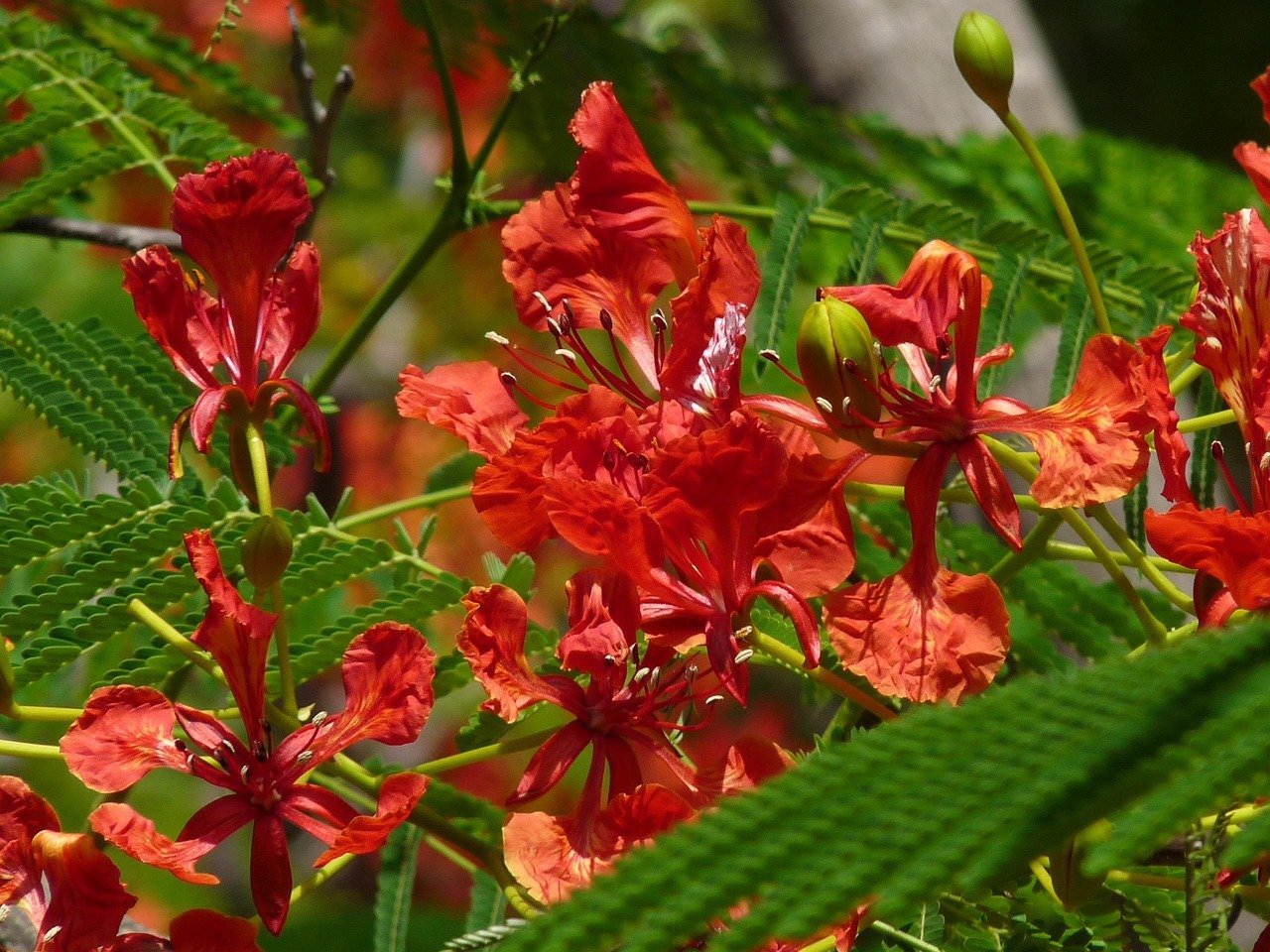
What makes a flowering shrub so beloved that an entire island claims it as a national symbol? For Pride of Barbados, the answer sits right in the blooms. Few garden plants deliver that level of color, heat tolerance, and pollinator traffic in a single package. This guide covers what the plant actually is, how to grow it well, the mistakes that trip up new growers, and the honest limits of its cold hardiness.
What Is Pride of Barbados?
Pride of Barbados is the common name for Caesalpinia pulcherrima, a flowering shrub in the legume family, Fabaceae. It also goes by peacock flower, red bird of paradise, dwarf poinciana, and, in French-speaking regions, flamboyant-de-jardin.
The plant grows roughly 1.5 to 3 meters tall, or about 5 to 10 feet. Its leaves are bipinnate, meaning each leaf divides twice into fine, fern-like leaflets. The flowers form in terminal racemes, with red, orange, and yellow petals and long stamens that protrude well past the petals. A yellow-flowered form is commonly sold as a cultivar.
One naming caution matters here. Pride of Barbados is not the same plant as Delonix regia, the flamboyant or flame tree, and it is not Erythrostemon gilliesii, the yellow bird of paradise. The shared common names cause real confusion at nurseries, so check the botanical name on the tag before buying.
Where Does Pride of Barbados Come From?
The plant is native to the West Indies, including Barbados, and to tropical America. It is now widely cultivated and has naturalized across tropical and subtropical regions worldwide. Gardeners should treat “native to the Caribbean” as the common claim rather than a settled fact, since the exact native range is still debated in the botanical literature.
Its national flower status in Barbados is widely reported and frequently repeated in travel and horticulture writing. Anyone citing this formally should confirm it against an official government or tourism source.
Why Growers Choose It
The plant earns its place in hot-climate gardens for practical reasons rather than appearance alone.
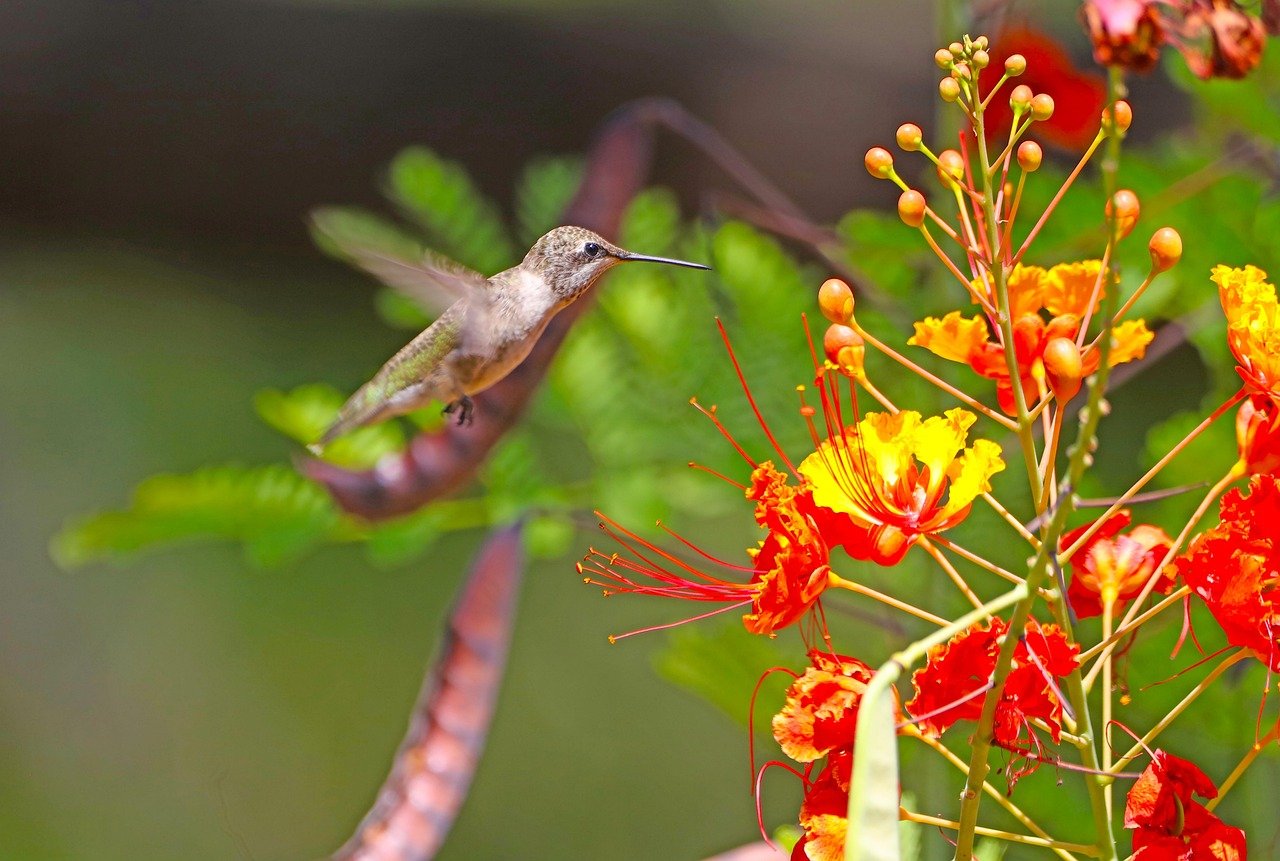
It thrives in full sun and well-drained soil. Once established, it is drought-tolerant, which makes it a sensible pick for water-wise landscapes. The flowers draw hummingbirds and butterflies, so it functions as a pollinator plant as well as an ornamental. And because it blooms over a long season in warm weather, it delivers color when many other shrubs have finished.
For anyone building a warm-climate garden from scratch, the plant fits naturally into a broader plan. A ride bike step by step guide that actually works is a strange comparison on the surface, but the underlying lesson is the same: steady, sequenced effort beats guesswork. The same principle applies to establishing a tropical shrub bed, where soil prep and sun placement decide the outcome more than any single purchase.
Hardiness: What the Zones Really Mean
Hardiness ratings for Pride of Barbados vary by source, which is worth knowing before you plan around them. Most references place it in USDA zones 9 to 11, while some say 8 to 11. Treat any specific zone number as approximate.
In practice, the plant is damaged or killed by frost in colder zones. Gardeners in those areas usually grow it as an annual or keep it in a container that moves indoors for winter. In marginal zones, a hard freeze can kill the top growth while the roots survive, and the plant may regrow from the base in spring.
| Growing Situation | Typical Approach | What to Expect |
|---|---|---|
| Zone 10 to 11 | Plant in ground, year-round | Reliable perennial shrub, long bloom season |
| Zone 9 | In ground with frost protection | May die back in cold snaps, regrows from base |
| Zone 8 and colder | Container or annual | Treat as seasonal color, overwinter indoors |
| Any zone, poor drainage | Amend soil or use raised bed | Root rot risk, stunted growth |
How to Plant and Grow It
Getting Pride of Barbados off to a strong start comes down to a short list of steps.
- Pick the hottest spot you have. Full sun is non-negotiable for good bloom. Half-day shade produces a leggy plant with sparse flowers.
- Check drainage before planting. Dig a hole, fill it with water, and see how fast it drains. If water sits for hours, plant in a raised bed or a container instead.
- Amend only if needed. The plant tolerates lean, sandy soil. Heavy clay is the real problem, so break it up and add grit or organic matter to improve flow.
- Plant at the same depth as the nursery pot. Do not bury the crown, which invites rot.
- Water deeply but infrequently after establishment. New plants need regular water for the first season. After that, cut back and let the soil dry between waterings.
- Fertilize lightly. Too much nitrogen pushes leafy growth at the expense of flowers. A light feeding in spring is usually enough.
- Prune in late winter or early spring. Cut back dead wood and shape the shrub before new growth starts. Light pruning after a flush of bloom can encourage another round.
Container Growing
For colder zones, a large container with drainage holes is the practical route. Use a gritty, fast-draining mix, water when the top inch dries, and move the pot indoors before the first frost. A sunny window or a cool garage with bright light usually carries the plant through winter. Expect some leaf drop indoors; that is normal, not a sign of failure.
Common Mistakes That Actually Matter
Most failures with this plant trace back to a handful of avoidable errors.
Planting in wet soil. This is the big one. Pride of Barbados tolerates drought far better than soggy roots. Gardeners who treat it like a moisture-loving tropical shrub often watch it decline within weeks.
Overwatering in containers. Container plants need drainage, and saucers that hold standing water defeat the purpose. Empty saucers after rain.
Choosing the wrong plant at the nursery. Because common names overlap, buyers sometimes bring home a flame tree or a different bird of paradise. Check the botanical name.
Expecting cold hardiness beyond the plant’s range. If you garden in zone 7, plan for container culture from day one rather than hoping for a miracle.
Overfeeding. Rich soil and heavy fertilizer produce a big, soft plant with fewer flowers and more frost damage.
Ignoring toxicity. Seeds and other parts of the plant are reported toxic if ingested. Keep it away from pets and small children who mouth plants, and do not assume any part is edible because it sits in a legume family. Anyone with a specific concern should check with a poison control center or a local extension office.
A Note on Traditional and Medicinal Claims
Pride of Barbados has a history of use in traditional medicine in parts of the tropics, and pharmacological studies on the plant exist. That said, the research is preliminary. Claims about treating specific conditions should be treated with caution, and no one should use a garden shrub as a substitute for medical care. The plant is best appreciated as an ornamental and a pollinator magnet, not as a home remedy.
Designing With Pride of Barbados
The plant works well as a specimen shrub at the back of a border, where its height and long bloom season anchor the bed. It also pairs well with other heat lovers: succulents, ornamental grasses, and low-water perennials that share its sun and drainage needs.
Because it attracts hummingbirds and butterflies, placing it near a seating area or a window pays off. The movement and color are the point as much as the flowers themselves.
For gardeners who like a project with visible progress, growing this shrub rewards patience in the same way any skill-building plan does. Following a structured approach, much like a step by step guide, keeps the early decisions in the right order: sun first, drainage second, water discipline third.
Pests and Problems to Watch
Pride of Barbados is generally tough, but a few issues show up.
Spider mites can build up in dry indoor conditions during winter. Watch for stippled leaves and fine webbing, and rinse the plant or raise humidity.
Aphids occasionally cluster on new growth. A strong water spray usually handles light infestations.
Root rot from poor drainage is the most serious problem and the most preventable. Yellowing leaves combined with wet soil point to it.
Frost damage shows as blackened, mushy top growth after a cold night. Wait until spring to prune, since dead stems can protect the living tissue below.
Frequently Asked Questions
Is Pride of Barbados a tree or a shrub?
It is generally grown as a shrub, reaching about 5 to 10 feet tall. In frost-free climates it can develop a more tree-like shape over time, but most gardeners treat it as a large shrub or a container plant.
Is Pride of Barbados toxic to pets?
Seeds and other parts of the plant are reported toxic if ingested, so it is not for human or pet consumption. Keep it out of reach of animals and children who chew plants, and consult a veterinarian or poison control if ingestion happens.
Can Pride of Barbados grow in cold climates?
Only with help. The plant is damaged or killed by frost and is typically rated for zones 9 to 11, with some sources saying 8 to 11. In colder areas, grow it as an annual or in a container that moves indoors for winter.
How much sun does Pride of Barbados need?
Full sun. A spot with six or more hours of direct light produces the best bloom. Shade leads to leggy growth and few flowers.
Does Pride of Barbados need a lot of water?
No. Once established, it is drought-tolerant and prefers soil that dries between waterings. New plants need regular water for the first season, and container plants need more attention than those in the ground.
What is the difference between Pride of Barbados and the flamboyant tree?
They are different plants that share confusing common names. Pride of Barbados is Caesalpinia pulcherrima, a shrub with red, orange, and yellow flowers. The flamboyant or flame tree is Delonix regia, a much larger tree. Always check the botanical name on the plant tag.
Conclusion
Pride of Barbados earns its dramatic name. A shrub that grows fast, blooms over a long season, shrugs off heat and drought, and pulls hummingbirds and butterflies into the garden is a rare combination. The catch is simple: it needs sun and drainage, and it will not survive hard frost without protection.
Get those two basics right and the plant largely takes care of itself. Watch the botanical name when buying, respect the zone limits, keep it away from pets and curious kids, and treat the medicinal claims with the caution they deserve. Do that, and this Caribbean native will reward you with one of the brightest displays a warm-climate garden can offer.
For readers still deciding, the simplest test is local: ask a nearby nursery or extension office whether the shrub overwinters in your area, and let that answer guide whether you plant in ground or in a pot. Either way, the plant asks little beyond the basics covered here, and it delivers color through the hottest stretch of the year when much of the garden flags. Start with one plant, learn how it responds to your site, and adjust from there. That approach turns a striking tropical into a dependable part of the landscape rather than a seasonal gamble.



