
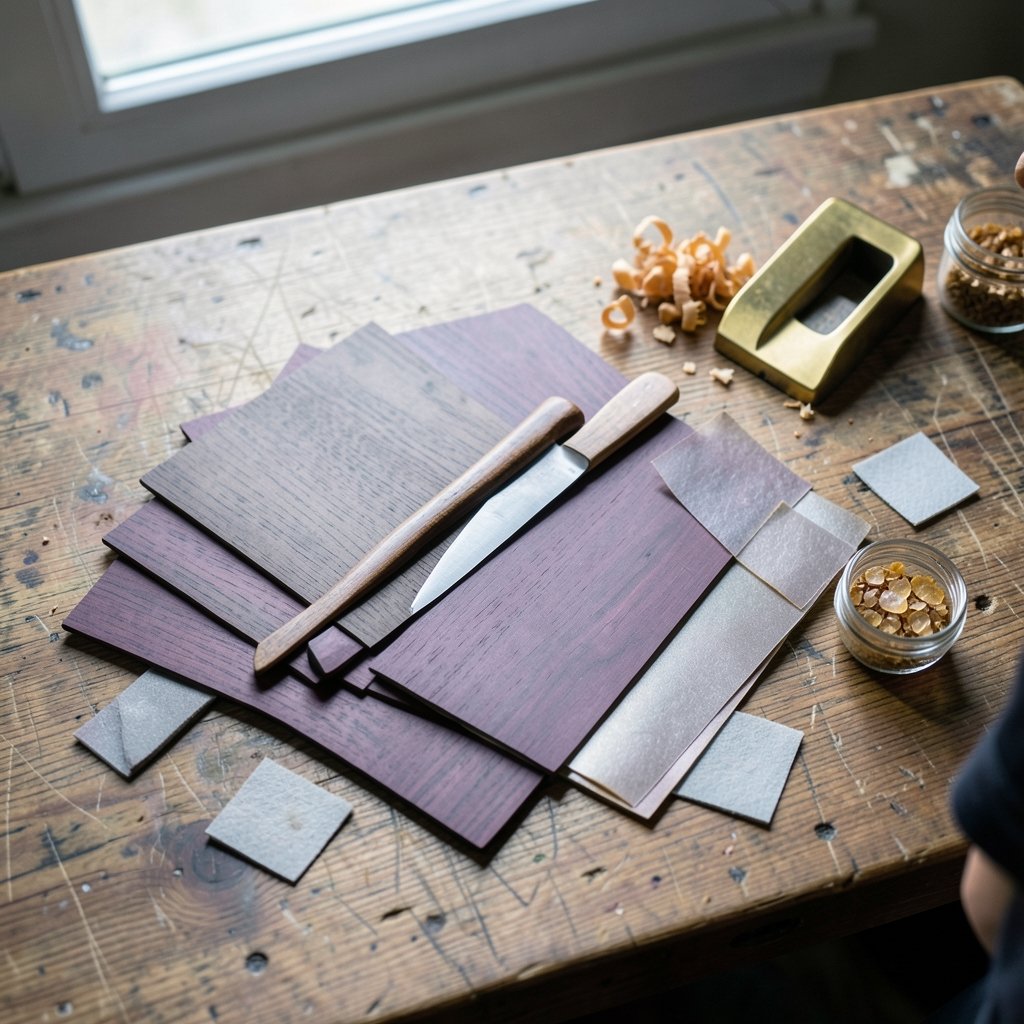
What if a piece of wood could change color before your eyes? Purple heart wood does exactly that. When a logger slices into a Peltogyne tree deep in the Amazon basin, the fresh heartwood looks dull grayish-brown, almost disappointing. Then light and air go to work. Within hours to days, that drab board turns a vivid violet that few woods on Earth can match. That trick of chemistry is why purpleheart shows up in high-end furniture, knife handles, guitar tops, and inlay work. It is also why plenty of woodworkers end up frustrated when their prized purple board slowly drifts toward brown a few years later. This guide covers what purple heart wood actually is, how it behaves in the shop, what it costs you in tool wear, and how to keep the color alive as long as possible.
What Is Purple Heart Wood?
Purpleheart is the commercial name for timber from trees in the genus Peltogyne, a group of flowering trees in the legume family, Fabaceae. The trees grow across tropical Central and South America, mostly in the Amazon basin. Loggers and sawyers often call the wood amaranth, violetwood, or pau roxo, but purpleheart is the name that stuck in the lumber trade.
The purple color is not a stain, dye, or finish. It comes from natural extractives inside the heartwood itself. When the tree is alive, those compounds sit quietly in the wood cells. Once the tree is cut and the wood meets oxygen and ultraviolet light, a chemical reaction kicks off and the purple develops. Freshly milled boards can look almost muddy. Give them a few days of daylight and the color arrives.
One naming caution worth repeating: purpleheart the wood has nothing to do with the Purple Heart military medal. They share a name and nothing else. When shopping or researching, anchor yourself to the botanical name Peltogyne so you know exactly what you are buying.
The Science Behind the Violet Color
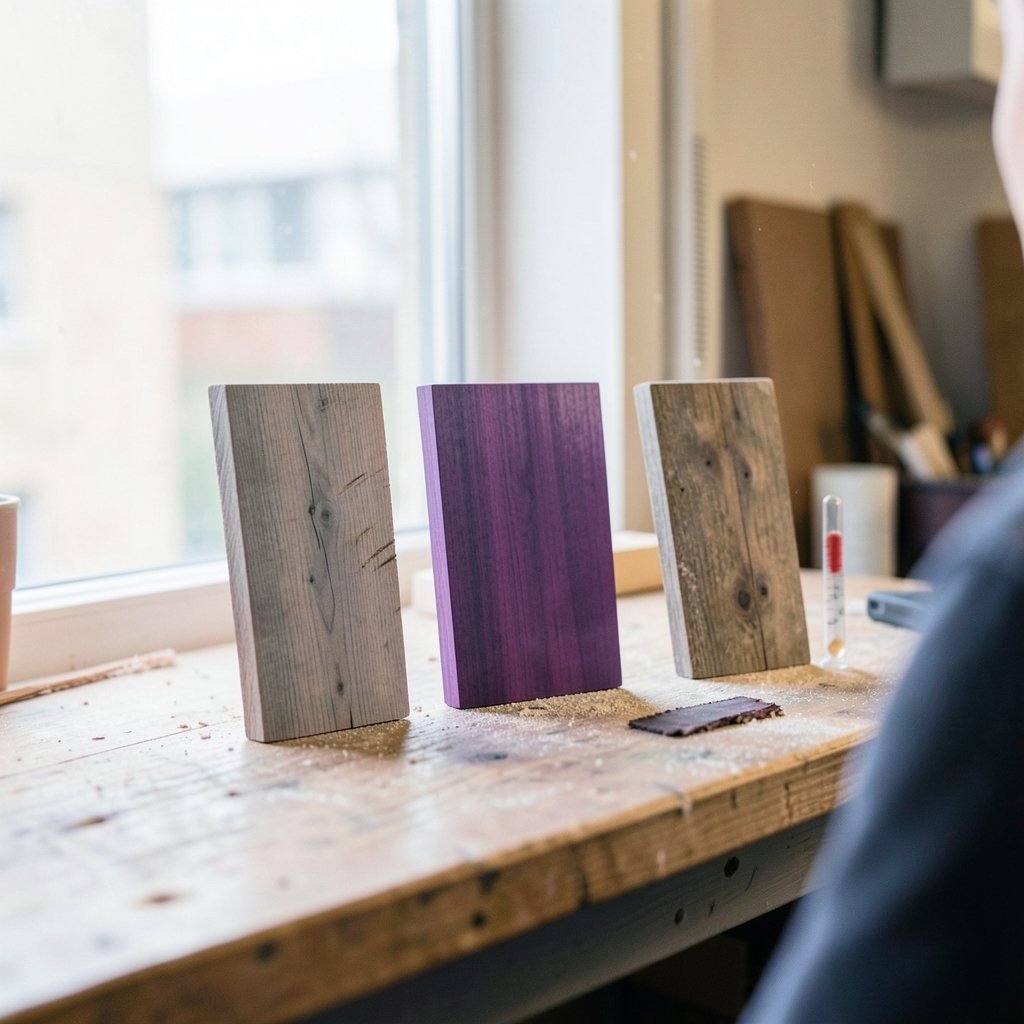
The color story has three acts, and understanding them explains almost every complaint woodworkers have about this species.
Act one: the cut. A freshly sawn purpleheart board is grayish-brown. The extractives responsible for color are still in their reduced state.
Act two: the bloom. Exposure to light and air oxidizes those extractives, and the wood flushes purple. This can take anywhere from a few hours to a couple of weeks depending on light intensity and how thick the piece is. A board left in a dark stack may barely shift at all.
Act three: the fade. Over months and years, UV exposure gradually pushes the purple toward brown or gray. This fade is widely reported by woodworkers and wood reference sites, though there is no single peer-reviewed study that pins down an exact rate. Treat the fade as a well-attested pattern rather than a measured number.
That third act is the one people underestimate. A purpleheart table left beside a south-facing window will not stay purple forever. It will still look handsome, but it will look brownish-purple, then brown with a purple memory. If you want lasting violet, plan for UV protection from day one.
Density, Hardness, and Working Properties
Purpleheart is a dense, heavy hardwood. Reference figures commonly cited put its specific gravity around 0.80 (basic) and its Janka hardness around 1,860 lbf, roughly 8,270 N. Those numbers come from hobbyist and reference databases rather than a standards body, and they vary somewhat depending on which Peltogyne species was tested, so treat them as good working estimates rather than gospel.
| Property | Typical figure | What it means in the shop |
|---|---|---|
| Specific gravity | ~0.80 (basic) | Heavy, sinks in water, dense feel |
| Janka hardness | ~1,860 lbf (~8,270 N) | Hard on edges, resists dents |
| Color | Grayish-brown fresh, purple after oxidation | Plan projects around the color shift |
| Grain | Usually straight, sometimes interlocked | Interlocked grain invites tearout |
| Common uses | Furniture, flooring, inlays, turnery, veneer | Decorative work where color is the point |
In practice, purpleheart is hard on tools. Planes and chisels dull faster than they would in walnut or cherry, and sharp edges matter more than usual. The grain is often straight, which helps, but interlocked sections are common and those are where tearout appears. A sharp, high-angle plane and light passes will save you a lot of sanding. Speaking of sanding, purpleheart dust is fine and can irritate skin and lungs, so a mask and good extraction are not optional.
One quirk worth knowing: the wood can be surprisingly springy and flexible for something so dense, which is part of why it turns up in archery bows and tool handles. It also glues and finishes reasonably well once you account for its density. Oily extractives are not a major problem here, but a wipe-down with solvent before finishing never hurts.
Where Purple Heart Wood Comes From and How It Is Traded
Peltogyne trees grow in tropical forests across northern South America, with Brazil, Suriname, and Guyana among the notable sources. The trees are large, and the heartwood is the prize; the paler sapwood gets left behind or used for less demanding work.
Trade status deserves care. Several Peltogyne species appear in CITES listings, but the details vary by species and change over time, so anyone making a sourcing decision should check current listings rather than rely on a general statement. Conservation status is similarly uneven. Some species are reported as not evaluated or data-deficient, and sources disagree about how well-managed harvest is across the genus. The honest position is this: ask your supplier where the wood came from and whether the harvest was certified. Reputable dealers can answer that question. If they cannot, that tells you something too.
Practical Tips for Working With Purpleheart
Experience with this wood teaches a handful of lessons fast. Here is what actually works, and what trips people up.
- Machine and sand it early to reveal the color. Freshly cut surfaces look dull. Let a test offcut sit in daylight for a few days so you can see the real color before you commit to a design.
- Keep blades sharp and take light passes. Dense wood plus interlocked grain equals tearout. A sharp plane with a high cutting angle and shallow cuts beats force every time.
- Pre-drill every screw hole. Purpleheart splits and cracks if you drive fasteners straight in. Pilot holes are cheap insurance.
- Wear respiratory protection. The dust is fine and irritating. A proper mask and dust collection protect your lungs.
- Plan the finish around UV. This is the big one. A finish with UV inhibitors slows the fade. Some woodworkers also apply a dye or toner to boost the purple before topcoating, though that is a cosmetic choice, not a fix.
- Store boards out of direct sun. A stack of purpleheart in a bright window will change color before you ever build with it.
Common mistakes follow a pattern. People buy a board, love the color in the shop, build a piece, and place it in full sun. Six months later they are disappointed. Others skip pilot holes and split an expensive blank. A few sand too aggressively and burnish the surface, which can mute the color. Slow down, test on offcuts, and the wood rewards you.
If you enjoy matching wood species to specific jobs, the same logic that governs choosing the best wood chips for smoking different meats applies here: the material dictates the method, not the other way around. (Angels vs yankees rivalry built october heartbreak)
What Purple Heart Wood Is Used For
The wood’s combination of hardness, density, and dramatic color makes it a natural for decorative work. Common uses include:
- Furniture accents such as drawer pulls, legs, and contrasting panels
- Inlay and marquetry, where thin strips of purple set off lighter woods
- Turnery including bowls, pens, and handles
- Knife scales and tool handles, thanks to density and spring
- Flooring in high-traffic decorative settings
- Musical instrument parts and decorative veneer
The color makes it a favorite for contrast work. Pair purpleheart with maple or holly and the effect is striking. Pair it with dark walnut and the purple reads as a subtle shimmer rather than a shout. Designers who understand material character tend to get more from it, much like musicians who understand an instrument’s personality. The clarinet’s journey from a 300-year-old woodwind to a jazz orchestra star is a good reminder that the material and the maker together create the result.
How to Protect the Color Over Time
Finish choice matters more with purpleheart than with almost any other species. Here is how the options compare.
| Finish approach | Effect on purple color | Notes |
|---|---|---|
| Bare wood, no finish | Fades fastest toward brown | Only for pieces kept out of light |
| Clear oil or wax | Minimal UV protection | Easy to refresh, color fades steadily |
| Film finish with UV inhibitors | Slows fade noticeably | Best practical option for furniture |
| Dyed or toned then topcoated | Boosts purple initially | Cosmetic, needs reapplication over time |
| Kept in low light | Color holds longest | Display pieces, drawer interiors |
The takeaway is simple. If the purple matters, block UV. A quality topcoat with UV inhibitors, plus sensible placement away from direct sun, buys years of color. Nothing stops the fade completely, because the extractives will eventually oxidize past purple. But you can slow the clock considerably.
Is Purple Heart Wood Right for Your Project?
Purpleheart suits anyone who wants a hardwood with genuine visual drama and does not mind the extra care. It is not the easiest wood to work. It is heavy, hard on edges, prone to tearout in spots, and its color is a moving target. But for accents, inlays, turnings, and statement pieces, few species deliver the same punch.
Think of it as a specialist, not an all-rounder. You would not build an entire kitchen from it, but a purpleheart serving board, a set of knife scales, or a contrasting band in a tabletop makes a piece memorable. The wood rewards patience and punishes hurry, which is true of most good materials.
Conclusion
Purple heart wood is one of the more fascinating hardwoods in the trade. It arrives looking ordinary, blooms into violet through a simple oxidation reaction, and then slowly drifts toward brown as UV does its work. Between those color shifts sits a dense, heavy, hardworking timber from the Peltogyne genus, useful for furniture, inlays, turnery, and anything that needs a shot of color. Work it with sharp tools, pilot your holes, protect your lungs, and finish it with UV inhibitors. Do that, and the purple stays around long enough to earn its place in your project. The wood will not stay violet forever, but it will stay interesting.
Frequently Asked Questions About Purple Heart Wood
What is purple heart wood?
Purpleheart is the commercial name for timber from trees in the genus Peltogyne, native to tropical Central and South America, mostly the Amazon basin. The fresh heartwood looks grayish-brown and turns purple after exposure to light and air through oxidation.
Does purple heart wood stay purple forever?
No. The purple color fades gradually toward brown or gray with prolonged UV exposure. This fade is widely reported by woodworkers and wood reference sites, though no single peer-reviewed study has measured the exact rate. Finishes with UV inhibitors and placement away from direct sunlight slow the change considerably.
Is purple heart wood hard or soft?
It is a dense, heavy hardwood. Commonly cited reference figures put its specific gravity around 0.80 and its Janka hardness around 1,860 lbf, about 8,270 N. Those numbers vary by species and source, but the wood is clearly on the hard end of the scale and dulls tools faster than most domestic hardwoods.
Is purple heart wood expensive?
It costs more than common domestic hardwoods like oak or maple, largely because it is imported from tropical South America and the heartwood is the valuable portion. Prices vary by supplier, board width, and grade. Buying shorts and offcuts is a practical way to get the color for small projects without paying for a full board.
Can purple heart wood cause allergic reactions?
The fine dust can irritate skin and respiratory passages in some people. Woodworkers should wear a respirator and use dust collection when machining or sanding it. Anyone with known sensitivity to tropical hardwoods should be especially careful and test exposure on a small piece first.
Is purple heart wood sustainable?
It depends on the species and the source. Several Peltogyne species appear in CITES listings, and conservation status varies across the genus, with some species reported as not evaluated or data-deficient. The practical step is to ask your supplier for the origin and certification of the wood before buying.



