
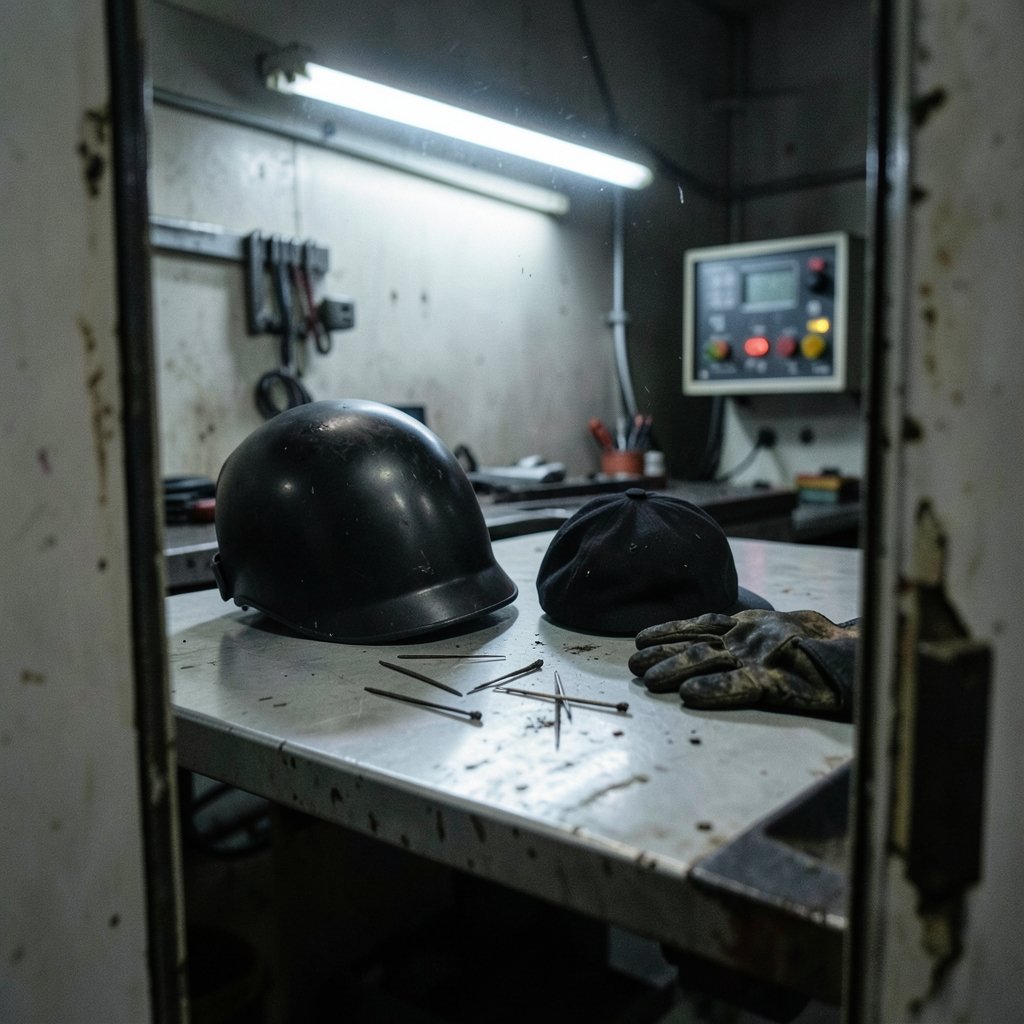
What do you grab first when you step up to a hot workbench — your helmet, or the thin cloth cap sitting underneath it? Most welders reach for the helmet. But the humble welding cap does more work than its size suggests. It soaks up sweat before it drips into your eyes, catches spatter before it lands on your scalp, and stops the helmet’s plastic headgear from grinding against your forehead after hour six. Get the cap wrong, and you’ll feel it by lunchtime.
This guide breaks down what a welding cap is, how it’s built, what it can and can’t protect you from, and how to pick one that survives real shop conditions rather than just looking good in a product photo.
What Is a Welding Cap, Exactly?
A welding cap is a close-fitting cloth head covering worn under a welding helmet. Its job is simple but important: absorb sweat, keep sparks and spatter off the scalp and hair, and add a cushioning layer between your head and the helmet’s suspension band.
It is not a helmet and not a hard hat. It’s a soft accessory — a welder’s cap, welding beanie, or welders hat, depending on who you ask. In some regions, a longer-billed version is called a pipeliners cap, a style favored by pipeline crews who want extra coverage over the ears and neck.
The design is deliberately low-profile. Anything bulky would interfere with the helmet shell or push the headgear out of adjustment. That’s why a good cap sits flat, hugs the skull, and stops just above the ears.
Why Welders Wear Them (and Why Sweat Isn’t the Only Reason)

Ask ten welders why they wear a cap and you’ll get ten answers. Sweat control tops the list. Under a helmet, heat builds fast. A cotton cap wicks moisture away from the brow, which keeps your vision clear and your focus steady.
But there’s more going on:
- Spatter protection. Small molten droplets fly farther than most people expect. A cloth layer over the scalp means fewer tiny burns and fewer singed patches of hair.
- Comfort under headgear. The suspension band on a helmet digs in over time. A cap adds a soft barrier that spreads the pressure.
- Hair and hygiene. Caps keep hair out of the way and absorb oils, which matters when you share a shop or wear a helmet for eight hours.
- Cold and sun. On outdoor jobs, a cap adds a bit of warmth in winter and shade in summer.
None of these are glamorous reasons. But practical gear rarely is.
What Welding Caps Are Made Of
Most caps are cotton or cotton-blend fabric. Many are made from flame-resistant (FR) treated cotton, which is standard practice in welding PPE for a good reason: untreated synthetic fabrics can melt and stick to skin when exposed to spatter. That melting behavior turns a minor burn into a serious one.
Here’s the practical rule that experienced welders pass along: check the fabric label before you buy. If the cap is polyester or a synthetic blend with no FR treatment, think twice. Cotton that chars and ash-falls away is far safer than plastic that melts into your skin.
A few construction details worth checking:
| Feature | Why It Matters |
|---|---|
| FR cotton or cotton blend | Resists melting; chars instead of sticking |
| Short brim or bill | Keeps spatter off the forehead without blocking vision |
| Reversible design | Doubles lifespan; lets you flip a sweat-soaked side |
| Elastic or adjustable back | Stays put when you tilt your head under the helmet |
| Flat seams | Prevents pressure points under the suspension band |
Reversible caps are a quiet favorite in real shops. Welders flip them inside out when one side gets soaked, which stretches time between washes and extends the cap’s life.
What a Cloth Cap Cannot Do
This is where honesty matters. A cloth welding cap offers minimal impact protection and no electrical protection. It is not a substitute for a hard hat where overhead hazards exist, and it won’t protect you from falling objects, electrical contact, or heavy impact.
If your site requires a hard hat, a cloth cap goes underneath or gets left in the locker — it doesn’t replace the hard hat. Site-specific rules always win over personal preference.
The cap also isn’t a substitute for the rest of your PPE. It’s supplementary protection: one layer in a system that includes your helmet, safety glasses, gloves, FR clothing, and respirator where needed.
What the Rules Actually Say
Welding safety in the U.S. is governed by OSHA’s welding-specific PPE requirements in 29 CFR 1910.252, part of Subpart Q on welding, cutting, and brazing. General PPE requirements sit in 29 CFR 1910 Subpart I. Whether a cap specifically is mandated isn’t clearly spelled out — it’s generally treated as supplementary protection rather than a required item.
The principal U.S. consensus standard for welding safety is ANSI/ISEA Z49.1, “Safety in Welding, Cutting, and Other Hot Work,” published by the American Welding Society. It covers protective clothing and head protection. Editions are updated periodically, so check the current version if compliance matters for your shop.
In the EU, welding PPE falls under Regulation (EU) 2016/425 on personal protective equipment, with workplace health and safety framed by Directive 89/391/EEC. Specific cap requirements aren’t established in either — again, the cap is supplementary.
The takeaway: regulations tell you to protect your head and body from welding hazards. How you do that — including whether you add a cap — is largely a judgment call based on your environment.
How to Choose a Welding Cap That Lasts
Shopping for a cap looks easy until you’re staring at forty options online. Here’s a practical sequence that works.
- Check the fabric first. Look for cotton or FR-treated cotton. Skip untreated synthetics.
- Decide on brim style. A short bill suits most helmet work. A longer bill (pipeliners style) gives more coverage for outdoor and pipeline work but can interfere with some helmet shells.
- Test the fit under your helmet. The cap should sit flat with no bunching. If it pushes the headgear out of position, it’s too thick or too loose.
- Look at the seams. Flat seams prevent pressure points. Raised seams will announce themselves after a few hours.
- Buy two. One to wear, one to wash. Caps get sweaty fast, and rotating them keeps both in service longer.
- Recheck after washing. FR treatments can degrade with repeated washing and harsh detergents. Follow the care label, and replace caps that have worn thin or lost their treatment.
A common mistake: buying a cap that fits well bare-headed but is too snug once the helmet’s suspension band tightens down. Try the cap on with your helmet, not without it.
Another mistake: assuming a cap is FR because it’s marketed to welders. Marketing language is loose. The label is not. Look for explicit FR claims and care instructions.
Caring for Your Cap So It Keeps Working
Washing matters more than most people think. A sweat-soaked cap loses its wicking ability and starts to smell like a burnt workshop. Wash regularly in mild detergent, avoid fabric softeners (they coat fibers and reduce absorbency), and air dry when possible.
Inspect the cap periodically. Look for thin spots, holes from spatter burns, and stretched elastic. A cap with burn holes has already failed at its main job — replace it.
Common Myths About Welding Caps
A few claims circulate in shops that deserve pushback.
Myth: any cap is fine as long as it’s cotton. Cotton is a good start, but fit and construction matter too. A loose cotton cap that slides around is worse than a snug one with flat seams.
Myth: caps are just for sweat. Sweat control is the headline benefit, but spatter protection and comfort under headgear are equally real.
Myth: a cap replaces a hard hat. It doesn’t. Where overhead hazards exist, hard hats are required, and no cloth cap changes that.
Myth: FR treatment lasts forever. It doesn’t. Washing and wear degrade it over time. Replace worn caps rather than assuming the protection is permanent.
Where Welding Caps Fit in the Wider Gear Picture
A cap is one small piece of a larger setup. If you’re building out a welding kit, the cap sits alongside your helmet, gloves, jacket, and eye protection. It’s also worth understanding how gear costs and tooling decisions play out across the industry — for instance, the economics of major equipment players have shifted dramatically, as covered in this analysis of Rocket Lab vs SpaceX’s $30B vs $2.2T market cap in 2026. That’s a different corner of the industrial world, but the same principle applies: small gear choices add up.
For welders who also follow gaming and tech hardware, there’s a parallel lesson in how subscription services cap usage — see this breakdown of the Xbox cloud gaming hour cap that Game Pass players should know. Limits and caps show up everywhere, including on your head.
Conclusion
The welding cap is easy to overlook. It’s cheap, soft, and unglamorous. But it earns its place in the kit every single shift. It keeps sweat out of your eyes, spatter off your scalp, and pressure off your forehead. It makes eight hours under a helmet noticeably more bearable.
The rules for choosing one are simple. Check the fabric — cotton or FR-treated cotton, never untreated synthetics. Test the fit with your helmet on, not off. Look for flat seams and a short, practical brim. Buy two so you can rotate. And replace it when it wears thin or picks up burn holes.
Regulations treat the cap as supplementary protection, and that’s the right way to think about it. It’s not a hard hat. It’s not a helmet. It’s the layer that makes the rest of your PPE work better — and that’s worth more than its price tag suggests. Pick one carefully, care for it properly, and it will quietly do its job for years.
FAQ
What is a welding cap used for?
A welding cap absorbs sweat, keeps sparks and spatter off the scalp and hair, and cushions the head against the helmet’s suspension band. It’s a soft accessory worn under a welding helmet, not a replacement for one.
Are welding caps flame-resistant?
Many are made from flame-resistant treated cotton, but not all. Untreated synthetic fabrics can melt and stick to skin when exposed to spatter, which is why cotton or FR-treated cotton is the safer choice. Always check the fabric label rather than relying on marketing language.
Can I wear a welding cap instead of a hard hat?
No. A cloth cap offers minimal impact and no electrical protection. Where overhead hazards exist, a hard hat is required, and site-specific rules always take priority over personal preference.
How often should I replace a welding cap?
Replace it when it develops thin spots, burn holes, or stretched elastic, or when the FR treatment has worn away from repeated washing. Many welders rotate two caps and replace them once or twice a year depending on use.
What’s the difference between a welding cap and a pipeliners cap?
A pipeliners cap is a style of welding cap with a longer bill, offering more coverage over the ears and neck. It’s popular in pipeline and outdoor work, though the longer bill can interfere with some helmet shells.
Do welding caps shrink in the wash?
Cotton caps can shrink, especially with hot water and high heat drying. Wash in cool or warm water, skip fabric softener, and air dry when possible to preserve fit and absorbency.



