
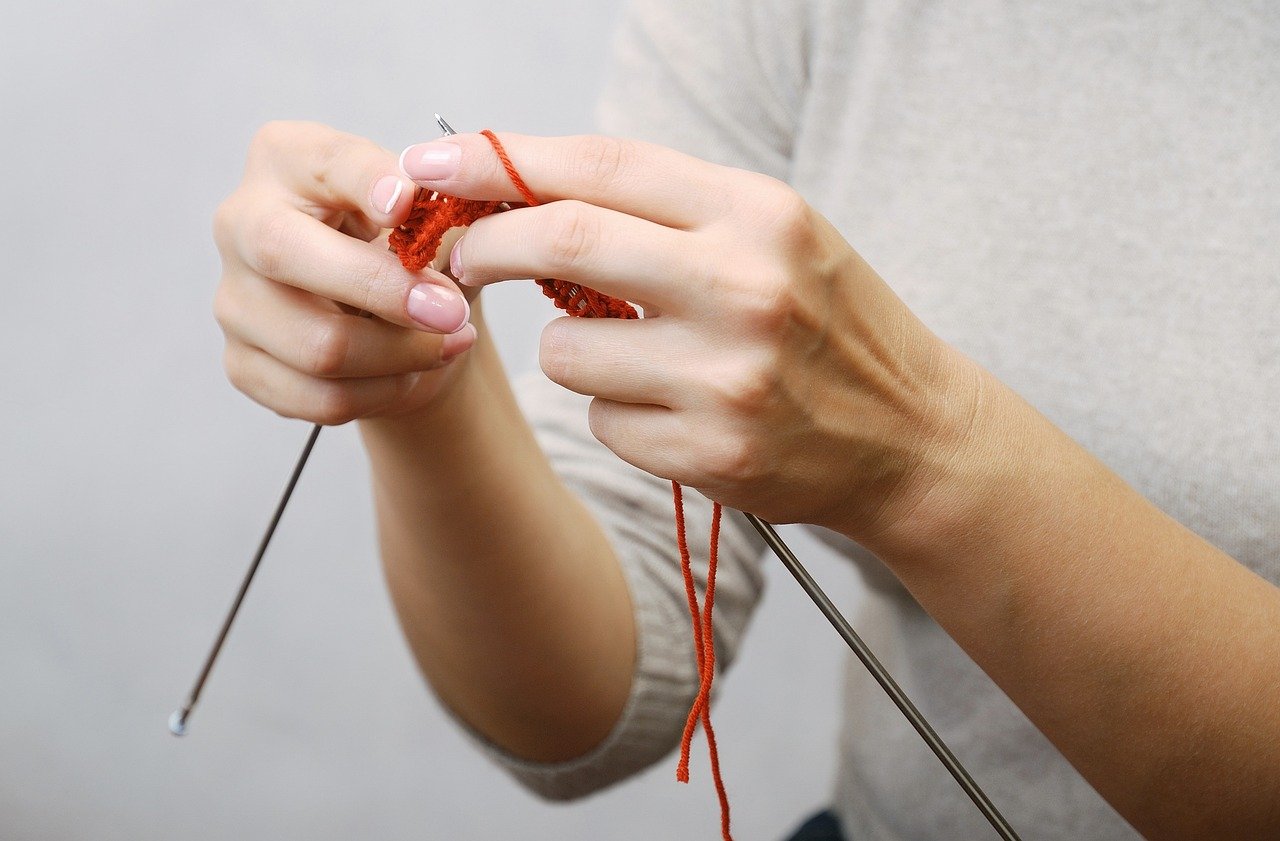
What if the most basic stitch in knitting is also the one that trips up the most beginners? That sounds like a riddle, but anyone who has knitted a plain sweater back and watched the bottom edge roll into a tube knows the feeling. Stockinette stitch is the smooth, V-shaped fabric that defines most commercial knitwear, and yet it is the one fabric that refuses to lie flat, hides no mistakes, and punishes every uneven tension change. It is simple to make and surprisingly hard to master.
This guide breaks down what stockinette actually is, how to work it flat and in the round, why it curls, where it fits among other stitch patterns, and the practical fixes that experienced knitters use every day. No fluff, no vague advice, just the mechanics and the habits that make the fabric behave.
What Is Stockinette Stitch, Exactly?
Stockinette stitch is a knitted fabric built from two simple actions: a row of knit stitches followed by a row of purl stitches, repeated. On the right side, you see smooth interlocking loops that look like small V shapes stacked in columns. On the wrong side, you see purl bumps, which look like tiny horizontal ridges.
The name splits by region. In the United States, patterns call it stockinette stitch and abbreviate it as “st st.” In the United Kingdom and Australia, the same fabric is called stocking stitch. Both names trace back to hosiery, since stockings were historically knitted in exactly this smooth, close-fitting fabric. If a pattern says “stocking stitch” and another says “stockinette,” they mean the same thing.
When knitted flat on two needles, the standard instruction is simple: knit one row, purl one row, repeat. When knitted in the round on circular or double-pointed needles, every round is knitted, because you never turn the work and never work the wrong side directly. That single difference is one of the most common sources of confusion for new knitters moving from flat scarves to hats and sweaters.
How to Knit Stockinette Stitch Flat and in the Round
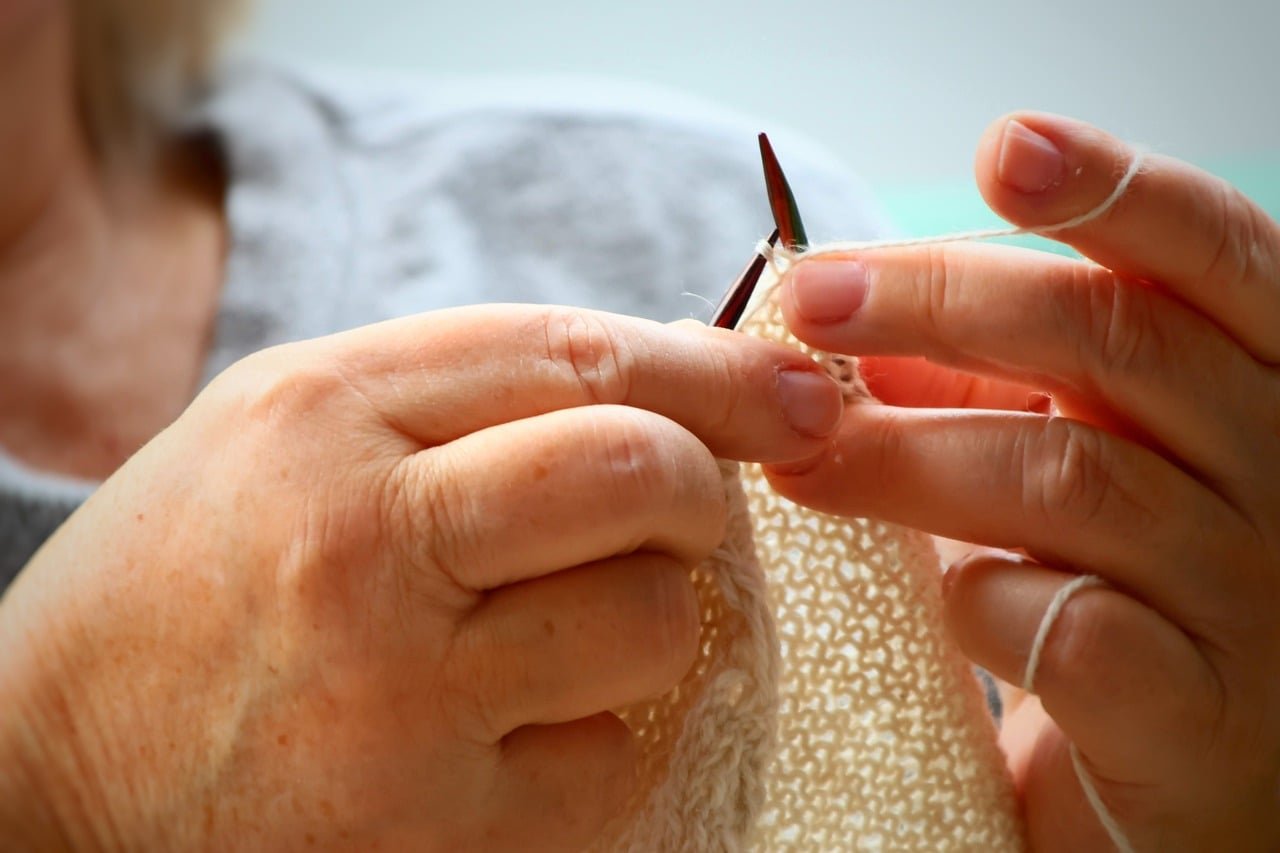
The mechanics are straightforward, but the order of steps matters. Here is the flat method:
- Cast on any number of stitches and knit the first row.
- Turn the work and purl every stitch of the second row.
- Turn again and knit every stitch of the third row.
- Repeat steps 2 and 3 until the piece is the length you want.
For working in the round:
- Cast on and join without twisting the stitches.
- Knit every stitch of every round until the piece reaches the desired length.
That is the whole pattern. The reason stockinette is considered the foundation of knitting is that it isolates two skills, the knit and the purl, and combines them into a fabric with a clear front and back. Once a knitter can produce even stockinette, every textured stitch pattern becomes a variation on a theme rather than a new language.
A practical detail worth knowing: stockinette is the standard fabric used for measuring gauge in most patterns. Because it is thinner and denser than garter stitch at the same needle size, the stitch count per inch in stockinette is the number most designers rely on. If a pattern says “22 stitches and 30 rows to 4 inches in stockinette,” that is the number to match before starting the project.
Why Stockinette Stitch Curls (and What Actually Helps)
Stockinette curl is the fabric’s signature flaw. Flat pieces roll at the side edges, the bottom edge flips forward, and the top edge flips back. The cause is structural: knit and purl stitches do not have identical tension, so the fabric stores energy that releases as a curl.
Beginners often make the same mistake here. They knit a swatch, see it curl, and assume they did something wrong. They did not. Curl is inherent to the fabric, not a sign of bad technique. What actually goes wrong is expecting a stockinette swatch to lie flat for measuring, or knitting an entire scarf in stockinette and being disappointed by the result.
What works in practice:
- Block the swatch before measuring. Wet blocking relaxes the fibers and gives a truer gauge reading, even though the swatch may still curl at the edges.
- Add a border. A few stitches of garter stitch, seed stitch, or ribbing along each edge stabilizes the fabric and stops the roll.
- Use ribbing at hems and cuffs. This is why commercial sweaters have ribbed bands. Ribbing pulls in and lies flat, anchoring the stockinette above it.
- Pick patterns designed for the fabric. Hats, sweaters, socks, and mittens work beautifully in stockinette because their shapes and edges are built to counteract curl.
What does not work well: knitting a flat stockinette scarf and hoping it will settle down after washing. It usually will not, and the edges will keep rolling for the life of the piece.
Stockinette vs. Garter, Ribbing, and Seed Stitch
It helps to see stockinette next to the other basic fabrics, because the contrast explains why each one exists.
| Fabric | How it is worked flat | Surface look | Curl behavior | Typical use |
|---|---|---|---|---|
| Stockinette | Knit row, purl row, repeat | Smooth V’s on front, bumps on back | Curls strongly at edges | Sweaters, hats, socks, hosiery |
| Garter | Knit every row | Horizontal ridges both sides | Lies flat | Scarves, borders, baby blankets |
| Ribbing | Alternate knit and purl columns | Vertical ridges that stretch | Lies flat, pulls in | Hems, cuffs, neckbands |
| Seed stitch | Alternate knit and purl stitch by stitch | Bumpy, textured both sides | Lies flat | Edges, textured panels, washcloths |
The pattern here is clear: stockinette is the only fabric in the group that curls. That is not an accident. The other three all mix knit and purl within the same row or alternate them in a way that balances tension. Stockinette separates them into whole rows, which produces the smooth face but leaves the fabric unbalanced.
Garter stitch is also thicker and wider than stockinette at the same gauge, so the two are not interchangeable in a pattern without recalculating. A sweater written for stockinette will not fit correctly if knitted in garter stitch at the same stitch count.
Stockinette in the Wider World of Knitwear
Hand-knitted stockinette and machine-knit jersey are structurally the same family of fabric: both are weft-knitted plain knit. The difference is scale. A single-bed flat knitting machine produces plain knit as its default structure, which is why the fabric is sometimes called plain knit in textile manufacturing. Machine jersey is usually far finer than anything a hand knitter can produce, but the loop structure is the same.
This matters for anyone comparing handmade and commercial garments. A store-bought T-shirt and a hand-knitted stockinette sweater share the same basic architecture, which is why both drape similarly and both can develop runs or ladders if a stitch breaks. Stockinette is a single layer of interlocking loops, so a dropped stitch can travel down a column unless it is secured. In hosiery, this is exactly the failure mode that produces a run.
For readers who follow how products move through supply chains and marketplaces, some of the same logic about availability and timing applies to knitting supplies and gear. The pattern of waiting for restocks and watching release windows shows up in unexpected places, as covered in pieces on the iPhone Duo preorder wait and stock hopes and on Steam Deck out-of-stock alternatives. The lesson transfers: knowing how a system works beats hoping a product appears.
Common Mistakes That Show Up in the Fabric
Stockinette is unforgiving. Unlike textured stitches, which hide small tension differences, a smooth surface shows every inconsistency. These are the errors that appear most often, and the fixes that actually solve them.
Twisted stitches. A stitch worked through the wrong leg twists the loop and creates a tight, slanted column that stands out against the surrounding fabric. The fix is to check which leg of the stitch sits at the front of the needle before knitting into it.
Uneven tension between knit and purl rows. Many knitters purl more loosely than they knit, which produces visible horizontal stripes of differing density. The practical fix is to size down the purl rows mentally, or to switch to knitting in the round where every round is knit, eliminating the mismatch entirely.
Accidental yarn overs. A yarn over creates an extra loop and a visible hole in the fabric. On a smooth stockinette surface, a single hole is glaring. Counting stitches at the end of each row catches these early.
Forgetting which row comes next. Flat stockinette requires alternating rows, and losing track produces garter ridges in the middle of a smooth panel. A row counter or a simple mark on the pattern solves this.
Splitting the yarn. Pointy needles and loosely plied yarn cause the needle to pierce the strand rather than the loop, creating a small bump. Slightly blunter tips help.
These are not signs of a hopeless knitter. They are the normal friction points of a fabric that shows everything. The same principle appears in digital storefronts, where small workflow differences create outsized results, as explored in this comparison of itch.io vs GOG vs Epic workflow differences. Small process choices compound.
Getting Gauge Right in Stockinette
Gauge is the number of stitches and rows per inch, and stockinette is the fabric where gauge matters most because it is the standard measuring fabric. A difference of one stitch per inch across a 40-inch sweater body translates to roughly 40 extra or missing stitches, which is the difference between a garment that fits and one that does not.
The reliable method is to knit a swatch at least 6 inches square in stockinette, bind it off, wash and block it the way the finished garment will be washed, and then measure across the center of the swatch rather than at the curling edges. Measuring at the edges is a common error, because the curled fabric distorts the count.
If the stitch count is too high, go up a needle size. If it is too low, go down. Change one variable at a time and re-measure. This is tedious, and it is the single habit that separates finished garments from unfinished ones.
Conclusion
Stockinette stitch earns its reputation as both the simplest and the most demanding fabric in knitting. It is two actions repeated, yet it curls at every edge, reveals every tension wobble, and refuses to hide a dropped stitch. That combination is exactly why it is worth learning properly. Once a knitter understands why it curls, how gauge behaves in it, and where borders and ribbing belong, the fabric stops fighting back and starts doing what it does best: producing clean, smooth, wearable knitwear. The stitch is not difficult. It is honest, and honesty in fabric is a skill worth building.
Frequently Asked Questions
Is stockinette stitch the same as stocking stitch?
Yes. Stockinette stitch is the American term and stocking stitch is the British and Australian term for the identical fabric. Both describe a smooth knit face with purl bumps on the back, worked as alternating knit and purl rows when flat or knit rounds when working in the round.
Why does my stockinette stitch curl so much?
Curl is built into the fabric. Knit and purl stitches hold different tension, so a flat stockinette piece stores energy that releases as rolling at the edges. It is not a mistake in your technique. Borders, ribbed bands, and blocking reduce the effect, but flat stockinette will always tend to curl.
Can I knit stockinette stitch in the round?
Yes, and it is easier than working flat. Because you never turn the work, every round is knitted, so there are no purl rows to slow you down and no tension mismatch between knit and purl. Most hats, socks, and sweater bodies are worked this way.
How do I stop my stockinette edges from rolling?
Add a border of garter stitch, seed stitch, or ribbing along each edge, or finish the piece with a ribbed band. Blocking helps relax the fabric but will not permanently stop a plain stockinette edge from curling on its own.
Is stockinette stitch good for beginners?
It is an excellent second project. Beginners usually start with garter stitch because it lies flat, then move to stockinette once they can knit and purl consistently. Expect a learning curve around tension, since stockinette shows uneven stitches more than textured fabrics do.
How do I measure gauge in stockinette stitch?
Knit a swatch at least 6 inches square, bind it off, wash and block it as you would the finished garment, then measure across the center rather than the curled edges. Compare your stitch and row counts to the pattern and adjust needle size one step at a time until they match.



