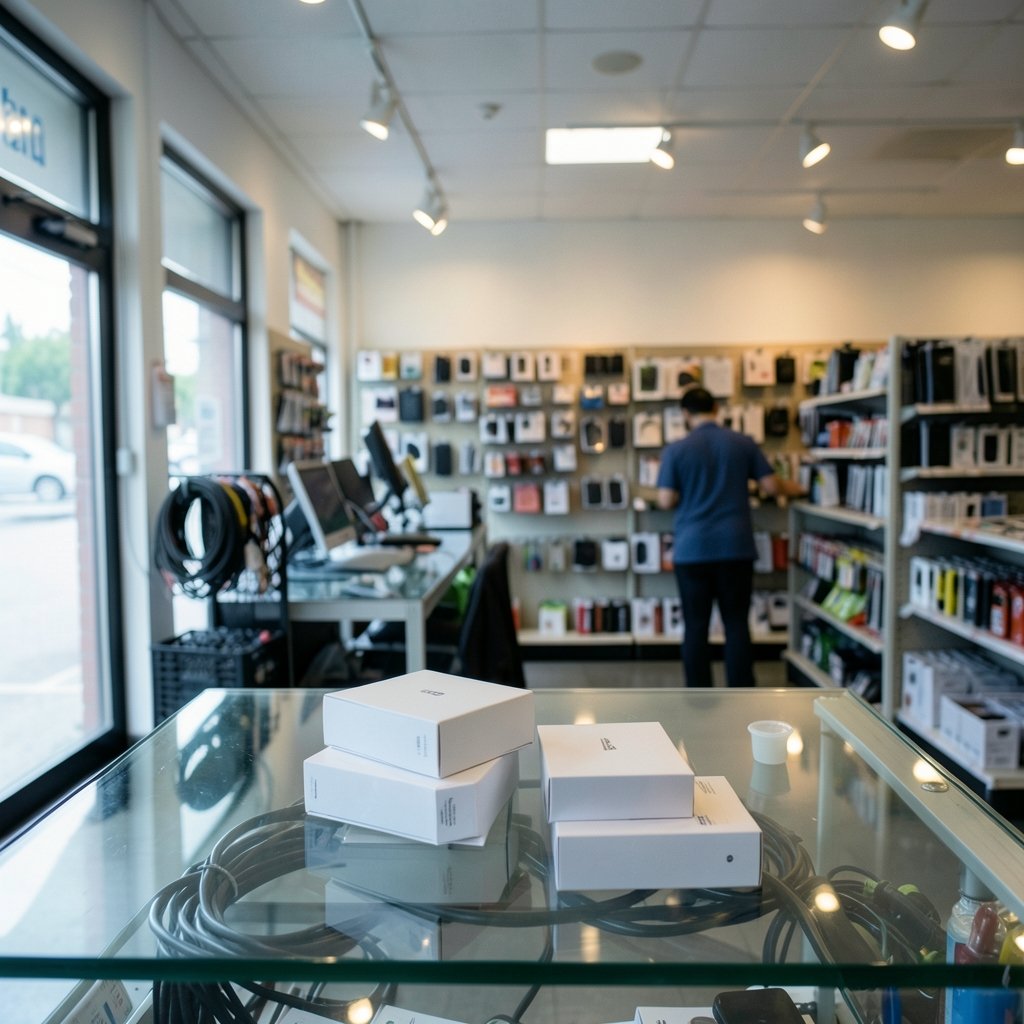
Can you really skip the iPhone Duo preorder line and stroll into a store on January 25 for walk-in stock? That question is driving a lot of searches right now, and the honest answer is messier than the hype suggests. There is no confirmed Apple product called the iPhone Duo in any official lineup, no verified January 25 preorder date, and no published walk-in inventory plan. That absence matters. It changes how a smart buyer should plan, what they should watch, and when waiting actually beats ordering. (iPhone)
This guide separates what is known from what is assumed. It also covers the practical mechanics of Apple launch windows, the risks of betting on launch-day walk-in stock, and the mistakes people make when a rumored device starts trending.
Why the iPhone Duo name is unverified
Apple has not announced or shipped a product called the iPhone Duo. That is the single most important fact in this entire topic, and it deserves to sit at the top rather than buried in fine print.
Rumors about a foldable iPhone have circulated for years. Industry watchers have discussed hinge designs, crease behavior, and display durability at length. But a rumor is not a product page, and a product page is not a shipping device. The jump from “people are talking about a foldable” to “preorder on January 25” is where most of the confusion starts.
Buyers who treat unverified names as confirmed products tend to make predictable errors. They set calendar reminders for dates that were never official. They refresh store pages expecting inventory that does not exist. They hold off on buying a phone they actually need because a rumored one might arrive. That last mistake is the most expensive, because it costs months of usable time with a device that already works fine.
The practical rule is simple: until Apple posts something on its own newsroom or shop pages, treat every date as a placeholder. The same caution applies to foldable screen durability claims, which have already generated early-buyer concern in coverage of screen damage under 20 folds — a useful reminder that first-generation hardware carries real risk.
What Apple launch patterns actually tell you
Even without a confirmed iPhone Duo, Apple’s historical rhythm is informative. It gives you a realistic model for how preorder and walk-in stock usually behave.
Apple has generally opened iPhone preorders on a Friday and shipped roughly a week later. In-store walk-in availability has typically begun on launch day. Recent iPhone launches have clustered in September, with occasional spring events. A late-January launch would be atypical and would need a primary source before anyone plans around it. (iPhone)
| Phase | Typical timing | What buyers experience |
|---|---|---|
| Announcement | Weeks before preorder | Specs, pricing, colors confirmed |
| Preorder opens | Usually a Friday | Delivery windows slip within hours |
| Preorder shipping | About a week later | Carrier and courier tracking updates |
| Launch day | Same week as shipping | Limited walk-in stock at some stores |
| Restock cycle | Days to weeks | Availability improves unevenly by region |
Two lessons follow from that table. First, preorder timing and walk-in timing are not the same event, and the gap between them is where frustration lives. Second, delivery estimates slip fast. Popular configurations, especially higher storage tiers and newer colors, can push from launch week to several weeks out within a single morning.
A January launch would also collide with post-holiday inventory patterns. Retail channels are usually rebuilding stock in late January, not sitting on surplus. That makes launch-day walk-in stock even less reliable than in a September window.
The walk-in stock gamble, explained
Walk-in stock means showing up at a store without a reservation and hoping units are available. It works sometimes. It fails often, and it fails in ways that are hard to predict.
Here is what actually determines whether a store has units on any given day:
- Allocation volume. Each store receives a shipment based on regional demand, not on how many people are lining up.
- Preorder fulfillment priority. Reserved orders are filled first. Walk-in inventory is whatever remains.
- Configuration mix. Base storage and standard colors are more plentiful. High storage and special finishes disappear first.
- Time of day. Morning arrivals capture most of the stock. Afternoon visits usually find empty shelves.
- Store tier. Flagship locations get more units but also draw far more foot traffic.
The common mistake is assuming a launch-day visit guarantees a purchase. In practice, walk-in success depends on arriving early, accepting a less popular configuration, and being willing to leave empty-handed. Buyers who fixate on one exact model and color have the lowest success rate.
A second mistake is trusting social posts over official availability checks. Screenshots circulate quickly and are often outdated within hours. The only reliable signal is the store’s own live inventory system on the day.
Practical tips that actually improve your odds
If someone decides to pursue walk-in stock anyway, a few habits separate a productive trip from a wasted morning.
Check live availability before leaving home. Store inventory tools update through the morning. A quick check at opening saves a commute.
Arrive before the doors open. Launch-day queues form early. Being twentieth in line is very different from being two hundredth.
List three acceptable configurations. Rank them in advance. Flexibility is the single biggest factor in walk-in success.
Ask about same-day online pickup. Some units get released back into the pool when reservations lapse. Staff can see this before it appears publicly.
Keep the preorder as a backup. Placing a preorder costs nothing extra and secures a unit. If walk-in succeeds first, the preorder can usually be cancelled.
That last point is the one most people skip, and it is the one that matters most. A preorder is a hedge, not a commitment. Treating it that way removes the pressure that leads to bad decisions on launch day.
For buyers weighing a foldable against a conventional flagship, the comparison is worth doing carefully rather than emotionally. A structured look at best iPhone options in 2026 helps frame what a first-generation foldable would need to beat.
Reading the evidence around early hardware
First-generation hardware always carries elevated risk, and foldables carry more than most. Hinges wear. Creases develop. Display layers delaminate under repeated stress.
Coverage of an evidence audit into early fold behavior illustrates why buyers should wait for independent testing rather than launch-day enthusiasm. Six hours of hands-on time in a store tells you almost nothing about a hinge that will be cycled thousands of times over two years.
The practical takeaway is not to avoid new form factors. It is to let other people stress-test them first. Waiting a few weeks after launch for teardown reports and durability testing is a far better use of patience than waiting in a queue for unproven hardware.
Collector behavior offers a useful contrast. A Dubai collector who owns 53 iPhones and picked up two iPhone Duos treats devices as artifacts, not daily drivers. That is a legitimate hobby, but it is not a purchasing strategy for someone who needs a reliable phone tomorrow. Collectors absorb risk for novelty. Everyday buyers should not.
When waiting is the right call, and when it is not
Waiting is sometimes smart and sometimes costly. The difference comes down to what you already own and how urgently you need a replacement.
| Situation | Better move | Why |
|---|---|---|
| Current phone works fine | Wait for verified launch info | No cost to waiting, and rumors may not ship |
| Current phone failing | Buy a proven model now | Reliability beats speculation |
| Enthusiast or collector | Preorder if a real listing appears | Novelty has value to this group |
| Budget-conscious buyer | Wait for first price cuts | Launch pricing rarely favors buyers |
| Needs specific configuration | Preorder early | Walk-in stock rarely matches exact specs |
The clearest guidance is this: never let an unverified product dictate a purchase decision you need to make this month. If a phone is failing, replace it with something confirmed and available. If a phone is working, waiting costs nothing and preserves optionality.
There is also a broader principle worth stating plainly. Scarcity marketing works because uncertainty feels urgent. Rumored dates and vague stock claims create pressure to act. Recognizing that pressure as manufactured is half the defense against it.
Common mistakes to avoid
A short list of errors that show up again and again in launch-window discussions:
- Treating a rumor as a schedule. No official date means no official date.
- Assuming launch day equals availability. Walk-in stock is residual, not guaranteed.
- Ignoring configuration flexibility. Rigidity is the top cause of failed walk-in attempts.
- Skipping the preorder hedge. A cancellable preorder is free insurance.
- Buying first-generation hardware on day one. Independent durability data takes weeks to appear.
- Trusting screenshots over live store inventory. Social posts age in minutes.
- Letting a rumored device delay a needed purchase. This is the costliest mistake of all.
Each of these is avoidable with a small amount of planning. None requires special knowledge. They require patience and a willingness to accept uncertainty instead of resolving it with a purchase.
How to verify launch information yourself
The most reliable path is direct verification, and it takes about ten minutes.
- Check Apple’s official newsroom for announcements.
- Check the official shop pages for live product listings.
- Check investor relations pages for any guidance tied to launch timing.
- Run one focused search for the product name plus preorder terms.
- Treat the absence of official results as a finding, not a gap to fill with guesses.
That fifth step is the one people skip. If a search for a specific product name returns nothing from the manufacturer, that silence is data. It means the premise is unsupported, and any article, video, or post claiming otherwise is working from something other than confirmed information.
For buyers comparing adjacent categories while they wait, broader roundups are useful context. A look at AI chatbot apps for iPhone and Android in 2026 shows how quickly software features now differentiate hardware that is otherwise similar. The same applies to gaming hardware, where Steam Deck stock shortages and alternatives demonstrate how supply constraints reshape buying decisions across categories. And for anyone weighing a graphics card purchase against a phone upgrade, the RTX 5090 versus RTX 5080 decision follows the same buy-now-or-wait logic.
Conclusion
The iPhone Duo preorder question has a clear answer, even if it is not the one searchers want. There is no confirmed product, no verified January 25 date, and no published walk-in stock plan. Anyone planning around those specifics is planning around assumptions.
What does hold up is the underlying framework. Apple’s launch patterns are predictable enough to model. Preorders slip fast. Walk-in stock is residual and configuration-dependent. First-generation hardware carries durability risk that independent testing takes weeks to reveal. And waiting is cheap when your current phone works, expensive when it does not.
The smartest approach combines a cancellable preorder as a hedge with a flexible list of acceptable configurations and a live inventory check on the day. That covers both paths without betting everything on either. Patience, in this case, is not passive. It is the strategy most likely to end with a phone you actually want at a price you can defend.
FAQ
Is there an official iPhone Duo preorder on January 25, 2026?
No official preorder date has been confirmed. Apple has not announced or shipped a product called the iPhone Duo, and no January 25 date appears in any official source. Treat any specific date as unverified until Apple publishes it directly.
Will stores have walk-in stock on launch day?
Historically, some stores have had limited walk-in stock on launch day, but it is residual inventory left after preorders are filled. Availability varies by location, configuration, and time of day. Morning visits have the best odds, and flexible buyers succeed far more often than those fixed on one exact model.
Should I wait for the iPhone Duo or buy a phone now?
It depends on your current device. If your phone works, waiting costs nothing and keeps your options open. If your phone is failing, buy a confirmed model now. Never let an unverified product delay a purchase you genuinely need.
How long after preorders do walk-in units usually appear?
Apple has generally opened preorders on a Friday and shipped about a week later, with in-store availability starting on launch day. That is a historical pattern, not a confirmed schedule for any unannounced device.
Why do preorder delivery estimates slip so quickly?
Demand concentrates on a few popular configurations, especially higher storage tiers and new colors. Allocation is finite at launch, so those estimates move from launch week to several weeks out within hours. Choosing a standard configuration is the simplest way to avoid the longest waits.
What is the biggest mistake buyers make during launch windows?
The biggest mistake is letting a rumor set the schedule. Treating unverified dates as commitments leads to wasted trips, delayed purchases, and rushed decisions. Verifying through official channels first, and keeping a cancellable preorder as a backup, avoids nearly every common pitfall.