
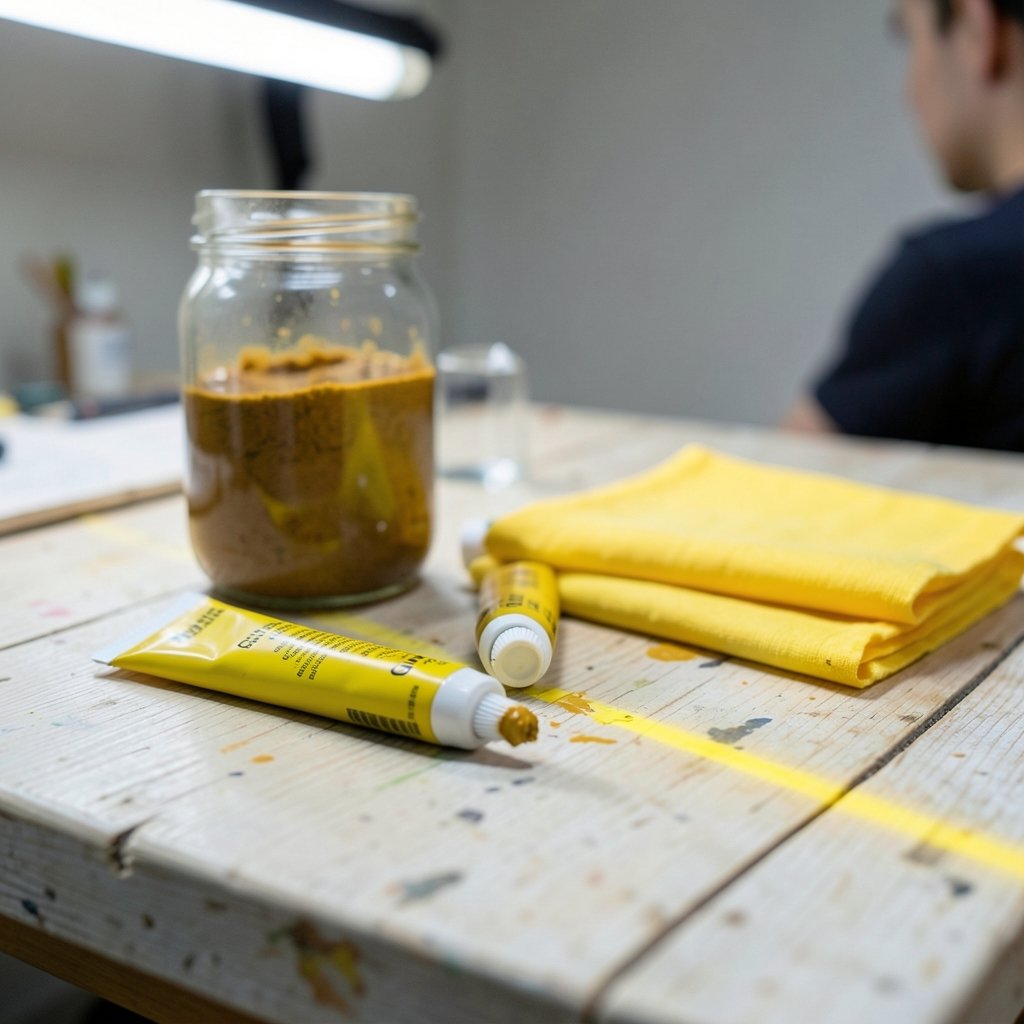
What do a school bus, a lemon, a sunflower, and the highlight marker on a desk all have in common? They all land in the same narrow band of color that the human eye reads as yellow. But here is the twist: the way each of those yellows gets made is completely different. A painter reaches for a tube. A screen designer flips on red and green pixels. A textile dyer soaks onion skins in a pot. A baker squeezes a few drops from a tiny bottle.
So the honest answer to “how to make yellow” depends entirely on what you are making it with. This guide walks through every common route, flags the mistakes people make, and explains why some methods simply cannot work no matter how hard you try.
The Short Answer: You Usually Can’t Mix It From Scratch
In traditional paint mixing, yellow is a primary color. That means it sits at the base of the color wheel alongside red and blue, and it cannot be created by blending the other two. Mix red and blue and you get purple. Mix yellow with anything and you get a different color, not yellow itself.
This is why art teachers tell students to buy yellow rather than mix it. In the RYB model used for centuries in painting, yellow is a starting point, not a destination. The same logic holds in commercial printing, where the CMY model treats cyan, magenta, and yellow as the three primary inks. Yellow ink is manufactured, not blended on press. (France social media blackout yellow vest protests telecom 2026)
That said, “primary” is a statement about a specific system, not a universal law of nature. Switch from pigment to light and the rules flip completely.
Making Yellow With Light: The Additive Trick
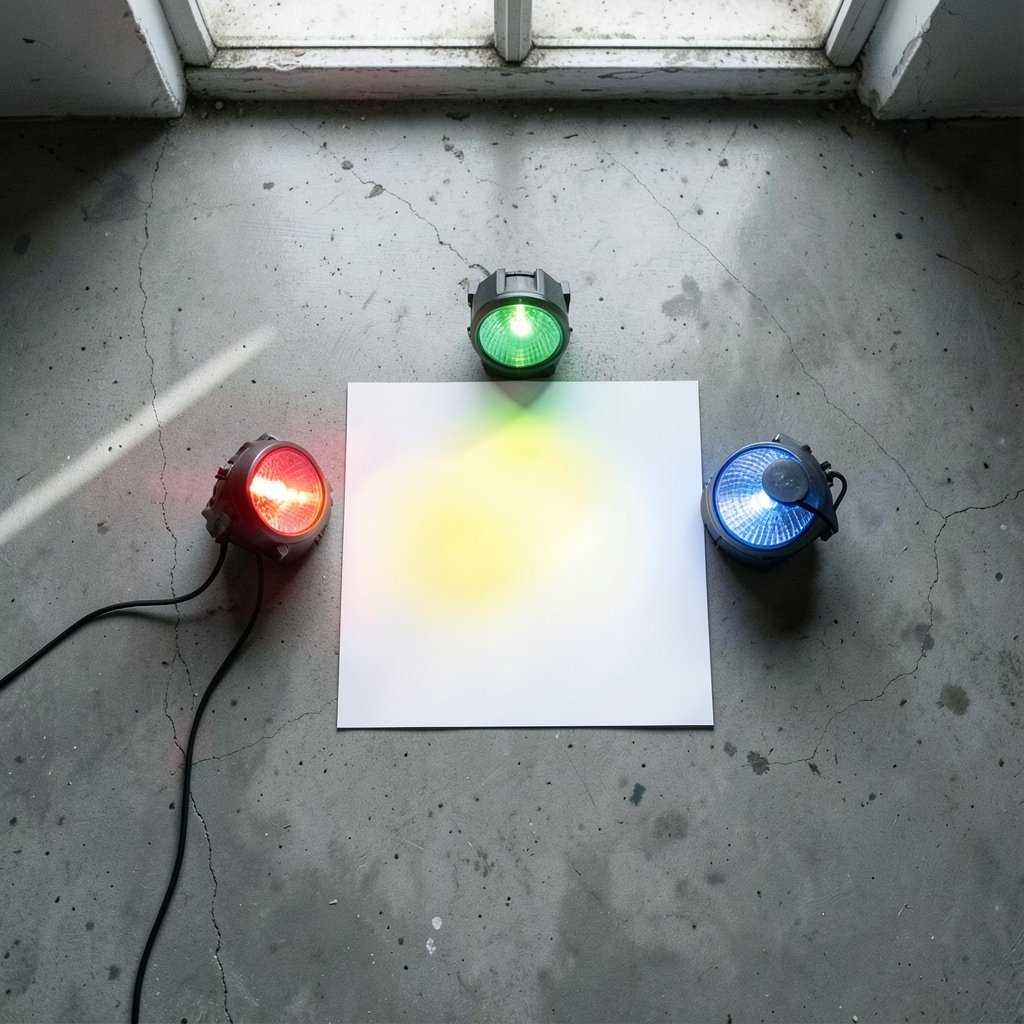
Screens, stage lights, and phone flashes build color in a totally different way. In additive color mixing, you start with darkness and add light. The three primaries are red, green, and blue, and combining them produces the colors people see on displays.
Yellow appears when red and green light shine together at full strength with no blue. That is the entire recipe. Two channels on, one channel off. Every yellow pixel on a monitor, tablet, or TV is a tiny demonstration of this principle.
A few practical notes for anyone working with light:
- Blue is the enemy. Even a small amount of blue light will drag the result toward white or gray. Dim the blue channel fully before adjusting anything else.
- Intensity matters. Unequal red and green produces amber or lime rather than a clean yellow.
- White is not the goal. Adding all three primaries at full power gives white, not yellow. Many beginners over-brighten and end up washing the color out.
This is also why printed yellow and screen yellow rarely match. One is reflected light bouncing off ink; the other is emitted light from a diode. They can look similar, but they are physically unrelated.
Optical Mixing: Yellow Without Any Yellow
Here is a trick that surprises almost everyone. You can create the impression of yellow using only green and red, as long as the dots are small enough and close enough together. The eye blends them before the brain has a chance to separate them.
This is the principle behind pointillism, the painting technique where artists apply tiny dots of pure color side by side instead of blending on a palette. It is also how halftone printing works: a newspaper or magazine page holds thousands of microscopic dots, and the reader’s visual system does the mixing.
For a practical version at home, try this:
- Cut narrow strips of red and green paper.
- Weave them into a simple checkerboard pattern.
- Step back several feet and squint slightly.
From a distance, the weave reads as a warm yellow or orange-yellow. Up close, it is clearly red and green. The color exists in the viewer’s eye, not on the paper.
Yellow Pigments: From Cave Walls to Modern Tubes
Pigment is where yellow gets physical. The history here is long and genuinely interesting.
Yellow Ochre: The Oldest Option
Yellow ochre is iron oxide hydroxide combined with clay. It occurs naturally in the ground, which is why it shows up in prehistoric cave paintings on multiple continents. It is cheap, lightfast, and remarkably stable. If you want a muted, earthy yellow, ochre is the classic choice.
The Synthetics
The nineteenth century brought chrome yellow, a lead chromate pigment that was bright, affordable, and widely used. It was also toxic, and it has largely fallen out of favor for good reason. Modern artists’ yellows include:
| Pigment | Character | Notes |
|---|---|---|
| Cadmium yellow | Opaque, strong, warm | Toxic; handle with care |
| Hansa yellow (PY74, PY97) | Transparent, clean, bright | Organic; common in student and professional lines |
| Isoindolinone yellow | Opaque, high tinting strength | Popular in automotive and industrial coatings |
| Yellow ochre | Muted, earthy, semi-opaque | Natural iron oxide; excellent lightfastness |
A common mistake is assuming all yellows behave the same in a mix. They do not. A transparent hansa yellow glazed over blue produces a luminous green. An opaque cadmium yellow mixed with the same blue gives a duller, flatter result. Tinting strength and opacity matter as much as hue.
Practical Mixing Tips That Actually Work
- Test on scrap first. Mix a small amount before committing to a full palette.
- Add dark to light, not light to dark. A tiny touch of brown or violet will mute a yellow; a large amount of yellow will not rescue an over-darkened mix.
- Keep your tools clean. Residual blue on a brush will turn yellow green instantly.
- Buy a warm and a cool yellow. Most painters keep both, because one will not substitute for the other in every mix.
Natural Yellow Dyes: Plants, Pots, and Mordants
Textile dyeing is a separate craft with its own rules. Historically, yellow dyes came from plants, and several are still used by hobbyists and small studios today.
Weld was a major European source of yellow dye from at least the medieval period. Onion skins are a popular kitchen-scrap option that produces warm golden tones. Saffron stigmas yield a yellow, though the cost makes it impractical for anything beyond small-scale work.
The critical concept here is the mordant, a substance that helps dye bond to fiber. Many natural yellows need one. Alum is the most common, and different mordants shift the final hue: tin tends to brighten the yellow, while iron darkens and dulls it toward olive or brown.
Common mistakes in natural dyeing:
- Skipping the mordant. The color will fade fast or wash out entirely.
- Using the wrong pot. Aluminum and iron pots react with dye baths. Use stainless steel or enamel.
- Rushing the heat. Sudden boiling can produce uneven, blotchy color. Slow, gentle heating gives better results.
- Forgetting to scour the fiber first. Oils and finishes block dye uptake.
Food Coloring: The Kitchen Version
For bakers and home cooks, yellow is usually a two-bottle job. Standard liquid food coloring sets typically include red, blue, yellow, and green. If you are out of yellow, a small amount of red plus a smaller amount of green can approximate it, because green already contains yellow and blue. (Money tree leaves turning yellow causes fixes that work)
A few things worth knowing:
- Go drop by drop. Liquid coloring is concentrated. Adding too much is far easier to fix than removing it.
- Gel colors behave differently. Gel and paste colors are more intense and can shift the texture of frostings if overused.
- Natural alternatives exist. Turmeric, saffron, and annatto all produce yellow tones, though each brings flavor and behaves unpredictably with heat and pH.
What Actually Works, and What Doesn’t
A lot of frustration around making yellow comes from applying the rules of one system to another. Here is a quick comparison of what each medium allows.
| Medium | Can you make yellow from other colors? | Best approach |
|---|---|---|
| Paint (RYB) | No | Buy a warm and a cool yellow |
| Light (RGB) | Yes | Full red + full green, zero blue |
| Printing (CMY) | No | Use yellow ink |
| Natural dye | Partially | Plant sources plus a mordant |
| Food coloring | Approximately | Yellow, or red plus a touch of green |
The pattern is clear. Subtractive systems, where color comes from pigment absorbing light, treat yellow as a foundation. Additive systems, where color comes from emitted light, treat it as a combination. Once that distinction clicks, most of the confusion disappears.
There is a broader lesson buried in all this. Color is not a fixed property of an object; it is an interaction between a material, a light source, and a pair of eyes. The same yellow pigment can look warm under tungsten light and cool in daylight. That is not a flaw in the pigment. It is simply how color behaves. Anyone who has watched a plant’s foliage shift from deep green to pale yellow knows how much a change in conditions can alter what the eye registers, whether the cause is light, nutrients, or something else entirely.
Conclusion
Making yellow is less about a single secret recipe and more about knowing which system you are working in. Painters buy it because it is primary. Lighting designers combine red and green because light adds rather than subtracts. Dyers coax it out of weld and onion skins with the help of a mordant. Bakers reach for a bottle or improvise with red and green. Each method is correct within its own rules, and each fails when borrowed into the wrong context.
The practical takeaway is simple: identify your medium first, then follow that medium’s logic. Keep a warm and a cool yellow on hand if you paint. Kill the blue channel if you work with light. Mordant your fiber if you dye. Add color one drop at a time if you cook. Do those things and yellow stops being mysterious. It becomes just another tool you know how to reach for.
Frequently Asked Questions
Can you make yellow by mixing two colors?
It depends on the medium. In traditional paint mixing, no. Yellow is a primary color in the RYB model, so it cannot be created by blending other pigments. In additive light, yes. Combining red and green light at full intensity with no blue produces yellow. The answer changes entirely based on whether you are subtracting light with pigment or adding it with a light source.
What two colors make yellow in RGB?
Red and green. In the additive RGB model used by screens and digital displays, yellow is produced when the red and green channels are at full strength and the blue channel is at zero. Any blue at all will pull the result toward white or gray, which is why blue must be completely eliminated before the yellow reads as clean.
Why can’t I mix yellow from other paint colors?
Because pigment mixing is subtractive. Each pigment absorbs certain wavelengths of light and reflects others. When you combine two pigments, you combine their absorption, which removes more light and pushes the result darker and duller. Yellow sits at the bright end of that spectrum, so there is no combination of other pigments that will reflect more yellow light than a yellow pigment already does.
Is yellow ochre the same as yellow paint?
No. Yellow ochre is a specific pigment made of iron oxide hydroxide mixed with clay, and it occurs naturally in the earth. It produces a muted, earthy yellow with excellent stability. Modern yellow paints may use ochre, cadmium, hansa yellow, isoindolinone, or other pigments, each with different opacity, tinting strength, and handling characteristics.
Do natural yellow dyes need a mordant?
Most do. A mordant is a substance that helps dye molecules bond to fiber, and without one the color tends to fade or wash out quickly. Alum is the most commonly used mordant for yellow dyes. Different mordants also shift the final hue, with tin generally brightening the yellow and iron darkening it toward olive or brown.
How can I make yellow food coloring if I run out?
Combine red and a smaller amount of green. Green coloring already contains yellow and blue, so a small addition of green to red nudges the mix toward yellow. Add it drop by drop and stir thoroughly between additions, since liquid coloring is concentrated and overcorrecting is easy. Natural options like turmeric or saffron also work but bring flavor and behave unpredictably with heat.



