A proposed social-media restriction can affect a protest without amounting to a nationwide internet blackout. During demonstrations, people rely on mobile access to share updates, contact family, and follow news. Losing access could affect protesters, bystanders, and journalists in the same area.
DNS filtering means using domain-name lookups to allow or block access to specified websites. That method can target named services, but it is different from shutting down all internet access. The distinction matters in a country where debate over protest policing, costs, and digital rights is tied to President Emmanuel Macron’s government.
The central question is whether a reported plan became an order, and whether operators carried it out. A proposed restriction and an active blackout are not the same event. The key question is what authorities proposed, what telecom operators could do, and whether any restriction actually took effect.
Key Takeaways
- The reported plan concerned temporary access limits in selected areas.
- Operators were asked to prepare for a possible measure, not given a confirmed order.
- The proposed content-removal rules were a separate part of a wider bill.
- Officials never activated the reported restrictions.
- A mobile network outage can disrupt service without government action.
What Did Lecornu’s Reported Request Ask Telecom Operators to Do?
The reported request was a contingency plan, not an instruction to shut down every social network across France. On October 22, 2026, Prime Minister Sébastien Lecornu’s office reportedly asked telecom operators to prepare for possible temporary restrictions. Possible matters here: preparing for a step does not mean receiving an order to carry it out.
The reported letter named Orange, SFR, Free, and Bouygues Telecom. It listed TikTok, Instagram, and Snapchat, with X added later. The requested preparations related to potential violence during demonstrations planned for October 24, 2026.

The distinction affects how reports should describe the event. A request to plan for a contingency is not proof that access changed, even if the letter lists services and possible time limits. The reported request did not confirm an active restriction.
A possible restriction should not be described as an order unless authorities issued one and operators acted on it.
That careful wording also helps separate preparation from enforcement. An operator might be asked to assess its systems, estimate the time needed, or discuss whether a measure could work. None of those steps alone shows that users lost access.
Reports about the request centered on a conditional measure linked to public safety. The stated trigger was not a call for protest, a march permit, or criticism of officials. The reported contingency was tied to potential violence connected with the demonstrations.
The timing placed the request two days before the planned events. That short window helps explain why the operators were asked to prepare, though it does not establish that they received a final instruction. The reports also did not make preparation equal to a binding command.
Readers should look closely at the verbs used in news stories. “Asked to prepare” describes planning; “ordered to restrict” describes a formal direction. Its stated trigger was violence during the demonstrations, not protest activity by itself.
Why Were Yellow Vest Demonstrations on the Government’s Radar?
The Yellow Vest name refers to a movement rooted in everyday economic pressures, not a single organization with one leader. The original movement began in 2018 amid complaints about fuel prices, fuel taxes, and living costs. Those grievances helped draw people into protests across France.
Its first major period ran from November 17, 2018, to June 28, 2020. Fresh demonstrations in 2026 drew on that name, but they were not simply a return to the same movement. Different groups and concerns shaped the later calls to gather.
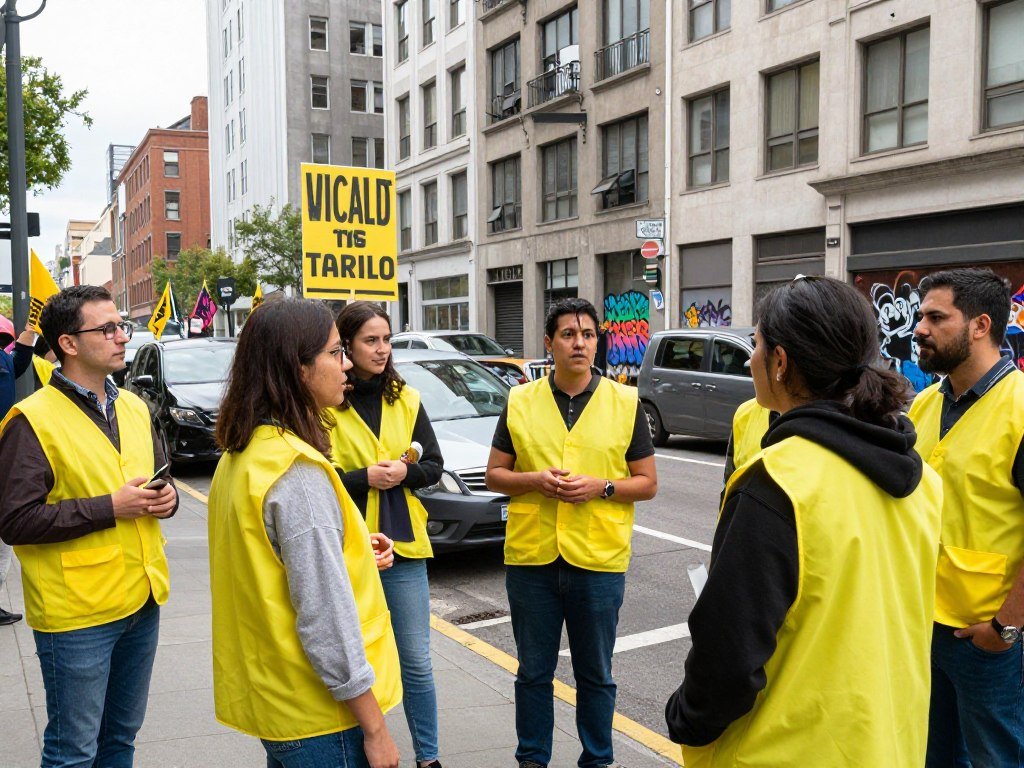
The movement’s cost-of-living roots
Fuel costs helped spark the movement because many people depended on cars for work and daily errands. Protesters also raised concerns about taxes and household budgets. The yellow vests made those complaints visible on roads, roundabouts, and in city centers.
The movement had no single leader who could speak for every group. That made its demands broad and sometimes varied from one gathering to another. Its name remained a marker for protest over economic pressure, even as later events included other causes.
How the 2026 demonstrations were organized
Yellow Vest activists called for demonstrations on October 17, 2026. High school students, teachers, trade unions, and university students were also expected to take part. Their involvement broadened the public-order questions beyond one protest group.
Organizers listed more than 1,750 planned protest locations across France on 17octobregiletjaune.net. That list suggested a wide range of planned gatherings, from local street events to larger city protests. A distributed set of locations can make planning for police and local officials more complex.
Participating groups included:
- Yellow Vest activists
- High school students
- Teachers
- Trade unions
- University students
Those groups did not necessarily share the same goals or take part in every location. The scale and mix of planned demonstrations help explain why officials treated online communication as part of the public-order debate.
What Would Amendment No. 94 Require Platforms to Remove?
Amendment No. 94 sets different removal deadlines for different kinds of covered content. The French government proposed it on October 26, 2026, as part of the “casseurs-payeurs” bill. The proposal concerns specific posts, not the same kind of access restriction discussed in the reported request.
Under the proposal, platforms would have one hour to remove content that incites or glorifies specified offenses. These include insurrection, attacks against the state, or taking up arms against the state or parts of the population. The one-hour deadline applies to those listed categories, not every political post.

One-hour deadline for insurrection content
The one-hour rule would cover content tied to a set of serious offenses. It would apply to material that incites or glorifies the covered conduct. A platform would need to assess the content quickly and act within the proposed time limit.
The government filed the amendment on October 26. The Senate was scheduled to begin examining the bill the next day. That schedule shows the proposal was still under review, not in force as a settled law.
Twenty-four hours for certain violent-crime content
A separate 24-hour deadline would apply to certain content directly provoking violent crimes. The rule is limited to cases where the content threatens serious public disorder. It does not cover every post that mentions violence or crime.
If platforms failed to comply, the proposal could allow website blocking or removal from search results without prior judicial authorization. That consequence would affect access beyond the individual post. The legal and practical reach would depend on how the proposed rule was used.
The planned legislative path had two stages:
| Date or stage | Action | Condition |
|---|---|---|
| October 26 | Government filed Amendment No. 94 | Part of the bill |
| October 27 | Senate scheduled to begin examining the bill | Scheduled review |
| After Senate passage | Next stop is the National Assembly | If the Senate passes it |
The proposed penalties raised questions about how a platform would judge a post under pressure. A quick deadline can leave little time to review context, intent, or the likely effect of the words. The proposal was still moving through a legislative process, so describe its provisions as proposed rather than enacted.
Why Did Operators Say Localized Mobile Restrictions Were Hard?
A location-based restriction is harder to deliver than a simple nationwide switch because the target area must be defined and enforced. The reported plan focused on 4G and 5G networks in selected areas, while seeking to preserve fixed-line Internet access where possible. Drawing the boundary is part of the technical challenge.
At an October 23, 2026, meeting, telecom representatives reportedly warned that geographically targeted DNS restrictions would be difficult to set up on short notice. A restriction could affect users near a protest area, but network signals and local boundaries do not always line up neatly. The operators’ concern was about speed and precision.
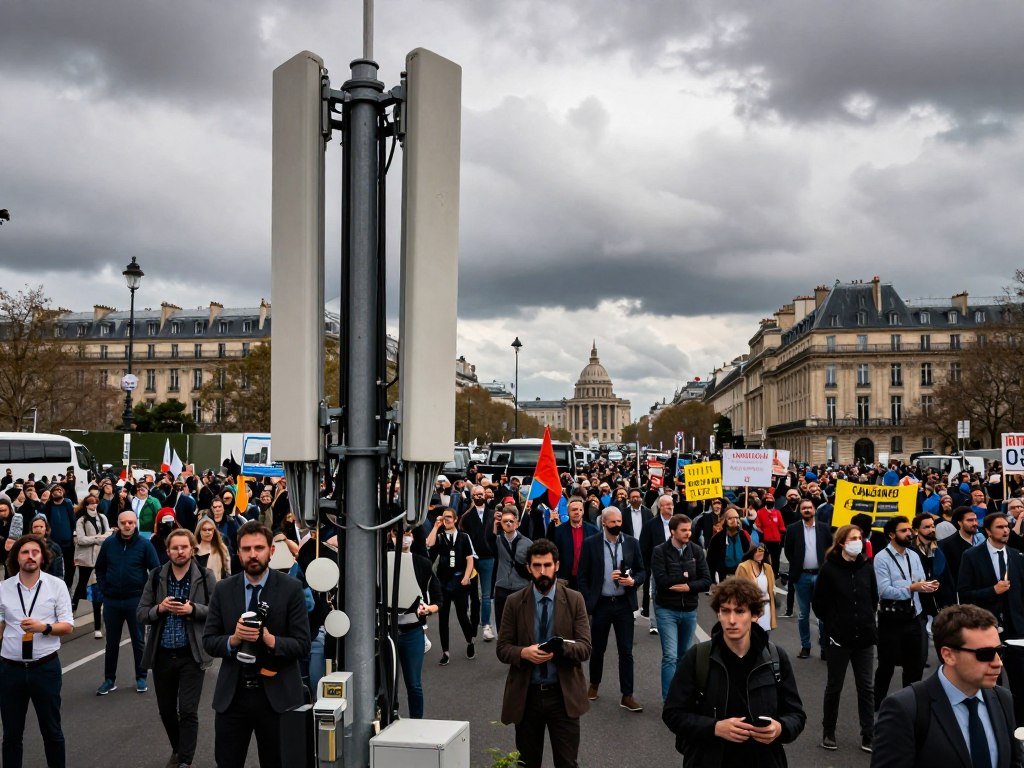
The difficulty of drawing a geographic boundary
Mobile networks serve devices that move between nearby cells. A boundary drawn around a protest zone might not match the reach of a network cell. As people travel, their phones can connect through different equipment, which can complicate area-based controls.
Fixed-line connections work differently from mobile connections. The reported proposal sought to keep fixed-line Internet access available where possible, rather than treat every connection as part of one switch. That distinction matters for homes and businesses near a selected area.
DNS restrictions and ways around them
DNS filtering can block access by refusing or changing a domain-name lookup. It does not erase the website, and it may not stop every route to that service. Telecom representatives reportedly said users could bypass the restrictions with a VPN or an alternative DNS resolver.
A VPN sends traffic through an encrypted connection to another server and can hide a user’s public IP address from destination services. It does not make someone fully anonymous. Readers comparing free VPN alternatives should check privacy terms, data limits, locations, and device support.
Alternative DNS resolvers can also avoid a block based on the operator’s usual lookup service. A VPN may help with access, but it shifts trust to the VPN provider for traffic leaving its server. A VPN service comparison can explain the tradeoffs between plans and features.
| Connection or method | Scope | Reported or practical limit | Access implication |
|---|---|---|---|
| Selected-area 4G/5G access | Mobile users in chosen zones | Hard to target quickly | Some nearby users could lose access |
| Fixed-line access | Home and business connections | Preserve where possible | Could remain available |
| VPN or alternative DNS | Individual user connection | Can bypass DNS restrictions | Access may continue through another route |
The same restriction could work differently across devices and connection types. Any account of a targeted restriction should specify both the network type and the geographic area.
France Social Media Blackout Yellow Vest Protests Telecom 2026: What Actually Happened?
A mobile service outage and a planned platform restriction are different events, even when both disrupt access. Orange’s mobile network suffered a nationwide disruption on October 21, 2026. The outage affected calls, texts, and mobile data, rather than only named social media services.
Downdetector recorded tens of thousands of user reports during the disruption. The number of reports showed a large wave of complaints, but did not turn the outage into evidence of a government order. A network failure and a directed restriction have different causes.
The incident came one day before the reported request to prepare for possible restrictions. That timing could lead readers to connect the events, but timing alone does not show a link. The affected services and the geographic pattern are the first details to check when distinguishing them.
Orange’s disruption affected ordinary mobile functions across the country. Users reported trouble placing calls, sending texts, and using mobile data. A platform-specific restriction, by contrast, would target access to selected services rather than all of those mobile functions.
Cybernews’s report on the Orange outage said service returned after about 10 hours. That duration offers a concrete measure of the disruption, while the tens of thousands of Downdetector reports show how widely users reported problems.
News outlets may describe both events with words such as blackout or disruption. Those terms can blur an important difference. A broad outage can prevent calls and data use, while a proposed restriction could concern access to a few platforms in selected locations.
For anyone trying to understand an incident on a particular day, the service list is a useful clue. Trouble with calls, texts, and mobile data points to a wider network problem. Trouble with a single app may have a narrower cause, though the symptoms alone do not prove who caused it.
What Did the New Caledonia Ruling Mean for the Proposal?
France’s 2025 ruling on TikTok in New Caledonia is a relevant precedent, but it concerned a specific earlier suspension. In 2024, France suspended TikTok during unrest there. In April 2025, the Conseil d’État ruled that suspension unlawful. That ruling matters, but it did not decide every later restriction.
The legal debate in 2026 involved a different proposal and a different stated aim. The government said it wanted to remove messages, not impose a general ban on a social network. The distinction between removing content and blocking a whole service is central.
What the Conseil d’État ruled
The Conseil d’État reviewed the 2024 suspension of TikTok during unrest in New Caledonia. Its April 2025 ruling found that suspension unlawful. The decision addressed the measure used in that case, not every possible limit on online content.
The ruling sits within a wider debate about rights during unrest. Authorities may seek to prevent violence, while users and civil-rights groups may warn that broad restrictions can limit speech and access to information. The legal question turns on the measure’s scope and its grounds.
Why the precedent does not settle every future case
The government described the proposed bill as a way to remove messages, rather than shut down a whole social network. Critics warned that blocking an entire network over one unremoved video could cross constitutional limits. Those claims address the possible reach of the proposed penalties.
A targeted takedown and a broad access block have different effects. Removing one post limits that item; blocking a service can cut users off from many unrelated posts, messages, and news updates. The precedent informs the debate, but the facts and legal basis of each measure still matter.
The concern is especially sharp when the response reaches people who did not post the content. A platform hosts many voices, so a broad block can burden users far beyond the person who shared a disputed video. The constitutional concern centers on whether a response aimed at one piece of content could burden access to an entire network.
How Could Restricted Access Affect Protesters, Bystanders and News Coverage?
A restriction aimed at a protest zone would reach people based on location, not on whether they took part. A selected-area measure could affect residents, workers, and visitors along with protesters. The location rule is why an access limit could reach people with no role in a demonstration.
Protest participants might lose a quick way to share updates or coordinate a meeting point. Bystanders might struggle to contact family or find information about changing street conditions. Journalists could face limits on posting reports or receiving tips from people nearby.
These are possible effects, not documented results of an activated restriction. The reported plan was never put into effect, so these impacts describe what an area-based limit could mean, not what people experienced during the demonstrations.
About 1,000 people were detained during the reported 2026 demonstrations. A separate CBS News report on arrests and clashes gave a figure of 1,314 arrests and described protests in several cities. Crowd estimates also differed, with the Interior Ministry and union organizers giving different totals.
| Person in the area | Possible access effect | Public-information consequence | Why it matters |
|---|---|---|---|
| Protest participant | May lose access to social apps | Fewer live updates | Coordination could be harder |
| Bystander | May have trouble messaging | Less access to local details | Daily plans could change |
| Journalist | May face posting limits | Fewer reports from the scene | Public coverage could narrow |
Street reports can help people understand where police lines, crowds, and closures are forming. A restriction could also make it harder to check competing accounts of an event. That is why the effect on ordinary communication belongs in any assessment of a public-order measure.
What Other Penalties Are in the Casseurs-Payeurs Bill?
The bill also concerns who may pay for protest-related damage, a separate issue from what platforms must remove. It would cap each participant’s share of damage liability at €10,000. The cap applies to one person’s share, not the full cost of damage.
Other proposed rules address people who cannot pay. The bill would allow family allowances and housing aid to be used in those cases. Those financial provisions are distinct from the platform rules.
The financial provisions include:
- A proposed cap of €10,000 on each participant’s share of damage liability.
- Possible use of family allowances for people unable to pay.
- Possible use of housing aid for people unable to pay.
The rules concern financial responsibility after property damage. They do not set the content-removal duties for online platforms. A person’s share would sit within the total claim for damage, rather than replace the amount owed by everyone involved.
The bill’s name points to the idea that people responsible for damage should help pay for it. The proposed cap would limit an individual participant’s share, while the aid provisions describe possible ways to collect from people unable to pay. Those are separate questions from whether an online post stays available.
It also matters to distinguish a liability rule from a punishment for speaking online. The damage provisions address payment for harm to property, while the platform proposal addresses specified online content and possible access consequences. The proposed cap applies to each participant’s share, not to the overall damage total.
What Should Readers Watch for in Future Restriction Reports?
The reported restrictions were never activated, so this episode was a proposed contingency rather than a blackout in operation. As of October 25, 2026, public reporting had no official confirmation of an ordered blackout. That status separates the reports of planning from evidence of a live restriction.
A report about preparations can still be important, but it does not show that users lost access. A confirmed order, an operator notice, and actual service limits are different points in the timeline. A claim of a live restriction needs evidence of both an order and an access change.
A live restriction needs confirmation of an order and evidence that access was actually limited.
Readers can check three details when a claim spreads:
- Look for an official statement from the government.
- Check whether a telecom operator issued a notice.
- See whether the problem affects a specific place or service.
Those checks can help separate a government action from an outage, an app failure, or a change made by a company. For example, a service change during a company’s bankruptcy process is not the same as a government-directed limit on mobile networks. A Character.AI service update concerns continuity during a business process, not protest policing.
Reports should identify the affected connection, the named services, and the area involved. A problem limited to one app may point to a different cause than a loss of calls and data across a mobile network. The timing of an official statement can also help show whether a plan became an order.
When an access problem appears, note whether it affects a whole city, a few streets, or only one platform. That detail gives users and news outlets a clearer account of what happened. A claim of a live restriction needs confirmation of an order and evidence that access was actually limited.
Conclusion
France’s 2026 debate joined protest policing, platform rules and telecom access in one contested issue. A reported request to prepare for a temporary measure did not establish that operators received or carried out an order.
That distinction matters to people who depend on mobile services for news, work, safety, and contact with family. Reports should say whether a restriction was proposed, ordered, or put into effect. Those words describe different stages, not interchangeable labels.
If a service problem affects you, record its time, location, network type and symptoms before contacting your carrier.
FAQ
Could a DNS-based restriction be bypassed without a VPN?
Yes, an alternative DNS resolver may bypass DNS filtering without a VPN. DNS filtering depends on how a domain lookup is handled, so changing the resolver can change the result. A VPN is another reported workaround because it routes traffic through another server. Neither method guarantees access, and a VPN provider can see traffic leaving its server.
Would the reported mobile restriction necessarily affect home broadband?
No, the reported plan focused on cellular networks and sought to preserve fixed-line Internet access where possible. That wording did not guarantee that every home connection would remain available. Fixed-line service uses a different connection path from 4G and 5G mobile access. The reported scope matters when assessing whether a specific user could be affected.
Did the proposed 24-hour deadline apply to every violent post?
No, the proposed 24-hour rule covered certain direct incitement to violent crimes when the content threatened serious public disorder. A post mentioning violence would not automatically meet those conditions. The proposal set a narrower category than a general rule against violent language. The 24-hour period was part of a bill under review, not an enacted deadline.
Could a restriction affect people who were not at a demonstration?
Yes, a geographic restriction could affect people in the selected area regardless of whether they joined a protest. Residents, workers, visitors, and nearby businesses could use the same mobile network zone as demonstrators. The reported approach focused on location rather than individual conduct. That could make the effect broader than the group officials hoped to target.
Did the 2025 New Caledonia ruling make every future platform restriction unlawful?
No, the Conseil d’État ruled against the 2024 TikTok suspension in New Caledonia, not every possible future measure. A later case could involve a different legal basis, scope, or response. The ruling remains relevant when officials seek to limit access during unrest. It does not settle every question about removing content or restricting a service.
Could an entire social network be blocked over one video?
Critics raised that concern because the proposed bill could allow blocking or search-result delisting after noncompliance. The government said its aim was to remove messages, not impose a general ban on a network. A block could still reach many posts beyond the disputed video. The difference between a content removal and a service-wide limit is central to the rights debate.