
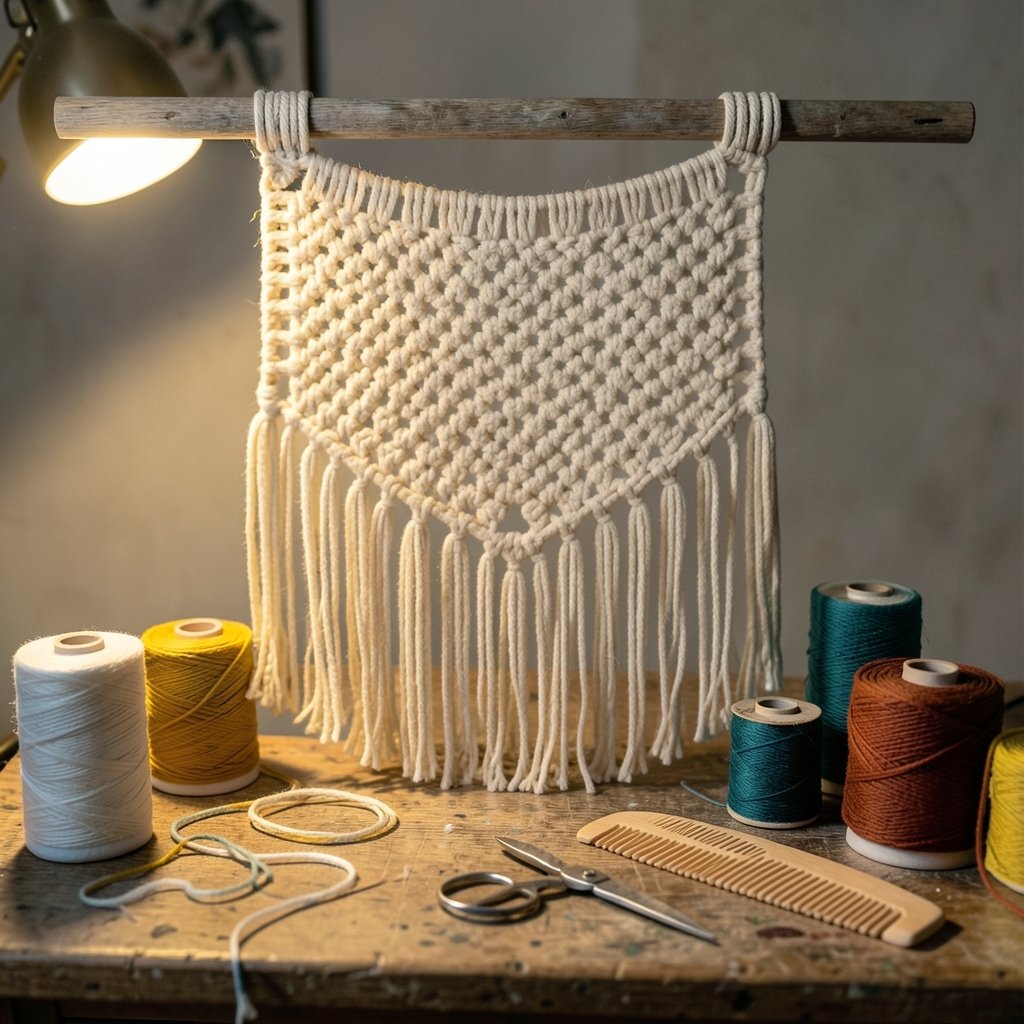
What if the only thing standing between you and a crisp, professional-looking wall hanging is a spool of string you picked up without thinking? That happens more often than most beginners admit. The pattern is fine. The knots are tied correctly. But the piece sags, frays, or looks fuzzy, and the culprit is almost always the cord itself.
Macramé is a textile technique of knotting cord by hand, with no needles, hooks, or looms involved. That definition matters because it tells you something practical: the cord is not a background material. It is the structure. Choose the wrong one and no amount of practice will fix the result. Choose well and even simple square knots look intentional.
This guide walks through what macramé cord actually is, how diameter and twist change your results, which fibers suit which projects, and the mistakes that trip up nearly every first-timer.
What Macramé Cord Really Is
The word macramé comes from French macramé, which traces back to Turkish makrama, meaning “napkin” or “towel,” and is related to Arabic miqramah, referring to an ornamental fringe or embroidered veil. The craft is commonly traced to 13th-century Arab weavers who knotted surplus thread into decorative fringes on shawls and veils, after which the technique spread to Spain, Italy, and France. Sailors then carried it around the world in the 19th century, knotting bell pulls, hammocks, and belts on long voyages.
None of that history changes what you buy at the craft store, but it does explain why the material is so simple. Macramé cord is essentially rope or thick string, and the craft’s whole appeal is that ordinary cord becomes decoration through knots alone.
Modern cord comes in three broad forms: twisted rope, single-strand cord (often sold as “string” cord), and braided or luxe cord. Terminology varies wildly between makers, so the label on the package is less reliable than the physical properties underneath it. Buyers should check twist and fiber rather than trust a product name.
Diameter: The Number That Changes Everything
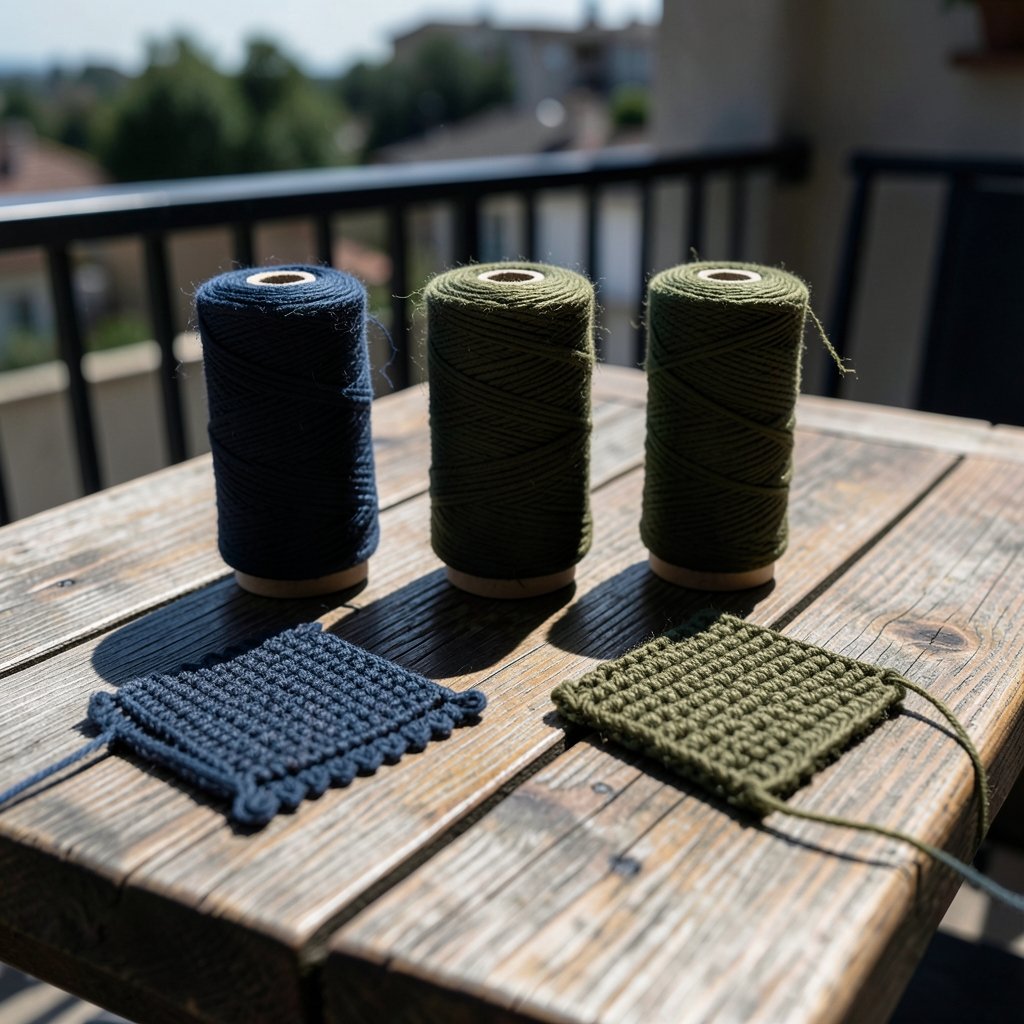
Cord for macramé is usually specified by diameter and by twist. Most projects fall in the range of roughly 2 to 5 mm, though the right choice depends heavily on scale.
| Diameter | Best for | What to expect |
|---|---|---|
| 1.5–2 mm | Jewelry, micro-macramé, fine details | Slow to work, delicate results, hard on fingers |
| 3 mm | Plant hangers, small wall hangings, keychains | The most versatile all-round size |
| 4–5 mm | Large wall hangings, curtains, chair backs | Fast coverage, bold knots, needs bigger patterns |
| 6 mm and up | Rugs, heavy structural pieces, outdoor projects | Chunky texture, limited pattern detail |
The practical rule: match cord thickness to the finished size of the piece. A 3 mm cord on a two-meter wall hanging produces knots so small they blur together from across the room. A 5 mm cord on a bracelet produces a lumpy, oversized result.
Here is where beginners go wrong most often. They buy one large spool of a single diameter and try to make everything with it. Macramé rewards having two or three sizes on hand. A 3 mm workhorse plus a 5 mm for large pieces covers most hobby projects.
Single Twist vs. Triple Twist: The Detail That Decides Your Texture
Twist is the property most buyers ignore and most experienced makers check first.
Single-ply, or single-twist, cord is made of strands twisted in one direction. It gives a soft, brushed fringe and a slightly fuzzy, organic look. It comes apart more readily at the ends, which is either a feature or a nuisance depending on the design.
3-ply, or triple-twist, cord holds firmer and produces more defined knots. The individual cords stay distinct, so patterns read clearly. It is the safer choice for structured pieces, geometric designs, and anything where crisp lines matter.
A quick test in the store: untwist the end of a sample. If it separates into distinct plies that hold their shape, you are looking at triple-twist. If it separates into a loose, wispy cloud, it is single-twist.
Fiber Types and What They Do
Cotton is the most popular macramé fiber, favored for softness and dyeability. It also takes knots cleanly and feels good against skin, which matters for wearables and plant hangers that hang indoors.
Jute and hemp are stiffer and coarser. They suit rustic, structured, or outdoor-adjacent pieces, and they hold shape well, but they are rough on hands during long sessions. Linen sits somewhere between cotton and hemp in feel. Synthetic and blended cords offer durability and sometimes a sheen, but they behave differently under tension and may not hold knots as securely.
| Fiber | Feel | Knot definition | Best use |
|---|---|---|---|
| Cotton | Soft, matte | Good to excellent | Wall hangings, plant hangers, wearables |
| Jute | Rough, stiff | Firm but coarse | Rugs, baskets, rustic decor |
| Hemp | Sturdy, natural | Firm | Outdoor pieces, structural items |
| Linen | Crisp, slightly stiff | Very good | Refined decor, table runners |
| Synthetic blends | Smooth, sometimes shiny | Variable | High-durability or outdoor projects |
One underrated point: dyed cotton cord can bleed, especially in saturated colors. If a piece will hang near a light-colored wall or be washed, test a small length in warm water first.
How Much Cord Do You Actually Need?
Cord length is usually estimated at roughly 4 to 6 times the finished length of the piece, depending on knot density and pattern. That is a rule of thumb from craft practice, not an official standard, and different teachers give different figures.
A few practical adjustments make the estimate more reliable:
- Measure the finished length you want, then multiply by five as a starting point.
- Add extra for the mounting row, since the first knots consume more cord than later ones.
- Add roughly 15–20 percent more for dense patterns with many half-hitches or wrapping knots.
- Cut longer than you think you need. Running short mid-project is far worse than wasting a little cord, because joining new cord mid-pattern shows.
Cutting cord is a one-way decision. Most experienced makers cut generously and trim the fringe at the end.
Preparation Steps That Save Hours
The unglamorous prep work is where good macramé actually happens.
- Cut all cords before you start knotting. Measure against a fixed reference, not by eye, so lengths stay consistent.
- Wrap the ends with tape or tie small overhand knots to stop fraying while you work. Single-twist cord especially needs this.
- Mount the cords with even tension. Uneven mounting is the number one reason finished pieces hang crooked.
- Work on a surface you can pin to, such as a cork board or a clamped dowel. Loose work drifts and knots tighten unevenly.
- Comb out the fringe only at the very end. Combing early tangles the remaining working cords.
If you plan to film or photograph your process for a tutorial, the same preparation discipline applies to your setup. Getting clean overhead shots of knotting is its own skill, and the general principles in this guide to recording your computer screen translate well to craft tutorials, while these screen record iPhone steps, audio tips and fixes help when you want to capture a quick demo on your phone. For anyone narrating as they knot, choosing a microphone that fits your actual recording needs matters more than most creators expect.
Common Mistakes and How to Avoid Them
Buying by name instead of by property. “Luxe,” “premium,” and “soft” mean different things to different makers. Check diameter, twist, and fiber content instead.
Using rope from a hardware store without checking it. Some utility ropes are treated with stiffening agents or lubricants that make knots slip and hands grimy. Craft cord is made to be handled.
Underestimating cord consumption. A large wall hanging can eat hundreds of meters. Buy one extra spool of the same dye lot, because colors can vary between batches.
Ignoring hand fatigue. Tight, small knots on thin cord hurt. Taking breaks and working at a comfortable scale keeps the craft enjoyable rather than punishing.
Skipping the practice knot. Tying ten square knots with a new cord before committing to a full project reveals exactly how it behaves under tension.
Storing cord badly. Left in a loose pile, cord tangles and kinks. Winding it around a card or keeping it in labeled bags keeps it workable.
Where Macramé Cord Fits in a Wider Craft Kit
Macramé rarely lives alone. Many makers pair it with other fiber and recording hobbies, and the same practical instinct applies across them. If you also document projects, a solid OBS Studio step-by-step guide for beginners covers recording and streaming in one place, and this walkthrough of how to screen record on a Mac with audio that actually works solves the sound problems that plague craft tutorials. Makers who store finished pieces or supplies in a studio with security cameras will find this advice on choosing an SD card for continuous recording that lasts unexpectedly relevant. And for anyone who likes a soundtrack while knotting, these jazz albums for beginners that actually click make good company.
A Short History Worth Knowing
Macramé is commonly traced to 13th-century Arab weavers, though that date is a widely repeated account rather than a firmly documented one. In 17th-century England the craft was known as “knotted fringe” or “McNamara lace.” It revived strongly in the 1970s as a home craft for wall hangings and plant hangers, and has seen another revival since the 2010s.
That pattern of boom and revival is useful context for buyers. Supplies surge during revivals, which means more variety but also more inconsistent labeling. The fundamentals, diameter, twist, and fiber, stay constant no matter how trendy the packaging gets.
Conclusion
Macramé cord is a simple material with a few decisive variables. Diameter sets the scale of your knots. Twist determines whether your pattern reads crisp or soft. Fiber decides how the piece feels, ages, and holds up. Get those three right and the craft becomes remarkably forgiving, because the structure is already sound.
The best approach for a beginner is modest and specific: buy a 3 mm cotton cord in triple-twist, cut generously, mount evenly, and finish one small plant hanger before investing in a large spool. That single project teaches more about tension and cord behavior than any amount of reading. From there, expanding into a 5 mm for large wall pieces and a single-twist for soft fringes happens naturally.
The history of this craft runs from medieval fringes to sailor’s hammocks to 1970s living rooms. What connects all of it is the same plain truth: ordinary cord, knotted with care, becomes something worth hanging on a wall.
FAQ
What is the best cord for macramé beginners?
A 3 mm cotton cord in triple-twist is the most forgiving starting point. It holds knots firmly, shows pattern definition clearly, and works for plant hangers, small wall hangings, and keychains. Single-twist cord is softer but frays more and is harder to control while learning.
How much cord do I need for a macramé project?
A common rule of thumb is roughly 4 to 6 times the finished length of the piece. Dense patterns sit at the higher end. Add extra for the mounting row and cut generously, since joining cord mid-pattern is visible and frustrating.
What is the difference between single-twist and 3-ply macramé cord?
Single-twist cord is made of strands twisted in one direction and gives a soft, brushed, slightly fuzzy finish. 3-ply cord holds firmer and produces more defined knots, making patterns read clearly. The untwisting test at the end of a sample reveals which one you have.
Can I use jute or hemp instead of cotton for macramé?
Yes, but expect a different result. Jute and hemp are stiffer and coarser, so they suit rustic, structured, or outdoor pieces better than soft indoor decor. They are also rougher on hands during long knotting sessions.
Does macramé cord fray, and how do I stop it?
Most cord frays, and single-twist frays fastest. Wrapping the ends with tape, tying small overhand knots, or using a bit of glue on the tips keeps working cords clean. Comb out fringe only after all knots are finished.
How do I store macramé cord so it stays usable?
Wind cord around cards or into loose coils and keep it in labeled bags by diameter and fiber. Loose piles tangle and kink, and kinked cord ties unevenly. Store away from direct sun, which can fade dyed cotton over time.



