
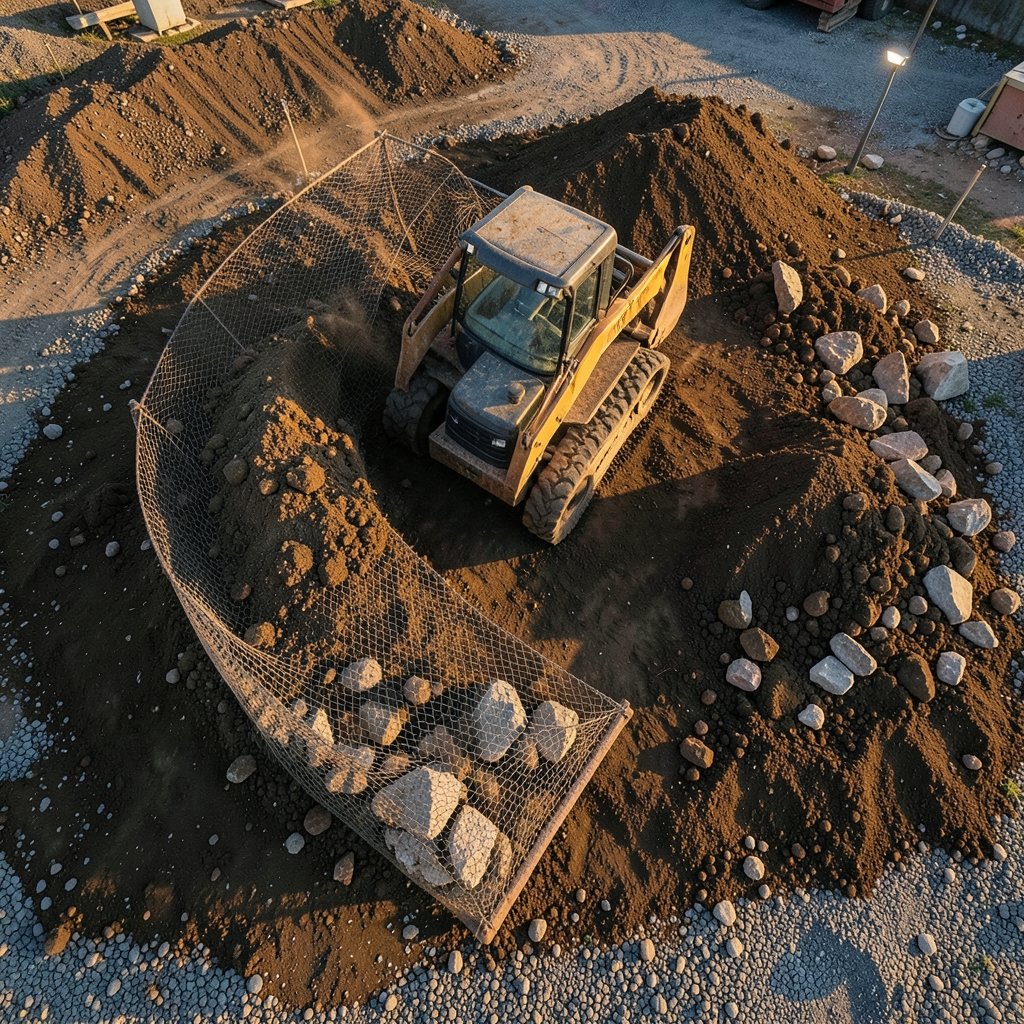
What happens when a pile of dirt, rubble, or compost is half useful material and half junk? That is the everyday problem a loader screener is built to solve. The name gets used loosely, and that is the first thing worth clearing up. A loader screener is not a standalone machine. It is a screening attachment that mounts on a wheel loader or skid-steer in place of the standard bucket, using the same quick-coupler or pin-on hitch. The loader supplies the power and the movement; the attachment does the separating.
That distinction matters because people searching the term often picture a dedicated screening plant. They are not the same thing, and the difference shapes everything about cost, setup, and what the tool can realistically do.
What a loader screener actually is
A screening bucket separates coarse material from fines. Rock, debris, and oversized lumps stay behind while soil, sand, or compost falls through. Most units fall into two broad design families, and the gap between them is bigger than it looks on a spec sheet.
| Design | How it works | Best suited to |
|---|---|---|
| Static grizzly or skeleton bucket | Fixed bars or heavy mesh; material separates as the bucket is tipped and shaken | Coarse separation, demolition rubble, rough sorting |
| Powered rotating or vibrating bucket | Drum or vibrating mechanism tumbles material actively | Topsoil, compost, damp or sticky material that clogs static bars |
A static bucket has no hydraulics to connect, which keeps it simple and cheap. A powered unit needs adequate hydraulic flow from the host machine and does more work per pass. Neither is universally better; the material decides.
Terminology varies by region and vendor. The same tool appears as a screening bucket, sieve bucket, skeleton bucket, grizzly bucket, or riddle bucket. Anyone shopping across suppliers should treat these as near-synonyms and check the specification rather than the label.
Why the term causes confusion
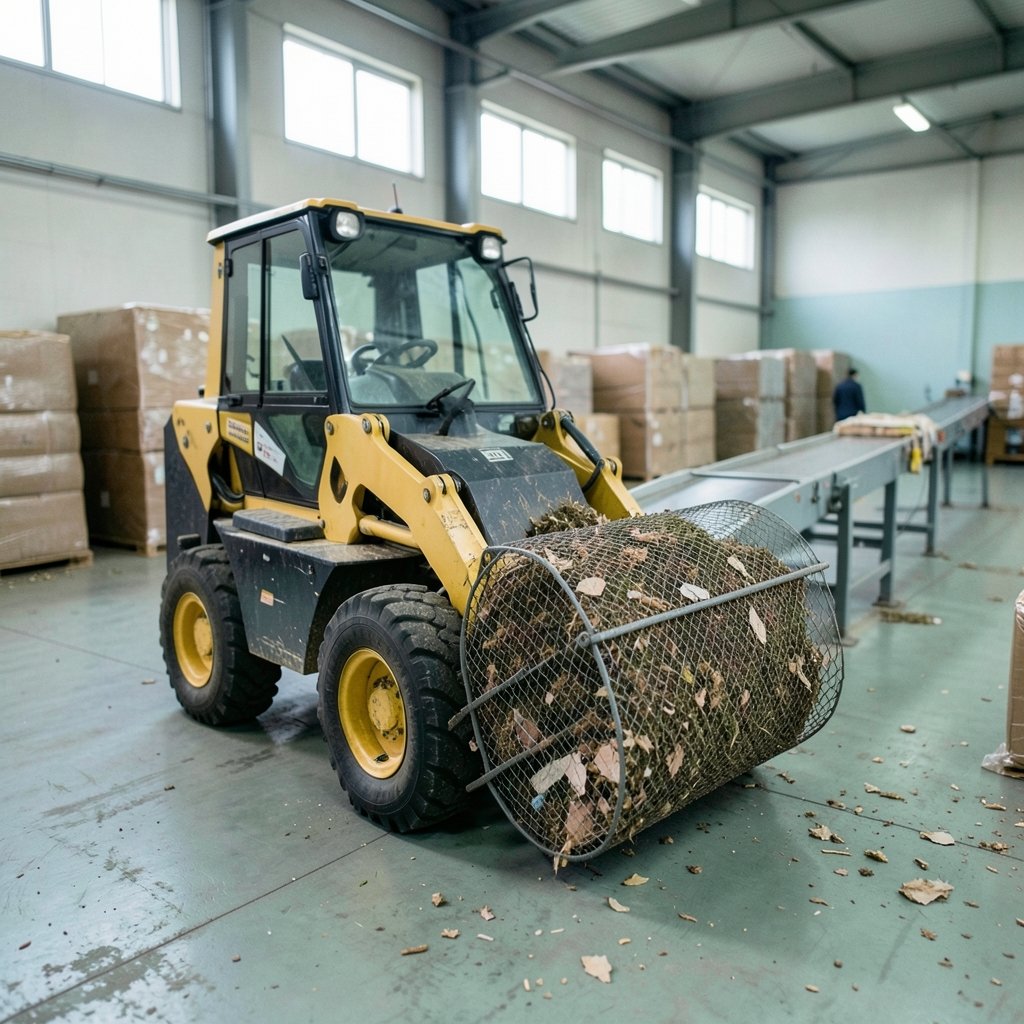
There is no authoritative standard that defines “loader screener” as a formal product class. That absence explains a lot of the muddle in search results and in conversations on site. The phrase also collides with a completely different meaning: a person who screens loads. At a loading dock or a waste and recycling facility, a screener inspects incoming material for prohibited items. Job titles and duties in that role vary by employer and jurisdiction.
So a reader arriving at this topic may want equipment advice or career information, and the two have nothing in common. This article covers the equipment sense, which is the more common intent. If the interest is the role, the attachment facts below simply do not apply.
The jobs a screening bucket handles well
The use cases are practical and repetitive, which is exactly why the attachment earns its place on a trailer.
- Separating topsoil from stones before landscaping or resale
- Screening demolition rubble to recover usable aggregate and reduce disposal volume
- Compost screening to pull out oversize material before finishing
- Sifting sand, including beach cleaning work
- Sorting construction spoil so clean material can be reused on site
The pattern across all five is the same: material that would otherwise be dumped gets split into a usable fraction and a reject fraction. On smaller sites, that alone can change the economics of a job.
Matching the attachment to the machine
This is where most costly mistakes happen. A screening bucket is only as good as the loader carrying it, and three variables decide whether the pairing works.
Lift capacity and machine size. Screening buckets are heavy, and loaded material adds more weight. A bucket that exceeds the loader’s rated capacity turns a useful tool into a stability hazard. Always check the loader’s load chart against the combined weight of attachment and material.
Hydraulic flow. Powered units need sufficient flow and pressure. A machine that runs a rotating bucket sluggishly will not screen efficiently, and the temptation to push it harder is where wear accelerates.
Aperture or bar spacing. This sets the cut size, the single most important number for matching the tool to the job. Too wide and usable fines pass through with the rejects; too narrow and the bucket blinds over and stops working. Buy for the material in front of you, not for a hypothetical future job.
Bucket weight deserves its own mention. It is listed separately from capacity on most spec sheets, and buyers routinely skim past it. On a compact loader, the attachment can eat a meaningful share of the available lift before a single scoop of material goes in.
Common mistakes that waste time and money
A few errors show up again and again in practice, and most are avoidable with a little planning.
Buying for the widest possible range of jobs. A bucket sized for everything usually screens nothing well. Aperture choice is a compromise, and picking the middle of the range often means mediocre results across the board.
Ignoring material moisture. Damp topsoil and wet compost clog static bars quickly. If the material is wet more often than not, a powered unit earns its extra cost.
Skipping the quick-coupler check. Hitch compatibility is boring until the attachment arrives and does not fit. Confirm the coupling type before ordering, not after.
Overloading to save a pass. Filling the bucket past its working load slows separation and stresses the machine. Screening works best with a steady, moderate fill.
Neglecting the host machine’s guidance. Attachments change a loader’s load chart and stability. Operators should follow the loader manufacturer’s attachment guidance alongside the attachment maker’s instructions, and the two documents are not always written with each other in mind.
Safety and stability: the part nobody reads
An attachment hanging off the front of a loader shifts the machine’s centre of gravity and changes how it behaves under load. That is not a reason to avoid screening buckets; it is a reason to read the paperwork.
The practical rules are unglamorous. Keep the load within the rated capacity for the attachment configuration, not the bare machine. Travel with the bucket low. Avoid lifting and slewing a full screening bucket over people or trenches. Recheck stability when working on slopes or soft ground, where the margin shrinks fast. Public-sector plant safety guidance consistently treats attachments as a change to the machine’s operating envelope rather than a neutral swap, and that framing is the right one.
There is a second, quieter risk: fatigue. Screening is repetitive work, and operators who run a powered bucket for hours tend to push fill rates to keep the cycle time down. The machine usually tolerates it longer than the operator does. Rotating tasks and building short breaks into long screening sessions is basic but genuinely effective.
Static or powered: a straight comparison
The choice between the two design families comes down to material, budget, and machine.
| Factor | Static grizzly bucket | Powered screening bucket |
|---|---|---|
| Upfront cost | Lower | Higher |
| Hydraulic requirement | None | Needs adequate flow and pressure |
| Wet or sticky material | Clogs easily | Handles it well |
| Setup time | Minutes | Requires hydraulic connection |
| Maintenance | Minimal | Moving parts, more checks |
| Best for | Dry, coarse, occasional work | Regular screening of soil and compost |
For a contractor who screens occasionally and works mostly dry material, a static bucket is often the sensible buy. For anyone screening topsoil or compost as a routine part of the business, the powered unit usually pays for itself in throughput. The honest test is how often the bucket will be used and how wet the material typically is.
Buying used without getting burned
Second-hand screening buckets are widely available and can be excellent value. They can also hide problems that only show up under load.
Check the bars or mesh for bending and weld cracking, since these take the most punishment. On powered units, inspect the drum or vibrating mechanism for play and look for hydraulic leaks around seals. Confirm the coupling type matches the host machine, and ask what material the bucket was previously used on. A bucket that spent its life in abrasive demolition rubble will be worn differently from one that screened compost.
Price the wear parts before committing. Replacement mesh or bar sections vary widely in cost, and a cheap bucket needing a full rebuild is not cheap at all.
Where the loader screener fits in a wider toolkit
Screening is one job among many, and it helps to see the attachment in context. A site that runs loaders, compact machines, and handheld devices tends to accumulate small technical headaches alongside the big equipment decisions. The same instinct that makes someone check a bucket’s aperture before buying also makes them look up a fix when a tool misbehaves. Steam Deck owners chasing a stubborn plugin, for instance, will find a walkthrough for the Decky loader not working Steam Deck fix 2026 useful, and it is a good reminder that “loader” means something entirely different in software.
Office-side troubleshooting follows the same pattern. A dual-monitor setup that suddenly behaves oddly is usually a settings problem, and a split screen Mac practical guide that actually works covers the common fixes. Designers mocking up equipment dashboards or job-tracking screens can follow a Figma tutorial to build a real screen from a blank file prototype and skip the guesswork.
On the hardware side, handheld buyers weighing dual-screen options get a straight comparison in this look at Ayn Thor vs Ayaneo Pocket DS and which dual-screen handheld fits. Field teams documenting jobs benefit from knowing the screen record iPhone steps, audio tips and fixes before they need them on site. And when a work laptop goes dark mid-shift, a step-by-step recovery plan to fix a black screen on Windows 11 is faster than a call to IT.
None of this is screening work, but it is the same underlying habit: understand the tool, check the specification, and fix the small things before they become expensive ones.
Conclusion
A loader screener is a simple idea wrapped in confusing terminology. It is a screening attachment, mounted where the bucket normally sits, that splits mixed material into a usable fraction and a reject fraction. The static-versus-powered decision, the aperture size, and the host machine’s lift capacity and hydraulic flow do almost all the work in determining whether the purchase pays off. Get those three right and the tool quietly earns its keep for years. Get them wrong and it becomes an expensive lump of steel on a pallet. Define the term, match it to the material, and read the load chart before anything else.
Frequently asked questions
What is a loader screener?
It is a screening attachment that fits on a wheel loader or skid-steer in place of the standard bucket. Fixed bars, mesh, or a powered drum separate coarse material from fines, so soil, sand, or compost falls through while rock and debris stay behind.
Is a loader screener the same as a screening plant?
No. A screening plant is a standalone machine. A loader screener is an attachment that relies on the host loader for power and movement. That makes it cheaper and more mobile, but generally slower for high-volume production work.
Which is better, a static or a powered screening bucket?
It depends on the material. Static grizzly buckets suit dry, coarse work and occasional use, with no hydraulics to connect. Powered rotating or vibrating buckets handle wet, sticky material far better and give higher throughput, at a higher price and with more maintenance.
What aperture size should I choose?
Match the bar spacing or mesh size to the material and the cut you actually need. Too wide and usable fines pass through with the rejects; too narrow and the bucket blinds over. Buy for the job in front of you rather than a hypothetical future one.
Can any loader run a screening bucket?
Most can physically mount one, but not all can run it safely or efficiently. Check the loader’s rated lift capacity against the combined weight of attachment and material, and confirm hydraulic flow and pressure if the unit is powered. Hitch compatibility needs checking before ordering.
Does a screening bucket affect loader stability?
Yes. Attachments change the machine’s load chart and centre of gravity, so stability margins shrink, especially on slopes or soft ground. Operators should follow both the loader manufacturer’s attachment guidance and the attachment maker’s instructions, and keep loads within the rated capacity for that configuration.



