

When did someone last scrape, polish, and probe your teeth and then hand you a bill for something called “prophylaxis”? If you have wondered why that word appears on your dental invoice, or whether the appointment was worth the time, that question is common. Dental prophylaxis is one of the most common preventive services in dentistry, and it is also one of the most misunderstood. It is not a deep clean, it is not gum treatment, and some people may not need it every six months. Below is a direct explanation of what prophylaxis dental care involves, what the evidence says, and how to tell whether you are getting the right version of it.
What Dental Prophylaxis Actually Means
Dental prophylaxis is the clinical term for preventive care that removes plaque and hardened calculus (tartar) from the teeth, polishes the tooth surfaces, and gives the patient advice on keeping things clean at home. In plain terms, it is the routine cleaning you get from a hygienist or dentist when your gums are basically healthy.
The word “prophylaxis” simply means prevention. That framing matters, because prophylaxis is designed to stop problems before they start, not to treat disease that already exists. This is the key distinction that confuses a lot of patients. A prophylaxis is a maintenance service. Scaling and root planing, by contrast, is a therapeutic procedure for active gum disease, and it goes below the gumline where a routine cleaning does not.
In the United States, prophylaxis is usually billed under specific codes in the dental coding system, with separate codes for adults and children. The exact numbers get revised over time, so patients should not memorize them, but the distinction between a preventive cleaning and a periodontal treatment is worth understanding because it affects both your bill and your care plan.
Prophylaxis vs. Deep Cleaning: Not the Same Service
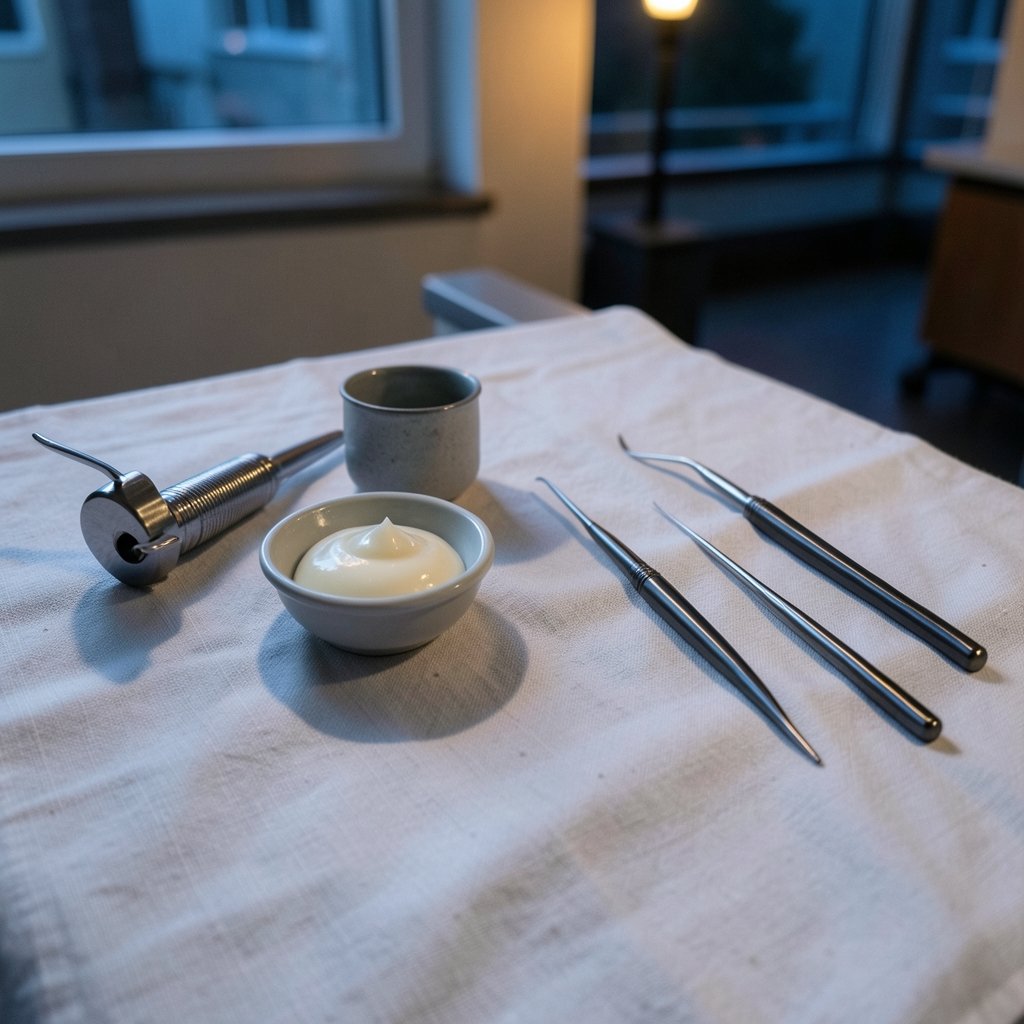
One of the most common mistakes people make is assuming every “cleaning” is the same. It is not, and the difference changes what happens in the chair and what you pay.
| Feature | Routine prophylaxis | Scaling and root planing |
|---|---|---|
| Purpose | Prevention and maintenance | Treatment of active gum disease |
| Where it works | At and slightly below the gumline | Well below the gumline, onto root surfaces |
| Typical patient | Healthy gums, low risk | Bleeding gums, deep pockets, bone loss |
| Frequency | Varies by risk | Usually staged in quadrants |
| Anesthesia | Rarely needed | Often needed |
If a hygienist starts measuring deep pockets and recommending a “deep cleaning,” that is a treatment procedure, not prophylaxis. Patients should feel comfortable asking which one they are receiving and why. A good practice will explain the reasoning without being asked twice.
What Happens During a Typical Appointment
The mechanics of a prophylaxis are fairly consistent from office to office, even if the tools and the small talk vary.
- Assessment. The clinician looks at your gums, checks for bleeding, and may measure pocket depth around each tooth. This step decides whether a routine cleaning is appropriate or whether something deeper is needed.
- Removal of deposits. Using hand instruments or an ultrasonic scaler, the clinician removes soft plaque and hard calculus from the tooth surfaces, especially around the gumline and between teeth.
- Polishing. A rotating cup with a gritty paste smooths the enamel, which makes it harder for plaque to stick afterward.
- Flossing and rinsing. Interproximal cleaning clears out what the scaler could not reach.
- Fluoride and advice. Depending on your risk level, a fluoride treatment may follow, along with coaching on brushing, flossing, and anything the clinician noticed.
That last step is where a lot of the real value sits. A cleaning removes what has already built up, but the advice is what slows the next buildup. Patients who skip the conversation and only show up for the scrape tend to be back in the same chair with the same problems.
What the Evidence Says About Routine Cleaning
Here is where the conversation gets more interesting, and more honest. The assumption that everyone needs a professional cleaning every six months is deeply embedded in dental culture, but the research is more nuanced than the marketing suggests.
A well-known Cochrane review examined routine scaling and polishing for healthy adults and found little or no difference in tooth loss or gingivitis compared with no treatment, though there was some short-term reduction in calculus. In other words, for a low-risk adult with healthy gums, the benefit of a routine professional cleaning is modest and mostly cosmetic in the short term. That does not mean it is worthless. It means the benefit is not the dramatic disease-prevention effect many people assume.
The picture changes for higher-risk groups. People with a history of gum disease, smokers, those with diabetes, and patients with poor plaque control generally benefit more from regular professional maintenance. Children and adolescents also tend to gain more, particularly from preventive measures like fluoride varnish, which research has shown reduces cavity increments, with the strongest evidence in permanent teeth.
There is also a real debate about frequency. In the UK, national health guidance suggests check-ups every three to twenty-four months depending on a person’s risk, rather than a fixed six-month rhythm. That risk-based approach is increasingly common among clinicians who follow the evidence, even where insurance schedules still push a twice-yearly default.
Why the Six-Month Rule Persists
If the evidence is mixed, why does almost every dental office still send a reminder every six months? A few practical reasons explain it.
First, six months is a convenient default that catches problems before they become expensive. Second, many insurance plans cover two cleanings a year, so the schedule and the coverage reinforce each other. Third, some patients genuinely do build up calculus quickly and benefit from more frequent visits. And fourth, the appointment is a chance to catch small issues, like a tiny cavity or early gum inflammation, while they are still cheap to fix.
The honest framing is this: six months is a reasonable starting point for most people, not a law of nature. Your actual interval should depend on your risk profile, and a good clinician will adjust it. Someone with excellent home care and no gum disease history might do fine on a yearly schedule. Someone with bleeding gums and a smoking habit might need quarterly visits.
Who Benefits Most From Prophylaxis Dental Care
Risk is not evenly distributed, and neither is the value of preventive cleaning. The groups that tend to benefit most include:
- People with a history of periodontal disease, who need ongoing maintenance to keep pockets from deepening again.
- Smokers, whose gum health and healing are compromised.
- People with diabetes, where blood sugar and gum inflammation influence each other.
- Patients with crowded teeth or difficult-to-clean restorations, where plaque accumulates in places a toothbrush cannot reach.
- Children and teens, especially with fluoride varnish as part of the visit.
- Anyone who has not had professional care in several years, simply because the backlog of calculus needs clearing.
For a healthy adult with good hygiene and no risk factors, the calculus is thinner, the gums are calm, and the marginal benefit of a cleaning is smaller. That is not an argument for skipping care entirely. It is an argument for matching the frequency to the person.
The Limits of Prophylaxis: What It Cannot Fix
Patients sometimes expect a cleaning to solve problems it was never designed to touch. It is worth being clear about the boundaries.
A prophylaxis will not whiten teeth beyond removing surface stains. It will not fix crooked teeth, close gaps, or repair chips. It will not reverse gum disease once pockets have formed, and it will not stop decay that has already reached the dentin. And it will not compensate for skipped brushing at home. If you want to understand where the line sits between what a cleaning can and cannot do, including for dents and surface damage, a closer look at what an auto dent removal service paintless repair can cannot fix clarifies the same principle in a different repair context: some damage is purely cosmetic and removable, and some requires a different kind of intervention entirely.
The same logic applies to teeth. Surface stains and soft deposits respond to polishing. Structural problems do not.
Common Mistakes Patients Make
A few habits reliably undercut the value of a prophylaxis appointment.
- Treating the cleaning as the whole strategy. The appointment is a reset, not a substitute for daily care. If nothing changes at home, the calculus returns on schedule.
- Skipping visits because “nothing hurts.” Gum disease and early decay are famously quiet. Pain is a late signal.
- Not asking which procedure is being done. Confusion between prophylaxis and periodontal treatment leads to billing surprises and, worse, to patients declining care they actually need.
- Ignoring the home-care advice. The two minutes of coaching at the end of the visit is often the most useful part.
- Assuming one interval fits forever. Risk changes with age, medication, pregnancy, and health conditions. The schedule should change too.
Fluoride and Prevention Beyond the Chair
Prophylaxis is one piece of a broader prevention picture. Fluoride varnish, applied during preventive visits, has solid evidence behind it for reducing cavities in children, particularly in permanent teeth. Community water fluoridation is widely described by public health agencies as an effective population-level measure for reducing tooth decay, though researchers have noted that contemporary evidence on side effects and inequalities is more limited than the historical data.
For adults, the biggest levers are boring and effective: brush twice daily with fluoride toothpaste, clean between the teeth daily, limit frequent sugary snacks, and do not smoke. None of that requires an appointment, and all of it reduces how much there is to scrape off at the next one.
How to Get More From Your Next Visit
A few practical moves make the appointment more useful.
Ask what your pocket depths were and whether they changed since last time. Ask whether the visit is a prophylaxis or periodontal maintenance, and why. Ask what specific thing you should change at home before the next visit. If the answer is “just keep doing what you are doing,” that is a fine answer, but it should be based on an actual assessment rather than a habit.
It also helps to be honest about your routine. Clinicians can tailor advice far better when they know you floss twice a week rather than twice a day. There is no judgment in that conversation, only better targeting.
Conclusion
Dental prophylaxis is a preventive service, not a cure-all, and the evidence supports it most strongly for people at higher risk of gum disease and decay. For healthy adults, the benefit is real but modest, and the six-month interval is a sensible default rather than a universal rule. The patients who get the most from prophylaxis are the ones who treat it as a checkpoint rather than a fix: they show up, they ask what the numbers mean, they adjust their home routine, and they let their clinician set a recall interval that matches their actual risk. That approach costs less over a lifetime, causes fewer surprises at the front desk, and keeps the teeth doing their job for longer.
Frequently Asked Questions
What is dental prophylaxis?
Dental prophylaxis is a preventive cleaning that removes plaque and hardened calculus from tooth surfaces, polishes the enamel, and includes advice on home care. It is distinct from periodontal treatment, which addresses active gum disease below the gumline.
Is a prophylaxis the same as a deep cleaning?
No. A prophylaxis is a preventive maintenance service for people with generally healthy gums. Scaling and root planing, often called a deep cleaning, is a therapeutic procedure for active gum disease and reaches far below the gumline onto root surfaces.
How often should you get a prophylaxis?
There is no single correct interval. Many practices default to every six months, but risk-based guidance suggests intervals ranging from three to twenty-four months depending on gum health, hygiene, smoking status, and medical conditions. Your clinician should set the interval based on your risk profile, not a fixed rule.
Does routine cleaning actually prevent tooth loss?
The evidence is mixed. Research on routine scaling and polishing in healthy adults found little or no difference in tooth loss or gingivitis compared with no treatment, though it did reduce calculus in the short term. Benefits are clearer for people at higher risk of gum disease and for children receiving preventive care such as fluoride varnish.
Is prophylaxis painful?
For most people, a routine prophylaxis is comfortable and requires no anesthesia. You may feel scraping, pressure, and cold water from the ultrasonic scaler, and sensitive areas may tingle briefly. Discomfort is usually greater when there is more calculus buildup or inflamed gums.
Can a prophylaxis whiten teeth?
Only slightly. Polishing removes surface stains from coffee, tea, and tobacco, which can make teeth look brighter. It does not change the underlying color of the tooth, so it is not a substitute for whitening treatment.



