
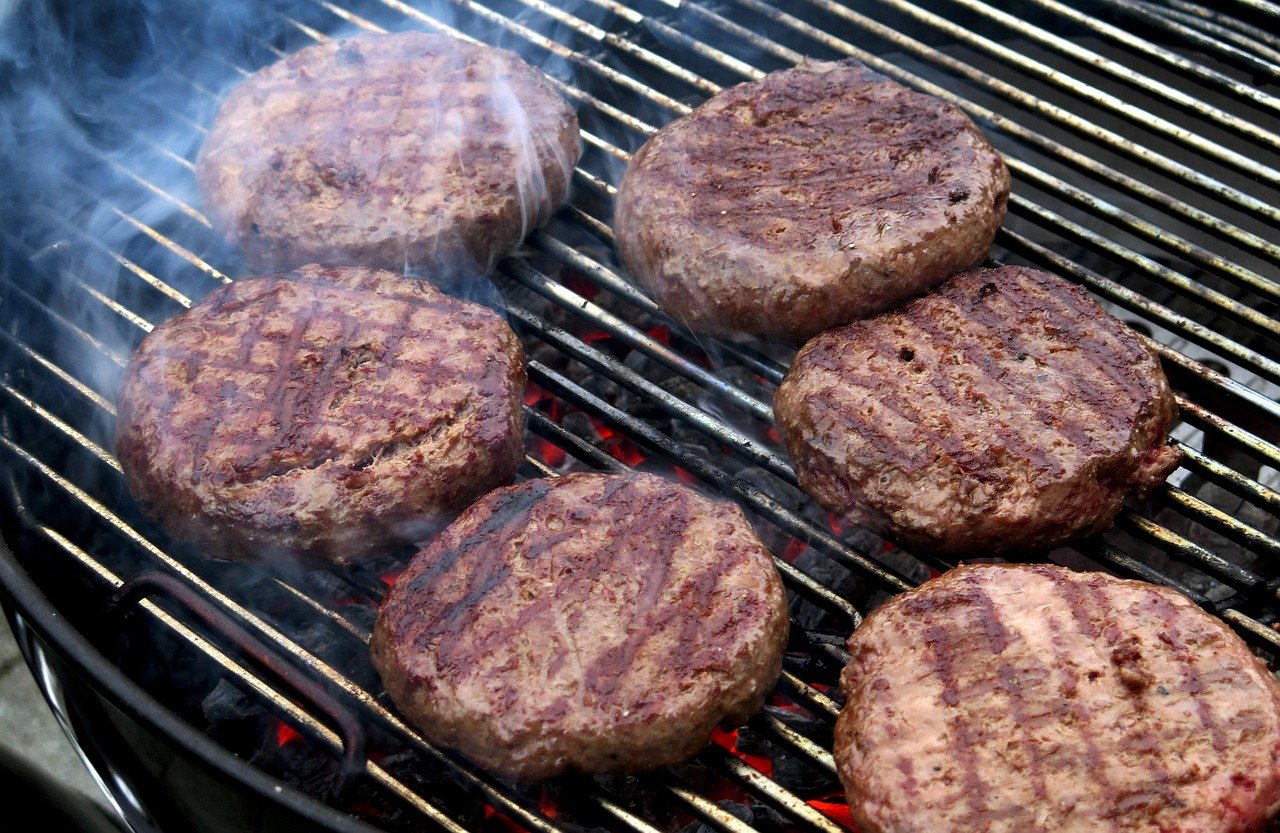
What is the actual temperature a hamburger needs to reach before it is safe to eat? It sounds like a simple question, but it opens one of the most debated topics in home cooking. Some people swear by a juicy pink center. Others refuse to eat a burger that isn’t gray all the way through. And somewhere in the middle, food safety agencies, chefs, and food scientists all have opinions that don’t always agree.
The answer matters because ground beef is riskier than a steak. When beef is ground, bacteria that lived on the surface get mixed throughout the entire patty. That means the outside of a burger is no safer than the inside, and the whole thing has to be handled with more care. This guide walks through the official numbers, what they really mean, how to measure them correctly, and where the rules bend for people who want a medium-rare burger.
The Official Number: 160 °F (71 °C)
The standard safe internal temperature for ground meat, including hamburger, is 160 °F (71 °C). This is the figure published in the safe minimum internal temperature chart from the USDA’s Food Safety and Inspection Service, and it has been the agency’s position for decades.
It’s worth being clear about what this number is and isn’t. It is a safety standard, not a doneness preference. The agency’s guidance exists to destroy pathogens such as E. coli O157:H7, which can be present in ground beef. The USDA does not endorse medium-rare burgers, and its materials say so plainly. If you follow official guidance to the letter, a burger is done when it hits 160 °F.
There’s also a rest time attached to that guidance. After cooking ground meat, the recommendation is to let it rest for 3 minutes before eating. This isn’t about juiciness, though it helps there too. It’s part of the same food-safety framework.
Why Ground Beef Gets Its Own Rule
People often wonder why they can eat a steak at 130 °F but are told a burger needs 160 °F. The difference is surface area and mixing. On a whole cut of beef, bacteria sit mostly on the outside, where the heat of the pan hits them directly. Grinding distributes those surface bacteria throughout the meat. A burger patty is therefore contaminated all the way through, and every part of it needs to reach a safe temperature.
This is also why ground meat from any animal, including pork, lamb, and poultry blends, follows stricter rules than whole cuts. The same logic applies to meatloaf and meatballs.
How the UK Handles It Differently
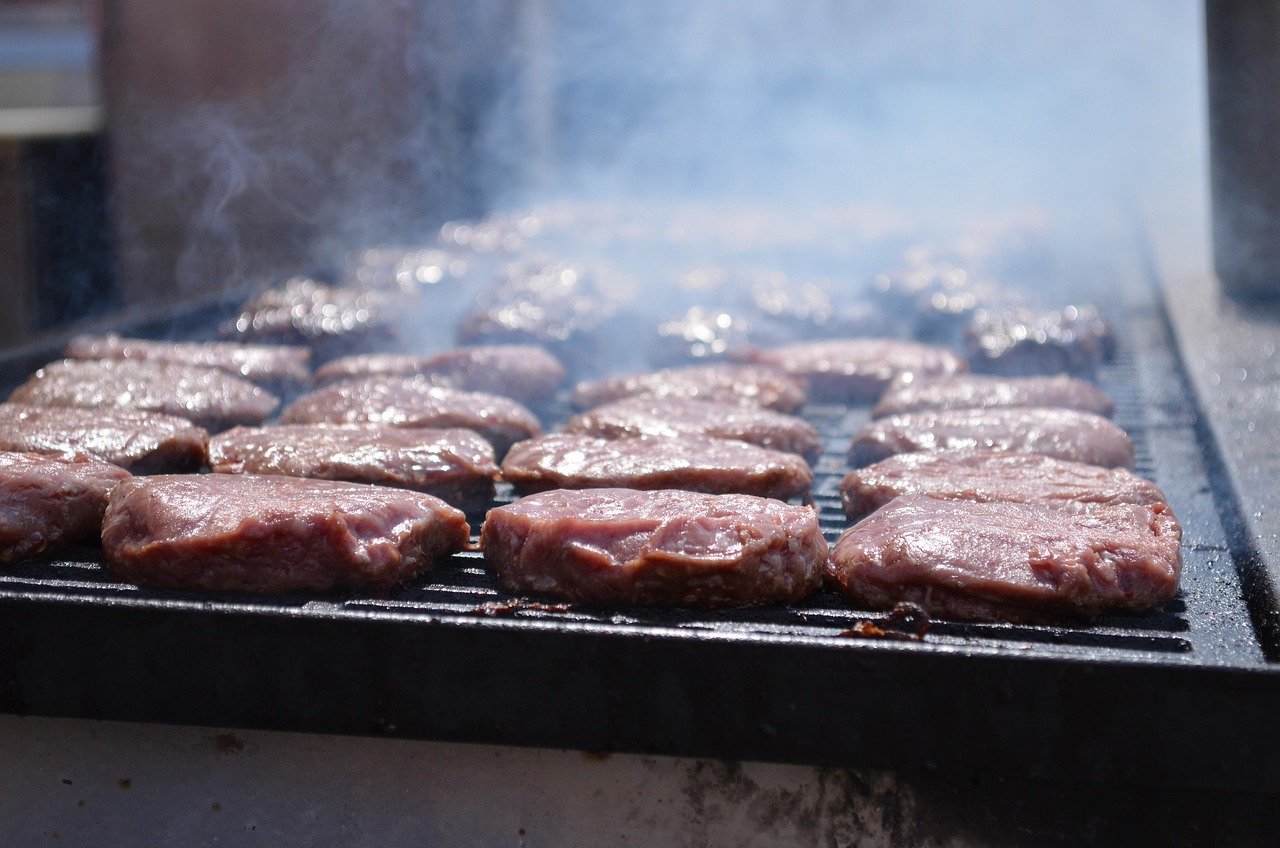
Not every country frames the rule the same way. In the UK, the Food Standards Agency advises that burgers made from minced meat should be cooked until they are steaming hot all the way through, with no pink meat remaining and juices running clear. Rather than handing home cooks a single temperature figure, the guidance focuses on observable signs.
This is a genuine international divergence, and it’s useful to know about because it explains why recipes from different countries sometimes seem to contradict each other. A British recipe might tell you to cook until the juices run clear. An American one might tell you to hit 160 °F. Both are aiming at the same safety outcome, but they give you different tools to check it.
For practical purposes, a thermometer is the more reliable of the two methods. Visual cues like juice color can mislead, especially on a grill where lighting is poor and patties are small.
The Science Behind Time and Temperature
Here’s where things get interesting, and where a lot of confusion lives. Pathogen lethality depends on both temperature and time. A lower temperature held for a longer period can achieve the same bacterial reduction as a higher temperature held briefly. This principle is the foundation of sous-vide cooking and of pasteurization tables used in food science.
Douglas Baldwin’s widely cited sous-vide guide lays out these time-temperature relationships in detail, and it’s the reference many serious home cooks use when they want to cook meat at lower temperatures safely.
It’s important to flag what this principle is and isn’t. It is a scientific principle, well established and used commercially. It is not a regulatory standard for home burger cooking. The official guidance of 160 °F is built around instant lethality, which is simpler and safer for a home cook who isn’t tracking time precisely. If you want to cook a burger to 140 °F and hold it there long enough to pasteurize it, you are relying on food science rather than on official advice, and you should understand the difference.
What Chefs Do
Some chefs and food writers advocate cooking burgers to around 130–140 °F (54–60 °C) for a medium-rare result, leaning on time-temperature pasteurization, high-quality sourcing, or both. This directly conflicts with the 160 °F guidance. The honest way to present it is to say both things clearly: the regulatory position is 160 °F, and some experienced cooks choose to go lower based on their own risk assessment. Neither position is a secret, and readers deserve to see the tension rather than have it smoothed over.
If you do choose to cook below 160 °F, sourcing becomes far more important. Freshly ground beef from a trusted butcher, ground on clean equipment and kept cold, carries a different risk profile than a package that has sat in a fridge for days. Grinding your own meat at home is another route some cooks take, though it doesn’t eliminate risk entirely.
Why Color Lies to You
The single most common mistake people make with burgers is judging doneness by color. Color is an unreliable indicator. Ground beef can brown prematurely, before it’s safely cooked, due to oxidation or pH differences. It can also stay pink when it is perfectly safe, for reasons that have nothing to do with rawness.
The USDA’s own fact sheet on the color of cooked ground beef explains this in detail. Factors that can keep a burger pink include:
- Nitrates and nitrites from curing salts or certain ingredients
- Young animal meat, which can hold more pink pigment
- High pH in the meat, which affects how pigments set during cooking
- Oven conditions, such as cooking in a gas oven where combustion gases interact with the meat
The reverse also happens. A burger can look brown and gray on the outside while the center is still undercooked. This is exactly why a thermometer beats a visual check every time. Relying on color alone is a gamble in both directions.
How to Take a Burger’s Temperature Correctly
Placement matters more than most people realize. A thermometer reading taken in the wrong spot can be off by 20 degrees or more. The guidance is to insert the probe into the thickest part of the patty, avoiding the edge and avoiding pockets of fat.
Here’s a method that works in practice:
- Use an instant-read thermometer. A basic digital probe is fine. You don’t need anything fancy.
- Cook the patty to roughly the right point first. Don’t probe a raw burger repeatedly; you’ll just poke channels for juices to escape.
- Insert the probe from the side into the center of the thickest part, not from the top. Side entry gives you a more accurate reading of the core.
- Avoid the edges and any visible fat. Fat renders and reads hotter than the meat around it.
- Wait a few seconds for the reading to stabilize. Instant-read thermometers still take a moment.
- Check more than one patty. Patties vary in thickness, and the thickest one is the one that matters.
- Rest for 3 minutes before serving, per the standard guidance.
A common mistake is checking only the burger that looks thickest and assuming the rest are fine. In practice, patties from the same batch can differ by 10 degrees or more depending on where they sat on the grill.
Thermometer Hygiene
One more practical point: clean the probe between checks, especially if you’re moving from a raw patty to a cooked one. Cross-contamination on the thermometer itself is a real and easily overlooked risk. A quick wipe with a sanitizing wipe between readings solves it.
Common Mistakes That Undermine a Good Burger
Beyond color and placement, a few habits consistently cause trouble.
Cooking cold patties straight from the fridge. They cook unevenly, with the outside overcooking before the center comes up to temperature. Letting patties sit at room temperature for 15 to 20 minutes helps.
Overworking the meat. Compacted patties cook unevenly and turn dense. Handle the meat gently and form a slight dimple in the center so the burger doesn’t bulge.
Judging by time alone. “Four minutes a side” is a starting point, not a rule. Patty thickness, starting temperature, and grill heat all change the math. Time gets you close; a thermometer gets you there.
Skipping the rest. Those 3 minutes let heat redistribute and juices settle. Cutting in immediately loses moisture and gives a misleading read on doneness.
Assuming a grill is hotter than it is. Grills lose heat fast when you open the lid and load them with cold meat. A thermometer in the meat, instead of only on the grate, tells you what is actually happening.
If you’re the type who likes monitoring numbers closely, some of the same habits that make temperature monitoring reliable elsewhere apply here. The same care you’d put into checking a device’s heat, as covered in this guide to checking CPU temperature on Windows 11, translates well to the kitchen: measure at the right spot, don’t trust appearances, and verify rather than assume. The same principle shows up in other temperature-sensitive kitchen gear, like understanding what gooseneck kettle accuracy numbers really mean when you’re brewing coffee to a specific degree. (Smart bulb color temperature bedrooms pick right kelvin)
A Quick Reference Table
| Doneness | Internal Temperature | Official Safety Status |
|---|---|---|
| Rare | 120–125 °F (49–52 °C) | Not recommended |
| Medium rare | 130–135 °F (54–57 °C) | Not recommended |
| Medium | 140–145 °F (60–63 °C) | Not recommended |
| Medium well | 150–155 °F (66–68 °C) | Below standard |
| Well done | 160 °F (71 °C) and above | Meets the standard |
The table makes the tension visible. Everything below 160 °F sits outside official guidance, even though plenty of people eat burgers in that range. Knowing the numbers lets you make a deliberate choice rather than an accidental one.
Does the Same Rule Apply to Other Ground Meat?
Yes, with variations. Ground pork and ground lamb follow the same 160 °F standard. Ground poultry is stricter, at 165 °F (74 °C), because poultry carries a higher risk of Salmonella and Campylobacter. Blended burgers that mix beef with bacon or other pork products should be treated as ground meat and cooked to 160 °F.
Veggie burgers are a different case entirely. They don’t carry the same bacterial risk as raw ground beef, so the temperature guidance is about texture and preference rather than safety. That said, if a veggie burger contains eggs or dairy, standard food-safety care still applies.
Conclusion
The hamburger temperature question has a clear official answer, and a messier real-world one. The safety standard is 160 °F (71 °C), measured in the thickest part of the patty, followed by a 3-minute rest. That figure exists because ground beef distributes bacteria throughout the meat, and it’s the position of the USDA and, in a different form, the UK’s Food Standards Agency.
At the same time, food science shows that time and temperature work together, which is why some cooks feel comfortable going lower. Color won’t tell you the truth either way. What actually works in practice is simple: buy good meat, keep it cold until you’re ready, use an instant-read thermometer, probe the right spot, and rest the burger before you serve it. Whether you stop at 160 °F or choose to go lower is a decision you make with the numbers in front of you, and that’s a much better place to stand than guessing.
Frequently Asked Questions
What temperature should a hamburger be cooked to?
The standard safe internal temperature for hamburger is 160 °F (71 °C), measured in the thickest part of the patty. This applies to ground beef, pork, and lamb. Ground poultry needs to reach 165 °F (74 °C). A 3-minute rest after cooking is also recommended.
Can you eat a burger medium rare?
Not according to official food-safety guidance. Both the USDA and the UK’s Food Standards Agency advise against burgers with any pink in the middle, because bacteria are mixed throughout ground meat rather than sitting on the surface. Some chefs cook to 130–140 °F using time-temperature pasteurization and careful sourcing, but that falls outside the official standard.
Is it safe to judge a burger by its color?
No. Color is unreliable in both directions. Ground beef can brown before it’s safely cooked, and it can stay pink when it’s fully safe, due to factors like nitrates, the animal’s age, or the meat’s pH. A thermometer is the only dependable check.
How long should a burger rest after cooking?
The standard guidance is 3 minutes. Resting lets heat redistribute through the patty and allows juices to settle, so the burger stays moist when you cut into it. It’s a short wait that improves both texture and accuracy of doneness.
Where exactly should the thermometer go?
Insert the probe into the thickest part of the patty, from the side rather than the top. Avoid the edges and any visible fat, since fat reads hotter than the surrounding meat. Clean the probe between readings if you’re checking multiple patties, especially after touching raw meat.
Does grinding your own beef make a rare burger safe?
It reduces some risk but doesn’t eliminate it. Grinding your own meat lets you control cleanliness and freshness, and some cooks consider that enough to justify cooking below 160 °F. However, the bacteria still get distributed throughout the patty, so the core temperature principle doesn’t change. It’s a risk-reduction step, not a guarantee.



