
Can a single cheek swab really tell you where your ancestors came from, what you should eat, and who your cousins are? That is the promise behind Cri Genetics, a direct-to-consumer DNA testing company that has built a following on ancestry reports, trait predictions, and a much-debated relative-matching feature. The pitch is slick, the price is often lower than the big names in the space, and the marketing leans hard on the idea that your DNA holds answers your doctor never gave you.
But what does the test actually measure, where do its claims hold up, and where should a careful buyer slow down? This article walks through how Cri Genetics works, what its reports can and cannot tell you, the regulatory and privacy landscape that surrounds every DTC genetic test, and the practical mistakes people make when they send their spit to a lab. If you are weighing a purchase or trying to interpret results you already have, the goal here is to separate solid science from sales language.
What Cri Genetics Is and How the Test Works
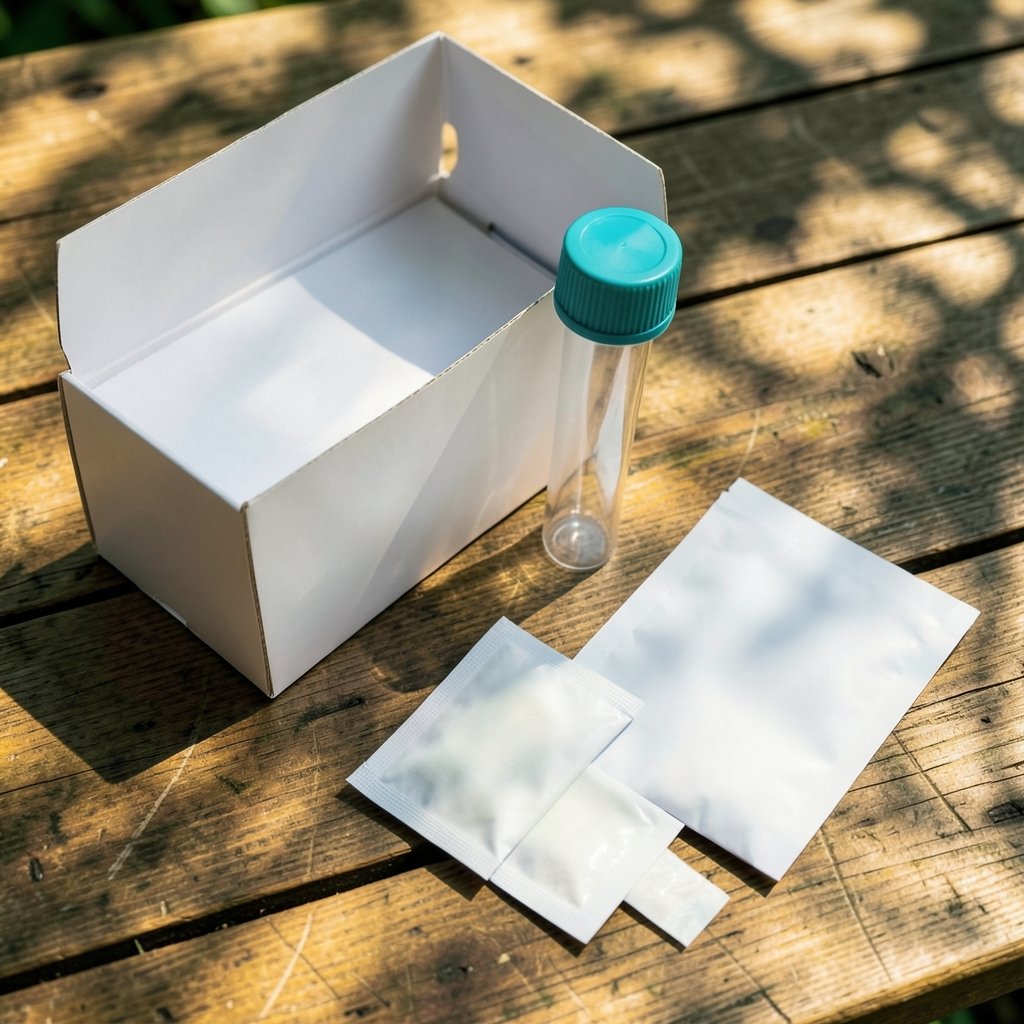
Cri Genetics is a direct-to-consumer (DTC) genetic testing company. It sells kits that customers order online, use at home to collect a DNA sample (typically through a cheek swab), and mail back to a laboratory for analysis. Results come back through an online dashboard and a report. The company has been active since the late 2010s and has marketed ancestry breakdowns, trait and wellness insights, and health-related reports alongside its relative-matching feature.
The underlying technology matters more than most buyers realize. Consumer tests of this type usually rely on genotyping arrays, sometimes called “SNP chips.” These chips read a few hundred thousand to a million specific points in your genome where human variation is common and well studied. They do not read your entire genome. They do not sequence every letter of your DNA. They sample known landmarks and compare the pattern to reference datasets.
That design is cheap, fast, and perfectly adequate for many ancestry and trait estimates. It is also the reason a consumer test is not a diagnostic medical test. A clinical genetic test ordered by a physician often uses different technology and is validated for specific disease questions. A DTC array test is a broad, low-cost snapshot. Understanding that distinction is the single most useful thing you can carry into any conversation about Cri Genetics or any of its competitors.
What the report includes
Most Cri Genetics packages bundle several report types:
| Report type | What it estimates | Confidence level |
|---|---|---|
| Ancestry composition | Regional and population-level percentages | Moderate; changes with reference panel updates |
| Trait reports | Likely physical and sensory traits (e.g., taste, hair, sleep patterns) | Variable; often probabilistic |
| Health and wellness insights | Risk tendencies and lifestyle-related markers | Low to moderate; not diagnostic |
| Relative matching | Shared DNA segments with other users | Depends heavily on database size |
The last row is where the most controversy lives, and it deserves its own section.
The Relative-Matching Claim and Why Genetic Genealogists Pushed Back

Cri Genetics has publicly claimed that its test can identify close relatives or “DNA matches” with high accuracy. That claim drew sharp criticism from experienced genetic genealogists, and the criticism is worth understanding because it explains a lot about how consumer genetics actually works.
Relative matching is not a property of your test alone. It works by comparing your shared DNA segments against other people who have also tested and who have agreed to be matched. If the database is small, or if the matching feature is limited, you can have a perfectly accurate read of your own genome and still find no relatives. The test is not “finding” your family in a vacuum. It is finding overlap inside a pool.
So when a company promises high-accuracy relative identification, the honest question is: high accuracy against what pool, and with what thresholds? Genetic genealogists generally want to see the size of the matching database, the centimorgan thresholds used to call a match, and clear explanations of false-positive risk. Without those details, a bold accuracy claim is marketing, not methodology.
Practical takeaway: if relative matching is the reason you are buying, compare database sizes across companies before you buy, not after. A cheaper kit with a tiny database can cost you more in wasted time than a pricier kit that actually surfaces cousins.
Ancestry Percentages Are Statistical Estimates, Not Facts
Here is the part that surprises almost everyone who tests with more than one company: the same person can get different ancestry percentages from different labs. This is not fraud. It is the nature of the method.
Ancestry estimates are built by comparing your markers to reference populations — groups of people with known geographic origins. When a company updates its reference panel, adds new population samples, or refines its algorithm, your percentages can shift. A region that showed 12 percent last year might show 7 percent after an update, or split into two newly distinguished regions.
What this means in practice:
- Treat small percentages (roughly under 5 percent) as suggestive, not settled.
- Treat broad regional labels as more reliable than narrow sub-regional ones.
- Expect your report to change over time as the science and the reference data improve.
- Do not use ancestry percentages to make legal, medical, or identity claims.
A useful habit is to screenshot your results each time you look at them. When an update lands, you will have a record of what changed, which makes the shifting numbers far less confusing.
Health Claims, FDA Oversight, and the Line Between Insight and Diagnosis
DTC health-risk testing in the United States sits under FDA oversight, and the framework was set in April 2017 when the FDA authorized marketing of the first direct-to-consumer tests to inform genetic risk for certain medical conditions. That authorization established the benchmark against which other DTC health claims are judged: what conditions are covered, what the evidence base is, and how results are communicated so consumers are not misled.
For a buyer, the practical question is not “is this test regulated?” but “what exactly has this specific report been cleared or authorized to say?” A wellness insight about caffeine metabolism and a risk estimate for a serious disease are worlds apart in evidentiary weight. If a report implies you can skip a screening or change a medication based on a swab, that is a red flag. Genetic risk is one input among many, and it is never a diagnosis.
Consumer-protection scrutiny has also shaped this market. The FTC has acted against DTC genetic companies over deceptive health claims and failures to protect genetic data, including a 2019 settlement with Vitagene. That enforcement environment is the context every DTC company, Cri Genetics included, operates inside.
Privacy: What GINA Covers and What It Leaves Open
Privacy is the question that should come before price. Genetic data is uniquely identifying. It is shared in part with relatives who never consented to anything. And it cannot be reissued like a credit card number.
The Genetic Information Nondiscrimination Act (GINA), signed in May 2008, prohibits health insurers and employers from discriminating based on genetic information. That is real and important protection. But GINA has a well-known gap: it does not cover life insurance, disability insurance, or long-term-care insurance. Those products can, in many circumstances, ask about or use genetic information.
State law adds another layer. Some states impose consent and data-handling requirements on DTC genetic testing companies; California’s genetic privacy law, effective January 1, 2021, is one example. The rules vary widely by location, which means the protections you get depend partly on where you live.
Before you buy, read the consent and privacy documents and look for four things:
- Whether your sample is destroyed after testing or retained
- Whether your de-identified data can be used for research, and whether that is opt-in or opt-out
- Whether data can be shared with third parties, and under what terms
- How you request deletion, and whether deletion is actually possible
If any of those answers is vague, treat that as information too.
Common Mistakes Buyers Make With DTC DNA Tests
First-hand observation of how people use these kits turns up a predictable set of errors. Avoiding them saves money and confusion.
Mistake one: buying for health answers. A DTC array test is not a checkup. People book a kit expecting to learn whether they carry a serious inherited condition, then are disappointed or, worse, falsely reassured. If there is a real medical question in your family, talk to a clinician about clinical testing.
Mistake two: expecting instant cousin matches. New users often open the relative list on day one, see nothing, and conclude the test failed. Matches appear as other people test. It can take months or years.
Mistake three: uploading raw data everywhere. Raw data files are portable, and third-party interpretation sites are tempting. Each upload is a new copy of your genetic data in a new company’s hands, often with weaker privacy terms. Upload sparingly.
Mistake four: reading percentages as identity. Ancestry estimates describe statistical similarity to reference groups. They do not define who you are, and they do not override family history or lived experience.
Mistake five: ignoring the consent fine print. The privacy document is the actual product contract. Skipping it is the most common and most consequential shortcut in the whole process.
How Cri Genetics Compares With the Bigger Names
Price is usually where Cri Genetics gets attention, and price is a fair starting point — but only a starting point. The meaningful comparison points are database size for matching, transparency about methodology, clarity of health claims, and privacy terms.
| Factor | Why it matters | What to check |
|---|---|---|
| Database size | Relative matching only works if others have tested | Number of users available for matching |
| Reference panels | Drives ancestry accuracy and stability | How often panels are updated |
| Health claim scope | Separates insight from diagnosis | What the report is authorized to state |
| Privacy terms | Determines long-term risk | Retention, research use, deletion policy |
| Raw data access | Enables portability and third-party tools | Whether download is offered and free |
A cheaper kit that skips transparency on these points is not a bargain. A pricier kit that answers them clearly often is. The same logic applies across the category, and it is why serious buyers read the methodology page before the checkout page.
For readers who want a broader, neutral explanation of how this entire category of testing works and where its limits lie, the NIH’s overview of direct-to-consumer genetic testing is a solid starting point, and the International Society of Genetic Genealogy maintains detailed material on how autosomal matching actually functions. Those resources are free, independent of any vendor, and considerably more detailed than any sales page.
Conclusion
Cri Genetics occupies a familiar spot in the consumer genetics market: an affordable kit, a broad report, and marketing that runs ahead of the underlying science in places. The ancestry estimates are real but statistical and subject to change. The trait reports are interesting but probabilistic. The health insights are not diagnoses. And the relative-matching claim, which drew justified criticism from genetic genealogists, depends on database dynamics that no single test can control.
None of that makes DTC testing worthless. It makes it a tool that rewards a informed buyer. Know what an array test measures, read the privacy terms before the price tag, treat percentages as estimates, and keep clinical questions with clinicians. Do that, and a kit like Cri Genetics can be a genuinely interesting window into your genome — just not the oracle the advertising sometimes implies. Readers comparing options can start with independent background material at and verify every company-specific claim against primary sources before spending a dollar.
Frequently Asked Questions
What is Cri Genetics?
Cri Genetics is a direct-to-consumer genetic testing company that sells at-home DNA kits and returns ancestry, trait, wellness, and relative-matching reports through an online dashboard. It is a consumer service, not a clinical diagnostic laboratory.
Is Cri Genetics accurate for ancestry?
Its ancestry estimates use the same broad method as other DTC companies: comparing your markers to reference populations. That method is reasonably reliable at the regional level but shifts as reference panels update, and small percentages should be treated as suggestive rather than settled.
Can a Cri Genetics test really identify relatives?
Relative matching works by finding shared DNA segments with other users who have tested and opted in. Accuracy therefore depends heavily on database size and matching thresholds, not on the test alone. This is why genetic genealogists questioned the company’s high-accuracy matching claim.
Does GINA protect me from all genetic discrimination?
No. GINA, enacted in May 2008, bars health insurers and employers from discriminating based on genetic information. It does not cover life insurance, disability insurance, or long-term-care insurance, so those products may still use genetic information in many circumstances.
Is a DTC health report the same as a medical test?
No. A DTC array test reads a limited set of known markers and is not validated to diagnose disease. The FDA’s 2017 authorization of the first DTC health-risk reports set the framework for what such tests may claim, and results should never replace a clinician’s evaluation.
What should I check before buying a DNA kit?
Check four things: the size of the matching database, how often ancestry reference panels are updated, what the health reports are actually authorized to state, and the privacy terms covering sample retention, research use, third-party sharing, and deletion. If any answer is vague, treat that as a warning sign.



