
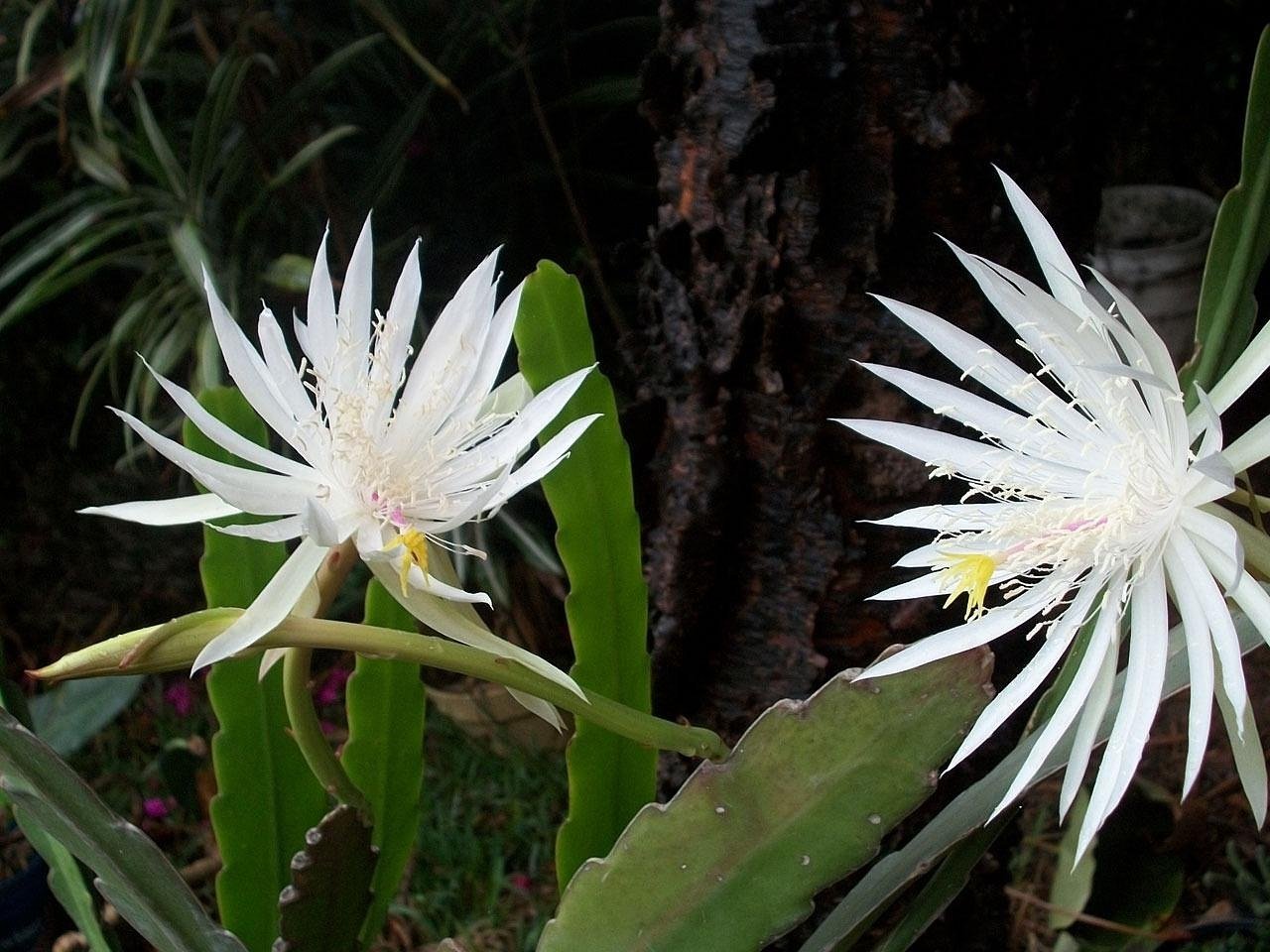
Have you ever walked past a flower bed at dusk and noticed that the blooms look… closed? Maybe the tulips that were wide open at lunchtime now look like folded umbrellas. Or the morning glories that greeted you at sunrise are shut tight by mid-afternoon. It is a strange thing to witness, and it raises a surprisingly old question: do flowers actually sleep? (Best camping pillows pick one that actually lets you sleep)
The short answer is yes, but not the way you or a pet dog sleeps. There is no brain, no dreaming, and no pillow. What flowers do is something botanists call nyctinasty — a rhythmic, clock-driven opening and closing of petals and sometimes leaves that follows the day–night cycle. It is one of the most elegant examples of how plants keep time without a single nerve cell. And once you understand it, you will never look at a garden at twilight the same way again.
The 1751 idea that gave us the phrase “sleep of plants”
The notion that plants rest at night is not a modern discovery. In his 1751 work Philosophia Botanica, the Swedish botanist Carl Linnaeus listed what he called Somnus plantarum — the “sleep of plants.” He catalogued species whose petals fold or droop as evening arrives, treating it as a real, observable behavior worth naming.
More than a century later, Charles Darwin and his son Francis published The Power of Movement in Plants in 1880. They documented night movements in many species, including the folding of leaves and the closing of petals. The Darwins were careful observers, and their work helped establish that these movements were not random accidents but repeatable, patterned events.
What neither Linnaeus nor Darwin had was a clock. They could describe the behavior beautifully, but they could not explain the mechanism. That would take another century of plant physiology.
What nyctinasty actually is

Nyctinasty is the scientific term for the rhythmic closing and opening of flowers or leaves in response to the day–night cycle. The key word is rhythmic. This is not simply a reaction to light hitting the petals. It is an internal timing system — a circadian clock — that anticipates the change rather than just responding to it.
That distinction matters more than it sounds. If you move a nyctinastic plant into a dark room at the wrong time of day, it will often still open and close on roughly its usual schedule for a while. The plant is not waiting to see the sun. It is running a program.
The mechanics: water, not muscles
Flowers have no muscles, so how does a petal move? The answer is turgor pressure — the internal water pressure inside plant cells. Petals contain specialized cells at their base, sometimes called the pulvinus, that can swell or shrink by shifting water and ions in and out.
When those cells take on water, they swell and push the petal open. When they lose water, the petal droops or closes. It is a hydraulic system, not a muscular one. Think of it less like a fist clenching and more like a sponge filling and draining.
This is also why cut flowers can behave oddly. A bloom that has lost its water supply may fail to open or close properly, because the mechanism depends on healthy water movement through the plant.
The examples you can actually watch
Some of the classic nyctinastic species are easy to find:
| Plant | What you’ll see | Timing pattern |
|---|---|---|
| Wood sorrel (Oxalis) | Leaves fold downward like tiny umbrellas | Evening |
| Four o’clock (Mirabilis jalapa) | Flowers open | Late afternoon |
| Morning glory (Convolvulus) | Flowers open then close | Morning to midday |
| Nasturtium (Tropaeolum) | Flowers close | Evening |
| Water lily | Flowers close and sometimes sink | Afternoon to evening |
For a simple at-home experiment, plant a few four o’clocks and check them at 3 p.m. and again at 6 p.m. over a week. You will see the timing shift slightly with the season, which is a clue that a clock, and not light alone, is in charge.
Why would a flower bother to close?
This is where the science gets genuinely interesting, and also where honesty is required: the adaptive reasons are debated and vary by species. There is no single tidy answer that covers every plant.
Several explanations are commonly proposed. Closing petals may protect pollen from dew, rain, or nighttime chill. It may reduce heat loss or water loss from delicate petal tissue. And in some species, opening and closing appears timed to match the activity of specific pollinators — night-blooming flowers open when their moth or bat pollinators are flying, while day-bloomers shut when their pollinators stop visiting.
The pollinator-timing idea is appealing and widely discussed, but the strength of evidence differs from plant to plant. Some species show tight synchronization with pollinator schedules; others seem to follow the clock regardless of whether any pollinator shows up. A flower will often keep its schedule even in a greenhouse with no insects at all, which tells you the clock runs independently of the reward.
The metaphor problem
Here is where a lot of popular writing goes wrong. Calling it “sleep” is a useful shorthand, but plants have no nervous system, no brain, and no consciousness. They are not resting in any way comparable to animal sleep.
What they have is a circadian rhythm — an internal oscillator with a period of roughly 24 hours that governs a wide range of plant processes, from when stomata open to when certain genes switch on. Nyctinastic petal movement is one visible output of that system. The word “sleep” is a metaphor borrowed from human experience, and it is a good metaphor, but it should not be stretched into claims about plant awareness.
If you are interested in how daily rhythms shape rest and recovery more broadly, the same principle of a biological clock shows up in human sleep research too. A practical guide on how to track sleep patterns can help you see your own rhythm the way a botanist sees a flower’s.
How the clock was proven
The strongest evidence for an internal clock comes from experiments where the external cue is removed. When plants are kept in constant darkness or constant light, nyctinastic movements usually persist for several days with a period close to, but not exactly, 24 hours. That free-running rhythm is the signature of a circadian oscillator.
Researchers have also studied petal opening and closing at the cellular level in species such as Arabidopsis and Kalanchoe, linking the movements to ion transport and changes in cell turgor. The exact molecular details are still being worked out, and different species use somewhat different machinery, which is part of why the field remains active.
For a home observer, the practical takeaway is simpler: if a flower keeps opening and closing on schedule in a dark room, you are watching a clock at work, not a reflex.
Practical tips for watching flowers sleep
If you want to observe nyctinasty yourself, a few habits make a big difference.
- Pick a species with obvious movement, like four o’clock, morning glory, or wood sorrel. Subtle movers will frustrate you.
- Observe at the same times each day for at least a week. One observation tells you almost nothing.
- Note the light conditions alongside the time. You are looking for whether the plant follows the clock or the sun.
- Use a camera on a tripod or a time-lapse app. Petal movement is slow enough that your eyes miss the transition.
- Keep the plant well watered. A thirsty plant may skip the show entirely because turgor pressure is too low.
A common mistake is checking once at dusk and concluding the flower “went to sleep.” In reality, many flowers begin closing well before sunset, and the timing shifts with the season. Another mistake is assuming every closed flower is sleeping — some close permanently after pollination, and some wilt from stress. Context matters.
What this means for gardeners and cut-flower buyers
Understanding nyctinasty has real practical value. If you are buying cut flowers for an evening event, knowing which blooms close at dusk helps you avoid a centerpiece that shuts down mid-party. If you are planning a garden for a specific time of day — say, a patio you use after work — choosing late-opening species like four o’clocks gives you flowers that are actually awake when you are.
For cut flowers, harvest timing matters too. Stems cut when the plant is well hydrated and the petals are in the right phase tend to last longer. And if you are storing blooms in a cool room, remember that temperature affects the clock and the water movement both.
The same principle of environmental conditions shaping rest shows up in unexpected places. Even a dehumidifier running in a closed room changes humidity and airflow in ways that affect plants and people alike, which is why keeping dehumidifier coils clean for better airflow and lower bills is worth the effort if you grow plants indoors.
The bigger picture: plants as timekeepers
Nyctinasty is a small window into something much larger. Plants are constantly tracking time — for flowering, for leaf movement, for opening stomata, for releasing scent. The flower that closes at dusk is not retreating from the world. It is running a schedule that has been tuned over millions of years.
That reframing is worth holding onto. When you see a tulip shut at evening, you are not watching a plant get tired. You are watching a hydraulic system, driven by an internal clock, execute a program that likely helps protect delicate tissue and time reproduction. It is quiet, slow, and easy to miss — which is exactly why it is worth stopping to look.
If you want to go further into the science of rest and rhythm, the evidence around essential oils and sleep is a good reminder that popular claims about “relaxation” often outrun the research, just as “flowers sleep” outruns what the word sleep actually means. Both are useful shortcuts, and both reward a closer look.
Conclusion
So do flowers sleep? In the poetic sense, yes — and the phrase has been in use since Linnaeus named the sleep of plants in 1751. In the scientific sense, what happens is nyctinasty: a circadian-clock-driven opening and closing of petals and leaves, powered by water pressure rather than muscle, and shaped by evolution for reasons that are still being debated species by species.
The next time you walk past a garden at dusk, look closely. The blooms that seemed static at noon are quietly closing, following a schedule older than any clock on your wall. You do not need a laboratory to see it. You just need to show up at the right time, more than once, and pay attention.
Do flowers really sleep at night?
Not in the way animals sleep. Flowers have no brain or nervous system. What they do is called nyctinasty: petals and sometimes leaves close and open on a roughly 24-hour rhythm controlled by an internal circadian clock. It is a real, measurable behavior, but “sleep” is a metaphor rather than a description of rest.
What is the difference between nyctinasty and photonasty?
Nyctinasty is driven by an internal clock and continues on schedule even when light conditions are held constant. Photonasty is a direct response to light itself, without the clock in charge. The giveaway is persistence: if the movement keeps going in constant darkness, a circadian clock is involved.
Which flowers are easiest to watch opening and closing?
Four o’clocks, morning glories, wood sorrel, nasturtiums, and water lilies are among the most visible. Four o’clocks open in late afternoon and morning glories close by midday, so together they let you observe movement at two different times of day without much effort.
How do petals move without muscles?
Through turgor pressure. Specialized cells near the base of the petal take in or release water and ions, swelling or shrinking. That change pushes the petal open or lets it droop closed. It is a hydraulic mechanism, which is why cut flowers that lose their water supply often stop moving normally.
Why do some flowers close during the day instead of at night?
Timing tends to track pollinators. Flowers that rely on daytime visitors may close once those visitors stop flying, while night-blooming species open in the evening. Protection from heat, water loss, and dew is also proposed, though the relative importance of each reason varies by species and is still debated.
Can I see nyctinasty in a houseplant?
Yes, though the movement is often subtle. Some common houseplants and herbs show slight leaf folding at night. The best approach is time-lapse photography over several days, since the change is too slow to catch by glancing at the plant. Keep it well watered, because low turgor pressure can suppress the movement entirely.



