
Quick Answer: When is passover 2027?
Passover 2027 begins at sundown on Wednesday, 21 April 2027, and its first full day is Thursday, 22 April 2027. The festival runs seven days in Israel, ending 28 April, and eight days in the Diaspora, ending 29 April. (Best ai translation tools 2027 deepl vs chatgpt vs google)
The first seder night falls on the evening of 21 April, with the second seder on the evening of 22 April for those outside Israel. Both dates are fixed by the Hebrew calendar, so they do not depend on local moon sightings or rabbinic announcements.
Readers planning around the holiday should confirm whether they follow Israeli or Diaspora observance, which evenings they need for seder meals, local candle-lighting times, travel and school schedules, and work commitments across the full festival window.
Why this date surprises people every single year
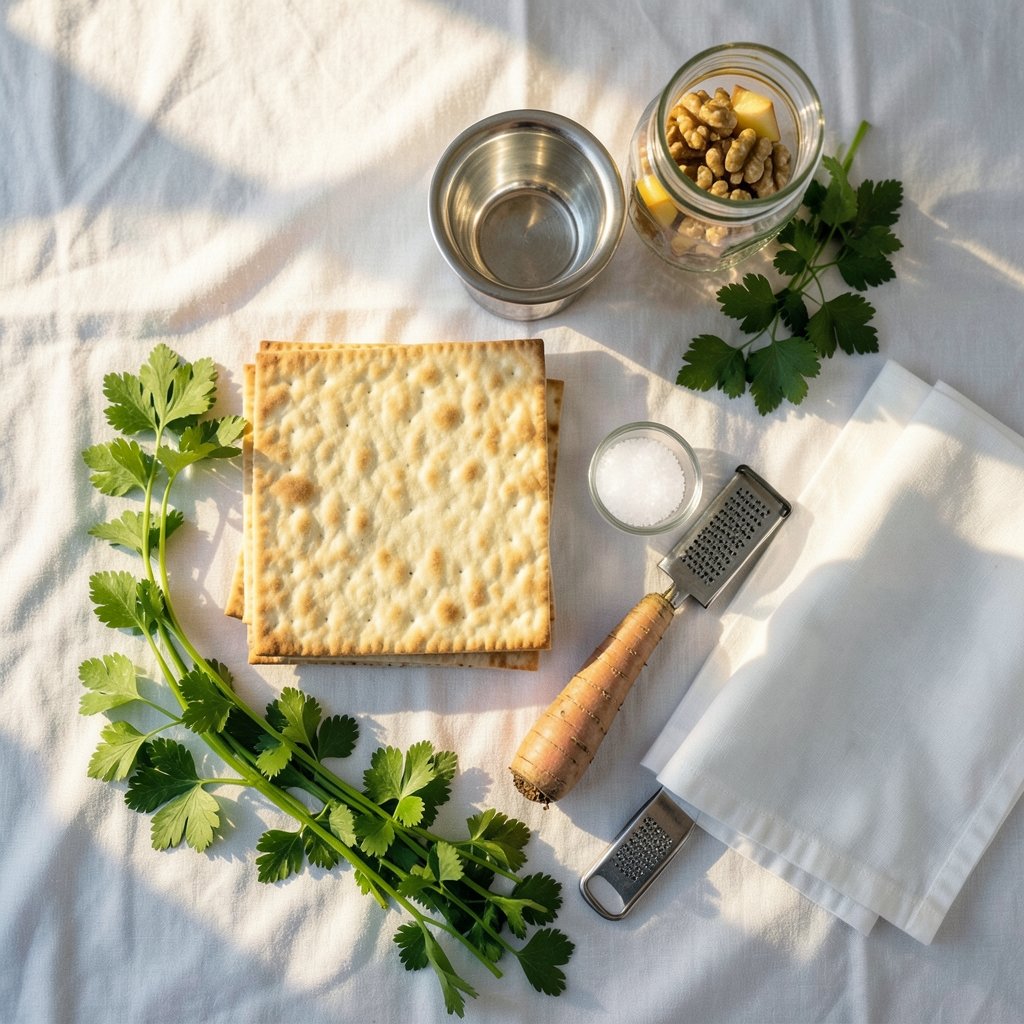
Ask ten people when Passover falls and you will get ten confident answers, most of them wrong. The holiday drifts around the Gregorian calendar like a houseguest who never checks the clock, and 2027 is one of those years where it lands noticeably late. If you are booking flights, planning a seder menu, or trying to figure out whether the kids will be on school break, the exact dates matter more than the general “sometime in spring” answer.
Here is the short version: Passover 2027 starts at sundown on Wednesday, 21 April 2027. The first day of the festival, 15 Nisan in the Hebrew calendar, corresponds to Thursday, 22 April. Everything else, from seder logistics to synagogue schedules, flows from those two anchor points.
The 2027 Passover dates at a glance
Because Jewish days begin at sunset, “when is Passover” genuinely has two correct answers depending on what a person means. Here is how the whole festival lays out.
| Event | Date in 2027 |
|---|---|
| Passover begins (eve of 15 Nisan) | Wednesday, 21 April, at sundown |
| First day of Passover / first seder night | Wednesday evening, 21 April |
| Second seder night (Diaspora) | Thursday evening, 22 April |
| Festival ends in Israel (7 days) | Wednesday, 28 April |
| Festival ends in the Diaspora (8 days) | Thursday, 29 April |
The one-day gap between Israel and the Diaspora is not a disagreement about the calendar. It is a long-standing custom rooted in how news of the new month once traveled from Jerusalem to distant communities. Outside Israel, an extra day was added to festivals to be safe. The practice stuck.
Why Passover 2027 falls in late April instead of March
This is the part that trips people up. The Hebrew calendar is lunisolar, meaning it tracks the moon but stays anchored to the seasons. A purely lunar calendar loses about eleven days a year against the solar year, which would eventually push Passover into summer. To prevent that, an extra month, Adar II, is inserted in seven out of every nineteen years.
The Hebrew year 5787, which contains Passover 2027, is a leap year with thirteen months. That extra month pushes the whole festival later. Compare the two years side by side and the effect is obvious.
| Year | Passover begins (sundown) |
|---|---|
| 2026 | 1 April 2026 |
| 2027 | 21 April 2027 |
Roughly three weeks of drift in a single year. That is the leap month doing its job. In a non-leap year, Passover typically lands somewhere in late March or early-to-mid April. In a leap year like 2027, it slides toward the second half of April.
For anyone tracking other calendars and holidays in the same window, this kind of year-to-year movement is worth planning around early. It is the same reason people double-check shifting dates for product launches and seasonal sales events, whether that is a festival calendar or a schedule of handheld console prices in 2027 confirmed versus reported. Late April 2027 will be crowded.
The two seder nights, explained properly
The seder is the ritual meal that opens Passover, and it is the centerpiece for most families. In 2027, the first seder begins on the evening of Wednesday, 21 April. The second seder, observed by Jewish communities outside Israel, begins on the evening of Thursday, 22 April.
A practical point that catches out newcomers: the seder does not start at a fixed clock time. It begins after nightfall, and nightfall varies by location. In high-latitude cities in late April, darkness arrives late, which can push the seder start well past 8 p.m. Families in places like London, Berlin, or Toronto should check local sunset times rather than assuming a standard hour.
Another common mistake is treating the first full day as the “first night.” It is not. The evening of 21 April is the eve of the first day. If someone tells you Passover 2027 is on 22 April, they are describing the daytime of the first day, not the start of the festival. Both statements are true; they just answer slightly different questions.
What happens across the eight days
Passover observance is front-loaded. The first and last days are full festival days with synagogue services and restrictions on work, while the middle days, known as Chol HaMoed, are semi-festive. Many people use those intermediate days for travel, family visits, and outings, which is why hotels in Israel and Jewish community centers abroad fill up fast during that stretch.
In 2027, the middle days fall between Friday, 23 April and Tuesday, 27 April, with the seventh day of Passover on Tuesday, 27 April and the eighth day, observed only in the Diaspora, on Wednesday, 28 April. In Israel, the festival closes on 28 April.
The dietary rules matter for planning too. During the entire festival, chametz, which includes leavened bread, pasta, and most grain products, is avoided. Homes are cleaned thoroughly in advance, and many families begin the switch to Passover kitchenware days before the seder. If you are hosting for the first time, the single most useful tip from experienced hosts is to start the pantry clear-out at least a week early. Last-minute chametz hunting is where most stress comes from.
Counting the Omer begins right away
One detail that surprises even people who grew up around the holiday: the Counting of the Omer starts on the second night of Passover, the evening of 22 April 2027, and runs for 49 days until Shavuot. It is a nightly verbal count, and it begins while the festival is still underway. Anyone who observes it should note that the count starts before Passover ends, not after.
Planning around Passover 2027 in practice
For anyone organizing a trip, a family gathering, or a work schedule, a few practical points save real headaches.
First, book accommodation and travel early. Late April 2027 coincides with spring travel season in many regions, and Passover itself drives heavy demand in Israel and in cities with large Jewish communities. The leap-month shift means some people will have already penciled in early April based on habit. They will be wrong this year.
Second, check school and public holiday calendars in your area rather than assuming. Passover is not a public holiday in most countries, but some school systems and employers offer flexibility, and the dates differ from 2026 by roughly three weeks.
Third, confirm candle-lighting and festival times with a local Jewish calendar for your city. Sunset times vary enormously by latitude, and the difference between a 7:30 p.m. and a 9:00 p.m. start changes the whole evening.
Fourth, if you are buying specialty foods, order ahead. Matzah, kosher-for-Passover products, and holiday staples sell out in the days before the festival, and in a late-April year the shopping window overlaps with other spring events.
There is a broader lesson here that applies well beyond religious calendars. Whenever a date is fixed by one system and read through another, confusion follows. The same pattern shows up in technology, where tools with similar-sounding names behave very differently under the hood, as a look at the ten best AI chatbots and how GPT-5 and Claude compare under the hood in 2027 makes clear. The label is not the whole story; the underlying mechanism is.
The calendar authority question
Some readers wonder whether the 2027 dates could change. They cannot, in any meaningful sense. The fixed arithmetic Hebrew calendar used today was standardized in the medieval period and is traditionally attributed to Hillel II in the fourth century CE. It runs on a deterministic mathematical rule, not on observation of the moon by a court. That means Passover 2027 is calculable centuries in advance and will not be adjusted.
This is different from the biblical-era system, where the new month was declared based on witnesses who had seen the crescent moon. Under the fixed calendar, the date is settled. Communities may differ on customs, on the number of festival days outside Israel, and on when exactly nightfall is deemed to begin, but the underlying date of 15 Nisan 5787 is not in dispute.
Conclusion
Passover 2027 begins at sundown on Wednesday, 21 April 2027, with the first full day on Thursday, 22 April. The festival runs through 28 April in Israel and 29 April in the Diaspora, and the first seder falls on the evening of 21 April. The late placement is not a quirk or an error. It is the leap month of Adar II doing exactly what it was designed to do, keeping the spring festival in spring.
For anyone planning ahead, the practical takeaway is simple: ignore the March dates you remember from other years, check local sunset times for your city, and start organizing early. Late April will arrive faster than the calendar suggests, and this is one holiday where the dates reward a little foresight.
Frequently asked questions
Is Passover 2027 one day or eight days?
It depends where you live. In Israel, Passover is observed for seven days, from 21 April through 28 April 2027. Outside Israel, an additional day is added, making it eight days, ending 29 April 2027. The extra day is a longstanding custom rather than a different calculation.
Do I need to attend two seders in 2027?
Only if you live outside Israel. The first seder is on the evening of Wednesday, 21 April 2027, and the second is on the evening of Thursday, 22 April 2027. In Israel, only one seder is held. Many Diaspora families hold both, though the second is sometimes a smaller, more relaxed affair.
Why is Passover 2027 so much later than in 2026?
Because the Hebrew year 5787 is a leap year with thirteen months. The inserted month of Adar II pushes the festival roughly three weeks later than the previous year. In 2026, Passover begins on 1 April; in 2027, it begins on 21 April.
Could the 2027 date still change?
No. The Hebrew calendar in use today is a fixed arithmetic system, so the date of 15 Nisan 5787 is determined in advance and does not depend on observation. Local customs about candle-lighting times may vary, but the festival date itself is settled.
What time does the seder start on 21 April 2027?
The seder begins after nightfall on Wednesday, 21 April 2027, and nightfall varies by location. In high-latitude cities in late April, darkness can arrive close to 9 p.m. or later. Check a local Jewish calendar for your city’s exact sunset and candle-lighting times rather than assuming a standard hour.
What is Chametz, and why does it matter for planning?
Chametz refers to leavened foods, including bread, pasta, and most grain products, which are avoided throughout Passover. Homes are cleaned and cleared in advance, and many families switch to separate kitchenware. Because the festival lasts eight days in the Diaspora, experienced hosts start the clear-out at least a week before the seder.