

Will the 2027 Corvette Stingray be a mild carryover, a mid-cycle refresh, or something bigger? That question sits at the center of nearly every Corvette forum thread and dealer conversation right now. The honest answer, at least for the moment, is that nobody outside General Motors knows for sure. But that does not mean buyers are flying blind. The C8 generation has a well-documented pattern, the lineup above the Stingray has changed dramatically, and the smart shopper can plan around what is likely rather than what is rumored.
This guide walks through what is confirmed, what is speculation, and how to think about the 2027 model year without getting burned by hype or by a dealer who swears the next car will be a collector’s item.
The Short Version: No Official 2027 Announcement Yet
As of the most recent confirmed information, Chevrolet has not publicly announced a “2027 Corvette Stingray” with finalized specs, pricing, or an on-sale date. That is the single most important fact in this article, and it should frame everything else.
What does exist is a strong track record. The C8 Corvette Stingray entered production in 2020 as the first mid-engine Corvette in the nameplate’s history. Model years 2020 through 2026 are established. That gives buyers six years of data on how Chevrolet handles changeovers, what tends to get updated, and what tends to stay the same.
Anyone presenting 2027 details as confirmed, whether it is a horsepower figure, a price, or a launch date, is working from inference, dealer chatter, or wishful thinking. Treat those claims accordingly.
What the C8 Stingray Already Delivers
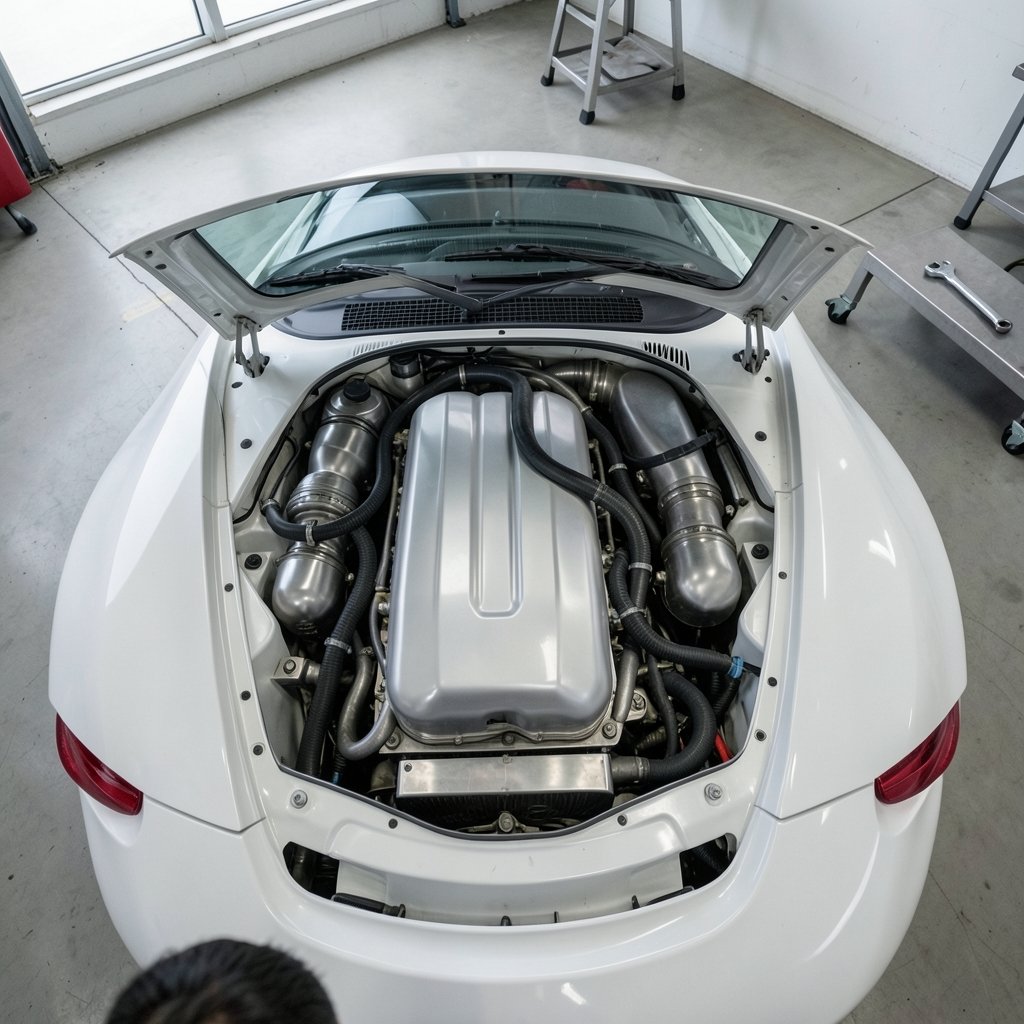
Before speculating about 2027, it helps to understand the baseline. The current Stingray is a genuinely remarkable car, and any 2027 version will almost certainly build on it rather than replace it.
Powertrain and Performance
The C8 Stingray uses a 6.2L LT2 V8, rated around 490 to 495 horsepower depending on exhaust and trim. Power goes to the rear wheels through an 8-speed dual-clutch transmission. That combination has been the defining character of the car since launch: naturally aspirated V8 sound, quick shifts, and a mid-engine layout that puts weight where it belongs for cornering balance.
One practical note for shoppers: the exhaust option matters. The performance exhaust adds a handful of horsepower and a noticeably sharper soundtrack. If you are comparing trims, drive both before deciding. The difference is real and it is one of the few options that changes the car’s personality rather than just its spec sheet.
Body Styles and Trim Ladder
The Stingray is offered as both a coupe and a convertible, a split that has served the C8 well. The coupe’s removable roof panel gives you open-air driving without the convertible’s price premium, which is why many buyers skip the drop-top entirely.
Above the Stingray, the lineup has expanded considerably:
| Model | Notable Feature | Approximate Output |
|---|---|---|
| Stingray | 6.2L LT2 V8, mid-engine entry point | 490–495 hp |
| Z06 | Flat-plane LT6 V8 | High-revving, track-focused |
| E-Ray | Hybrid, all-wheel drive | Electrified performance |
| ZR1 | Top-tier halo model | Roughly 1,064 hp |
A 2027 Stingray would sit at the bottom of that ladder, which is exactly where it belongs. It is the volume car, the daily-driver Corvette, and the one most people actually buy.
The Most Likely Scenario for 2027
Here is where inference takes over, and it is worth being explicit about that. Based on how Chevrolet has handled model-year changeovers across the C8 run, the most plausible 2027 Stingray is a carryover or lightly refreshed C8, not an all-new generation.
What does that mean in practice? Typically, a changeover year brings:
- New exterior colors and possibly a retired color or two
- Updated wheel designs
- Minor trim or appearance package changes
- Software and infotainment updates
- Occasionally, a small equipment reshuffle across trim levels
What it usually does not bring is a new engine, a new platform, or a dramatic price reset. Those events are rare and heavily publicized well in advance.
Why a Full Redesign Is Unlikely
The C8 is still relatively young, and Chevrolet has spent the last several years investing in the variants above the Stingray, the Z06, the E-Ray, and the ZR1. Spreading development money across a new generation while still launching halo models would be an unusual allocation of resources. The more sensible read is that the Stingray stays put for 2027 while the higher-performance cars carry the excitement.
That said, this is reasoning, not a press release. Buyers who need certainty should wait for official word.
Common Mistakes Buyers Make Right Now
Plenty of people are already making decisions based on 2027 rumors. Here is what tends to go wrong.
Paying a markup for a “last of its kind” car. Every model year gets framed as the final something. Unless Chevrolet says so, it is sales talk.
Waiting indefinitely for a refresh that may be minor. If you want a Stingray now and you find one at a fair price, waiting a year for new paint colors is rarely worth it. Depreciation and lost driving time are real costs.
Assuming 2027 pricing will be lower. It almost never is. Prices tend to drift upward with each model year, and the mid-engine Corvette has held value unusually well.
Trusting dealer speculation as fact. Sales staff often repeat what they have heard from regional reps or forums. Sometimes that is accurate. Often it is not. Ask for documentation, not assurances.
The practical move is to separate what you can verify from what you are hoping for. If a dealer claims a specific 2027 horsepower number, ask where it came from. The answer is usually telling.
How the Stingray Fits in a Crowded Market
The sports car landscape has changed since the C8 launched. Electric performance cars are faster in a straight line than ever, and the buying public has more information at its fingertips than at any point in history. Shoppers now routinely compare spec sheets across categories before ever visiting a showroom, and the same research habits that shape decisions about everyday software, such as the best AI chatbots compared under the hood, now shape how people evaluate cars. The Stingray’s advantage has never been raw numbers. It is the combination of a naturally aspirated V8, a mid-engine chassis, and a price point that undercuts most mid-engine rivals by a wide margin.
That value proposition is the reason the car has sold so well. It is also the reason a 2027 carryover would still be competitive. The formula does not need fixing.
Where the Stingray Still Falls Short
Balance means acknowledging the weaknesses. The C8’s interior storage is limited, the front trunk is useful but not generous, and the dual-clutch transmission, while excellent, is the only option. Enthusiasts who want a manual gearbox have to look elsewhere. These are well-known trade-offs, not secrets, and any 2027 update is unlikely to change them.
Buying Advice That Holds Up Regardless of Model Year
Whether the 2027 turns out to be a carryover or a refresh, the fundamentals of buying well do not change.
- Decide on coupe versus convertible first. It is the biggest structural choice and it affects everything downstream.
- Drive at least two trims. The 2LT and 3LT packages add meaningful equipment, and the difference is easier to feel than to read.
- Check the build date and recall history on any used example, especially early 2020 and 2021 cars.
- Get an insurance quote before you commit. Mid-engine cars can surprise people on premiums.
- Budget for tires. Performance rubber wears quickly and replacements are not cheap.
None of that requires knowing what Chevrolet will announce. It is just good practice.
The Research Habit That Saves Money
Car buying rewards patience and skepticism in equal measure. The same discipline applies whether you are evaluating a sports car or a piece of consumer tech, where buyers routinely weigh DeepSeek, ChatGPT, and Gemini on output quality before spending a dollar. The principle is identical: verify claims against primary sources, ignore marketing language, and let the actual product do the talking. (Best ai translation tools 2027 deepl vs chatgpt vs google)
For the 2027 Stingray, the primary source is Chevrolet itself. Official model-year specifications, fuel-economy filings, and press releases are the only places where confirmed details will appear first. Everything else is downstream of those documents.
Conclusion
The 2027 Corvette Stingray is, for now, a car defined by what is likely rather than what is confirmed. Chevrolet has not announced it with final specs, and anyone claiming otherwise is guessing. What the evidence does support is a strong probability that 2027 brings a carryover or lightly updated C8, with new colors, minor equipment changes, and the same 6.2L LT2 V8 that has made the car such a compelling value since 2020.
For buyers, that is not a disappointing conclusion. It is a useful one. It means the car you can buy today is very close to the car you will be able to buy next year, and it means there is no strong reason to wait unless you specifically want a new paint option. The Stingray’s core appeal, a mid-engine layout, a naturally aspirated V8, and a price that embarrasses its rivals, is not going anywhere.
Watch for official word from Chevrolet before making any decision based on 2027 specifics. Until then, drive the car in front of you.
FAQ
Is the 2027 Corvette Stingray officially confirmed?
Not with final specifications, pricing, or a launch date. Chevrolet has not publicly announced a 2027 Stingray in detail. Model years 2020 through 2026 are established, and any 2027 information circulating is speculation or inference until the manufacturer confirms it.
Will the 2027 Stingray be a new generation?
Almost certainly not. The C8 platform is still relatively young, and Chevrolet has spent recent years expanding the lineup with the Z06, E-Ray, and ZR1. A 2027 Stingray is most plausibly a carryover or a light refresh rather than an all-new generation, though this is inference rather than confirmed fact.
What engine will the 2027 Stingray have?
The most likely answer is the same 6.2L LT2 V8 used since the C8 launched, rated around 490 to 495 horsepower depending on exhaust and trim. No official confirmation of a powertrain change exists.
Should I wait for the 2027 model or buy now?
If you want a Stingray and find one at a fair price, waiting a year for what is likely a minor update rarely pays off. Depreciation and lost driving time are real costs. The exception is if you specifically want a new color or feature that has not been announced yet.
How much will the 2027 Stingray cost?
Pricing is unknown and should not be stated as fact. Corvette prices have generally trended upward with each model year, and the mid-engine car has held value well. Expect any official figure to come from Chevrolet directly, not from dealer speculation.
Is the Stingray still worth buying compared with the Z06 and E-Ray?
For most buyers, yes. The Stingray is the volume model, the daily-driver Corvette, and the one that undercuts mid-engine rivals on price by a wide margin. The Z06 and E-Ray offer more performance at a significantly higher cost. The right choice depends on whether you want a great sports car or a track-focused one.
One final consideration: resale and long-term ownership. The Stingray has historically held value better than most sports cars, but that pattern depends on supply, not on model-year hype. If 2027 brings only cosmetic changes, today’s car will not suddenly look dated, and buyers who purchase now will not be penalized for it. If Chevrolet surprises everyone with a significant update, the market will adjust accordingly, as it always does. Either way, the decision should rest on what you can verify today, not on what a forum thread predicts for tomorrow.



