

Quick Answer: What should I check before paying for gaming chairs?
Before paying for a gaming chair, check the fit and safety details that no product photo shows: seat height and depth against your body and desk, stated maximum user weight, gas-lift documentation, material breathability, warranty terms, return window, and spare-part availability. Buyers can act on these by measuring their setup at home, asking sellers for test documentation, and reading the return policy before checkout, not after delivery.
A gaming chair is not a regulated product category with its own safety standard in the EU or US, so the burden of verification falls largely on the buyer. That makes the seller’s disclosures and your own measurements more important than the styling or the brand name stitched on the headrest.
Key factors to compare include adjustability range, weight capacity, gas-lift class claims, upholstery material, warranty length versus statutory rights, return shipping costs, assembly requirements, and whether replacement parts are sold separately.
Why the Chair You Click On Is Rarely the Chair You Need
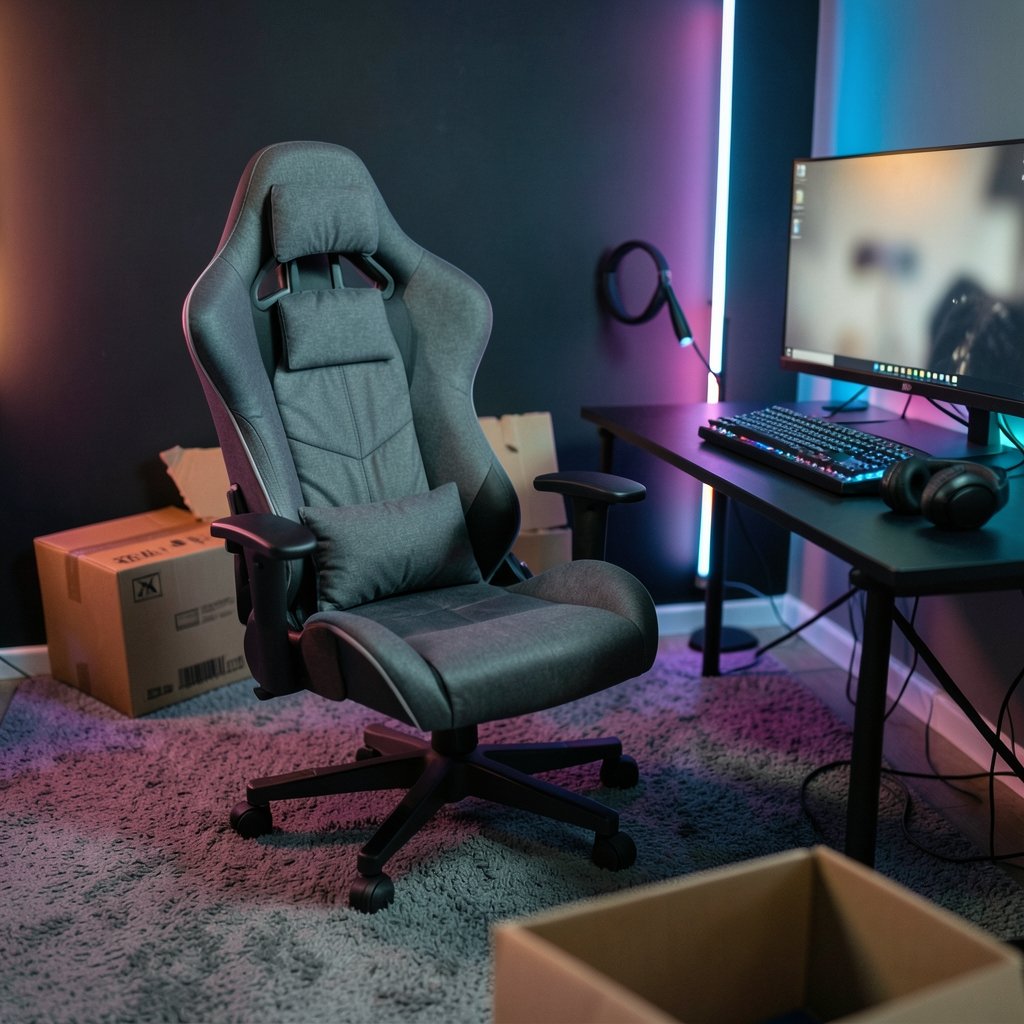
Have you ever bought a chair because it looked aggressive and supportive in a photo, then spent the first week shifting your weight every ten minutes? You are not the only buyer to make that first-week adjustment. Gaming chairs sell on silhouette and streaming culture, but they are judged by your spine, your desk, and hour four of a long session.
The awkward truth is that “gaming chair” is not a regulated product category with its own safety standard in the EU or the US. There is no single certification badge that proves a chair is safe or well built. Instead, buyers have to borrow the checks that apply to office seating, furniture safety, and consumer law, then apply them to a product marketed with racing stripes.
That is doable. It just takes fifteen minutes of homework before you hit pay. The same discipline applies to other big purchases with hidden fine print, whether that is a loan product or a piece of hardware, as the guidance on bmg money reviews borrowers should check before signing makes clear.
Start With Your Body and Your Desk, Not the Product Page
Fit is the first filter, and it costs nothing to check. Before looking at a single listing, measure three things: the floor-to-desk height, the depth of the space behind your knees, and your own seated shoulder height.
The measurements that actually matter
| Measurement | How to take it | Why it matters |
|---|---|---|
| Seat height range | Compare the chair’s stated range to your floor-to-desk height | Feet should rest flat while forearms sit level with the desk |
| Seat depth | Sit with your back against the backrest and measure knee-to-seat-edge | Too deep cuts circulation behind the knees; too shallow feels unstable |
| Maximum user weight | Read the seller’s stated limit, not the marketing photos | Exceeding it stresses the gas lift and frame |
| Armrest height and width | Check adjustability and whether they fit under your desk | Fixed armrests often block you from pulling close to the keyboard |
| Backrest height | Compare to your seated shoulder line | A short backrest leaves the upper spine unsupported |
Public ergonomics guidance on desk work is general rather than gaming-specific, but the principles transfer directly: seat height, seat depth, lumbar support, and armrests should all be adjustable enough to match the user. A chair that cannot be adjusted to your body is a chair you will fight for years.
A practical tip that saves returns
Tape a strip of paper to the floor marking your ideal seat height, then sit on a dining chair at that height for twenty minutes. If your thighs go numb, you now know something a review never told you. Buyers who skip this step are the ones who discover the problem after assembly, when the box is already in the recycling.
Check the Safety Paperwork Before the Aesthetics
Safety is where marketing language gets slippery. Sellers describe gas lifts by class, such as Class 3 or Class 4, but there is no single mandatory global labeling rule for these claims. Treat a class number as marketing until the seller provides test documentation.
What to ask the seller directly
- Ask for the stated maximum user weight in writing, plus the test method behind it.
- Ask which office chair standard the chair was tested against, if any. ANSI/BIFMA X5.1 is a widely cited US standard for general-purpose office chairs covering durability and stability tests, and BIFMA publishes information on it.
- Ask whether the chair appears on any recall list. In the US, the CPSC maintains official recall listings for furniture and seating, and checking them takes a minute.
- Ask for the product identification and safety information required of sellers in the EU under the General Product Safety Regulation, which applies to consumer products including chairs from 13 December 2024.
If a seller cannot answer these questions, that silence is itself an answer. A reputable brand will have the paperwork on file and will send it without drama.
Materials, Heat, and the Long Session Problem
PU leather and similar coated fabrics trap heat. Anyone who has sat in a racing-style chair through a summer evening knows the feeling. Mesh and breathable fabrics are generally recommended for long sessions because air moves through them.
This is comfort advice, not a formal standard, but comfort drives how often you actually use the chair. A cheap mesh task chair that breathes can beat an expensive coated chair that turns your back into a sauna.
Also inspect the foam density claims. Soft foam feels great in the showroom and flattens within a year. Look for a stated density figure, and read reviews that mention sagging after six or twelve months rather than the ones written on delivery day. The same long-view reading habit pays off with hardware, as the advice on amd vs intel cpu check compatibility before upgrade 2027 shows.
Warranty, Returns, and Your Legal Rights
This is the section buyers skim and later regret. Warranty terms and return windows are the main consumer-protection levers you have.
Statutory rights versus the seller’s own warranty
In the EU, the minimum legal guarantee for goods is two years under the Sale of Goods Directive (EU) 2019/771, which applied from 1 January 2022. In the US, warranty law is shaped by the Magnuson-Moss Warranty Act of 1975. The seller’s own warranty sits on top of these rights; it does not replace them.
So check three things before paying:
- Length and scope of the seller’s warranty. Does it cover the gas lift, casters, and frame, or only the upholstery?
- Who pays return shipping if the chair arrives damaged or fails in month eight. A “free returns” badge often hides a freight charge on bulky items.
- The return window in days, and whether assembled chairs are excluded. Many sellers refuse returns once the chair is built.
A chair that costs more but ships with a five-year warranty on the gas lift can be cheaper over a decade than a bargain model with a ninety-day window. Read the fine print the way you would read a contract, because that is what it is. Buyers weighing other high-consideration purchases benefit from the same skepticism, as the breakdown of ai chatbot lifetime deals 2027 buyers should actually check illustrates.
Assembly, Spare Parts, and the Real Cost of Ownership
Assembly and spare parts availability affect long-term value. Casters wear out. Gas lifts fail. Armrest pads crack. If none of those parts are sold separately, a small failure turns into a whole new chair.
Before paying, search the seller’s site for replacement casters, gas lifts, and armrests. If the search returns nothing, assume the chair is disposable. Also check the assembly instructions, usually posted as a PDF, for two red flags: a one-person build that clearly needs two, and any step that involves forcing parts together.
A quick pre-purchase checklist
| Check | Pass | Warning sign |
|---|---|---|
| Weight limit stated | Clear figure with test method | No figure at all |
| Gas lift documentation | Certificate or test report offered | “Class 4” with no evidence |
| Spare parts sold | Casters, lift, armrests listed | Nothing listed |
| Return window | Stated in days, assembled chairs included | “See policy” with exclusions |
| Assembly guide | Public PDF, clear steps | No guide until after purchase |
What Reviews Can and Cannot Tell You
Reviews are useful for spotting patterns and useless for predicting fit. Because chair fit depends on body size and desk height, a chair that suits one reviewer may not suit another. A 120-pound reviewer and a 250-pound reviewer are effectively testing different products.
Read for specifics: mentions of squeaks after three months, gas lift sinking, armrest wobble, or a return process that went badly. Skip the unboxing posts. And be wary of review clusters that all appear in the same week with the same phrasing.
The same pattern-spotting skill applies to other categories where early reviews are thin, as the analysis in the nvidias ai box pitch buyers should actually check demonstrates.
Frequently Asked Questions
Is a gaming chair better than an office chair for long sessions?
Not automatically. Office chairs are often designed against published durability and stability standards, while gaming chairs frequently are not. The better choice is whichever chair adjusts to your body and desk, breathes well, and comes with clear warranty terms. Style should be the last tiebreaker, not the first.
How much should a decent gaming chair cost?
There is no reliable price floor, because price tracks branding as much as build quality. Instead of chasing a number, compare what the money buys: a stated weight limit, documented gas lift, replaceable parts, and a warranty that covers the frame and lift. A mid-priced chair with those four items beats a premium chair without them.
Do I need to check recall lists before buying a chair?
It is a sensible one-minute step, especially for furniture and seating sold in the US, where the CPSC maintains official recall listings. Recalls often involve stability or tip-over risks rather than upholstery. If a model appears on a list, skip it, even if the listing looks current.
What does gas lift class actually mean?
Gas lifts are often described by class, such as Class 3 or Class 4, but documentation is inconsistent across sellers. Without a test report, the class number is a marketing claim. Ask for evidence, and treat an unanswered request as a reason to look elsewhere.
Can I return a gaming chair after assembling it?
Often not, which is why the return policy matters more than the warranty for first-time buyers. Many sellers exclude assembled chairs or charge freight on bulky returns. Read the policy before checkout, and if assembly voids returns, inspect every part on arrival before you start building.
How long should a gaming chair last?
That depends on foam density, weight load, and part availability rather than price alone. Chairs with replaceable casters, lifts, and armrests routinely outlast sealed models because small failures stay cheap to fix. A realistic expectation for a well-documented mid-range chair is several years of daily use with at least one parts replacement.
Conclusion
Paying for a gaming chair is a small act of trust. The listing promises support, durability, and comfort, and you cannot test any of it through a screen. What you can do is shrink the gap between promise and reality with a handful of checks: measure your desk and body, demand the weight limit and gas lift documentation, confirm the warranty and return terms, verify that spare parts exist, and read reviews for failure patterns rather than first impressions.
None of this requires expertise. It requires fifteen minutes and a willingness to ask a seller an awkward question. The chair that survives that conversation is usually the one worth your money, and the one that dodges it is telling you something useful before you have spent a cent.



