
Quick Answer: Where can i buy a refrigerator?
You can buy a refrigerator at big-box appliance stores, warehouse clubs, local appliance dealers, and directly from manufacturers, with delivery and haul-away offered by most large sellers. The main options split into three groups: national chains with broad selection and installation services, warehouse clubs with bundled warranties and membership perks, and local dealers who often provide faster service and price matching. Before choosing a store, compare total delivered price, installation and haul-away fees, warranty length, return window, delivery timeline, and whether the model actually fits your kitchen opening.
Few purchases test a person’s patience quite like buying a refrigerator. It is a big, heavy, expensive box that has to fit a specific hole in your kitchen, arrive without dents, and keep running for a decade or more. So it makes sense that shoppers ask the same question again and again: where can I buy a refrigerator without getting burned on price, delivery, or service?
The honest answer is that there is no single best store. There are, however, clear trade-offs between the main channels, and knowing them turns a stressful purchase into a manageable one. This guide walks through the realistic options, what each one does well, where each one stumbles, and the practical checks that matter more than the store’s logo on the truck.
The Main Places to Buy a Refrigerator
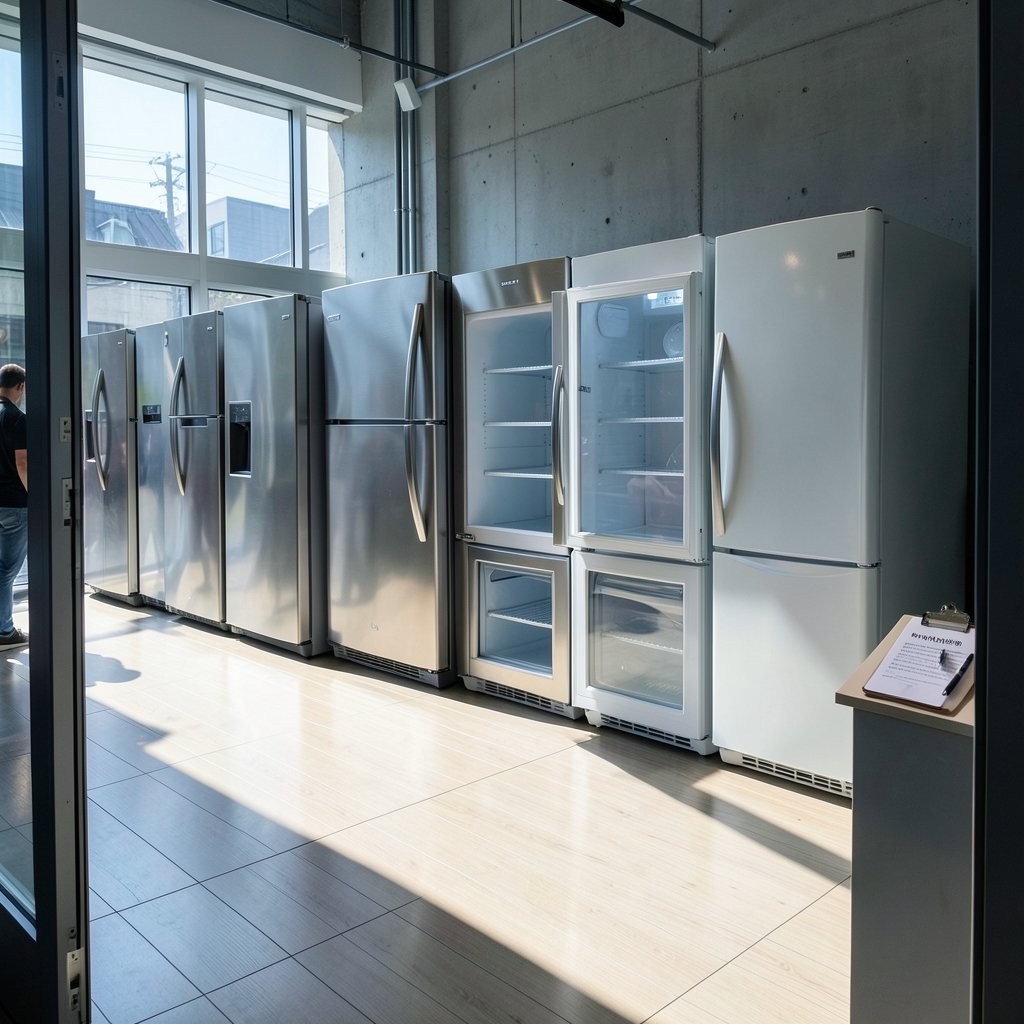
Most buyers end up choosing among a handful of channels. Each has a distinct personality, and the right fit depends on whether you value selection, speed, service, or price.
| Channel | Strengths | Watch-outs |
|---|---|---|
| Big-box appliance retailers | Wide selection, price matching, delivery and installation | Delivery windows can slip; install fees add up |
| Warehouse clubs | Bundled extended warranty, competitive pricing | Limited models, membership required |
| Local appliance dealers | Personal service, faster repairs, negotiating room | Smaller floor inventory |
| Manufacturer-direct stores | Closeouts and scratch-and-dent deals | Final-sale policies are common |
| Used and refurbished sellers | Lowest upfront cost | No warranty, unknown history |
Big-Box Appliance Retailers
National chains remain the default for most shoppers because they carry the widest range of brands, sizes, and finishes in one place. The appeal is convenience: you can compare models side by side, read the yellow EnergyGuide label on each unit, and arrange delivery at checkout.
The catch is that the sticker price is rarely the final price. Delivery, installation, removal of the old unit, and new water lines for ice makers often appear as separate line items. Ask for the full out-the-door quote in writing before you commit. It is also worth checking whether the store’s price-match policy covers competitors’ sale prices, since refrigerator pricing swings widely during holiday promotions.
Warehouse Clubs
Warehouse clubs sell a smaller, rotating selection of refrigerators, usually in popular sizes and finishes. The real draw is often the bundled extended warranty and the club’s generous return window, which can matter more than a small price difference on a machine you expect to keep for years.
The trade-off is limited choice. If you need a specific width or a niche configuration, the club floor may simply not have it. Membership fees also factor into the real cost unless you already shop there regularly.
Local Appliance Dealers
Independent dealers are the underrated option. They often stock fewer floor models but can order nearly anything, and they tend to be more flexible on price when you are standing in the showroom. Service after the sale is usually their strongest card, because the same people who sold you the fridge often handle the repair calls.
For anyone who has ever waited two weeks for a national retailer’s service department, that local relationship is worth real money. It is also the channel where asking “what can you do on the price if I buy the matching range too?” actually gets a response.
Manufacturer-Direct and Outlet Stores
Several brands operate outlet or direct stores that sell closeouts, discontinued finishes, and scratch-and-dent units at meaningful discounts. These can be excellent value if you are flexible on color or a minor cosmetic flaw.
Read the fine print, though. Outlet purchases are frequently final sale, and the warranty may be shorter or handled differently than on a new retail unit. Inspect the appliance in person whenever possible, and photograph any damage before it leaves the lot.
Used and Refurbished Sellers
Used refrigerators are the cheapest route, sold through appliance resellers and online marketplaces. Condition, warranty, and refrigerant handling vary widely, and there is no uniform standard across sellers. A used unit can be a fine stopgap for a garage, rental, or basement bar, but it is a gamble as the primary fridge for a family.
Online vs. In-Store: What Actually Works
Buying a refrigerator online is now normal, but it comes with a specific risk: fit. A model that looks perfect on a product page can fail at the doorway, the stairwell, or the cabinet opening. Measure the opening, the doorways along the delivery path, and the space needed for the doors to swing open before you click buy. Standard widths commonly fall around 30 to 36 inches, but the only number that matters is the one on your own tape measure.
In-store shopping solves the fit problem and lets you feel the drawer slides and check the interior layout. It also lets you spot the difference between a display model’s finish and the one you are actually ordering.
A practical hybrid works well: research and compare online, then visit a store to confirm dimensions and see the finish in person, then buy wherever the total delivered price is lowest. If you are also outfitting a home office or reading corner while you wait for delivery, guides like the breakdown of best e readers 2026 actually matters before you buy follow the same compare-before-you-commit logic.
The Fine Print That Costs People Money
Delivery, Installation, and Haul-Away
Most large retailers offer delivery and removal of the old unit, but the terms are not standardized. Some include basic hookup, others charge extra for water line connections, door removal, or stair carries. Confirm three things in writing: the delivery date window, whether installation is included, and who takes the old refrigerator away.
Warranty Rights
Written warranties on major appliances in the US are governed by the Magnuson-Moss Warranty Act, which sets disclosure rules for consumer product warranties. In plain terms, the warranty document has to tell you what is covered and what is not. Read it before purchase, especially the sections on sealed system coverage, which is the expensive part to repair.
Energy Costs and Efficiency
Every new refrigerator sold in the US carries a yellow EnergyGuide label showing estimated annual energy use and cost, required under the FTC’s Appliance Labeling Rule. Models certified through ENERGY STAR meet efficiency criteria set by the EPA, and all units must meet minimum efficiency standards set by the Department of Energy. A slightly higher purchase price on an efficient model often pays back over the unit’s life, especially in larger French-door sizes.
Disposal and Refrigerant Rules
Refrigerators contain refrigerant, and disposal is regulated under EPA rules implementing the Clean Air Act. That is why haul-away service matters: a properly handled old unit keeps refrigerant out of the atmosphere. Never let a random hauler take an old fridge without confirming where it goes.
Mistakes Buyers Make Again and Again
The most common error is measuring the wrong thing. People measure their old refrigerator instead of the cabinet opening, then discover the new unit is an inch too wide. Measure the opening at the narrowest point, including trim and countertop overhangs.
The second mistake is ignoring the delivery path. A 36-inch fridge will not fit through a 32-inch doorway no matter how carefully it is angled, and delivery crews will not remove doors or railings for you.
The third is chasing the lowest sticker price and ignoring the total. A “cheaper” fridge with a $150 delivery fee, a $50 haul-away charge, and no installation is often the more expensive choice. Build a simple comparison sheet with the model, price, delivery, install, haul-away, warranty length, and return window for each candidate.
Finally, buyers often skip the repair question. Before purchase, check whether local technicians service the brand you are considering. A great price on a brand nobody in town repairs is a future headache. The same principle applies to any appliance or gadget purchase, whether you are comparing design tools through this look at benefits canva alternatives where other tools actually win or weighing a mystery bundle through this guide to whether perfume mystery box blind buy fragrance bundles really work.
And if the old fridge is still in the kitchen making noise, do not assume it is dead. Many cooling failures are fixable, and this practical guide on how to fix refrigerator that stopped cooling practical guide covers the checks worth trying before you spend four figures on a replacement.
Timing Your Purchase to Save Real Money
Refrigerator prices are not fixed. They move with promotions, inventory cycles, and model-year changes. The biggest discounts tend to appear around major holiday sales events and when new model years push older inventory out. Floor models and discontinued finishes are also worth asking about, since stores are motivated to move them.
Rebates are another lever. Utilities sometimes offer incentives for efficient appliances, and manufacturer rebates stack with store promotions. Ask the salesperson directly which rebates apply to the model you want, then verify the paperwork yourself.
One more timing tip: buy before the old unit dies if you can. Emergency purchases force you to accept whatever is in stock and whatever delivery slot is available, which is exactly when fees and markups creep in.
Conclusion
So where can you buy a refrigerator? Anywhere from a national chain to a local dealer to a warehouse club, and the right answer depends less on the store and more on your priorities. If selection and one-stop delivery matter most, a big-box retailer fits. If warranty coverage and returns matter more, a warehouse club earns its membership fee. If service and negotiating room matter, a local dealer is hard to beat. Outlets and used sellers serve budget-focused buyers who can accept some risk.
Whichever route you choose, the winning formula is the same: measure the opening and the delivery path, get the full delivered price in writing, confirm installation and haul-away terms, read the warranty, and check that someone local can repair the brand. Do those five things, and the store you pick becomes a detail rather than a gamble.
FAQ
What is the cheapest place to buy a refrigerator?
Used and refurbished sellers usually offer the lowest upfront price, followed by manufacturer outlets selling scratch-and-dent units. Among new retail options, warehouse clubs and holiday promotions at big-box stores tend to produce the lowest total cost, especially when delivery and haul-away are included.
Is it better to buy a refrigerator online or in a store?
Online buying is convenient and often cheaper, but in-store shopping lets you verify fit, finish, and interior layout before committing. A hybrid approach works best for most people: research online, confirm dimensions and finish in a showroom, then purchase wherever the total delivered price is lowest.
Does the store have to take away my old refrigerator?
No, haul-away is not automatic. Many large retailers offer it, sometimes free and sometimes for a fee, but the terms vary by store and promotion. Confirm haul-away in writing at purchase, since proper disposal matters because refrigerators contain refrigerant regulated under EPA rules.
How do I make sure a refrigerator will fit?
Measure the cabinet opening at its narrowest point, then measure every doorway and hallway along the delivery path, plus clearance for the doors to swing open. Standard widths commonly run around 30 to 36 inches, but always confirm against the specific model’s published dimensions.
What does the yellow EnergyGuide label tell me?
The EnergyGuide label shows the model’s estimated annual energy use and cost, required under the FTC’s Appliance Labeling Rule. It lets you compare running costs between models, which matters because a fridge runs every hour of every day for years.
Should I buy an extended warranty on a refrigerator?
It depends on the price and what the manufacturer warranty already covers. Many refrigerators include sealed system coverage for several years, so read the existing warranty first. An extended plan makes the most sense when it bundles accidental damage or covers a high-end model with expensive electronics.



