
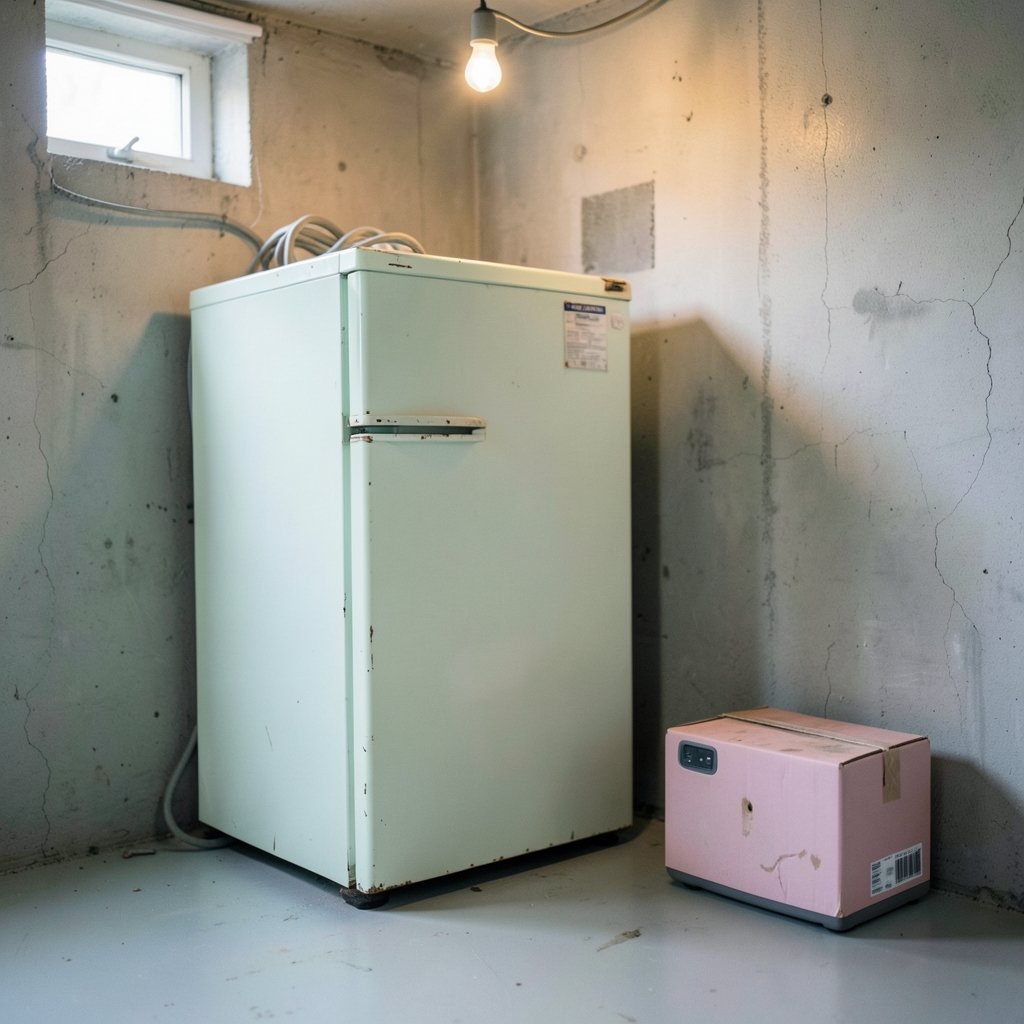
Is a refrigerator in the basement a smart way to gain extra cold storage, or a slow-moving appliance mistake waiting to happen? Ask ten homeowners and you’ll get ten different answers, usually delivered with strong opinions. The truth sits somewhere in the middle, and it depends far more on the room than on the fridge.
A basement refrigerator can be genuinely useful. It can also quietly drain electricity, sweat through humid summers, and thaw your frozen food during a cold snap. The difference between those outcomes comes down to a handful of decisions most people make in about five minutes at the top of the stairs. This guide walks through what matters, what gets overlooked, and what actually holds up in practice.
What people usually mean by a basement refrigerator
The phrase isn’t a formal product category. Nobody stamps “basement-rated” on a spec sheet. In everyday use, it describes one of two things: a second refrigerator parked downstairs for overflow groceries and drinks, or a unit specifically built to tolerate unconditioned spaces like garages and basements.
That second type matters more than most people realize. Standard refrigerators are typically rated for a narrower indoor temperature range, often somewhere around 55 to 110 °F depending on the manufacturer. Garage-ready models are advertised to operate across a much wider band, roughly 0 to 110 °F, though these numbers vary by brand and model and marketing claims are not standardized. Always check the actual spec sheet for the unit in front of you rather than trusting a label on the box.
If the plan is to keep the fridge in a finished, heated basement that stays comfortable year-round, a standard unit is fine. If the basement is unfinished and swings cold in January, the rating question becomes the whole ballgame.
The cold-weather problem nobody warns you about
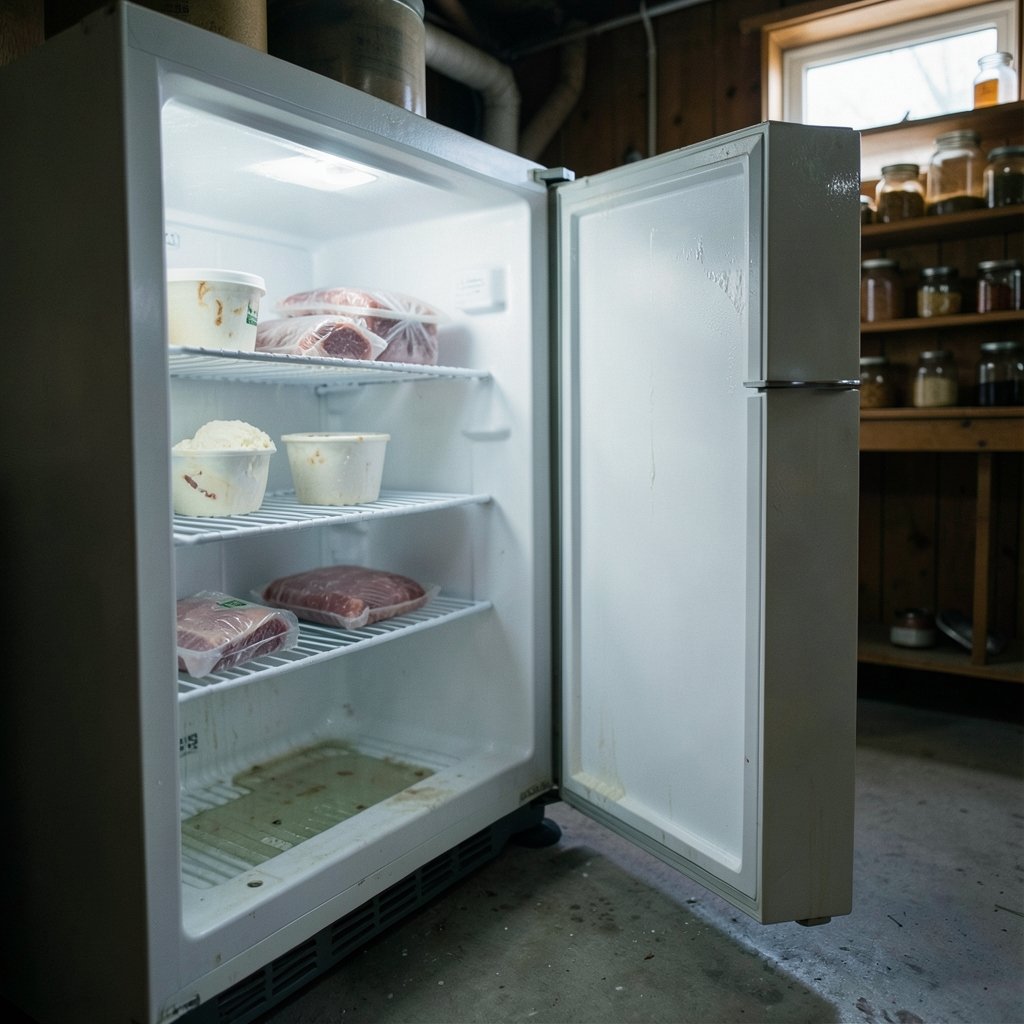
Here’s the mechanism that trips people up. In a space that drops below a refrigerator’s rated minimum, the thermostat may stop calling for cooling. The compressor sits idle. Meanwhile, the freezer compartment slowly warms, and food starts to thaw. Homeowners discover this after a winter cold snap, usually when the ice cream has turned to soup and the meat has gone soft.
This is exactly why garage-ready models exist, and it’s the single most common failure mode for basement fridges in cold climates. The frustrating part is that nothing looks broken. The fridge hums, the light works, and the problem only shows up in the food.
Practical fix: before buying, look up the unit’s rated ambient temperature range. If your basement drops below that floor for weeks at a time, either buy a garage-ready model or accept that the freezer becomes unreliable in deep winter.
Moisture, humidity, and the slow decay of a good appliance
Basements are typically cooler and damper than living space, and that combination is unkind to appliances. High humidity promotes condensation on cold surfaces, mold growth on door gaskets, and rust on coils and cabinet edges over time.
What actually helps in practice:
- Keep the fridge a few inches off the wall so air can move behind it.
- Wipe down gaskets every few months, especially in summer, and check for black spotting in the folds.
- Deal with standing dampness in the room itself rather than expecting the fridge to cope. If the space feels clammy, the room needs attention first. Placement matters more than people think, and there’s a real difference between putting a dehumidifier where it can work and parking it in a corner where it can’t, which is covered in this guide to where to place a dehumidifier in a basement for maximum drying power.
- If the basement smells musty, address the source. Odor masking doesn’t fix humidity, and an air purifier is a supplement, not a solution, as explained in this piece on whether an air purifier for basement odors actually clears the smell.
One more basement-specific health note worth taking seriously: basements are common locations for furnaces and water heaters, and radon accumulates at the lowest level of a home. A refrigerator isn’t a source of either problem, but the shared space is. Understanding why radon gas and the air in your basement matters is a reasonable five-minute read before spending more time downstairs.
Energy cost: the quiet bill you didn’t budget for
A second full-size refrigerator is a continuous load running 24 hours a day, every day. Older units use substantially more energy than current models, and a hand-me-down fridge from the garage is often the least efficient appliance in the house.
The practical math is simple: find the unit’s estimated annual energy use on its yellow energy label, multiply by your local electricity rate, and compare that number to the price of a new efficient model. Sometimes the old free fridge costs more over five years than a new one would have. Sometimes it doesn’t. But the calculation is worth ten minutes, because the answer is frequently surprising.
A few habits that genuinely reduce consumption:
- Keep the fridge reasonably full but not packed to the point of blocking vents.
- Check the door seal by closing a dollar bill in the door; if it slides out easily, the gasket is failing.
- Vacuum the coils once or twice a year, especially if the basement is dusty.
- Set the temperature appropriately rather than as cold as possible.
If the unit stops cooling entirely, the decision tree gets more complicated, and this practical guide to fixing a refrigerator that stopped cooling walks through the diagnosis before you call anyone. The same repair-versus-replace logic applies to basement fridges as to any other, though the stakes differ when the unit is a secondary appliance rather than the main one.
Electrical and safety considerations
Unfinished basements often have outlets that may require ground-fault circuit interrupter protection under the National Electrical Code, and local adoption of code editions varies. Whether a refrigerator should sit on a GFCI-protected circuit is genuinely debated among electricians, because nuisance tripping can spoil food while you’re away. Treat this as a question to ask a licensed electrician about your specific basement and your locally adopted code, not as a rule you can look up once and apply everywhere.
Flood risk deserves a mention too. A basement refrigerator sits at the lowest point of the house, exposed to water damage from sump failure or heavy flooding. Standard food-safety guidance is clear: discard food that contacted floodwater, and discard refrigerated food that has been held above 40 °F for more than two hours. When in doubt, throw it out. Nobody has ever regretted tossing a questionable casserole.
Garage-ready versus standard: a practical comparison
| Factor | Standard refrigerator | Garage-ready refrigerator |
|---|---|---|
| Typical rated ambient range | Narrower indoor range, often around 55–110 °F | Wider range, roughly 0–110 °F, varies by model |
| Cold basement performance | Freezer may warm when the room drops below the rated minimum | Designed to keep cooling in cold ambient temperatures |
| Price | Lower | Usually a premium |
| Best fit | Finished, heated basement | Unfinished or unconditioned basement |
| Spec sheet check | Read it | Read it; claims vary by brand |
The takeaway from that table isn’t “always buy garage-ready.” It’s “match the appliance to the room.” A heated basement in a mild climate doesn’t need the premium. A cold-climate unfinished basement almost certainly does.
Placement mistakes that cost you
People tend to treat basement placement as an afterthought, then wonder why the fridge runs constantly or the floor underneath it stays damp. A few things that actually matter:
- Clearance. Refrigerators need airflow around the cabinet and behind the coils. Tucking one into a tight alcove traps heat and makes the compressor work harder.
- Level ground. An unlevel fridge doesn’t seal properly, and the door may drift open. Shimming it takes two minutes.
- Distance from heat sources. Next to a furnace or water heater is the worst spot in the room.
- A dedicated circuit where possible. Sharing a circuit with a freezer, sump pump, or power tools invites tripped breakers and spoiled food.
- A raised base in flood-prone basements. A simple platform won’t save a fridge from a real flood, but it buys time against minor water events.
One underrated point: put the fridge somewhere you’ll actually walk past it. A basement fridge in a far corner becomes a forgotten fridge, full of food nobody remembers buying. Out of sight really does mean out of mind, and forgotten food is wasted money.
Buying used versus new for a secondary unit
The used-fridge market is enormous, and a cheap secondhand unit is often the whole reason someone ends up with a basement refrigerator in the first place. That’s fine, with caveats.
Check the age. Units older than roughly fifteen to twenty years are markedly less efficient and more likely to fail. Ask how long it’s been sitting unplugged; a fridge that’s been idle for years may have a dried-out compressor or a seized fan. Plug it in and let it run for a full day before handing over money. Smell the interior, since mold in the liner is hard to remove completely.
If the unit is being retired rather than purchased, disposal deserves attention. Older refrigerators contain refrigerant and, in older models, insulating foam blowing agents, and refrigerant recovery is regulated. Many utilities and municipalities offer pickup programs and occasionally rebates, which is often easier than hauling a fridge up a basement staircase yourself.
When a basement fridge just isn’t worth it
Honesty time. Some basements simply shouldn’t host a refrigerator:
- The space floods regularly or has active seepage.
- The room is unheated and the unit isn’t rated for cold ambient temperatures.
- The electrical setup can’t safely support another continuous load.
- The fridge would sit mostly empty, running for the sake of a few cans of soda.
- Nobody actually goes down there.
In those cases, a smaller dedicated beverage cooler, a chest freezer, or simply better organization upstairs often solves the real problem at lower cost. The goal is cold storage that works, not an appliance that exists because there was an empty corner.
The same logic applies to any secondary cooling appliance, including the ones that travel. RV owners learn this lesson fast, and the numbers behind RV refrigerator repair failures and what replacement actually costs make the repair-or-replace tradeoff concrete in a way that translates well to basement decisions.
Conclusion
A basement refrigerator is a practical, genuinely useful appliance when the room and the unit match each other. The failures almost always trace back to the same handful of causes: a standard fridge in a space that gets too cold, humidity left unmanaged, an aging unit quietly burning electricity, or placement that traps heat and blocks airflow.
The good news is that none of these problems require expertise to avoid. Check the rated temperature range before buying. Deal with basement dampness as a room problem, not a fridge problem. Run the energy math on any older unit. Keep the coils clean and the gaskets sealed. Put the fridge where you’ll see it. Do those things and the second refrigerator earns its place downstairs instead of becoming the appliance you forget about until something smells wrong.
FAQ
Does a regular refrigerator work in a cold basement?
It depends on how cold the basement gets. Standard refrigerators are typically rated for a narrower indoor temperature range, often around 55 to 110 °F, though this varies by manufacturer. Below that minimum, the thermostat may stop calling for cooling and the freezer compartment can warm enough to thaw food. If your basement drops below the unit’s rated range for extended periods, a garage-ready model is the safer choice.
What temperature range should a basement refrigerator handle?
Garage-ready refrigerators are commonly advertised to operate from roughly 0 to 110 °F, but these figures differ by brand and model and the claims aren’t standardized. Check the manufacturer’s specification sheet for the exact unit rather than assuming a range applies across the category.
Is it expensive to run a second refrigerator in the basement?
It can be. A second full-size refrigerator runs continuously, and older units use substantially more energy than current efficient models. Check the yellow energy label for estimated annual use, multiply by your electricity rate, and compare that to the cost of a newer unit. Many people find the old hand-me-down costs more over several years than replacing it would.
Can a basement refrigerator cause mold or moisture problems?
The fridge itself isn’t usually the cause, but basements are cooler and damper than living space, and high humidity encourages condensation on cold surfaces, mold on gaskets, and rust on coils. Keep clearance around the unit, clean the gaskets regularly, and address room-level dampness with ventilation or a dehumidifier rather than expecting the appliance to cope.
Should a basement refrigerator be on a GFCI outlet?
This is genuinely debated among electricians, because GFCI protection can nuisance-trip and spoil food, while code requirements depend on your locally adopted edition of the National Electrical Code and whether the basement is finished. Ask a licensed electrician about your specific setup rather than applying a blanket rule.
What should I do with food in a basement fridge after a flood?
Discard any food that contacted floodwater. Discard refrigerated food that has been held above 40 °F for more than two hours. When in doubt, throw it out. A basement fridge sits at the lowest point of the house, so it’s among the first appliances exposed when water gets in.



