
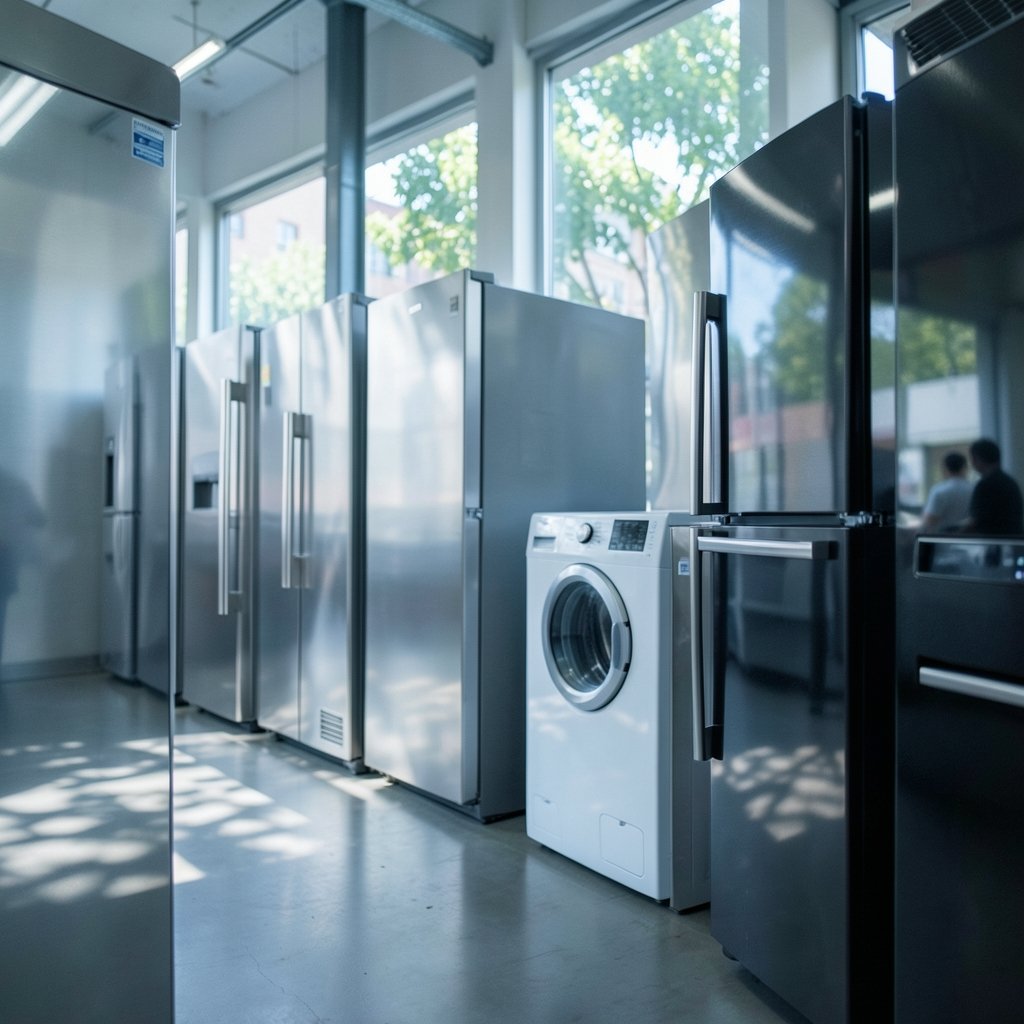
When a refrigerator dies on a Tuesday in July, timing advice feels like a luxury. But for anyone planning ahead, the question of when to buy home appliances is worth a serious answer, because the difference between a rushed purchase and a well-timed one can easily run into hundreds of dollars on a single large appliance. So when should you actually pull the trigger?
The short answer is that there is no single magic week. There are, however, several predictable windows when retailers and manufacturers are more motivated to move inventory, and a handful of traps that quietly erase the savings. Understanding both is what separates a smart purchase from a lucky one.
Why Appliance Prices Move at All
Appliance pricing is not random. It responds to a few forces that repeat every year. Retailers run on quarterly targets, so the end of a quarter often brings sharper promotions than the middle. Manufacturers introduce new model years, usually in late summer and fall, which pushes older inventory toward clearance. Holiday weekends give stores a reason to advertise aggressively, and shoppers respond to the ritual of a “sales event” even when the underlying discount is modest.
There is also a less visible factor: floor model and discontinued color clearance. A range in a trendy finish that the brand is phasing out can drop sharply once the new palette arrives. Shoppers who are flexible on color and brand often do better than those who are not.
One caution worth stating plainly: much of the “best time to buy” advice in consumer media is shaped by retailer marketing calendars and rarely backed by hard transaction-price data. Treat any seasonal claim, including the ones in this article, as a probability, not a guarantee. The only price that matters is the one you can verify on the day you buy.
The Main Seasonal Windows

Most major U.S. appliance sales cluster around the same handful of holiday weekends. These are the periods when advertising volume spikes and discount depth tends to follow.
| Window | Typical timing | What tends to be discounted |
|---|---|---|
| Presidents’ Day sales | February | Large kitchen appliances, laundry pairs |
| Memorial Day sales | Late May | Refrigerators, ranges, outdoor-adjacent gear |
| July 4th sales | Early July | Mid-year clearance, bundled kitchen sets |
| Labor Day sales | Early September | Outgoing model years, floor models |
| Black Friday and Thanksgiving week | Late November | Broad discounts across categories |
| End-of-quarter pushes | March, June, September, December | Negotiable pricing, bundle deals |
The pattern is not subtle. Retailers want reasons to advertise, and holiday weekends provide them. But the depth of discount varies enormously by category and by how badly a store needs to clear a specific unit.
Presidents’ Day and Memorial Day
February and late May are the two most reliable “appliance holiday” windows in the first half of the year. Presidents’ Day promotions lean heavily toward kitchen packages, and Memorial Day is often when retailers push refrigerators and laundry pairs ahead of the summer moving season. If you are replacing a full kitchen, these two weekends are reasonable targets.
Labor Day and the Model-Year Shift
Labor Day deserves more attention than it usually gets. New model years typically arrive in late summer and fall, which means September is when outgoing inventory gets marked down to make room. The discounts here are often on specific SKUs rather than storewide, so you need to know which model you want before you walk in. Shoppers who arrive without a target model tend to get steered toward whatever the salesperson needs to move.
Black Friday and Thanksgiving Week
Late November remains the loudest appliance window of the year, and for good reason: the discounts are real, but so is the noise. The trick is to distinguish genuine markdowns from inflated “original” prices. Check the price history of a specific model over the preceding two months if you can. A refrigerator that was $1,899 in September and is “$1,499, was $2,199” on Black Friday is not actually a Black Friday deal.
What Actually Works in Practice
Seasonal timing is only half the equation. The other half is preparation, and this is where most shoppers lose money.
Know your measurements before you shop
Measure the opening, the doorway, and the path from the truck to the kitchen. Appliance returns are frequently driven by fit problems, and a return wipes out any seasonal savings instantly. Write the numbers down and bring them with you.
Track one specific model
Pick a model, note its price weekly for four to six weeks, and then buy when it dips. This beats chasing storewide sales because it tells you what a real discount looks like for that unit. Price-tracking browser tools make this close to effortless.
Ask about end-of-quarter timing
Sales staff often have room to negotiate near the end of a quarter or month when targets loom. Asking directly about upcoming promotions or whether a better price is available on a floor model costs nothing and occasionally works.
Check rebate programs before you buy
For large appliances, government and utility rebate programs can matter more than seasonal timing. Efficiency-linked rebates on refrigerators, washers, and dryers sometimes exceed the holiday discount itself. Program details change often, so verify eligibility at the source before you commit. The same discipline applies to any big-ticket purchase where the fine print carries the real value, much like weighing a build-versus-buy decision over a multi-year horizon using a three-year cost comparison for build vs buy AI framework.
Do not ignore the boring categories
Small appliances and accessories follow different rhythms than major ones. If you are outfitting a kitchen from scratch, it helps to know where the genuine deals sit in adjacent categories, whether that is a perfume mystery box blind buy experiment or a best e-reader purchase in 2026. The principle is the same: research the specific product, not the sale banner.
Common Mistakes That Cost Real Money
A few habits reliably undercut even well-timed purchases.
Buying in a panic. Emergency replacements almost always cost more because you cannot wait for a sale or compare models. If an appliance is more than ten years old and showing strain, start researching now rather than waiting for failure.
Ignoring delivery and installation fees. A $200 discount means little if delivery, haul-away, and installation add $250. Ask for the full out-the-door price before comparing offers.
Assuming the holiday price is the lowest. Sometimes the best price on a specific model appears two weeks after the holiday, when unsold promotional inventory gets marked down again.
Skipping the extended warranty math. Extended plans are profitable for retailers, which tells you something about their expected value. For most appliances, a modest emergency fund beats a pricey warranty, though there are exceptions for complex units with expensive electronics.
Overlooking scratch-and-dent inventory. Retailer outlet sections and scratch-and-dent floors often carry the steepest discounts of all, frequently steeper than holiday sales. Inspect carefully, confirm the warranty still applies, and you can save substantially.
Timing Around Life Events Beyond Calendars
There is a quieter timing question that matters as much as the seasonal one: when in your own life should you buy? Moving season, which peaks in late spring and summer, drives appliance demand and can push prices up in June and July. If you are buying for a new home, shopping in February or September may serve you better than shopping the week you move in.
Similarly, if you are renovating, order appliances early. Supply delays on specific models can stretch for weeks, and a kitchen sitting half-finished while you wait on a range is an expensive way to save a little. Planning around the calendar is useful, but planning around your renovation schedule is essential.
A Simple Decision Framework
If you want a practical rule set rather than a list of dates, use this sequence.
- Confirm the appliance truly needs replacing, and note your deadline.
- Measure the space and the delivery path.
- Choose two or three specific models that fit.
- Track their prices for at least four weeks.
- Check rebate eligibility and total out-the-door cost.
- Buy when the tracked price dips, prioritizing Presidents’ Day, Memorial Day, Labor Day, or Black Friday if your deadline allows.
- Keep the receipt and warranty paperwork in one place.
This framework beats any single “best day” claim because it accounts for the model you actually want, not the one a store wants to sell you.
Conclusion
The best time of year to buy home appliances is not one date on a calendar. It is the overlap between a retailer’s motivation to discount and your own readiness to buy a specific model at a verified price. Holiday weekends in February, May, September, and late November give you the strongest odds, and the model-year shift in late summer adds a second layer of clearance opportunity. But preparation, measurement, price tracking, and a clear-eyed look at total cost will do more for your wallet than any sale banner. Shop the model, not the event, and the timing tends to take care of itself.
FAQ
When is the cheapest time to buy a refrigerator?
Late summer through early fall, especially around Labor Day, tends to bring the sharpest discounts on refrigerators because new model years arrive and retailers clear older inventory. Black Friday is a close second. Prices on specific models can dip further in the weeks after a holiday, so tracking a single model beats waiting for a storewide event.
Are Black Friday appliance deals actually worth it?
Often yes, but not automatically. Some Black Friday prices are genuine markdowns, while others are inflated “original” prices dressed up as savings. The reliable test is to check the same model’s price in the weeks before the holiday. If it was already low in October, the Black Friday tag is marketing.
Should I buy appliances at the end of a quarter?
It can help. Retailers and sales staff work toward quarterly and monthly targets, which sometimes creates negotiating room or unadvertised discounts near the end of March, June, September, and December. It is not guaranteed, but asking directly about upcoming promotions or floor-model pricing costs nothing.
Is it better to wait for a new model year?
It depends on your priorities. If you want the latest features, buy when the new model launches. If you want the lowest price, buy the outgoing model after the new one arrives, since that is when clearance pricing kicks in. The tradeoff is usually a smaller selection of colors and configurations.
Do government rebates beat holiday discounts?
Sometimes they do, especially on large, efficiency-linked appliances. Rebate programs tied to energy efficiency can exceed a typical holiday markdown, but eligibility rules and funding vary by location and change frequently. Verify current program details at the source before you buy rather than assuming a rebate applies.
What is the worst time to buy an appliance?
Buying in a panic during peak moving season, usually June and July, is the most expensive scenario. Demand is high, you have no time to compare models, and you lose all negotiating leverage. If an older appliance is nearing the end of its life, start researching before it fails so you keep control of the timing.
The final piece of the framework is patience with a deadline. Set a firm date by which you must have the appliance installed, then work backward from it. If your deadline falls in June or July, start tracking in April so you can act on an early dip rather than paying peak moving-season prices. If the deadline is flexible, let the calendar work for you and wait for one of the four holiday windows. Either way, decide in advance what price you will accept, and buy the moment a tracked model crosses it. That single habit, more than any sale date, is what separates a good appliance purchase from an expensive one.



