
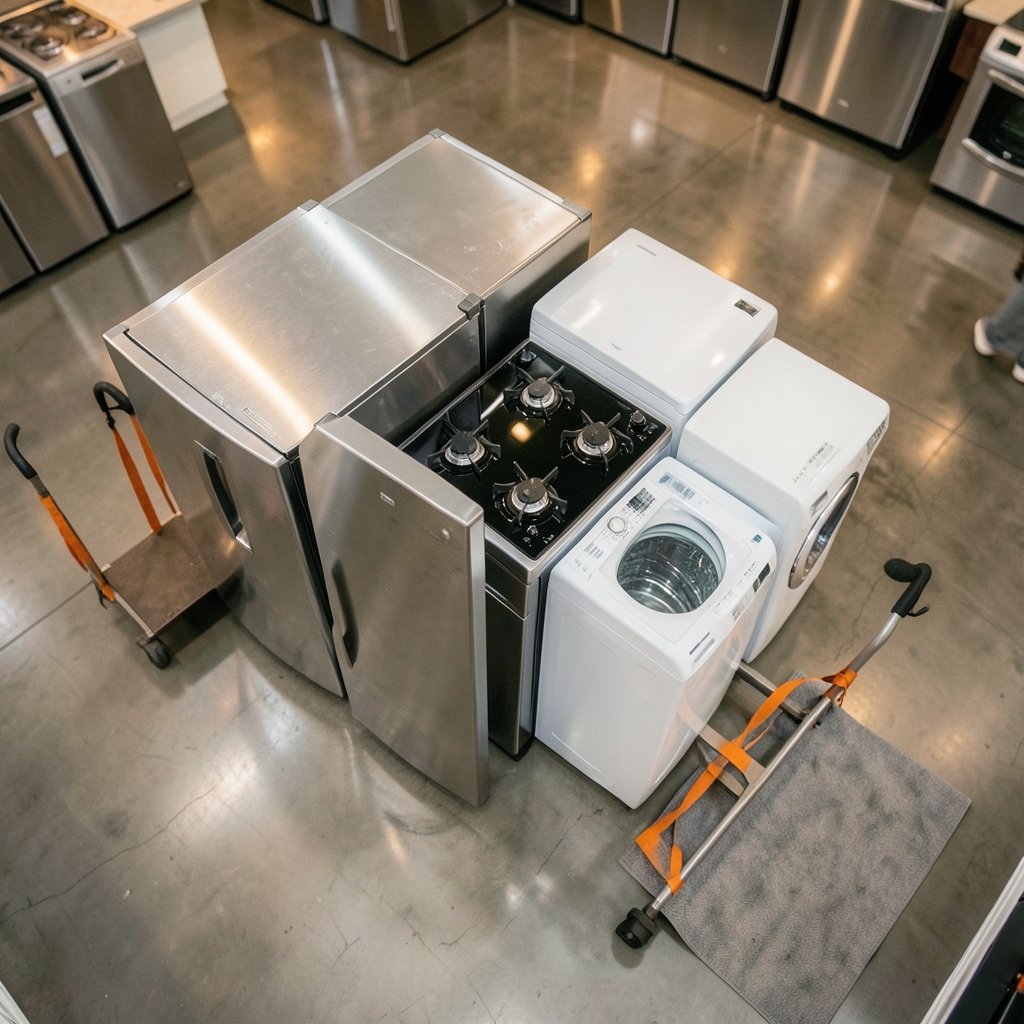
What if the biggest factor in your next appliance purchase isn’t the brand on the box, but where you buy it? In Madison, Wisconsin, shoppers have real choices: locally based chains, national big-box stores, and specialty dealers that sell and service what they sell. Each option comes with different pricing, delivery terms, and warranty support. The store you pick often matters more than the logo on the door.
This guide covers how appliance shopping actually works in Madison, from sales tax and delivery fees to haul-away service and repair-or-replace math. It’s written for people who want to walk into a store knowing what to ask, what to check, and what to skip.
Why the Store Matters as Much as the Brand
Most major appliances come from a handful of manufacturers, so the same refrigerator may appear under several brand names. What differs is the buying experience: who delivers, who installs, who handles a warranty claim, and whether anyone answers the phone when the ice maker dies in month fourteen.
A few practical realities shape the Madison market:
- Local chains often bundle delivery and installation into the advertised price, while big-box stores may quote them separately at checkout.
- Specialty dealers frequently offer in-house service, which can shorten repair waits compared with a national call center.
- Big-box return windows are usually generous but may exclude installed items like dishwashers once they’ve been hooked up.
The smart move is to compare the total out-the-door cost, not the sticker price. A $699 washer with $120 in delivery and installation fees costs more than a $749 washer that includes both.
The Main Types of Appliance Stores in Madison
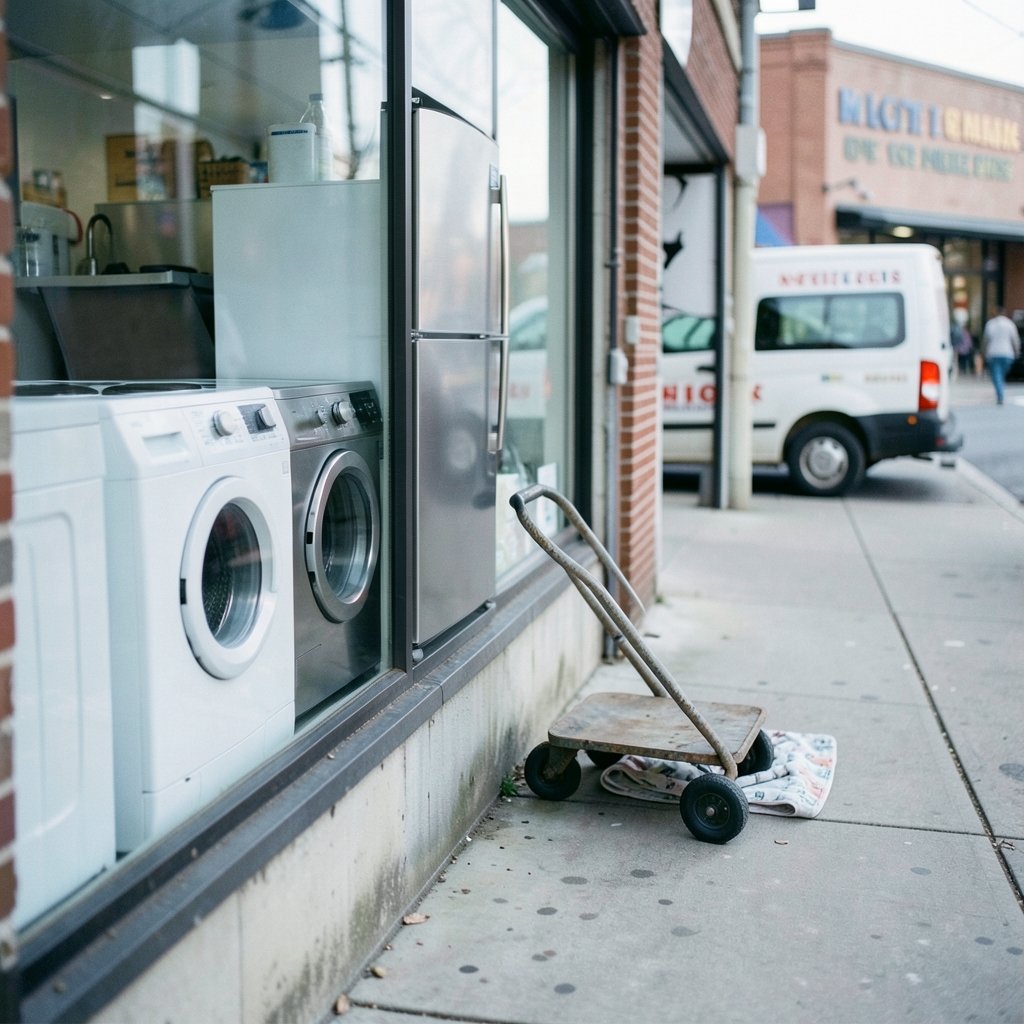
Madison shoppers generally encounter four store categories. Each fits a different kind of buyer.
| Store type | Best for | Watch out for |
|---|---|---|
| Local independent chains | Service, delivery bundles, staff knowledge | Smaller floor inventory, limited weekend hours |
| National big-box stores | Price matching, wide selection, financing | Add-on fees, third-party installers |
| Specialty appliance dealers | High-end brands, design help, in-house repair | Higher base prices |
| Warehouse and membership clubs | Bulk deals, seasonal promotions | Limited brands, membership cost, minimal service |
Local independent chains
Madison has a strong tradition of locally based appliance retailers, some of which have served the area for decades. Their advantage is accountability: you can walk back into the store where you bought the machine. Staff tend to know which models come back for repairs most often, which is information you won’t find on a spec sheet.
National big-box stores
Big-box retailers compete hard on price and often run appliance promotions around holidays. They’re a good fit if you already know the exact model you want and mainly care about financing or a price match. Ask specifically who will deliver and install, because it’s frequently a contracted crew rather than store employees.
Specialty dealers
If you’re remodeling a kitchen and need a wall oven, a panel-ready refrigerator, and a range hood that all work together, a specialty dealer earns its markup. These stores typically carry premium brands and offer design consultations. For basic replacements, though, the premium is rarely worth it.
Warehouse clubs and outlet options
Membership warehouses occasionally beat everyone on price for standard models, but selection rotates and delivery is often an extra charge. Outlet and scratch-and-dent inventory can save real money if you’re flexible about a cosmetic blemish on a side panel nobody sees.
What to Check Before You Buy
A short checklist prevents most appliance-buying regrets. Bring it to the store.
- Measure the opening, not the old appliance. Width, height, and depth all matter, and so does the doorway the new unit must pass through.
- Confirm the door swing and clearance. A refrigerator that opens into a kitchen island is a daily annoyance.
- Ask what’s included. Delivery, installation, haul-away of the old unit, and the power cord or hoses are often separate line items.
- Check the warranty length and who honors it. In-house service versus manufacturer-authorized repair changes the experience.
- Verify the delivery date in writing. Backorders on popular models can stretch for weeks.
- Look for the energy label. Efficiency ratings are revised periodically, so compare current labels rather than older reviews.
A common mistake is buying on a holiday sale without confirming the delivery window. A great price means little if the refrigerator arrives after your kitchen renovation is finished.
Sales Tax, Rebates, and the Real Out-the-Door Price
Wisconsin charges state sales tax on appliance purchases, and Dane County adds its own county tax on top. Rates change, so confirm the current combined rate with the Wisconsin Department of Revenue before you finalize a budget. On a $2,000 kitchen package, even a small rate difference changes the total meaningfully.
Rebates are the other lever. Wisconsin’s ratepayer-funded energy efficiency program, Focus on Energy, has historically offered residential appliance rebates, though offerings shift from year to year. Check current availability before you shop, and note that many rebates require the old unit to be recycled through an approved program.
Then there’s the energy bill. A modern efficient refrigerator can use dramatically less electricity than a unit from fifteen years ago, so a higher purchase price sometimes pays back within a few years. The same logic applies to washers and dishwashers, where water and heating costs add up.
Delivery, Installation, and Haul-Away: Where Budgets Break
Ask ten Madison homeowners what surprised them about an appliance purchase, and delivery logistics will come up more than once. The pattern is consistent: the price looked right until the add-ons appeared.
Typical add-on charges to watch:
- Delivery, especially to upper floors or homes outside the standard delivery zone
- Installation, particularly for dishwashers, gas ranges, and over-the-range microwaves
- Haul-away and recycling of the old appliance
- New hoses, cords, and connectors, which installers may require
- Removal of doors or railings to get a wide unit inside
Two habits help. First, get the delivery and installation quote in writing before you pay. Second, photograph the path from your door to the kitchen and show it to the salesperson, so nobody is surprised on delivery day. If your home has a tight stairwell or a narrow galley kitchen, that photo can save you a return.
For shoppers building out a full kitchen or a rental property, coordinating multiple deliveries is its own puzzle. Software that tracks stock and delivery schedules helps landlords and small property managers avoid double-ordering, and the same discipline applies to appliances as to any other inventory. Guides on the best inventory management software for online stores cover the tracking side in more depth.
Repair or Replace? A Decision Framework
When the dishwasher starts leaking, the first question isn’t which store to visit. It’s whether the machine is worth fixing.
Use this rough framework:
| Situation | Lean toward repair | Lean toward replace |
|---|---|---|
| Age | Under half expected lifespan | Near or past expected lifespan |
| Repair cost | Under half the price of a new unit | Over half the price of a new unit |
| Efficiency | Already efficient | Old, high energy use |
| Frequency | First major failure | Third repair in two years |
Average appliance lifespans vary by source and by how hard the machine works, but most consumer guides put refrigerators and ranges in the range of roughly a decade or more, with dishwashers and washing machines somewhat shorter. If a repair quote approaches half the cost of replacement on an eight-year-old unit, replacement usually wins.
There’s a consumer-protection angle too. Wisconsin’s lemon law covers new motor vehicles, not appliances. Appliance warranty rights generally fall under the federal Magnuson-Moss Warranty Act and state laws against unfair or deceptive trade practices. If a retailer refuses to honor a written warranty, the Wisconsin Department of Agriculture, Trade and Consumer Protection handles consumer complaints about retail sales.
Smart Shopping Habits That Actually Work
Some tactics pay off consistently, and some are mostly noise.
What works:
- Shopping mid-week and mid-month, when sales floors are quiet and staff have time to dig into model differences
- Asking directly which models come back for service most often
- Checking whether the store services what it sells
- Comparing the total price including delivery, installation, and haul-away
- Buying the previous year’s model when the only change is cosmetic
What usually doesn’t:
- Chasing the deepest discount without confirming the delivery date
- Assuming the extended protection plan is a scam or a necessity; it depends on the appliance and the plan terms
- Trusting a single online review, positive or negative
- Buying a suite of appliances purely for matching handles if the individual models rate poorly
The broader retail landscape is shifting fast, with AI-assisted shopping tools and app-based services changing how people compare products. If you’re curious how that trend is reshaping retail generally, the roundup of AI tools for e-commerce stores is a useful primer on where things are heading, and the same forces are reaching appliance showrooms.
Common Mistakes Madison Shoppers Make
A handful of errors show up again and again.
First, forgetting the doorway. The appliance fits the alcove but not the hall. Measure every opening on the route.
Second, skipping the delivery quote. The advertised price is rarely the final one. Ask for the complete total before signing.
Third, ignoring the old unit. Haul-away isn’t always included, and leaving a refrigerator on the curb isn’t a plan. Madison-area utilities and retailers often coordinate recycling, but confirm it.
Fourth, buying gas appliances without checking the hookup. A gas range needs a proper connection, and installation rules matter. Confirm the store’s installers will handle gas or that you have a licensed technician lined up.
Fifth, overlooking the secondhand market. If budget is tight, quality used appliances from estate sales and resale shops can outperform cheap new ones. Local guides to the best thrift stores near you are a reasonable starting point for furniture and household goods, though appliances deserve extra scrutiny for safety and warranty coverage.
When a Repair Goes Wrong
Sometimes the problem isn’t the appliance but the repair shop. Phone repair horror stories get attention, and appliance repair has its own version: technicians who diagnose generously, quote vaguely, and disappear. The same consumer instincts apply. The guide on how to choose repair stores for phones without getting burned lays out questions that translate almost directly to appliance repair: ask for a written estimate, confirm licensing and insurance, and get the diagnostic fee credited toward the repair.
For appliances still under manufacturer warranty, use an authorized service provider. Going elsewhere can void coverage. For out-of-warranty repairs, an independent shop with strong local reviews is often faster and cheaper than a national dispatch network.
Conclusion
Buying an appliance in Madison isn’t complicated, but it rewards preparation. Measure first, get the full delivered-and-installed price in writing, confirm the delivery window, and ask who will service the machine if it fails. Local chains, big-box stores, and specialty dealers each make sense for different shoppers, and the right choice depends on whether you value price, service, or design help most.
The shoppers who end up happiest are rarely the ones who found the deepest discount. They’re the ones who knew their doorway width, read the warranty, and asked the salesperson a slightly awkward question about repair rates. Do that, and the appliance you buy in Madison is far more likely to be one you keep for a decade without regret.
Frequently Asked Questions
Where should I buy appliances in Madison, WI?
It depends on your priority. Local independent chains tend to offer better service and bundled delivery, national big-box stores compete on price and selection, and specialty dealers are best for high-end or design-matched kitchens. Compare total out-the-door costs rather than sticker prices.
Is it cheaper to buy appliances at a big-box store or a local dealer?
Not always. Big-box stores often win on base price, but delivery, installation, and haul-away may be added at checkout. Local dealers frequently bundle those services. Add up the full cost, including tax, before deciding which is actually cheaper.
Does Wisconsin charge sales tax on appliances?
Yes. Wisconsin applies state sales tax to appliance purchases, and Dane County adds a county tax on top. Rates change over time, so confirm the current combined rate with the Wisconsin Department of Revenue before you set a budget.
Are appliance rebates available in Madison?
Wisconsin’s Focus on Energy program has historically offered residential appliance rebates, but offerings change from year to year. Check current availability before you shop, and note that many rebates require recycling the old unit through an approved program.
Should I repair or replace a broken appliance?
Use age and cost as your guide. If the unit is past roughly half its expected lifespan and the repair costs more than half the price of a new one, replacement usually makes more financial sense. A first major failure on a newer unit is usually worth repairing.
What should I ask before paying for a new appliance?
Ask four things: what the total price includes, the confirmed delivery date, who performs installation, and who honors the warranty. Get the answers in writing. Also confirm whether haul-away of the old appliance is included, since it often isn’t.



