
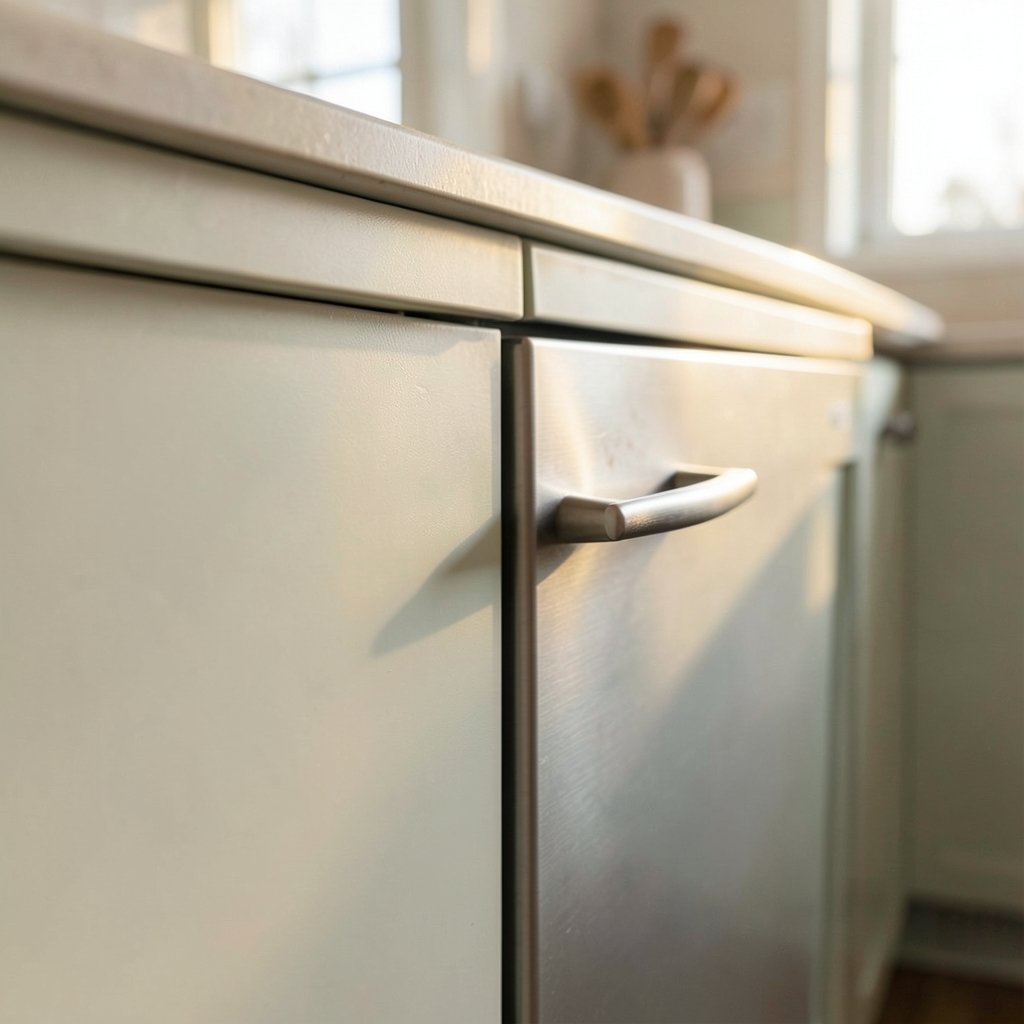
Why does a refrigerator that looks perfect in the showroom often stick out six inches past the cabinets once it’s home? That small gap is the reason counter-depth refrigerators have become one of the most searched appliance categories in the country. Shoppers want the built-in look without the built-in price, and they want a model that actually keeps food cold, doesn’t break down in year three, and fits the space they measured twice. (Rv refrigerator repair fails it costs when replace)
The problem is that “best rated” means different things depending on who is doing the rating. One outlet rewards lab performance, another weights owner satisfaction, and a third focuses on reliability surveys. This guide walks through what the ratings really measure, where counter-depth models compromise, and how to translate a star rating into a decision that holds up in a real kitchen.
What Counter-Depth Actually Means (and Why It’s Not Standardized)
A counter-depth refrigerator is designed to sit roughly flush with standard 24-inch-deep base cabinets. In practice, that usually means a depth of about 24 to 30 inches excluding handles, compared with 30 to 36 inches for a standard-depth model. The concept is simple. The execution is not.
“Counter depth” is not a standardized measurement across manufacturers. Depth figures often exclude handles and hinges, and door protrusion varies widely between French-door, side-by-side, and column configurations. A model advertised at 28 inches deep can push past 31 inches once the doors and handles are counted, especially when the refrigerator door sits proud of the cabinet face by design.
This is where most buyers get burned. The common mistake is measuring the cabinet opening and buying to that number, then discovering the doors won’t open past a nearby wall or the handles clip a doorway. What actually works is measuring the finished cabinet depth, adding the handle protrusion from the spec sheet, and mapping the door swing with a tape line on the floor. If a walkway or island sits across from the fridge, check that the doors can open far enough to pull out a crisper drawer.
Why “Best Rated” Depends Entirely on Who Is Rating

There is no single authoritative list of best counter-depth refrigerators. Ratings from major testing organizations, newspaper review teams, and retailer review aggregates frequently disagree, because each one weights different things. A lab that measures temperature consistency across zones will rank models differently than a survey that asks owners how they feel after two years.
| Rating Source Type | What It Measures Best | What It Can Miss |
|---|---|---|
| Independent lab testing | Temperature stability, cooling speed, energy use | Long-term durability |
| Member reliability surveys | Repair rates by brand over time | Specific model performance |
| Newspaper review teams | Real-world usability, value, setup | Brand-wide reliability trends |
| Retailer review aggregates | Owner satisfaction, delivery experience | Bias toward recent buyers, review bombing |
The practical takeaway is to read at least two types of ratings before deciding. A model that tops a lab test but carries a weak brand reliability record is a different purchase than one that scores slightly lower in the lab but rarely needs service. Brand-level reliability rankings also shift from year to year, so a survey from three years ago is a weak guide to what is on the floor today.
The Capacity Trade-Off Nobody Mentions in the Showroom
Counter-depth looks cost interior space. Where a standard-depth French-door unit of the same width might offer 25 to 28 cubic feet or more, counter-depth versions often land around 20 to 24 cubic feet. That difference shows up in shelf depth, drawer size, and how far a sheet pan or a large turkey will slide in. (Double counter discord bot breach 28 million accounts 2026)
The trade-off gets sharper when you add an ice and water dispenser. Dispensers eat into door-bin storage and sometimes into fresh-food volume, which is why some of the most highly rated counter-depth models skip the dispenser entirely and put the ice maker in the freezer instead. If dispensed water is a must, plan for less usable shelf depth and check the interior dimensions rather than the headline capacity number.
There is also a quiet capacity trap: cubic footage is measured to the interior walls, but usable space shrinks with door bins, ice makers, and bulky shelving hardware. Two models with identical capacity figures can feel very different once loaded with groceries.
Features That Earn Their Place in Top-Rated Models
Reviewers tend to converge on a handful of features that separate strong counter-depth models from mediocre ones. These are not marketing extras. They change daily use.
Dual evaporators. Separate cooling systems for the fridge and freezer section reduce odor transfer and help maintain humidity in the fresh-food compartment. This is one of the most consistently praised features in higher-end counter-depth units.
Adjustable, spill-proof shelving. Full-width adjustable shelves and a split shelf that slides to make room for tall items matter more in a shallower cabinet, where vertical space is doing extra work.
Variable-speed compressors. These run at lower, steadier speeds instead of cycling on and off hard. They tend to be quieter and more energy-efficient, which matters in open-plan kitchens where the fridge sits near the living space.
Energy Star certification. Models certified under the federal Energy Star program meet efficiency criteria set by the EPA and DOE, on top of the mandatory federal efficiency standards that apply to all residential refrigerators. Certification is a floor, not a guarantee of low operating cost, but it is a useful filter.
Door alarms and temperature alerts. Small features, genuinely useful. A door left ajar on a counter-depth unit with tight clearances is easy to miss.
How to Compare Ratings Without Getting Fooled
Ratings are only as good as the comparison behind them. A five-star average built on forty reviews from the first month of ownership tells you almost nothing about reliability. A four-star average across several hundred reviews spanning multiple years tells you much more.
A few habits separate confident buyers from regretful ones:
- Sort reviews by “oldest” first to see how the model holds up after a year or two of ownership.
- Search reviews for words like “compressor,” “ice maker,” and “leak” rather than reading only the top-rated glowing ones.
- Check whether the rating body tested the exact model number, rather than the series alone. Manufacturers quietly revise internals under similar model names.
- Cross-check the brand’s repair record separately from the model’s performance score.
- Confirm the model is still in production before falling in love with a rating from last year’s list.
It also helps to know what happens when things go wrong. Repair economics vary enormously by unit type, and the same logic that applies when an RV fridge fails and you weigh repair against replacement applies in the kitchen: a compressor or sealed-system repair on a premium counter-depth unit can approach a meaningful fraction of the purchase price, which is why warranty length and local service availability deserve a place in the comparison. If you are troubleshooting a unit that has already stopped cooling, a practical walkthrough of the fix before you call a technician can save a service fee.
Measuring for a Counter-Depth Fit: A Step-by-Step Approach
Getting the fit right is the single most common source of dissatisfaction with counter-depth refrigerators, and it is entirely preventable.
- Measure the width of the opening at the cabinet face, the countertop overhang, and the back wall, since these can differ.
- Measure the finished cabinet depth from the front of the cabinet box to the wall.
- Pull the manufacturer spec sheet and find depth with doors and handles included, rather than cabinet depth alone.
- Note the required clearance for the door hinge side, the back, and the top. Some models need an inch or more behind for airflow and door swing.
- Mark the door swing arc on the floor with tape and walk the path you use most often.
- Confirm the refrigerator will fit through every doorway and stairwell on the delivery route. Removing doors helps, but only if the model allows it.
A refrigerator that fits the opening but blocks a drawer or a walkway will annoy you every single day. The tape-on-the-floor test takes five minutes and prevents most of these problems.
Budget Reality: What the Premium Buys
Counter-depth models typically cost more than comparable standard-depth refrigerators, often by several hundred dollars or more, and pricing shifts frequently with promotions and model-year changes. Rather than chasing a specific number, think in tiers.
Entry counter-depth models generally deliver the look with fewer interior refinements and more plastic. Mid-tier models add dual evaporators, better shelving, and quieter compressors. Premium models add panel-ready options, advanced cooling zones, and longer warranties. The jump from mid-tier to premium buys diminishing returns in cooling performance but real gains in fit and finish.
One underrated budget move is to skip the dispenser. Dispenser-free counter-depth models often cost less, offer more usable space, and have fewer components that can fail. If your household drinks filtered water from a pitcher or a under-sink filter, this is a straightforward win.
Reliability: The Rating That Matters Most After Year Three
Performance tests happen in weeks. Ownership happens in years. The most valuable rating data for a counter-depth purchase is repair-rate information gathered from large owner surveys, because refrigerators are one of the appliances most likely to need service, and the failure points (compressors, sealed systems, ice makers) are expensive to fix.
Brand-level reliability rankings change annually, so the right move is to check the most recent survey year available and treat older rankings as historical context rather than current truth. Within a brand, certain platforms have better track records than others, which is another argument for researching the specific model number rather than the brand as a whole.
Warranty structure deserves equal attention. Most refrigerators carry a one-year general warranty, with longer coverage on sealed system parts. Read the fine print on labor coverage, because parts-only coverage on a compressor still leaves a significant bill. If you are the type who tracks costs carefully, treating the appliance like any other household expense with a defined replacement horizon helps avoid surprise spending, the same way careful planning pays off when you need to know what to expect at a store counter for a money order.
Matching the Refrigerator to Your Actual Kitchen
The best-rated counter-depth refrigerator for one household is rarely the best for another. A family of five that cooks constantly needs different priorities than a couple in a condo.
For a busy family, capacity and ice production usually outrank panel-ready styling. A dispenser-free French-door model with a large freezer and a strong reliability record is often the smarter pick than a sleeker unit that holds less. For a compact kitchen where the fridge sits at the end of a run, door swing and handle protrusion matter more than cubic feet. For anyone planning a renovation, buying the refrigerator before the cabinets are built is the single best way to guarantee a flush fit.
A useful exercise is to list the three things you do most with a refrigerator: load groceries, get ice, find leftovers. Then check how each candidate model handles those three tasks in reviews. That filter cuts through most of the noise in ratings.
Conclusion
The search for the best-rated counter-depth refrigerator ends not with a single winner but with a shortlist built on three checks: does it fit the actual space with doors and handles counted, does it carry strong reliability signals at the model and brand level, and does its layout match how the household really uses a fridge. Ratings from labs, owner surveys, and review teams each answer part of that question, and none answers all of it. Measure carefully, read the oldest reviews rather than the newest, weigh the capacity trade-off honestly, and treat the dispenser as an optional extra rather than a default. Do that, and the refrigerator will sit flush with the cabinets for a decade without becoming a source of daily irritation.
Frequently Asked Questions
Is counter depth worth the extra cost?
For most kitchens with standard 24-inch base cabinets, yes. The premium buys a flush look that changes the entire feel of the room, and it keeps walkways clear. The cost is real, though, and it comes with less interior space than a same-width standard-depth model. If the refrigerator sits against a wall where depth is invisible, a standard-depth unit is the better value.
How deep is a counter-depth refrigerator really?
Most are advertised at roughly 24 to 30 inches deep excluding handles. Add handles, hinges, and door protrusion and the real number is often two to four inches more. Always use the spec sheet’s depth-with-handles figure and leave clearance behind the unit for airflow and door swing.
Do counter-depth refrigerators hold less food?
Generally, yes. A counter-depth French-door unit often offers around 20 to 24 cubic feet, while a standard-depth model of the same width may offer 25 to 28 or more. Dispensers reduce usable space further. Check interior shelf depth and drawer dimensions, not the headline capacity figure alone.
Which rating source should I trust most?
Use at least two. Independent lab testing gives the clearest picture of cooling performance and energy use, while large owner surveys reveal long-term repair rates that short tests cannot capture. Retailer review averages are useful for delivery and usability feedback but skew toward recent buyers. Where sources disagree, the disagreement itself is informative.
Should I buy a model with an ice and water dispenser?
Only if dispensed water is a genuine daily habit. Dispensers reduce door storage, consume interior volume, and add components that can fail. Dispenser-free counter-depth models often cost less, hold more, and have fewer service issues, which is why several highly rated models skip them.
How long should a counter-depth refrigerator last?
Most refrigerators are expected to serve roughly a decade, though compressor and sealed-system failures are the most common early problems. Warranty terms matter here: general coverage is typically one year, with longer parts-only coverage on sealed systems. Labor coverage is the detail worth reading closely before purchase.



