
A good game night can start with nothing but a question, a circle of friends, or a phone. Fun games to play with friends can fill a short break or anchor an evening, whether everyone sits together or joins from home. This list spans no-equipment conversation games, tabletop and team games, and mobile social play. You can narrow the choices by player count, available equipment, group energy, and whether your friends are together or apart. A social deduction game is a game in which players use clues and behavior to work out which players have hidden roles. That format suits friends who enjoy talk and guesswork, while other picks lean on teamwork, pictures, or shared virtual spaces. Think about how much time your group has and what kind of mood people want. Pick a game that fits the people who are there, not just the one with the most elaborate rules.
Key Takeaways
- Choose by group size, equipment, mood, and location.
- Conversation games can start without boards, cards, or phones.
- Team clue games give friends a shared puzzle to solve.
- Mobile picks work for friends together or in separate places.
- Keep a skip option for questions that feel too personal.
- A short first round helps everyone learn the pace.
15 Fun Games to Play With Friends for Different Group Sizes
If friends are together and want an easy conversation starter, begin with 21 Questions; if the group is spread across phones, start with a social app. The best game for your group depends on where people are, how much time they have, and whether they want talk or competition. A social deduction game asks players to use clues and behavior to find who holds a hidden role.
Pick the format before comparing individual games. Conversation games need little setup, tabletop games give everyone a shared task, and mobile social play can connect friends across places. A short game with no supplies works well when your group has little time or equipment.
| Format | Setup | How the group participates | Examples |
|---|---|---|---|
| No-equipment conversation | No board or cards | Talk, answer, and guess together | 21 Questions, Two Truths and a Lie |
| Tabletop and team play | Cards or a game set | Share clues or solve a common task | Dixit, Wavelength, Codenames |
| Mobile social play | Phones and a shared app | Meet, compete, or talk through play | Rec Room, Among Us, Highrise |
Use these three checks to narrow the options before anyone starts setting up:
- Are all your friends in the same place?
- Does the group want conversation or competition?
- Would anyone like a skip option for personal prompts?
A tabletop pick can work when friends want a clear shared task, while a phone game can suit people joining remotely. If your group wants local or online console play, compare multiplayer Switch games by play style before choosing a title. A quick headcount and a check for available equipment can prevent a game from stalling before the first turn.
Choose the format that fits your friends’ location, mood, and setup before picking a specific game.
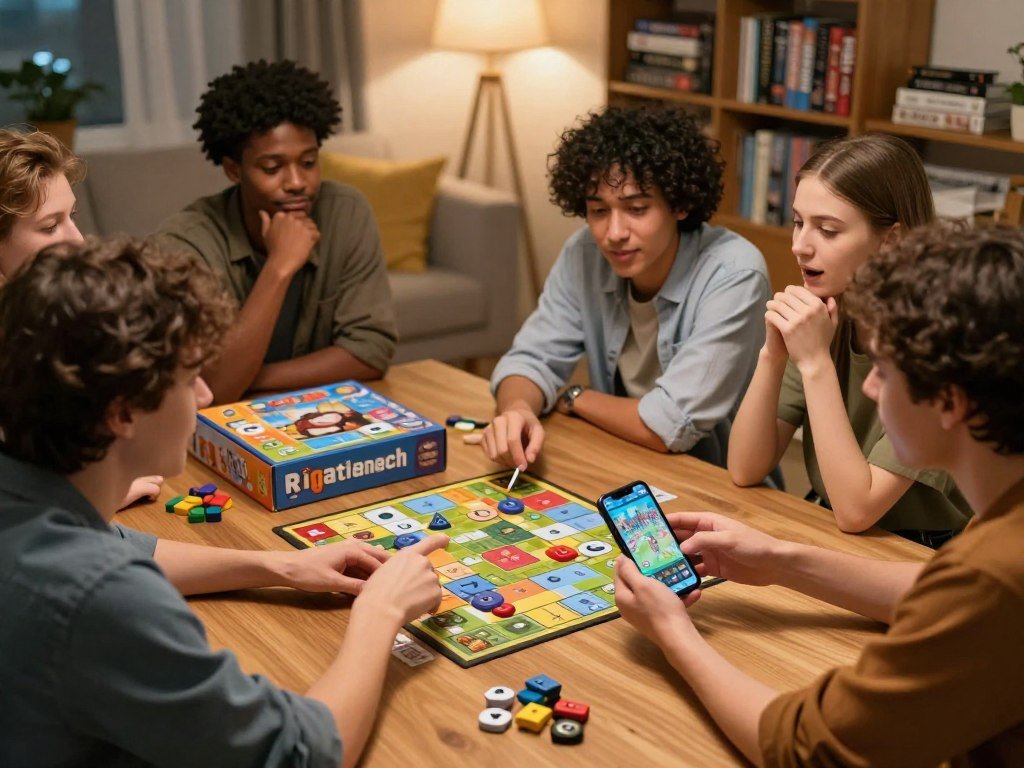
No-Equipment Games for Conversation and Quick Laughs
Three no-equipment choices can turn a quiet room into a conversation or a fast counting challenge. 21 Questions, Sam Yuk Gu, and Two Truths and a Lie need no board or cards, so friends can start while seated together. Each game gives a group a different reason to listen closely.
Agree on comfort and mistake rules before play begins. That small choice keeps a light game from turning awkward or stopping over a missed turn.
| Game | Equipment | Central action |
|---|---|---|
| 21 Questions | None | Ask and answer questions |
| Sam Yuk Gu | None | Count and clap for certain digits |
| Two Truths and a Lie | None | Spot the false statement |
21 Questions
21 Questions works for two people or a larger group, with no board, cards, or other equipment. With two players, take turns asking and answering. In a group, one person asks a question for everyone to answer, then the next player chooses a question.
Try light prompts such as “What snack would you bring on a road trip?” or “Which season would you keep all year?” You can ask about a favorite small win, a place you would revisit, or a skill you would like to learn. Friends can agree that anyone may skip a question that feels uncomfortable.
Sam Yuk Gu, the 3-6-9 Game
Sam Yuk Gu, the 3-6-9 counting game, works for two or more players and needs no equipment. A group game takes about 15 minutes, with 4 to 8 players recommended. Players count in order, clapping instead of saying any number that contains 3, 6, or 9.
Clap twice when a number contains two of those digits. Say 12 aloud because the rule follows digits, not multiples of 3. Every number from 30 through 39 gets at least one clap. Numbers 33, 36, 39, 63, 66, 69, 93, 96, and 99 each get two claps.
Before starting, pick whether a fumble sends the count back to 1 or lets the group continue from the missed number. A no-alcohol variation can use a forfeit, such as singing or doing an impression, instead of a drink penalty. The Sam Yuk Gu digit rule is simple to teach, but the numbers with two marked digits reward careful listening.
Two Truths and a Lie
Each player shares three statements: two true facts and one false one. Everyone else guesses which statement is the lie. Keep score if the group enjoys competition, or skip points and play for the reveals. A surprising hobby or harmless childhood habit can make a good clue without pushing anyone to share private details.

Agree on a skip rule before asking anything personal, and choose a restart rule before the first Sam Yuk Gu round.
Crossfire for a Fast Social-Deduction Round
Crossfire is a good fit when 5 to 10 friends want a social-deduction round that takes about 3 minutes. A social deduction game is one in which players use clues and behavior to work out which players have hidden roles. Short turns suit a group that wants hidden-role play without a long game-night commitment.
Crossfire supports 5 to 10 players, and a round takes about 3 minutes. Players use the round’s clues and their read of one another to figure out what is happening. The quick length makes it easier to try a round between longer activities.
Keep the explanation brief and make turn-taking clear before play starts. When each person knows when to speak, the round can stay lively instead of becoming a jumble of overlapping guesses. Ask players to keep clues focused on the game, not on unrelated stories or side conversations.
Some friends enjoy speaking up as soon as they have a hunch; others want a moment to listen first. Set a simple speaking order so quieter players get room to share what they noticed. That structure helps a fast round feel social without letting one voice take over.
Crossfire’s 3-minute round gives your group a clear time expectation before you begin. It is a better choice for friends who want quick suspicion and discussion than for people seeking a long story or a deep strategy session. Keep the first round’s explanation brief so the game’s quick pace is not lost.

Dixit for Imaginative Clues
Dixit works best for a group that enjoys interpreting an image as much as guessing the storyteller’s clue. It supports 3 to 6 players and uses illustrated cards to spark different ideas. Imagination matters more than quick reflexes, so the group can take time to look and think.
The storyteller scores when some, but not all, players guess the original card. Each round, one player gives a clue for a card they hold. The other players choose cards that could fit the clue, then everyone votes on which card belonged to the storyteller.
A clue should offer a path toward the right card without making the answer plain. If every player guesses correctly, the clue may have been too obvious; if no one does, it may have been too obscure. Both outcomes make the storyteller’s choice matter.
For example, a storyteller might say “a quiet escape” for an image that suggests a hidden garden. That is an invented example, not an official prompt. Other players can interpret the words in their own way and submit images that fit their reading.
The fun comes from seeing how different people connect a few words to a picture. A friend may read the clue as a mood, while another focuses on a small detail in the art. A clue that leaves room for more than one plausible card keeps the vote interesting.
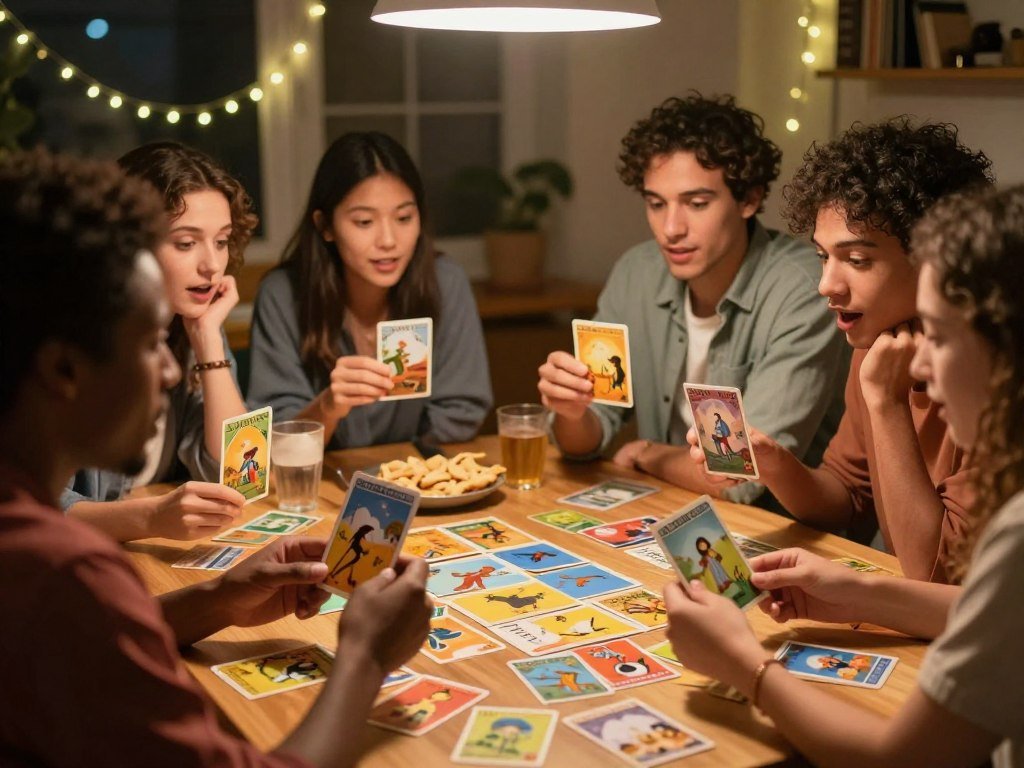
Wavelength and Codenames for Team Clues
Choose Wavelength for a shared spectrum puzzle, or Codenames when your team wants to connect a clue to cards on the table. Both games ask teams to interpret a teammate’s clue, but one points to a place on a spectrum and the other to words on cards.
Wavelength supports 2 to 12 players, while Codenames supports 2 to 8. Pick based on whether your friends would rather estimate a hidden point or spot cards linked by a clue.
| Game | Clue task | Player range |
|---|---|---|
| Wavelength | Place a clue on a hidden spectrum target | 2 to 12 players |
| Codenames | Connect a word and number to table cards | 2 to 8 players |
Wavelength
In Wavelength, teams use one clue to reason about a hidden point on a spectrum. The clue giver offers a hint, and teammates discuss where the target might fall between the ends. The group earns points by getting close to the hidden spot.
The game gives friends a chance to compare how they read the same clue. One player may take a hint literally, while another thinks about the group’s shared habits. Those differences make the discussion part of the puzzle.
Codenames
In Codenames, a clue giver uses one word and a number to connect teammates to cards on the table. The team looks at the words, then chooses the cards it thinks match the clue. Teams try to identify their own cards while avoiding wrong guesses.
The two clue styles need different kinds of teamwork. Wavelength asks your team to place an idea along a scale; Codenames asks players to link a clue with specific cards. Before the first clue, make sure everyone understands what the clue giver is allowed to say.
Deception: Murder in Hong Kong for a Mystery
Deception: Murder in Hong Kong suits 4 to 12 players who enjoy debating clues and suspecting one another. The game assigns roles including a murderer, a Forensic Scientist, and detectives. Discussion drives the mystery as the group tries to connect clues to what happened.
Role-based talk is central to the game’s appeal. Detectives consider the clues and discuss who may have committed the murder. The murderer tries to mislead the group, while the Forensic Scientist gives clues to guide the investigation.
Friends who like talking through possibilities will have plenty to discuss. Players can compare their theories, explain why a clue seems important, and see whether another person’s view changes their minds. That kind of conversation is more important than taking quick turns in silence.
A detailed Polygon gameplay overview describes the Forensic Scientist’s clues and the group’s discussion. Treat the theme as part of the choice, not just the game’s title. Check that everyone is comfortable with a murder-mystery theme before choosing it for a mixed group.
Rec Room for Cross-Platform Party Activities
Rec Room gives friends on iOS and Android several kinds of shared activities, with cross-platform play. It is free to play and offers different ways to spend time together, from puzzles to games built around movement or music.
Friends can choose from escape rooms, trivia, paintball, dodgeball, and rhythm games. Escape rooms suit groups that want to solve puzzles, while paintball and dodgeball bring competition. Rhythm games offer a music-based change of pace.
That range makes Rec Room a useful option when one group cannot agree on a single style for the whole evening. A few friends may want to solve a challenge, while others would rather compete or follow a beat. The group can pick an activity to match its mood.
Since friends can play across platforms, people do not all need the same kind of device to join. Your group can move from one type of activity to another when its energy changes. It is still easier to begin when everyone knows what they are joining.
Some groups want a clear goal, while others prefer a casual activity they can leave after a short visit. Rec Room offers several paths without asking friends to settle on one kind of play for the whole session. Agree on an activity before joining so nobody spends the first few minutes deciding what to do.
Among Us for Online Social Deduction
Among Us is a straightforward phone option when friends want to discuss who might be hiding a role. It is free to play on iOS and Android, and its social-deduction rules are described as explainable in 30 seconds. Discussion helps the group work out who may be the impostor.
Players talk through suspicions and try to identify the impostor. The basic goal is quick to explain, though every group may take a different amount of time to learn the rules. Friends can then focus on sharing what they noticed and deciding whom they trust.
The group conversation gives everyone a chance to make a case. A player may point to something suspicious, while someone else may offer another reading of the same moment. The fun comes from comparing those views and seeing whether the group reaches a shared guess.
Among Us suits friends who want a phone-based game with a clear social goal. It can work when people are together or when they join from separate places, as long as they can communicate. A group that enjoys talking through clues may find the discussion as engaging as the game itself.
Decide how everyone will talk before starting, especially when friends are not in the same room. A group chat or voice call gives players a shared place to exchange suspicions. Set a group chat or voice-call plan before starting if friends are playing from separate places.
Highrise and ZEPETO for Avatar-Based Socializing
Pick Highrise for player-created social spaces and crews, or ZEPETO for 3D avatar customization and fashion. Both are free-to-play mobile options on iOS and Android. Avatars give friends a way to meet or share creative choices.
Highrise focuses on social spaces and crews, while ZEPETO centers on customization and shared content. Choose based on what your group wants to do together: find places to spend time, or shape and share avatar styles.
| Option | Main social focus | Mobile availability |
|---|---|---|
| Highrise | Player-created spaces, crews, events | iOS and Android, free to play |
| ZEPETO | 3D avatars, fashion, content sharing | iOS and Android, free to play |
Highrise
Highrise is a free-to-play mobile virtual world on iOS and Android. Friends can customize avatars, visit player-created social spaces, join crews, and take part in events. Those features give a group different ways to spend time in the same virtual setting.
A crew can give friends a shared social circle, while player-created places offer a spot to meet. Events add another reason to log in together. The focus is on social spaces and shared activity rather than one fixed round.
ZEPETO
ZEPETO is a free-to-play mobile game on iOS and Android focused on 3D avatar customization, fashion, and content sharing. Friends can work on their looks and share what they create. That style may suit a group that enjoys self-expression.
These options offer different ways to use an avatar. Highrise emphasizes spaces, crews, and events, while ZEPETO emphasizes personal style and shared content. Decide whether your group would rather build a shared look or find a virtual place to hang out.
Avakin Life for Virtual Places to Meet
Avakin Life is a fit for friends who would rather meet in a virtual cafe or club than compete in a fast round. This free-to-play mobile game is available on iOS and Android. Shared places give friends a setting for an avatar-based meetup.
Avakin Life includes apartments, clubs, cafes, and beach resorts. Friends can choose a setting, bring their avatars together, and spend time in the same virtual place. That makes it a better match for a casual hangout than a puzzle or competitive round.
A group that wants to talk and relax may enjoy picking a cafe or apartment as its meeting spot. A club or beach resort gives the group another backdrop. The choice of place can help set the mood for the visit.
This game is not the strongest fit if your friends mainly want a winner, a score, or a task to solve. It suits people who want to meet in a virtual setting and spend time together. Friends looking for an active challenge may prefer a different kind of game.
For a remote meetup, agree on a place before everyone joins. That makes the first moments easier, since players know where the group intends to gather. Choose a shared place to meet before inviting everyone into the game.
Pokémon GO for In-Person Mobile Meetups
Pokémon GO is the mobile pick for friends who want a reason to meet up for raids, Community Days, trading, or gifting. It is free to play on iOS and Android. Shared activities give friends a reason to play in the same physical area.
Pokémon GO suits groups who want mobile play tied to being in the same place. Friends can join raid battles, take part in Community Days, trade, or send gifts. Those activities create several ways to share the game beyond playing alone.
A raid can give friends a common goal, while trading lets them interact directly through the game. Community Days offer a shared event, and gifting gives friends another way to connect. The group can choose the activity that fits the time it has.
This option feels different from a virtual hangout because friends meet in the real world around the game. It can work well for a group that enjoys a shared mobile activity while spending time together. It is less suited to friends who want to remain in separate places.
Plan a public meeting point that is easy for everyone to find. Check the route together before leaving so the group agrees on where to meet. Choose a public meeting point and check the route together before heading out.
Sky: Children of the Light for Quiet Social Play
Sky: Children of the Light is a good fit for friends comfortable communicating with gestures and light instead of text or voice. It is available on iOS and Android, free to play with optional purchases. Quiet play may suit a group that does not want constant conversation.
Players communicate through gestures and light rather than text or voice. That nonverbal style can feel calm for friends who prefer fewer words while playing together. It also means the game may not suit groups that rely on spoken or written chat.
Friends can use gestures to express themselves without stopping to type. The game’s communication style may help players who enjoy a quieter shared activity. It creates a different social rhythm from games built around fast discussion.
Consider how your group normally communicates during a game. If everyone likes voice chat or wants to talk through every move, another option may fit better. Friends who are comfortable with nonverbal play may enjoy the quieter pace.
Some players enjoy a game that leaves room for silence, while others want active conversation. Knowing which style suits your friends can help set the right expectation. Check that your group likes a quieter style of interaction before making it the night’s main game.
How to Choose an Indoor or Outdoor Game
Match the game to the room first: a small living room favors seated play, while a clear open area can accommodate movement. Space helps decide whether a group should choose conversation, tabletop, or movement-based play. About 10 to 30 minutes is a useful rule of thumb for a casual round.
Allow about 10 to 30 minutes for a casual game round. The right length depends on setup and how many turns your group wants. 21 Questions and Sam Yuk Gu need no board or cards, making them easy to start in person.
Check these three things before choosing:
- Will the group play indoors or outside?
- Is there room to move without crowding anyone?
- Do players want a brief round or a longer sit-down game?
Conversation or tabletop formats work well in a limited indoor space. Movement-based play makes more sense when everyone has room to do it comfortably. Five easy indoor options are 21 Questions, Sam Yuk Gu, Two Truths and a Lie, Dixit, and Codenames.
The first three work without special equipment, while Dixit and Codenames use cards. A living room table can make a tabletop game easier to manage, but it does not need to be large. If the space is cramped or the group is unsure, choose a seated game with no equipment.
Use the room and the group’s preferred round length to narrow your choices before play.
Online Games to Play Together From Different Places
Friends in different places can still share a round through a mobile app, a browser game, or a cooperative video game. Online play works best when everyone can access the same activity and knows how to communicate.
A phone, a stable connection, and an agreed way to talk are practical starting points. Your group can choose from three common formats:
- Join the same mobile game, with each friend using an account or app.
- Open a shared browser room for drawing or guessing, such as Gartic Phone or Skribbl.io.
- Play a cooperative or competitive video game, such as Jackbox Party Packs, Minecraft, or Phasmophobia.
These examples show different ways to play together, not a promise that every game fits every group. Some activities focus on drawing and guessing, while others ask friends to cooperate or compete. You can also compare local and online multiplayer options when your group is considering console play.
Check these three setup details before the planned start:
- Everyone can access the same activity.
- The group has agreed on a voice or text channel.
- The connection works before everyone commits to playing.
For longer play, a shared way to talk can make teamwork easier and keep guesses clear. Friends can use voice chat when they want quick conversation or text when they prefer to type. Test the link and audio before the group commits to a longer session.
Set Up a Game Night Everyone Can Join
A welcoming game night starts with one clear goal and a rule explanation short enough for everyone to remember. A little structure helps adults and mixed-experience groups settle in without turning a casual evening into a lesson.
Explain the goal first, then use a short practice round to check that everyone understands. One simple plan gives friends space to learn before scores or edge cases matter.
- Set out only the supplies the chosen game needs.
- Explain the goal before discussing unusual cases.
- Play a short practice round.
- Ask whether the group wants to keep score.
A host can give a 5-to-10-minute explanation before play, then use a short first round to check the rules. Agree in advance on whether players can skip questions in conversation games. For Sam Yuk Gu, settle how the group will handle a counting mistake.
Adults can choose light conversation, team clues, or a phone-based activity based on the group’s mood. If friends need the host’s network to join a phone game, a recognizable Wi-Fi name can make the right connection easier to spot. A clear, memorable Wi-Fi name should not reveal personal details.
Let friends ask about rules during the practice round, when the stakes are low. Then give everyone a chance to say whether the pace and style feel right. Let the group choose whether to play another round before turning a casual game into a scored competition.
Keep the first round low-pressure so new players can learn by taking part.
Conclusion
A good first choice is the one everyone can understand and join without a long setup. The best fit depends on whether your friends want conversation, teamwork, or mobile play. Low setup makes it easier to start before the group loses its energy.
You do not need a perfect plan for a fun night. Choose one activity that suits the people who showed up, then see how the first round feels. If the group wants a different pace, switch after that round.
Ask your friends to pick the mood, choose one game, and give it a first round.
FAQ
What are some good games that you can play with your friends?
21 Questions is a good choice for conversation, Codenames works for team clues, and Rec Room offers mobile activities. The right pick depends on where your friends are and what they feel like doing. Choose a question game for easy talk, a clue game for teamwork, or a phone activity when friends want to join from different places.
What is the 3 6 9 game?
The 3 6 9 game is Sam Yuk Gu, a counting game where players clap instead of saying numbers containing 3, 6, or 9. Clap twice when a number contains two of those digits. Say 12 aloud because the rule follows digits, not multiples of three. Agree on what happens after a missed clap before starting.
What are 21 juicy questions for friends?
Try these optional prompts: What small thing always cheers you up? Which memory makes you laugh? What is a skill you wish you had? What place feels peaceful? What song takes you back? What fear have you outgrown? What is your proudest quiet win? What would you learn for fun? What kind act stayed with you? What do you value in a friend? What makes a day feel good? What do you miss from childhood? What is a goal you have changed? What tradition matters to you? What helps when you feel stuck? What would you tell your younger self? What makes you feel brave? What is a risk you are glad you took? What do people misunderstand about you? What would you like to do with friends? What question do you wish people asked? Anyone can skip any prompt.
What are some fun easy party games?
21 Questions needs no supplies and gives friends prompts to answer. Two Truths and a Lie asks each person to share two true statements and one false one for others to spot. Dixit uses illustrated cards and imaginative clues. All three work well when your group wants an easy start, though Dixit needs its game cards.
What are 20 indoor games?
Try 21 Questions, Two Truths and a Lie, charades, I Spy, telephone, word association, and name that tune without equipment. For cards or tabletop play, choose Crazy Eights, Go Fish, Uno, Rummy, Pictionary, Codenames, Dixit, Scrabble, checkers, chess, dominoes, Jenga, or a jigsaw puzzle. These choices fit a living room, though card and board games need their own supplies.
What are 5 indoor games?
Five easy indoor games are 21 Questions, Sam Yuk Gu, Two Truths and a Lie, Dixit, and Codenames. The first three need no special equipment, while Dixit and Codenames use cards. Pick a conversation game for a small seated group, or choose a card game when friends want a clearer shared task.
What are 10 fun games?
Ten options are 21 Questions, Sam Yuk Gu, Two Truths and a Lie, Dixit, Wavelength, Codenames, Rec Room, Among Us, Pokémon GO, and Sky: Children of the Light. They cover conversation, counting, card clues, team puzzles, and mobile play. Choose by whether your friends are together, want to talk, or prefer a shared phone activity.
Which game is best for indoors?
21 Questions is a strong indoor choice for a small group seeking seated play without equipment. Friends can take turns asking and answering while staying in one spot. If your group wants more structure, choose a tabletop clue game such as Codenames or Dixit. Those options need cards, so make sure the game set is available.



