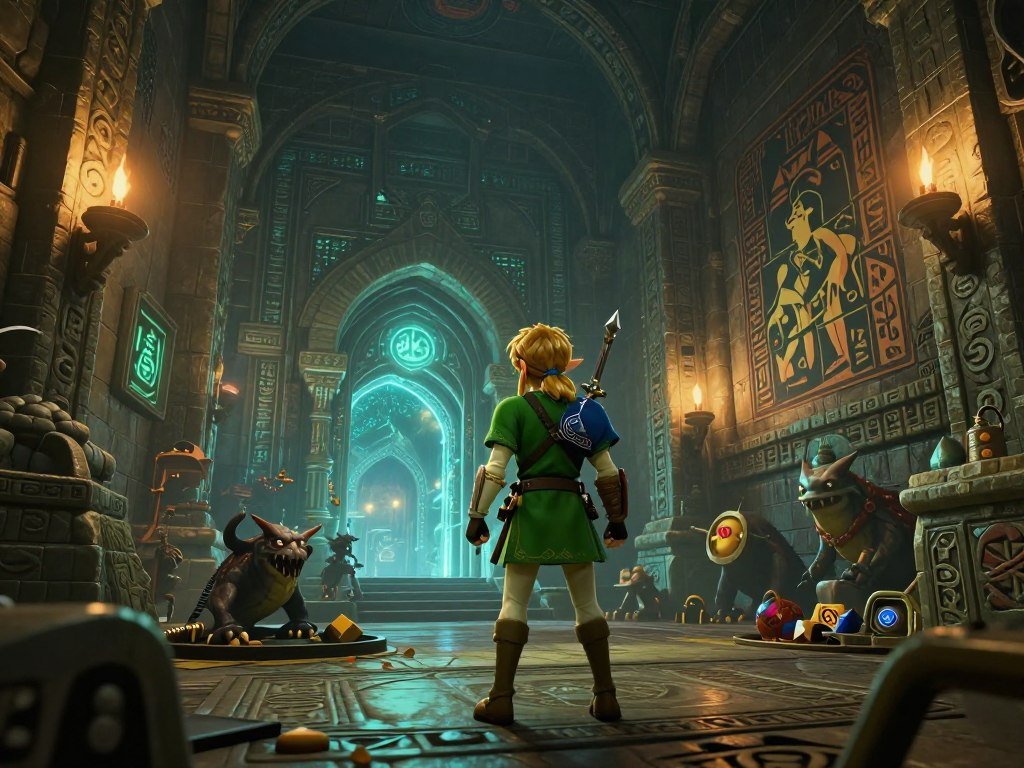
A great Zelda game can be a carefully built dungeon puzzle or a world that invites you to wander off course. Fans have argued over their favorites for years, and different play styles lead to different picks. This ranked list offers a clear starting point for choosing an adventure, while keeping personal taste in view.
Ocarina of Time is my best all-around starting point for an authored 3D adventure. Open-world Zelda games, classic dungeons, and memorable characters all have a place here. The right choice depends on whether you want a guided story, room to roam, or a compact top-down quest.
Key Takeaways
- Ocarina of Time is my top pick for a guided 3D adventure.
- Breath of the Wild suits players who value freedom and discovery.
- A Link to the Past is a strong classic top-down choice.
- Different play styles can lead to very different favorites.
- Check which version works on your hardware before choosing.
Readers who want a single first pick can start with Ocarina of Time, while players drawn to free exploration should begin with Breath of the Wild.
How Should You Judge a Zelda Adventure?
The strongest entries make their central idea shape the whole adventure, rather than feel like an isolated gimmick. Good design connects gameplay, world, dungeons, and story to the same goal.
I rank each game by how well it carries out its own design, not by nostalgia alone. The Legend of Zelda began in 1986, developed by Shigeru Miyamoto and Takashi Tezuka. Koji Kondo composed its music, and Eiji Aonuma stewarded the series from the late 1990s.
Across nearly four decades, the franchise has sold over 150 million copies. That history includes major changes to its formula, yet each title still asks players to explore, solve puzzles, and grow stronger.
How the ranking weighs design and replay value
I consider whether a game’s mechanics, world, dungeons, and story support its main idea. A new feature earns its place when it shapes more than one room or scene.
Judge an adventure by how well its parts support its main idea, not by whether it copies a favorite from the past.
Replay value matters, too, but it means more than a long list of collectibles. A clear route, optional discoveries, and memorable characters can each make another playthrough appealing.
How to match a game to your play style
Ocarina of Time offers a guided 3D route with planned dungeons. Breath of the Wild gives players more freedom to set their own course. Neither style is best for every fan.
- Do you want authored dungeons with a clear sequence?
- Would open exploration make the gameplay more fun?
- Do you prefer a character-driven story?
- Would you rather play a handheld or top-down adventure?
Pick the design style you most want to spend time with before treating the order as a verdict on personal taste.
Best Zelda Games Ranked by Play Style
Ocarina of Time takes the top spot for its balance of guided discovery, memorable dungeons, and precise 3D play. For one best pick, I choose it as the strongest all-around authored adventure.
Breath of the Wild is the pick for open exploration, while A Link to the Past is the classic top-down choice. The best Zelda games in order depend on which design you want to play. This list gives a practical ranking, not a rule for every fan.
Here are the top 10 best Zelda games, ranked by overall design and how well each game delivers its style:
- Ocarina of Time
- Breath of the Wild
- Majora’s Mask
- The Wind Waker
- A Link to the Past
- Tears of the Kingdom
- Twilight Princess
- Link’s Awakening
- A Link Between Worlds
- The Minish Cap
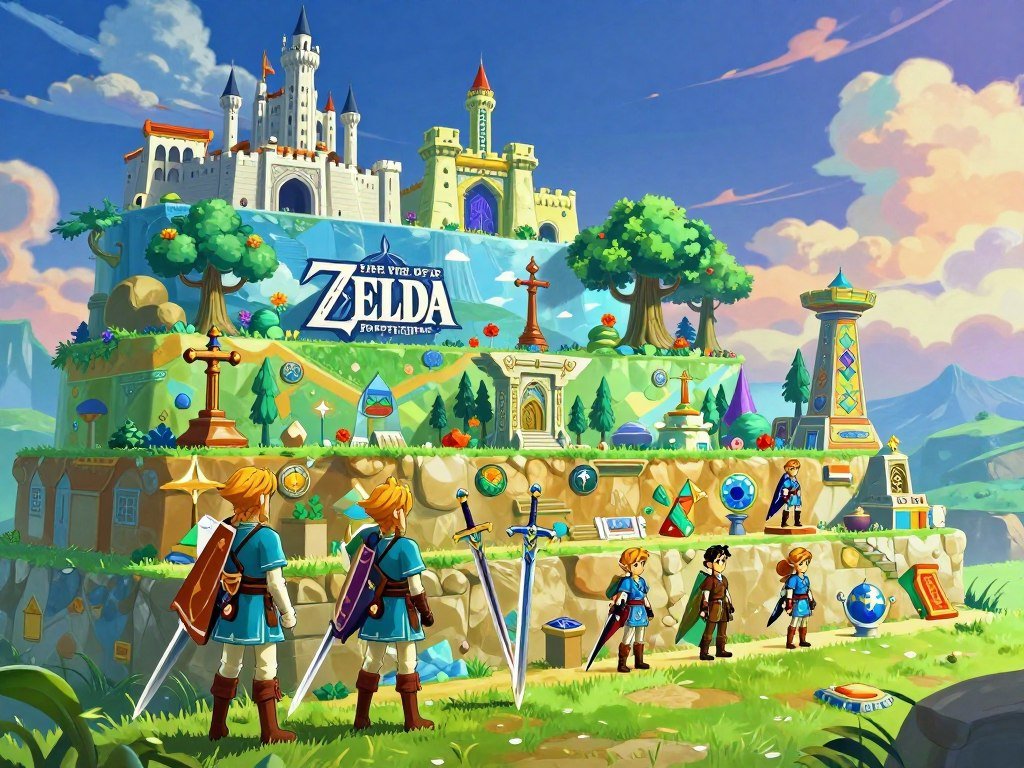
The Legend of Zelda series has room for many kinds of fans. One title may win on dungeon design, while another offers a story or world worth returning to.
| Game | Design mode | Signature strength | Best fit |
|---|---|---|---|
| Ocarina of Time | Authored 3D | Lock-on combat and dungeons | Players wanting a guided 3D classic |
| Breath of the Wild | Open-air 3D | Self-directed exploration | Players who like freedom |
| A Link to the Past | Top-down | Dual-world design | Players who want compact dungeons |
| Majora’s Mask | 3D time loop | Character quests | Players drawn to a darker story |
| The Wind Waker | 3D sailing adventure | Expressive art and ocean exploration | Players who want a playful journey |
Fans also read LGBTQ meaning into some characters, but interpretation is not the same as canon. The games do not clearly confirm every character discussed this way as LGBTQ, so I separate fan readings from facts established in the story.
Treat the order as a practical starting point, then let your preferred pace and style decide what to play next.
1. Ocarina of Time Still Sets the 3D Standard
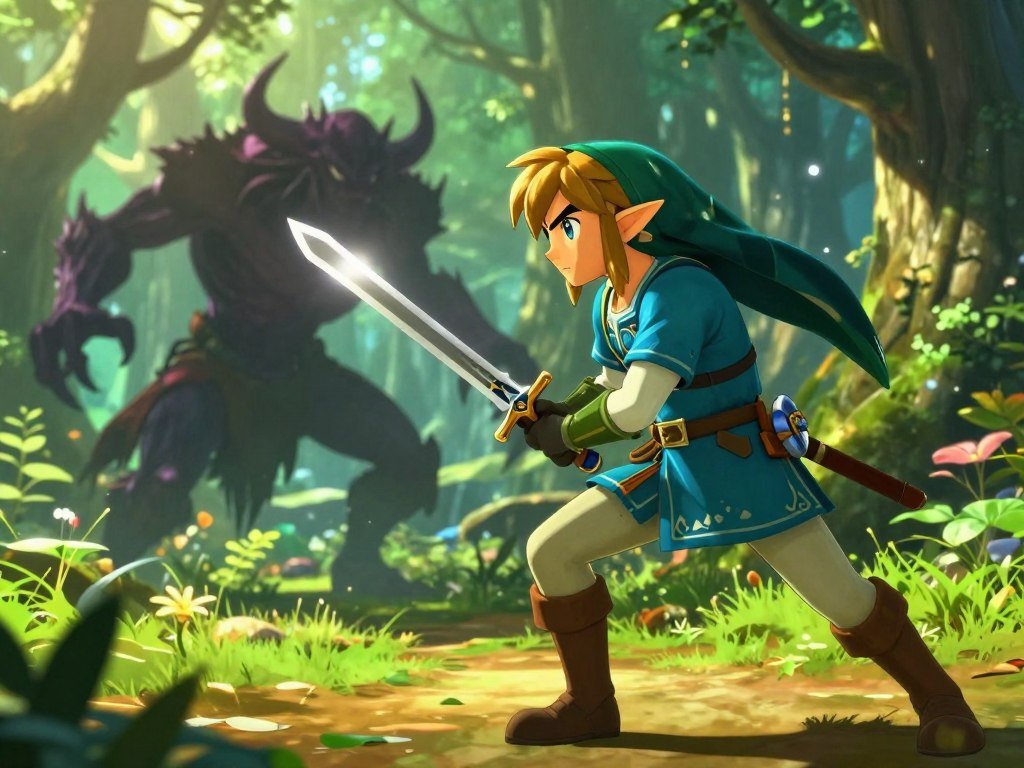
A player stepping into 3D Hyrule for the first time gets a guided adventure that makes its movement and combat easy to read. Z-targeting is a lock-on system that keeps Link focused on an enemy or object during 3D play.
Lock-on combat and context-sensitive actions help the game teach spatial awareness without burying players in controls. Ocarina of Time released for Nintendo 64 in 1998 and helped define how action games could work in 3D.
When Link targets an enemy, the camera and his movement help players track distance and direction. Context-sensitive actions change with the setting, so one button can open a door, climb, or talk.
The dungeons build on that clear teaching style. Link finds an item, learns how it solves a puzzle, then uses it to face a boss.
- Readable combat that shows where a threat stands.
- Varied dungeon layouts with distinct puzzle ideas.
- A clear sense of growing capability as Link gains items.
The Strong National Museum of Play describes the game’s role in 3D design in its Ocarina of Time overview. That influence remains easy to see during play.
Some pacing and older presentation may feel dated to a new player. The game also asks for patience when puzzles depend on careful route tracking.
Give the Water Temple time, since its changing water levels reward careful tracking of the route.
2. Breath of the Wild Makes Exploration the Main Event
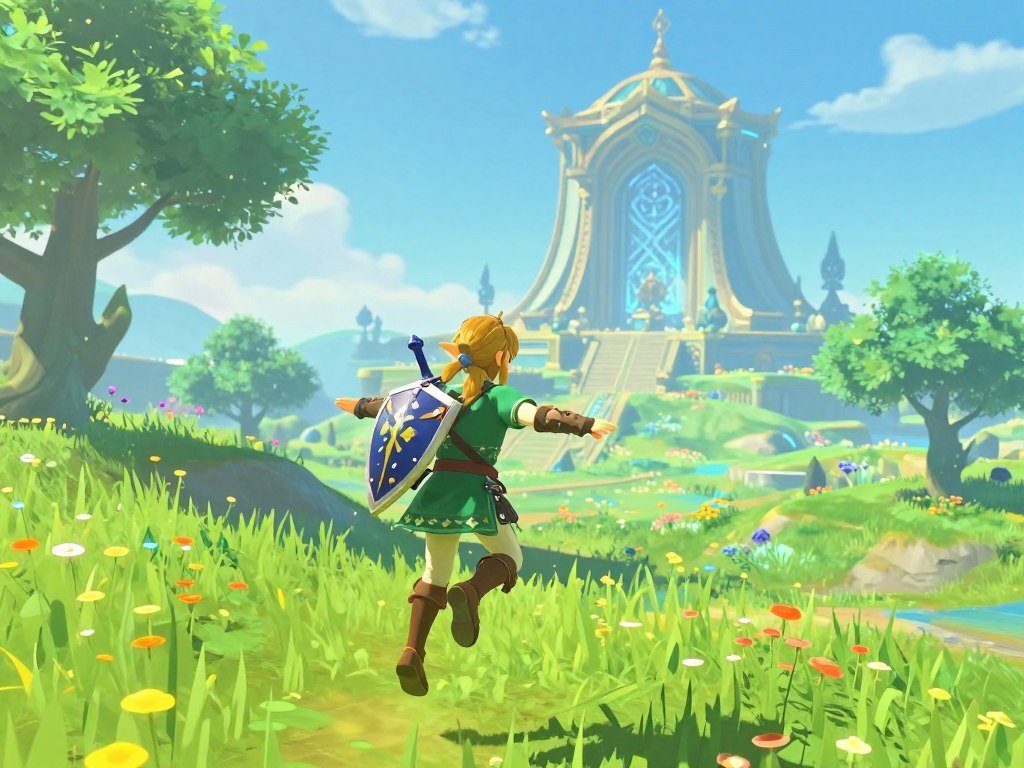
Breath of the Wild is the best choice for someone who wants the map itself to drive the adventure. Its open-air design lets players choose where to go and how to reach it.
Climbing, gliding, physics interactions, and Shrines turn the landscape into a set of puzzles. The game released for Nintendo Switch in 2017 and includes 120 Shrines.
A distant tower can draw your eye, while a cliff or river makes you rethink the route. You can climb, glide, or use objects in the world to solve problems in your own way.
The freedom has a trade-off. Shrines offer short challenges, not the long, connected dungeons found in many classic entries. The Divine Beasts also offer less dungeon variety than those older designs.
The open-world structure gives landmarks room to guide players without setting one fixed path. A game design analysis of Breath of the Wild discusses how visual cues and environmental puzzles help players find their own way.
Breath of the Wild won Game of the Year at The Game Awards 2017. It had sold over 33 million copies as of March 2025, a sign of its reach, not proof that every player will love its style.
If long, themed dungeons are your favorite part of Zelda, balance this pick with a more traditionally structured entry.
3. Majora’s Mask Turns Time Pressure Into Story
Majora’s Mask makes the world feel alive by letting players watch Termina change as the three-day deadline approaches. The ticking clock shapes the story and the way players explore.
Its three-day cycle gives residents routines and stakes beyond Link’s quest. The game was built in one year using Ocarina of Time’s engine, but it takes a very different tone.
Characters move through town, meet other people, and face their own problems as time passes. Watching those routines gives even a brief side story an emotional edge.
Masks change more than Link’s look. They let him transform, reach new places, and experience the world from different perspectives.
Majora’s Mask has fewer dungeons than Ocarina of Time, so its character quests carry more weight. Its darker story touches on grief, fear, and the pressure of a deadline.
Repeated cycles can frustrate players who prefer a conventional, linear adventure. Rewinding time also means some progress must be repeated, which can feel like work.
Use the Bomber’s Notebook to keep track of schedules instead of trying to memorize every character’s routine.
4. The Wind Waker Makes the Great Sea a Colorful World
The Wind Waker turns a vast ocean into an inviting setting through expressive animation and a bright visual style. Its cel-shaded art keeps faces and feelings clear.
Sailing makes the sea part of the adventure’s mood, even when travel slows the pace. The Wind Waker released for GameCube in 2002 and later received an HD remaster on Wii U.
Character expressions stay readable, and the art has aged well because it does not chase realism. The story follows a young boy who chooses to become a hero.
Exploring islands gives each trip a chance to reveal a new place or task. The named dungeons include Forsaken Fortress and Earth Temple, with puzzles that keep the classic focus on observation and clever item use.
The sea can feel slow if you want constant action. That pace suits players who enjoy the space between major story events, but it may test anyone who wants a new fight every few minutes.
Its bright tone does not make the story shallow. Link’s choice to act gives the adventure a simple, strong emotional center.
If sailing starts to feel like a chore, focus on island discoveries and charted destinations rather than crossing the sea without a goal.
5. A Link to the Past Perfects the Top-Down Adventure
A Link to the Past is the strongest choice for a tightly paced top-down journey built around distinct dungeons. Its compact structure keeps exploration focused.
The Light World and Dark World make players look for links between places. The game released for Super Nintendo in 1991 and features 12 dungeons.
A path blocked in one world may have a useful counterpart in the other. Moving between them makes exploration a matter of noticing how the same place changes.
The dungeon sequence uses new items to teach a mechanic, test it, and then reward the player. Each tool helps Link reach rooms that once seemed closed off.
This design helped shape the series, though not every later game follows its structure. Its clear route and steady challenge still make it easy to recommend to players who want classic top-down gameplay.
There is little wasted space between major goals. The world feels broad enough to explore, while each new dungeon gives the adventure a firm sense of direction.
Pay attention to unusual terrain and blocked paths, since revisiting familiar places can reveal new routes.
6. Tears of the Kingdom Expands the Creative Sandbox
Tears of the Kingdom is the pick for players who would rather experiment with a toolset than follow one intended solution. Creative play sits at the center of its design.
Ultrahand and Fuse let players build contraptions and combine equipment. The game released for Nintendo Switch in 2023, adding new ways to interact with the world.
Ultrahand lets Link move and join objects, so players can make vehicles or build a bridge. Fuse combines gear with other items, changing how weapons work.
The tools support many solutions to the same problem. One player may build a machine, while another finds a simpler route through the space.
The open design is not for everyone. Players who found Breath of the Wild’s repeated landscape or equipment management tiring may not want a larger sandbox built on that foundation.
Tears of the Kingdom sold 10 million copies in its first three days and passed 20 million by the end of 2023. It also won Best Action/Adventure at The Game Awards 2023.
Those milestones show its reach, but the choice between these games comes down to what you want to do. Choose it over Breath of the Wild if construction and mechanical experimentation are the features you most want to explore.
7. Twilight Princess Brings a Darker, Traditional Quest
Twilight Princess is the strongest traditional pick for players who want a darker atmosphere and full-size dungeons. Its mood gives the adventure a more serious feel.
Link’s wolf form changes how he moves and explores. Twilight Princess released for GameCube and Wii in 2006, then later appeared on Wii U.
Wolf Link can track scents and reach places in ways his human form cannot. Switching forms gives familiar paths a different purpose.
Midna adds a strong companion dynamic. Her sharp humor and changing relationship with Link help give the story a personal center.
Dungeons such as Arbiter’s Grounds and Snowpeak Ruins offer the scale traditional 3D fans may want. Their puzzles and settings make them among the game’s strongest stretches.
The opening builds momentum well, though some later sections move more slowly. Players seeking a quick start may find the early setup takes time.
Choose it for its mood and dungeon variety, not simply because its visuals look more realistic than another entry’s.
8. Link’s Awakening Makes a Small World Feel Mysterious
Link’s Awakening is the best choice for players who want a compact adventure with an unusual story at its center. Koholint Island feels close and slightly surreal.
The game turns familiar Zelda ideas into part of its mystery. It first released for Game Boy two years after A Link to the Past.
Small details make the island feel personal, from its local characters to its strange corners. The story gives those familiar sights a question that players keep trying to answer.
The original handheld version has the limits and charm of its screen and sound. Its tight view can make the island feel like a private little world.
A Nintendo Switch remake arrived in 2019 with a refreshed presentation. The new look may suit players who want a modern display, while the original has a distinct handheld feel.
Both versions keep the same self-contained adventure at the heart of the experience. The choice is more about presentation than a simple upgrade from old to new.
Pick the original for the classic handheld feel or the Switch remake for its refreshed presentation.
9. A Link Between Worlds Reworks a Familiar Map
A Link Between Worlds stands apart because its wall-merging mechanic changes how players read familiar top-down spaces. Perspective becomes a tool, not just a view.
Link can merge into walls, turning a flat room into a puzzle about angles and paths. The game builds a new adventure around a map that will feel familiar to some players.
When Link becomes a painting, he can slip along walls and cross gaps that would otherwise block him. Players must look at a room from the side as well as from above.
The rental system lets players borrow items and choose a flexible route through dungeons. That choice arrives earlier than a traditional item-by-item unlock.
Renting gear can make progression feel different from older entries. Some players will enjoy the freedom, while others may miss earning each key tool through the story.
The system encourages players to choose an approach rather than wait for a single required item. It also means losing a rented item can change what Link can do.
Try the rental system with an open mind, since its freedom is part of the game’s design rather than a departure to overlook.
10. The Minish Cap Makes Scale the Main Puzzle
The Minish Cap makes ordinary scenery feel enormous by changing Link’s scale. Size drives the puzzles and makes familiar rooms feel new.
When Link shrinks to Picori size, grass, puddles, and household objects become obstacles or landmarks. The Game Boy Advance game makes small details matter.
The Picori are tiny people who live out of sight from most humans. Link’s ability to shrink lets him find paths hidden inside ordinary places.
Rooms and dungeons use scale shifts to change what counts as a wall, a bridge, or a safe path. A puddle can become a barrier, and a piece of furniture can turn into a landmark.
Colorful art and a lively soundtrack give the game a bright feel. Its compact handheld scope may be less appealing to players who want a vast world.
The central idea stays clear throughout the adventure. Looking closely can reveal routes that are easy to miss at normal size.
Look for routes that only become visible at Picori size before assuming an area has nothing left to offer.
Which Zelda Games Can You Play on Switch and Switch 2?
Players with a Switch 2 can start with a Switch Zelda game through backward compatibility. Most Switch games work on the newer system, though some titles may not work identically.
Breath of the Wild, the Link’s Awakening remake, and Tears of the Kingdom all have Switch releases. Their release years make it easy to find a modern starting point.
Which Zelda games work on Switch and Switch 2?
Nintendo Switch games are playable on Nintendo Switch 2 through backward compatibility. Check a specific title’s support details if you depend on the same performance or features.
| Game | Switch release year | Switch 2 playability |
|---|---|---|
| Breath of the Wild | 2017 | Playable through backward compatibility |
| Link’s Awakening remake | 2019 | Playable through backward compatibility |
| Tears of the Kingdom | 2023 | Playable through backward compatibility |
| Echoes of Wisdom | 2024 | Playable through backward compatibility |
These three choices cover different ways to play:
- Breath of the Wild for a modern open-world adventure.
- Link’s Awakening for a traditional top-down remake.
- Tears of the Kingdom for a newer open-world sequel.
A family gaming console guide can help compare hardware access and play styles. For group plans, see this guide to multiplayer Switch games.
Which Zelda games are worth emulating?
Older entries such as A Link to the Past and the original Link’s Awakening suit emulation of SNES and Game Boy games. Use legally obtained game files and follow local copyright rules.
Check the compatibility details for a specific title before relying on identical performance or features.
Which Zelda Games Take the Most Work to 100%?
Tri Force Heroes is a standout 100% challenge because its mission total sits alongside costume and Friendly Token requirements. Several goals stack up before the run is complete.
Its 128 missions combine with 36 costumes and 15 Friendly Tokens. That mix makes it a strong candidate for a demanding completion run, though it does not prove one game is hardest for everyone.
What completion requires in three demanding games
These examples show how different completion tasks can stretch a playthrough:
| Game | Named completion count | Other stated requirement |
|---|---|---|
| Tri Force Heroes | 128 missions | Unlock 36 costumes and collect 15 Friendly Tokens |
| The Minish Cap | 136 figurines | Collect the full set |
| The Wind Waker | 61 charts | Find 148 treasure chests underwater in the Great Sea |
Tri Force Heroes can feel especially demanding because missions and extra collections count together. Its three-player co-op design can also affect how manageable the work feels.
The Minish Cap asks players to collect 136 figurines, while The Wind Waker spreads its charts and treasure across the sea. Each game makes completion depend on a different kind of search.
How to plan a completion run without losing momentum
Use a simple order so optional tasks do not crowd out the main adventure:
- Check the completion tracker.
- Finish major story objectives.
- Revisit missed areas with the relevant tools.
- Reserve optional collectibles for a focused cleanup session.
Keep a separate checklist for optional collectibles so they do not interrupt progress through the main objectives.
What Do the Spin-Offs and Lower-Rated Games Offer?
Tri Force Heroes is a co-op spin-off whose main appeal is solving dungeon challenges with a group. Teamwork is the point, not a side feature.
The game is designed primarily for three-player co-op, and players must work together to clear dungeons. It released as a Nintendo 3DS exclusive in 2015.
Tri Force Heroes makes teamwork part of the puzzle
Players need to coordinate actions and combine their efforts to reach goals. Without a reliable group, the experience can feel less smooth.
The three-player co-op spin-off is distinct from the mainline entries. Its teamwork gives it a place for fans who enjoy solving a room with other people.
Players who like portable adventures might also enjoy other Nintendo DS games. Phantom Hourglass and Spirit Tracks offer different handheld ideas.
What review scores can and cannot tell you
Metacritic gives Tri Force Heroes a score of 73, tied with Zelda II for the series low. Skyward Sword HD is next at 81.
| Game | Metacritic score | Series context |
|---|---|---|
| Tri Force Heroes | 73 | Tied for the series low |
| Zelda II | 73 | Tied for the series low |
| Skyward Sword HD | 81 | Next highest of these three |
A review score gives one comparison point, not a verdict on whether a game’s mechanics suit you. Control style and structure matter more to a player choosing what to try.
- Phantom Hourglass for touchscreen puzzles.
- Spirit Tracks for train travel and Zelda’s companion role.
- Skyward Sword for its story and motion-control combat.
A score can help you compare games, but it cannot decide whether a control style feels right in your hands.
Treat the score as a prompt to check whether a game’s control style and structure appeal to you.
Conclusion
Ocarina of Time remains the safest first recommendation for a player who wants Zelda’s classic mix of exploration, story, and dungeons. It gives new players a clear path through an authored 3D adventure.
Choose Breath of the Wild for open exploration, or A Link to the Past for classic top-down play. Each makes a different part of the series its main draw.
You do not need to start with the oldest release or play in order. Pick the central style that sounds most fun, then check which version your hardware can run.
Start with the style you most want to play, then let the adventure earn its place among your favorites.
FAQ
What is the best Legend of Zelda?
Ocarina of Time is the strongest all-around pick for an authored 3D adventure. Its guided route, clear combat, and dungeon progression make it a reliable first choice. Breath of the Wild is a better fit for open-ended exploration, where players choose their own routes and goals. Your preferred pace matters more than the ranking alone.
Is Zelda good for mental health?
Zelda games can offer enjoyable recreation or relaxation for some players, but they are not a substitute for mental-health care. A calm play session may help someone unwind, while a tense challenge may not. Take breaks when play stops feeling good, and seek support from a qualified professional for mental-health concerns.
Which Zelda game is the longest?
Tears of the Kingdom is a strong pick for the longest overall experience when optional exploration and side activities count. Its large world gives players many ways to spend time beyond the main story. A player who follows only major goals will have a shorter run than someone who explores widely and tackles extra tasks.
What is the hardest Zelda game to 100%?
Tri Force Heroes is a strong candidate, with 128 missions, 36 costumes, and 15 Friendly Tokens required for 100% completion. Its three-player focus can make the challenge feel easier with a dependable group. Players who tackle it alone may have a different experience, so those checklist totals do not settle a universal hardest-game ranking.
Which Zelda game is the shortest?
Link’s Awakening is a compact, self-contained choice. The time needed changes with the version, a player’s familiarity with its puzzles, and the number of optional collectibles they pursue. Someone following the main story can finish sooner than a player seeking every extra item. Its focused world keeps the adventure from feeling sprawling.
What is the lowest rated Zelda game?
Tri Force Heroes and Zelda II are tied at 73 on Metacritic, while Skyward Sword HD is next at 81. Those scores offer a way to compare reviews, not a measure of what every player will enjoy. A game’s controls, structure, and play style can matter more to your own choice.
What is the easiest Zelda?
The Wind Waker is a newcomer-friendly choice because its adventure structure offers clear guidance and an approachable tone. Its sailing gives players room to explore between major story events, while its dungeons still teach familiar puzzle skills. Players who dislike slow travel may prefer a more direct game, but its friendly presentation helps ease newcomers in.
What’s the darkest Zelda game?
Majora’s Mask is the strongest pick for its time pressure, grief, and unsettling stories about Termina’s residents. Its three-day cycle makes those stories unfold against a deadline, giving small character moments extra weight. Masks change how Link moves through the world, while repeated cycles can feel tense for players who prefer a steady, linear quest.