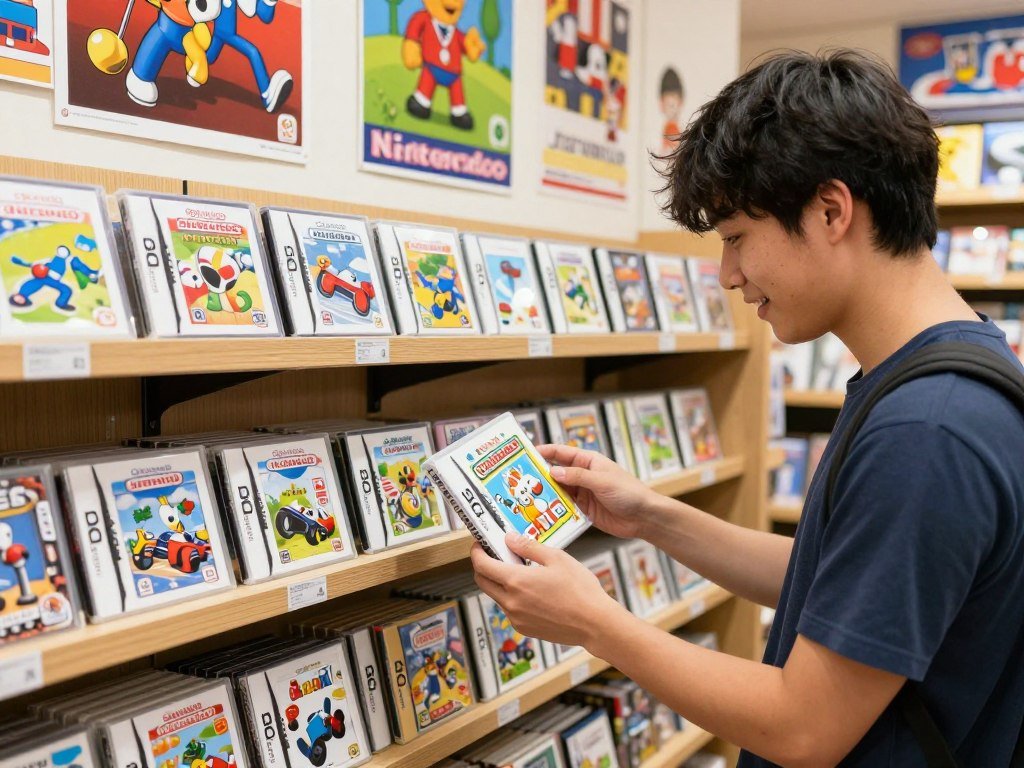
A great DS game can turn a short break into a puzzle, a race, or a story you keep thinking about. This list brings together 25 fan favorites for many kinds of gaming, from story-led adventures and RPGs to puzzles and touchscreen experiments.
There is no single pick that fits every player. The best choice depends on what makes your time with a game feel rewarding, whether that means learning a new system, solving a mystery, or revisiting a familiar series.
Some titles invite a few minutes of play, while others offer a world you can return to over many sessions. Each pick here has a clear reason to try it, so you can match the game to your mood rather than its reputation alone.
Start with the kind of play you enjoy most, then choose the title that makes you curious enough to pick up the system.
Key Takeaways
- Choose a game by play style, not sales alone.
- Touch controls shape some of the system’s most unusual picks.
- Familiar series offer easy starting points.
- Story-led games suit longer play sessions.
- Check the ESRB rating when choosing for a child.
- Emulator setups need to support the game’s key controls.
How to Choose the Best Nintendo DS Games for Your Play Style
The best starting point is the kind of play you want, since the DS library ranges from stylus puzzles to familiar button-led adventures. Your preferred pace can narrow the field faster than a sales chart.
Sales show reach, not personal fit. By March 31, 2025, 139 Nintendo DS games had sold at least one million units. A well-known game may still feel wrong if its pace or controls do not suit you.
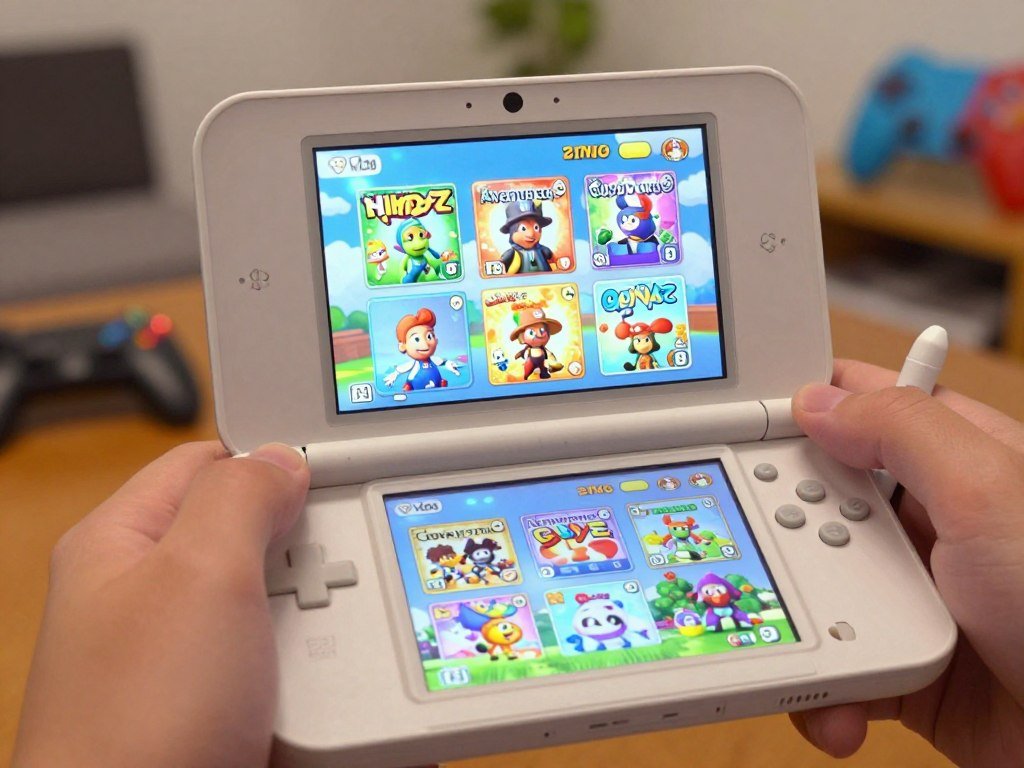
The Nintendo DS launched in the United States on November 21, 2004. Its two screens each measure 3 inches and show 256 × 192 pixels, giving games room for maps, menus, and action.
A resistive touchscreen is a touch-sensitive screen that responds to pressure from a finger or stylus. The system also has a microphone, a D-pad, and eight digital buttons, so games can mix touch, voice, and button input.
| Feature | Specification | What it enables |
|---|---|---|
| Two screens | 3 inches each, 256 × 192 pixels | Action and maps can appear together |
| Inputs | Touchscreen, microphone, D-pad, 8 buttons | Touch, voice, and button controls |
| Memory | 4 MB RAM, 256 MB flash memory | Runs games made for the system |
| Model weights | Original: 275 g; DS Lite: 218 g | Portable play with two system sizes |
The popular DS games of the 2000s range from touch-led experiments to familiar series. A top 20 Nintendo DS games list can make a large library easier to sort, while a top 100 DS games list has more room for niche genres.
Think about how much time you want to spend in one sitting, too. A short race or rhythm stage works well in spare minutes, while a deep RPG rewards a longer stretch and a reason to return.
The system also plays Game Boy Advance games, which gives you another library to consider. If you own a DS Lite, its 218 g weight makes it lighter than the original 275 g system.
Which DS Platformers Still Feel Fresh?
For classic side-scrolling action, New Super Mario Bros is the easiest place to begin. It feels familiar without asking you to learn a new control scheme first.
Choose by the kind of movement you want: New Super Mario Bros for 2D jumping, Super Mario 64 DS for a 3D collectathon, or Kirby Canvas Curse for stylus-led movement.
| Game | Platforming style | Why its controls stand out |
|---|---|---|
| New Super Mario Bros | Side-scrolling 2D levels | Classic jumps use familiar buttons |
| Super Mario 64 DS | 3D collectathon | Exploration centers on moving through open spaces |
| Kirby Canvas Curse | Touch-led platforming | Stylus-drawn paths guide Kirby |
New Super Mario Bros sold 30.80 million units, making it a major entry in the system’s library. Its appeal is easy to grasp: run, jump, find hidden routes, and take on levels that keep the familiar Mario rhythm.
Super Mario 64 DS suits you better if you want a three-dimensional adventure built around exploration and collecting. Its levels reward looking around, testing routes, and finding ways to reach items that sit just out of view.
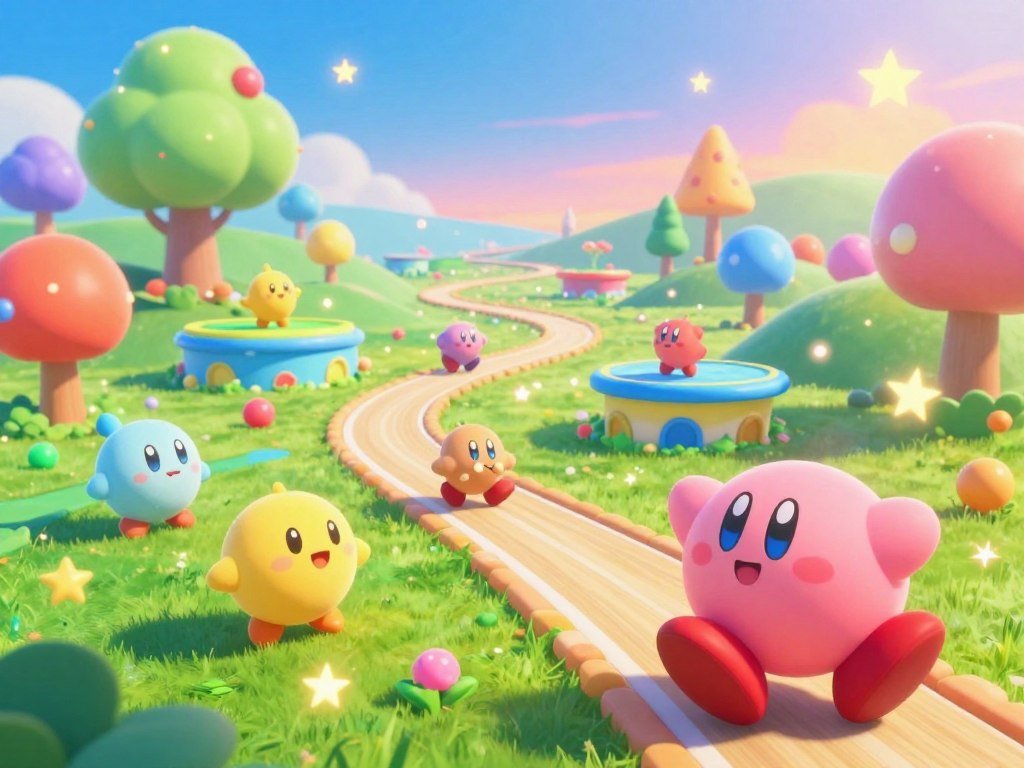
Kirby Canvas Curse changes the usual relationship between player and character. You draw a route with the stylus, and Kirby follows the path, turning movement itself into part of the puzzle.
- Pick New Super Mario Bros for a direct, familiar 2D Mario adventure.
- Pick Super Mario 64 DS for open levels and collectible goals.
- Pick Kirby Canvas Curse if you want touch input to shape movement.
Super Mario 64 DS sold 11.06 million units, but its lasting appeal comes from the way it adapts a 3D collectathon for portable play. It asks for more exploring than a straight run through side-scrolling levels.
These three picks suit different moods, even though each centers on platforming. Try Kirby Canvas Curse if you want the stylus to change how you move, not just how you interact with menus.
Which DS Games Make a Short Break Feel Exciting?
Choose Mario Kart DS when you want a race you can jump into quickly, and Elite Beat Agents when you want the song and story to move together. Both suit short sessions, but their gameplay asks for different kinds of focus.
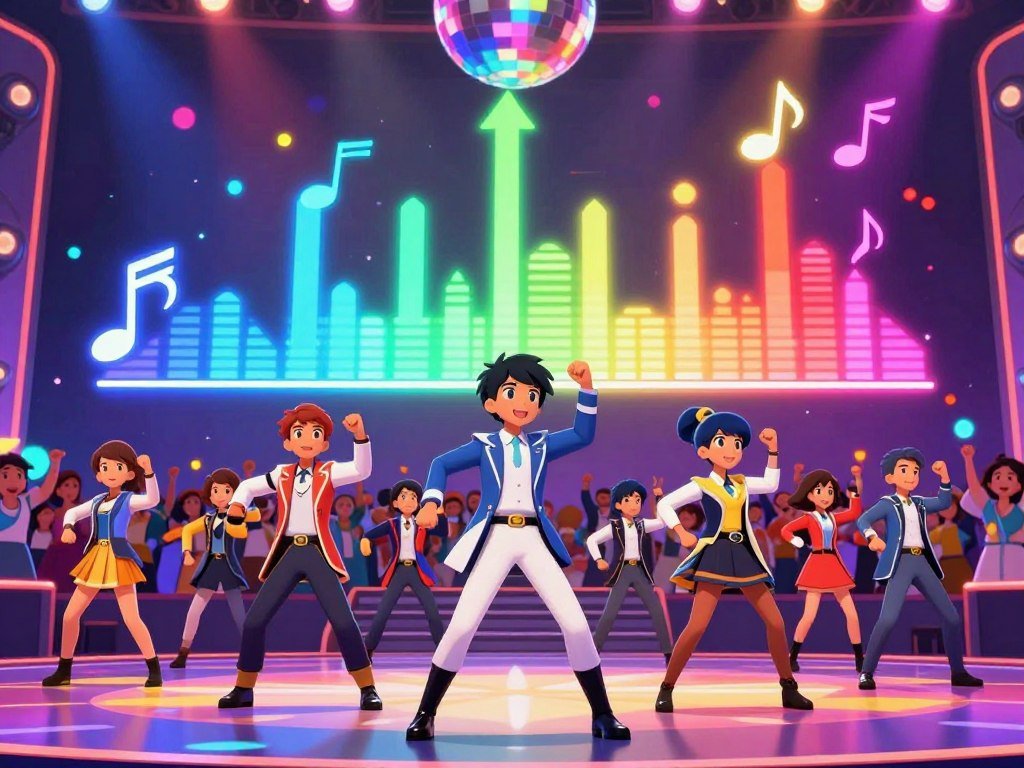
Mario Kart DS is the quicker competitive pick. Elite Beat Agents turns rhythm play into a sequence of animated stories that respond to your performance.
Mario Kart DS came out on November 14, 2005, and carries an ESRB rating of E. Its races make a good choice when you want to start quickly and focus on driving, timing, and competing for a better result.
Elite Beat Agents arrived on November 6, 2006, and is rated E10+. Players tap the screen, trace rhythmic patterns, and keep time as comic scenes play out around each song.
Each stage can end in one of three ways, depending on how well you perform. That gives a missed beat more meaning than a lower score, since your timing can change the story’s resolution.
The game’s stages connect songs and comic situations in a playful way. You are not simply tapping through a soundtrack; you are trying to help each story reach a better outcome.
Mario Kart DS has an 8.5 Metacritic user score, while Elite Beat Agents has an 87 Metascore. Those are different score types, so they are not direct, like-for-like ratings.
Pick Mario Kart DS when you want familiar racing that suits a quick break. It also works when you want a competitive game without following a long story from one session to another.
Elite Beat Agents offers a more unusual mix of score chasing and comic scenes. Elite Beat Agents is the more distinctive pick if you enjoy seeing your play affect a stage’s outcome.
Which DS Puzzle Games Reward Careful Thinking?
Pick Professor Layton and the Unwound Future if you want brain-teasers woven into a continuing mystery. The story matters as much as solving the next puzzle.
Choose Layton for narrative clues and Picross for methodical grid work. Each style rewards patience, but they ask you to think in different ways.

Professor Layton’s Story Puzzles
Professor Layton and the Unwound Future blends mysteries, memorable characters, and puzzles into a story-led adventure. Each challenge gives you a reason to pause and work through the clues before returning to the larger case.
Professor Layton and the Curious Village is another strong entry in the series. It sold 4.49 million units, and it gives you a good way to meet the cast and enjoy the series’ mix of story and brain-teasers.
Nintendo discussed the first game’s European sales and marketing in a Nintendo executive Q&A. That history helps explain how Professor Layton found an audience beyond Japan.
Picross and the Satisfaction of Solving a Grid
Picross DS turns number clues into a picture hidden inside a grid. You mark squares based on the clues along each row and column, then check whether your logic reveals the right image.
Picross 3D shifts the idea into blocks, asking you to work out which parts of a three-dimensional shape should stay. Its deductions feel different from a flat grid, even though the basic pleasure comes from solving clues.
| Game | Puzzle approach | Best fit |
|---|---|---|
| Unwound Future | Story-linked brain-teasers | Mystery and character fans |
| Picross DS | Number clues on a flat grid | Patient logic solving |
| Picross 3D | Block-based deductions | Spatial reasoning fans |
A common misstep is skipping a hint too quickly. If the pleasure comes from working through the clues, take a moment to test your own answer before asking for help.
- Choose Unwound Future for puzzles tied to a continuing mystery.
- Choose Picross DS for clear, grid-based logic.
- Choose Picross 3D for familiar clues in a spatial form.
Layton offers a steady stream of different challenges, while Picross keeps you focused on a puzzle’s rules. Picross 3D is the better choice for anyone who wants familiar logic in a new spatial form.
Which Zelda Adventure Fits Your Style?
Choose Phantom Hourglass for a sea-bound journey, or Spirit Tracks if the train and its companion are part of the appeal. The travel setup is the clearest way to choose between these two adventures.
Phantom Hourglass suits a sea voyage; Spirit Tracks suits a train journey. Both use stylus-led navigation and puzzle-solving, but each builds its world around a different way to travel.

The Legend of Zelda: Phantom Hourglass sold 4.76 million units. Link sails between islands, and charting a course gives the adventure a sense of moving across a wide sea.
Its puzzles make use of stylus interaction in ways that fit the handheld format. You can mark a route or work through a challenge with direct touch actions, rather than relying only on button commands.
The Legend of Zelda: Spirit Tracks sold 2.96 million units. Its train journey gives the adventure a more fixed route, while a companion can help Link solve challenges along the way.
That companion changes how some puzzles feel. Rather than treating each problem as a solo task, you can think about how Link and his partner work together to get through it.
Phantom Hourglass is the better fit if you want a sea voyage and the feeling of choosing where to sail next. Spirit Tracks is a strong choice if you like the train setting and the role its companion plays.
Both are separate adventures, so you do not need to treat one as a replacement for the other. Their shared stylus interaction gives them a family resemblance, while travel shapes their different moods.
Pick the setting that makes you want to keep exploring. Spirit Tracks is the more fitting pick if you want your travel method to be part of the puzzle-solving.
Which Pokémon DS Games Offer the Best Long-Term Adventure?
Pokémon HeartGold and SoulSilver are the strongest fit if you want a mainline adventure in Johto. These remakes revisit a familiar region through the usual trainer journey.
Choose the mainline pair for a classic Pokémon path, or Explorers of Sky for a story-first spin-off. They share a world and series name, but their play styles are not the same.
A Mainline Journey Through Johto
HeartGold and SoulSilver remake the Johto adventures, making them a natural choice if you want the familiar structure of a mainline Pokémon game. You travel through the region, meet its people, and build a team as the story unfolds.
The remakes sold 12.72 million units. Their appeal goes beyond returning to a popular place, since they give you the recognizable trainer experience in a version made for the DS.
Choose them if you want an adventure that feels like the main series you already know. The familiar structure helps you settle in, while a return to Johto gives longtime fans a chance to see the region again.
A Story-First Pokémon Mystery Dungeon
Pokémon Mystery Dungeon: Explorers of Sky is a spin-off for players who want a more narrative-led adventure. It sold 1.49 million units and puts more weight on its own story than on the usual trainer path.
Its different format makes it a useful choice when you want Pokémon characters without repeating the mainline structure. The story gives you another way to spend time in the series’ world.
Use your preferred kind of adventure to make the call. A remake revisits a known region, while a spin-off can offer a different style of play and a new kind of story.
- A mainline journey: choose HeartGold or SoulSilver for the familiar trainer structure.
- A remake: choose either Johto game to revisit that region.
- A story-first spin-off: choose Explorers of Sky for a narrative-led Pokémon game.
The three priorities overlap for some players, but each points to a different reason to start. Choose Explorers of Sky when a distinctive story matters more to you than following the usual trainer journey.
Which DS RPGs Are Worth Settling Into?
Chrono Trigger is the best pick if you want a classic RPG whose story can branch into 14 endings. Its choices have weight because the story can reach very different outcomes.
Try Chrono Trigger for branching story paths, Dragon Quest IX for party building, or The World Ends With You for unusual combat. These picks offer different reasons to settle into an RPG.
Time Travel and a Far-Reaching Story
Chrono Trigger first appeared on SNES in 1995, and its DS version is a port of the original role-playing game. Time travel drives the plot, sending characters across different periods as they try to shape what comes next.
The game has 14 endings, which gives its branching story a clear draw. You can follow the main plot while knowing that choices and progress can lead to another outcome.
This is a strong option for the best Nintendo DS games for adults if you want layered stories and room to think about what might change. That does not mean the game is only for adults; it means its story has plenty to explore.
Party Building and Unusual Battle Systems
Dragon Quest IX centers on building a party and taking it into battles. It sold 5.5 million units, and its role-playing appeal comes from shaping a team that can handle different fights.
The World Ends With You takes a different route, with battles that use both screens. Its dual-screen combat makes the fight itself feel distinct from a standard turn-based RPG.
| Game | RPG appeal | Best fit |
|---|---|---|
| Chrono Trigger | Time travel and 14 endings | Branching stories |
| Dragon Quest IX | Party building and battles | Players who like shaping a team |
| The World Ends With You | Dual-screen battles | Players seeking unusual combat |
For a longer game, consider whether you prefer following a plot, refining a party, or learning a new battle system. Each choice changes what you spend most of your time doing.
Chrono Trigger gives you a sweeping story, Dragon Quest IX makes party choices central, and The World Ends With You puts a fresh spin on combat. Choose The World Ends With You when you want the battle system itself to feel unlike a standard turn-based RPG.
Which Castlevania Games Best Show Off DS Exploration?
Castlevania: Order of Ecclesia is the pick for players who want exploration with a sharper action edge. Its fights demand focus as you move through areas and face enemies.
Order of Ecclesia is the more demanding action choice, while Dawn of Sorrow offers another exploration-led route. Both are Nintendo DS entries in Konami’s Castlevania series.
Order of Ecclesia suits you if you like learning how enemies attack and adjusting your approach. Its action focus can make progress feel hard-won, especially when a new area brings a tougher encounter.
Dawn of Sorrow is another strong pick if you want to explore, fight enemies, and find routes through a connected world. It gives you a different entry point into the series’ handheld style.
Both games pair combat with exploration and enemy encounters. Finding a new route can feel rewarding because it opens a fresh path through the level, not just another fight.
The appeal depends on whether repeated combat feels like a satisfying test or a chore. If you enjoy learning an enemy’s pattern, the challenge can make each victory feel earned.
If repeated fights wear you down, a puzzle adventure may fit your mood better. That is a useful distinction to make before choosing an action-heavy game.
Order of Ecclesia is the better fit when you want the sharper challenge, while Dawn of Sorrow gives you another way through the series. Choose Dawn of Sorrow if you want another route through the series’ handheld exploration style.
Which Ace Attorney Games Make a Good Starting Point?
Start with Phoenix Wright: Ace Attorney if you want the clearest entry into the series’ courtroom mysteries. The first game introduces the main character and the case-based format.
Play the Phoenix Wright trilogy in release order if you want the connected character arcs to build without missing key context.
Phoenix Wright’s Courtroom Cases
The Nintendo DS trilogy begins with Phoenix Wright: Ace Attorney, followed by Justice for All and Trials and Tribulations. Each game brings new cases, while the returning characters make the larger story more rewarding in order.
These courtroom mysteries ask you to follow what people say, spot gaps, and present evidence at the right time. The cases make the series easy to approach, while the character arcs give you a reason to continue.
If you only want one self-contained mystery, you can start with a single game. Serialized stories benefit more from the release order, since later moments build on what came before.
Apollo Justice and the Miles Edgeworth Spin-Off
Apollo Justice: Ace Attorney follows the original trilogy as another courtroom entry. Ace Attorney Investigations: Miles Edgeworth offers a spin-off that shifts attention to a different central character.
Both make more sense after you know the series’ main cast, though each can appeal to players drawn to its lead character. They give you more stories without changing the core interest in clues and cases.
- First: Phoenix Wright: Ace Attorney introduces the series.
- Second: Justice for All continues Phoenix’s cases.
- Third: Trials and Tribulations completes the original trilogy.
- Fourth: Apollo Justice follows the trilogy.
The recommended order keeps the connected cases and character changes clear. Play the connected Phoenix Wright cases in release order to follow their character arcs without losing key context.
Which DS Life Sims Make Everyday Play Fun?
Choose Animal Crossing: Wild World if you want a town to revisit, or Nintendogs if caring for a virtual pet sounds more appealing. Both invite return visits instead of a rush toward an ending.
Animal Crossing offers a changing town; Nintendogs makes daily care the focus. Pick the routine that feels more enjoyable to come back to.
Animal Crossing: Wild World sold 11.75 million units. Its town changes as you visit, giving you small things to check and do rather than one long campaign to finish.
Nintendogs sold 23.96 million units and lets you care for a virtual dog through touch and voice interaction. It responds to voice commands through the microphone, making your voice part of the play.
The two games suit people who enjoy routines in different forms. In Wild World, you return to a place and its residents; in Nintendogs, your attention centers on looking after a pet.
Neither game is built around one rush to the ending. You can play for a little while, leave, and return later without needing to remember a long sequence of story events.
The sales totals show how widely both games reached players, but they do not decide which one fits your day. Choose the town if you want a familiar place to revisit, or the dog if you want care tasks and interaction.
Nintendogs also makes voice input part of the bond with your virtual pet. Nintendogs is the more natural choice when you want microphone interaction to be part of everyday play.
Which DS Games Turn Touch Controls Into the Main Event?
Scribblenauts is the more surprising choice if you enjoy solving problems by coming up with objects. Your ideas become tools when you write words to create things in the game.
Choose Scribblenauts for imaginative solutions and Meteos for fast puzzle action. Both put the touchscreen at the center of play, but their challenges feel very different.
Scribblenauts asks you to solve challenges by writing words that create objects. That gives you room to try different approaches, though not every idea works in every situation.
The pleasure comes from thinking about what might help, then testing an object against the problem in front of you. One challenge may invite a clever tool, while another rewards a more direct solution.
Meteos is a touch-controlled puzzle game built around moving and matching blocks. Its pace is faster, with quick decisions that keep your attention on the screen and the next move.
Scribblenauts rewards imagination, while Meteos asks you to react and plan within a tighter puzzle loop. Try them based on whether you want to invent a way forward or work through a rapid series of matches.
- Try Scribblenauts for imaginative solutions to challenges.
- Try Meteos for quick puzzle action and fast decisions.
- Try either when you want the touchscreen to be central.
Both show how a touch-based idea can shape the whole game, rather than serving only as a menu or extra feature. Pick Meteos when you want a tighter puzzle loop built around quick touch-screen decisions.
Which DS Action Games Deliver a Tougher Challenge?
Contra 4 is the pick if your idea of fun includes learning difficult stages through repeated attempts. Its challenge is direct, with enemies and hazards testing your timing.
Choose Contra 4 for tough run-and-gun action, or Okamiden for an action-adventure with a distinct story identity.
WayForward developed Contra 4, which was released in the United States and Japan. Its stages ask you to react quickly and learn from mistakes, so repeated attempts are part of the experience.
The game’s release in two countries does not block play on an original Nintendo DS. Original DS games are region-free, so a cartridge from another region can work on the system.
That rule applies to original DS games, not every later handheld format. Check the game format before buying an import, since region-free play applies to original DS games.
Okamiden is the action-adventure alternative if you want a more story-led experience. It follows the events of Okami a few years later, giving its setting a clear connection to that earlier game.
The two picks suit different kinds of challenge. Contra 4 focuses on difficult action stages, while Okamiden offers an adventure with its own visual and story identity.
If repeated attempts sound satisfying, Contra 4 is the sharper choice. Pick Okamiden when you would rather follow a connected story through an action-adventure.
Which DS Game Works for Music-Minded Kids?
Kids Learn™ Music – A+ Edition is a concrete choice for a child who enjoys music activities and playful learning. It makes music the activity through mini-games and music mixing.
The game is rated E for Everyone, though a rating describes content suitability, not whether a child will enjoy playing it.
What Kids Learn Music Offers
Kids Learn™ Music – A+ Edition includes music-based mini-games and a feature for mixing music. It also covers 15 countries and instruments such as mandolin, flute, violin, and bongos.
That makes it a specific answer for families seeking the best DS games for kids, especially when music activities sound more appealing than combat or racing. Families should still check the rating details for other titles.
For the best DS games to emulate, focus on whether the setup can handle the touchscreen, microphone, and dual-screen actions a game needs. That matters most for titles whose main idea depends on those controls.
How ESRB Ratings Help Set Age Expectations
ESRB ratings give a quick guide to content and age suitability. Everyone is generally suitable for all ages and may include minimal cartoon, fantasy, or mild violence, or infrequent mild language.
Everyone 10+ is generally suitable for ages 10 and up. Teen is generally suitable for ages 13 and up, while Mature 17+ is generally suitable for ages 17 and up.
Adults Only 18+ is suitable only for adults ages 18 and up. The ESRB label is a starting point, not a promise that every child will enjoy a game or find it easy.
Families can use the rating to set expectations, then consider the child’s interests and comfort with the game’s content. Check the individual ESRB rating before handing a game to a younger player, since the E label is not shared by every DS title.
Conclusion
The right DS classic is the one whose style makes you want to start playing, not the one with the biggest reputation. A familiar series can offer an easy starting point, especially when you already know what kind of adventure you enjoy.
A distinctive control idea may be the better choice if you are curious about what makes the system different. A new way to move, solve, or interact can make a game feel fresh even years later.
Keep your first choice simple. Pick one game that matches your favorite kind of play, check that its cartridge works with your handheld, and give it a first session.
FAQ
Can you play Nintendo DS games on a 3DS?
Yes, 3DS systems play most Nintendo DS game cards. A few games use DSi-specific features that may not work the same way on every 3DS model or in every mode. The card itself still fits and plays for most titles, so check whether a game depends on a special camera or other DSi feature before choosing it.
How many Nintendo DS games sold at least one million copies?
139 Nintendo DS games had sold at least one million units by March 31, 2025. That count shows how many titles reached a major sales mark across the system’s library. It does not rank the games by quality or show which one will suit your taste, so use sales as context rather than your only reason to choose.
Can the Nintendo DS play Game Boy Advance games?
Yes, the Nintendo DS is backward-compatible with Game Boy Advance games. That lets you play many GBA cartridges on the original DS hardware, giving you more options beyond DS releases. The DS Lite also supports GBA games, though the handheld does not play older Game Boy or Game Boy Color cartridges.
What is the difference between ESRB E and E10+?
ESRB E is generally suitable for all ages, while E10+ is generally suitable for ages 10 and up. The ratings offer a quick guide to a game’s content, not a measure of difficulty or fun. Check the rating details for the content notes, then decide whether the game fits the player you have in mind.
Which DS games are easiest to pick up for short sessions?
Mario Kart DS works well for a quick race, while Elite Beat Agents offers a rhythm stage that lasts about a song. Both let you start playing without following a long story first. Choose Mario Kart DS when you want a race, or Elite Beat Agents when you want to tap and trace along with music.
What should you check before trying DS games on an emulator?
Check whether the setup can reproduce the dual-screen layout, touch input, and any microphone-dependent controls. Some games rely on those features for core actions, so a setup that handles only buttons may make them hard to play. Test the control options before settling on a title, especially when touch or voice input drives the main gameplay.