
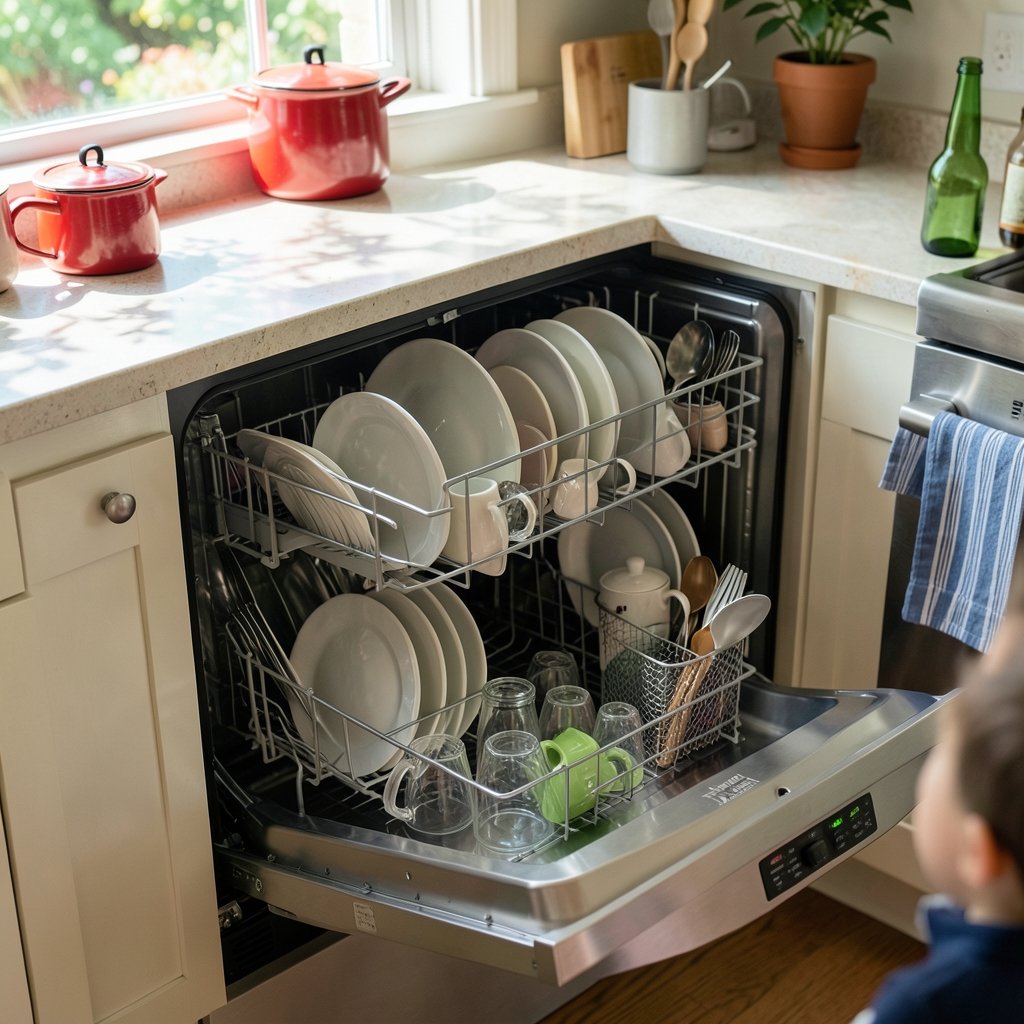
Why do so many Whirlpool dishwasher reviews disagree with each other? One buyer calls a model a bargain that cleans like a champ. Another calls the same machine a soggy disappointment. Both can be honest. The trouble is that most shoppers read reviews looking for a single verdict, when dishwasher reviews actually answer several different questions at once. Does it clean? Does it dry? Will it still work in year five? Whirlpool sells dishwashers across a wide price spread, from basic builder-grade units to quiet mid-range machines with third racks, so a blanket “Whirlpool is good” or “Whirlpool is bad” judgment falls apart fast. This guide breaks down what reviewers actually praise, what they complain about, and how to read the noise without getting burned. The same skill applies to any review category. If you have ever tried to decode conflicting scores, the way critics and users rate games in a metacritic vs opencritic vs steam reviews comparison shows how much a rating depends on who is doing the testing. (Free vpns safe use honest answer most reviews skip)
Who Whirlpool Is and Where Its Dishwashers Sit
Whirlpool Corporation is one of the largest appliance makers in the United States, based in Benton Harbor, Michigan. It owns a family of brands that includes Maytag, KitchenAid, Amana, and JennAir, which matters more than it sounds. Many Whirlpool dishwashers share platforms, parts, and service networks with those sibling brands, so a complaint about one often tells you something about the others.
In the market, Whirlpool dishwashers generally sit in the budget-to-mid-range tier. They typically cost less than premium European brands like Bosch and Miele, and more than the cheapest entry-level labels. That positioning explains a lot of the review split. Shoppers comparing a $500 Whirlpool to a $1,000 Bosch often expect the same drying and near-silent operation, then feel let down. Shoppers comparing it to other budget machines often feel they got a solid deal.
A practical tip: before reading a single review, find the exact model number on the door jamb or the seller’s listing. Whirlpool’s lineup changes often, and reviews for a three-year-old model say little about what is on the shelf now. Reviewers who skip this step are the ones who end up confused by contradictory star ratings.
What Reviewers Consistently Praise
Across professional testing and owner feedback, a few themes come up again and again in Whirlpool’s favor.
Value pricing. This is the most common positive. For the money, reviewers often find cleaning performance competitive with machines costing noticeably more. Budget-focused outlets tend to be kinder to Whirlpool than premium-focused ones, and that gap is about expectations as much as performance.
Quiet operation on mid-tier models. Whirlpool’s better mid-range units run quietly enough for open-plan kitchens. The cheapest models are louder, so noise ratings are one place where the model tier really matters.
Flexible loading. Third racks and adjustable tines earn frequent praise. Families with lots of utensils and odd-shaped items tend to like the loading flexibility, and reviewers who cook a lot notice it.
Cleaning performance. Professional lab testing has historically rated some Whirlpool dishwashers well on cleaning, especially on the normal cycle. That is a meaningful signal, because lab tests are standardized in a way that owner reviews never are.
Where the Complaints Cluster
The criticisms are just as consistent, and they are worth taking seriously.
Drying performance. This is the big one. Many Whirlpool models rely on condensation drying rather than a heated drying element, and dishes can come out wet, especially plastic items. Reviewers who expect bone-dry plates are often disappointed. The fix in practice is simple: use a rinse aid, crack the door after the cycle ends, and pick a model with a heated dry option if dry dishes matter to you. Blanket statements that “Whirlpool dishwashers don’t dry” are unfair, because it depends heavily on the model.
Reliability complaints. Some owners report control-board failures and other electronic issues, and aggregate owner-review sentiment is less rosy than professional lab results. Neither source is definitive. Lab tests measure a new machine’s performance over a short window; owner reviews capture long-term experience but are skewed toward people who are either delighted or furious.
Noise on budget models. The entry-level units are noticeably louder than the mid-tier ones. Shoppers who buy on price alone sometimes miss this.
Warranty expectations. Whirlpool dishwashers have historically carried a one-year limited warranty on parts and labor, with longer coverage on some components such as racks and the tub. Buyers who assume the whole machine is covered for years are often surprised. Always read the current warranty document for the specific model.
How to Read Whirlpool Dishwasher Reviews Without Getting Fooled
Here is a method that works far better than scrolling star averages.
- Pin down the model number first. Ignore reviews that do not name a model. Ratings blend dozens of machines into one meaningless number.
- Separate professional tests from owner reports. Pros test cleaning and drying on a new unit. Owners report reliability over years. You need both, but for different reasons.
- Weight reviews from the two-to-three-year mark. A five-star review written the day after delivery tells you almost nothing. A review written after two years of daily use tells you a lot.
- Look for patterns, not outliers. One control-board failure is bad luck. Twenty reviews mentioning the same failure is a signal.
- Check the drying method before you buy. Heated dry versus condensation dry changes your daily experience more than any star rating.
- Read the EnergyGuide label. Every dishwasher sold in the U.S. carries one, listing estimated annual energy use and cost. It is a fair way to compare models on running cost.
That last point connects to a broader lesson: reviews are only as useful as the question you bring to them. The same is true of money products. Anyone weighing a loan offer should read bmg money reviews borrowers should check before signing with the same discipline, because the headline rating rarely captures the fine print that actually matters.
Whirlpool vs. the Competition: A Fair Comparison
Reading reviews in isolation is a mistake. The useful question is not “is this Whirlpool good?” but “is this Whirlpool good for this price?” Here is how the brand typically stacks up.
| Factor | Whirlpool | Premium European brands | Entry-level brands |
|---|---|---|---|
| Price tier | Budget to mid-range | Premium | Lowest |
| Cleaning performance | Competitive for the price | Strong | Variable |
| Drying | Often condensation dry; heated dry on some models | Often strong, model-dependent | Basic |
| Noise | Quiet on mid-tier, louder on budget | Typically very quiet | Louder |
| Reliability reputation | Mixed; varies by line | Generally strong | Mixed |
| Best for | Value-focused buyers | Buyers who want quiet and drying | Tight budgets |
The takeaway from that table is that Whirlpool’s strength is the middle. Buyers who want premium quiet and flawless drying should expect to pay for it. Buyers who want solid cleaning at a fair price are in the right aisle.
Practical Tips That Actually Work
A few habits separate happy Whirlpool owners from frustrated ones, and they come straight from recurring review themes.
Use rinse aid from day one. It is the single cheapest fix for wet dishes on condensation-dry models.
Load for water flow, not maximum capacity. Overloading blocks spray arms and produces the “it doesn’t clean” complaints that dominate negative reviews. Facing dirty surfaces toward the center works better than cramming.
Run the hot water tap before starting. This helps machines without a heated dry cycle reach temperature faster.
Clean the filter monthly. Many one-star reviews describe poor cleaning that traces back to a clogged filter. It takes two minutes.
Register the product and keep the receipt. Warranty claims go far more smoothly with documentation in hand.
Do not judge noise from the first cycle. New machines often sound different once broken in, and the normal cycle is quieter than the heavy one.
These habits sound trivial, but they explain a large share of the gap between glowing and scathing owner reviews. Reviewers rarely mention whether they used rinse aid or cleaned the filter. You should assume they did not.
There is also a lesson about paid or incentivized reviews. Any product category with heavy marketing attracts reviews that are not entirely independent, and the dynamics of amazon reviews money paid reviews backfire buyers sellers apply here too. Treat suspiciously uniform five-star clusters with the same skepticism you would give a wall of one-star rants. (Metacritic vs opencritic vs steam reviews read each score)
Common Mistakes Buyers Make
The most frequent mistake is buying on star average alone. A 4.2 rating across forty models tells you nothing about the one in your cart.
The second is ignoring the drying method. Shoppers who care about dry dishes and buy a condensation-dry model without realizing it are the loudest complainers in the review sections.
The third is comparing across price tiers. A Whirlpool at half the price of a premium machine is not failing when it dries less well. It is doing what it was built to do.
The fourth is skipping the EnergyGuide and warranty documents. Both are short, both are required to be accurate, and both answer questions that reviews cannot.
The fifth is trusting a single review, positive or negative. Patterns beat anecdotes every time. That principle holds everywhere online, from appliances to entertainment. If you have ever wondered how a show gets a huge audience and modest payouts, a breakdown of what 1 million views youtube actually pays in 2025 shows how headline numbers and real outcomes can diverge.
Conclusion
Whirlpool dishwasher reviews are not contradictory by accident. They are contradictory because Whirlpool sells machines across a wide price range, and reviewers bring wildly different expectations to the same brand name. The pattern that emerges is consistent: solid cleaning and strong value, quiet operation on mid-tier models, drying that depends heavily on the model, and reliability that varies by line. None of that is a scandal. It is a normal mid-market brand doing normal mid-market things.
The smart move is to stop looking for a single verdict and start asking better questions. Which model? Which drying method? What do owners say after two years? What does the EnergyGuide say about running costs? Buyers who do that homework tend to end up satisfied, and buyers who skip it tend to end up writing the one-star reviews everyone else reads. Read widely, weigh patterns over outliers, and match the machine to your actual habits rather than to a star average.
Frequently Asked Questions
Are Whirlpool dishwashers reliable?
Reliability varies by model line, and the evidence is genuinely mixed. Professional lab testing tends to rate cleaning performance well, while aggregate owner reviews report more control-board and electronic issues than premium brands. Neither source is definitive. Checking reviews written after two or more years of use gives the clearest picture for a specific model.
Why do my dishes come out wet after a Whirlpool cycle?
Most Whirlpool models use condensation drying rather than a heated drying element, and plastic items in particular can stay wet. Using rinse aid, selecting a model with heated dry if dry dishes matter to you, and cracking the door after the cycle finishes all help noticeably.
How long is the warranty on a Whirlpool dishwasher?
Whirlpool dishwashers have historically carried a one-year limited warranty covering parts and labor, with longer coverage on certain components such as racks and the tub. Terms change, so always read the warranty document for the exact model you are buying rather than relying on general statements.
Is Whirlpool a good dishwasher brand compared to Bosch or Miele?
It depends on what you are paying. Whirlpool sits in the budget-to-mid-range tier, so it typically costs less and delivers competitive cleaning for the price, but usually less drying performance and quieter operation than premium European brands. Comparing across price tiers is the most common source of unfair reviews.
How can I tell if a Whirlpool dishwasher review is trustworthy?
Look for reviews that name the exact model number and were written after a year or more of use. Weight patterns over single anecdotes, and be skeptical of uniform five-star clusters or angry one-star rants. Reviews that mention the drying method, noise level, and specific cleaning results are usually the most useful.
Do Whirlpool dishwashers save energy?
Many Whirlpool models carry the ENERGY STAR label, which means they meet federal efficiency criteria. Every dishwasher sold in the U.S. also carries an EnergyGuide label listing estimated annual energy use and cost, which is the fairest way to compare running costs between specific models before you buy.



