
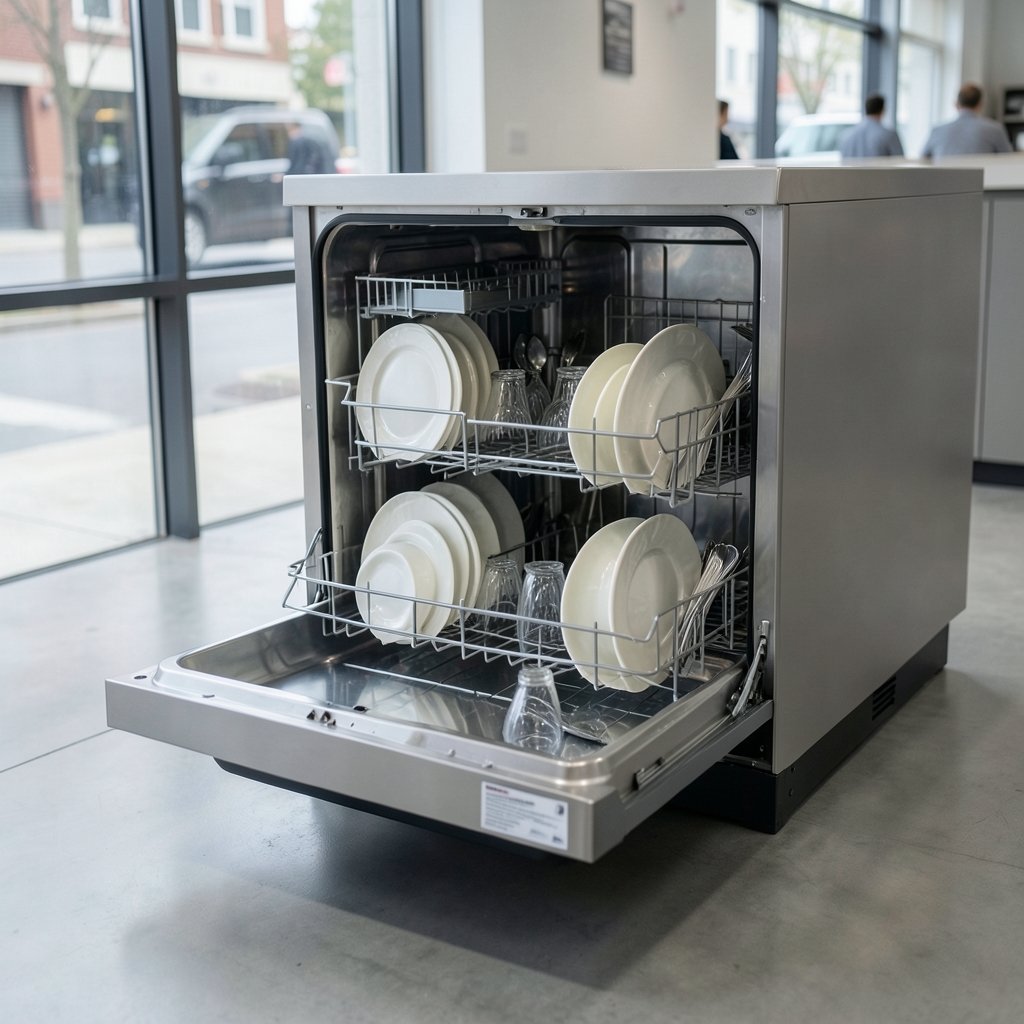
Why do two dishwashers with nearly identical yellow stickers clean so differently? That question sits at the heart of every dishwasher rating you will ever read. A score of 82 out of 100 looks impressive until you learn the machine took four hours to finish a normal load, or that its “rating” came from a test cycle almost nobody uses at home. Ratings are useful, but only when you know what sits behind the number. This guide breaks down how dishwasher ratings are built, where they mislead, and how to read them like someone who tests appliances for a living. (E reader waterproof ratings explained ipx8 really means)
What a Dishwasher Rating Actually Measures
A dishwasher rating is a compressed summary of several very different measurements. Most rating systems blend four things:
- Cleaning performance, usually tested against standardized soil loads such as baked-on egg, dried oatmeal, and lipstick-stained glasses
- Energy use, often expressed per cycle or per 100 cycles
- Water consumption, measured in liters or gallons per cycle
- Noise, reported in dB(A), where lower numbers mean quieter operation
The trouble is that these four dimensions get mashed into one score. A machine that sips electricity but leaves crusted food on plates is not “good” in any practical sense, yet a weighted average can still rank it mid-pack. Readers who only look at the headline number miss the trade-offs the tester quietly baked in.
The Two Big Regional Rating Systems Work Differently
If you shop across regions, the first surprise is that “rating” means different things in different places. In the European Union, dishwashers have carried a rescaled energy label since 1 March 2021. The old A+/A++/A+++ tiers are gone, replaced by a stricter A to G scale, and the label now shows energy consumption per 100 cycles alongside water use per cycle. A machine that proudly wore A+++ under the old system can land at C or D under the new one. That is not a downgrade in quality; it is a tighter ruler.
In the United States, the yellow EnergyGuide label works on a different logic. It shows estimated yearly energy use and cost, letting shoppers compare models side by side. The underlying numbers come from standardized test procedures, and separate certification programs recognize models that beat baseline efficiency thresholds. The practical consequence: a European A-rated machine and a US-certified machine cannot be compared directly, because the tests, the metrics, and even the assumed usage patterns differ.
| Feature | EU Label | US EnergyGuide |
|---|---|---|
| Scale | A to G (since March 2021) | Estimated yearly cost and energy |
| Main metric | Energy per 100 cycles | Yearly kWh and dollars |
| Water shown | Per cycle | Not the focus |
| Best used for | Comparing models in Europe | Comparing models in the US |
Why Consumer Organization Scores Disagree
Independent testing organizations such as Consumer Reports in the US, Which? in the UK, and Stiftung Warentest in Germany all run their own dishwasher programs. They use standardized soiled loads, measure energy and water, and publish cleaning scores. Yet their rankings often diverge, and there are legitimate reasons why.
First, the soil loads differ. One lab’s “normal” load may include more baked-on starch; another may emphasize greasy films. Second, cycle selection matters enormously. A lab that tests the heavy cycle will produce different results than one testing the eco program, even on the same machine. Third, scoring weights are proprietary. How much a tester penalizes noise versus energy use is a judgment call, not a law of physics.
The practical takeaway for shoppers: treat any single rating as one opinion from one lab. When two respected organizations both rank a model highly, that agreement is meaningful. When they split, dig into the sub-scores rather than the headline.
The Eco Program Gap Nobody Warns You About
Here is the mistake almost everyone makes. A dishwasher earns its energy rating on the eco program, which typically runs long and at lower temperatures. Many people then load the machine, hit “intensive” because the dishes are greasy, and wonder why their energy bill does not match the label.
The eco program is not a gimmick, but it is also not magic. It works by extending cycle time and letting detergent chemistry do more of the work. If you routinely override it, your real-world consumption will drift well above the rated figure. The honest way to use a rating is to ask whether you will actually run the program it was measured on. If the answer is no, discount the energy score accordingly.
There is a related trap with cycle length. Some machines earn strong efficiency scores partly by running for three or four hours. That is fine if you run the dishwasher overnight, but frustrating if you need dishes back within the hour. Ratings rarely surface this trade-off prominently, so check the cycle time column whenever a tester publishes one.
Noise Ratings: Useful but Incomplete
Decibels are one of the few rating figures that is genuinely comparable across brands, since dB(A) is a standardized unit. Lower is quieter, and the differences are real. But perceived loudness depends on frequency, not just the number. A machine rated at 44 dB with a harsh mid-frequency whine can feel more intrusive than one rated at 47 dB with a soft, low hum. Installation matters too: a dishwasher set into a cabinet with sound insulation will seem quieter than the same model standing free in an open kitchen.
The practical rule: use the dB(A) figure to narrow the field, then read owner comments about tone and pitch. If a rating mentions noise at all, look for whether the tester describes the character of the sound, not just the number.
How to Read a Rating Table Without Getting Fooled
Rating tables reward careful reading. A few habits separate informed buyers from people who regret their purchase.
- Find the cleaning sub-score first. Efficiency means nothing if dishes come out dirty.
- Check which cycle was tested. Eco, normal, and heavy produce different numbers.
- Note the cycle duration. Long cycles and high efficiency often travel together.
- Compare water use per cycle, not just energy. Water matters in drought-prone regions and on metered utilities.
- Look for reliability and repair data. A brilliant first-year score means little if the machine needs service in year three.
- Read the methodology note. If a tester does not explain how it scores, treat the ranking as a rough guide.
That last point deserves emphasis. Transparency is itself a quality signal. Testers who publish their soil recipes, cycle choices, and weighting schemes are giving you the tools to disagree with them intelligently. Testers who publish only a star count are asking for trust they have not earned.
Where Ratings Stop Being Useful
Ratings measure performance under standardized conditions. Your kitchen is not a standardized condition. A few factors ratings cannot capture:
- Loading flexibility. Some machines have clever rack designs that fit awkward pots; others force Tetris. No score reflects this well.
- Build quality over time. A rating reflects a machine on day one. Door hinges, spray arms, and pumps degrade at different rates.
- Service networks. A highly rated model from a brand with no local technicians is a gamble.
- Detergent compatibility. Ratings assume a standard detergent dose. If you use pods, tablets, or powder differently, results shift.
Thinking about durability is a habit worth borrowing from other appliance categories. The same logic that makes people study commercial-grade construction in laundry equipment, as covered in this look at why a Speed Queen washer gives you commercial-grade durability, applies to dishwashers: the rating tells you about performance, not about how the machine will feel in year five.
Practical Shopping Tips That Ratings Won’t Give You
Beyond the score, a handful of practical checks save real money and frustration.
Measure your cabinet opening before anything else. Dishwashers come in standard widths, but height and depth vary, and a machine that does not fit is a rating you cannot use.
Check the water hardness in your area. Hard water changes detergent performance and can scale heating elements. A machine rated highly in soft-water testing may need rinse aid and regular descaling where you live.
Ask about the filter design. Self-cleaning filters reduce maintenance; manual filters need rinsing every few weeks. Neither is wrong, but the maintenance burden is real and rarely appears in ratings.
Consider the drying method. Condensation drying, heat drying, and zeolite drying perform differently on plastics. If your load is mostly plastic containers, a machine rated highly for cleaning may still leave them wet.
Read the manual’s program list. Some machines bury the eco program behind three button presses. A rating earned on a program you cannot easily find is a rating you will never reproduce.
Care habits matter as much as the machine. Just as you would not judge a garment’s quality without checking its care label (here is a guide to what each clothing wash care symbol actually means), you should not judge a dishwasher without reading how it wants to be loaded, rinsed, and maintained. The manual is part of the product.
Matching the Rating to Your Actual Life
The best rating is the one that matches your household. A two-person apartment and a family of five have different needs, and the same score can serve one well and the other poorly.
| Household | Priority | Rating to weight most |
|---|---|---|
| Two people, light use | Quiet operation | Noise score |
| Family with kids | Cleaning power | Cleaning sub-score |
| Small apartment | Speed | Cycle duration |
| Eco-conscious home | Efficiency | Energy and water per cycle |
| Entertainers | Capacity and flexibility | Rack design and capacity |
Notice that none of these priorities is “highest overall score.” That is the quiet secret of rating tables: the overall number is an average of priorities that may not be yours. A machine ranked seventh overall might be first for your specific needs, and a machine ranked first might be wrong for how you actually cook and clean.
Conclusion
Dishwasher ratings are a starting point, not a verdict. They compress dozens of measurements into a single number, and that compression always loses something: the cycle you will actually run, the noise you will actually hear, the dishes you will actually load. Read the sub-scores, check which program was tested, compare water and energy per cycle rather than per year, and treat any single lab’s ranking as one informed opinion. Do that, and a rating table stops being a leaderboard and becomes what it should be: a tool for matching a machine to your kitchen, your habits, and your budget. The number on the sticker is where the conversation starts, not where it ends.
Frequently Asked Questions
What is a good dishwasher rating?
A good rating depends on the sub-scores, not the headline number. Look for strong cleaning performance first, then acceptable energy and water use on the eco program, then noise. A machine that cleans well and runs quietly at a mid-range efficiency score is often a better buy than an efficiency champion with weak cleaning results.
Are dishwasher energy ratings accurate in real homes?
They are accurate for the specific test cycle, usually the eco program. If you routinely run intensive or quick cycles, your real consumption will be higher than the rated figure. The rating is a comparison tool between models, not a prediction of your exact utility bill.
Why did a dishwasher’s energy rating drop after the EU label change?
The EU rescaled its energy labels in March 2021, removing the A+/A++/A+++ tiers and using a stricter A to G scale. A model that earned A+++ under the old system can legitimately show a lower letter under the new one. The machine did not get worse; the measuring stick got tougher.
Do consumer organization dishwasher ratings agree with each other?
Not always, and that is normal. Consumer Reports, Which?, and Stiftung Warentest use different soil loads, cycle choices, and scoring weights. When multiple respected testers rank a model highly, that agreement is meaningful. When they disagree, read the methodology and sub-scores rather than trusting the headline.
How important is the decibel rating on a dishwasher?
It is useful for narrowing the field but incomplete on its own. Lower dB(A) means quieter, but perceived loudness also depends on sound frequency and installation. Use the number to shortlist models, then check whether reviewers describe the tone as a soft hum or a harsh whine.
Should I buy the top-rated dishwasher overall?
Only if its strengths match your needs. Overall scores average priorities that may not be yours. A family that cooks heavily should weight cleaning power; a light-user household may care more about noise and speed. Match the sub-scores to your habits before trusting the overall ranking.



