Metroid: Zero Mission is an inviting first pick, while Pokémon Emerald and Mario Kart: Super Circuit suit players who want a longer RPG or a quick race. Your time, taste, and access to the handheld shape which game feels right. The best GBA games mix original handheld adventures with remakes and ports, so familiar names sit beside fresh portable play.
A Metroidvania is an action-adventure structure built around connected areas and abilities that open new routes. That design gives you room to explore, while other games offer races, role-playing, or short challenges. This list gives you clear starting points without treating sales or nostalgia as a quality score.
Key Takeaways
- Try Metroid: Zero Mission for exploration and a welcoming action adventure.
- Choose Pokémon Emerald when you want a longer role-playing game.
- Pick Mario Kart: Super Circuit for short races and quick restarts.
- Compare original adventures with remakes and ports before choosing.
- Use genre and session length to narrow your first game.
Retro gaming works best when a game fits the moment you have, not just a memory you want to revisit. These selections span different styles of portable play, from one quick race to a longer story. Treat the list as a set of strong starting points, then choose by the kind of play you enjoy.
Which GBA Games Sold the Most?
Pokémon Ruby and Sapphire lead the listed GBA sales totals at 16,220,000 units worldwide. Their combined total tops the other titles listed here, while later Pokémon releases also drew large audiences. Sales offer useful context, but they cannot tell you whether a game will suit your own play style.
Ruby and Sapphire have the highest total listed for a Game Boy Advance game. The figures below compare five popular releases, including a combined total for FireRed/LeafGreen. They show how widely a title sold, not whether it is the right pick for you.
The leading worldwide sellers
The top-selling titles include three Pokémon releases, one Mario racer, and a classic platformer. Their totals cover games sold or shipped worldwide as stated for each release. FireRed/LeafGreen appears as one combined figure.
| Game | Worldwide units sold | Sales note |
|---|---|---|
| Pokémon Ruby and Sapphire | 16,220,000 | Highest total listed |
| Pokémon FireRed/LeafGreen | 12,000,000 | Combined total |
| Pokémon Emerald | 6,800,000 | Hoenn role-playing game |
| Mario Kart: Super Circuit | 5,910,000 | Handheld racing game |
| Super Mario World: Super Mario Advance 2 | 5,690,000 | Portable platformer version |
What sales can and cannot tell you
A sales total can point you toward series that reached many players. It cannot explain why one person prefers a racer and another wants a story-led game. Before you use popularity to choose, consider three questions:
- Does the gameplay suit the kind of player you are?
- Is the title a remake or an original adventure?
- Do you want a short session or a story-led experience?
Sales measure how many copies reached players, not how much you will enjoy a game.
Each answer can change which title makes sense for your next session. A high total may help you spot a well-known series, but it does not describe controls, pace, or story. Use popularity to spot widely played series, then make the final choice by genre and play style.
Which Pokémon GBA Adventures Are Worth Playing?
Choose Emerald for the enhanced Hoenn adventure, FireRed/LeafGreen for a return to Kanto, or Red Rescue Team for a Pokémon-led mystery. Each offers a different format, so the best Pokémon GBA games of all time depend on the story and structure you want. Emerald builds on Ruby and Sapphire, while the other two take different routes.
Pick between a mainline role-playing adventure, a Kanto remake, and a story-led spin-off. The table gives you a quick way to compare the settings and best fit. Then look at the details that shape each experience.

Ruby, Sapphire, and Emerald
Ruby, Sapphire, and Emerald take you to Hoenn, a region shaped by land, sea, and Pokémon battles. You explore towns and routes, build a team, and work through the familiar mainline adventure. Emerald is the enhanced version, making it the natural choice when you want one Hoenn game.
Ruby and Sapphire remain clear options if you want to see the original pair of releases. Their story and world share the same broad structure, though each version has its own Pokémon and details. Emerald brings together the Hoenn setting in a revised release.
FireRed/LeafGreen
FireRed/LeafGreen takes you back to Kanto, the setting of the first Pokémon role-playing games. You travel between towns, train a team, and challenge the region’s Gym Leaders. Choose it when revisiting that classic setting matters more than seeing Hoenn.
If you are playing the Kanto remakes on an emulator, a Pokémon FireRed emulator setup guide covers cheat formats and save safety. The advice also applies to readers who want help setting up codes in supported apps. Keep the game itself separate from any added code.
Pokémon Mystery Dungeon: Red Rescue Team
Red Rescue Team changes the usual role-playing setup: its protagonist wakes as an amnesiac Pokémon and joins a Rescue Team. The team takes on missions while the protagonist investigates their past. That premise makes the story feel more focused on identity and friendship.
The game launched in North America on September 18, 2006, and earned 67/100 on Metacritic. It sold 2,360,000 units worldwide. Its mission-based play and Pokémon-led story make it a distinct choice from the mainline games.
| Title or version | Premise | Best fit |
|---|---|---|
| Ruby, Sapphire, and Emerald | Mainline adventure in Hoenn | Players wanting a classic Pokémon RPG |
| FireRed/LeafGreen | Remake adventure set in Kanto | Players returning to the original region |
| Red Rescue Team | Amnesiac Pokémon joins a Rescue Team | Players wanting a story-led spin-off |
Pick the setting and story format you most want, since the three options offer distinctly different adventures.
Which Super Mario Games Make the Best GBA Picks?
Mario fans can choose between racing, familiar platforming, and a comic RPG without leaving the GBA library. Each game fits a different mood, whether you want quick laps, classic jumps, or a longer story. Their distinct styles make it easier to choose by session and taste.
Super Circuit suits racing, the Super Mario Advance releases suit platforming, and Superstar Saga suits role-playing. The ports bring familiar platform games to the handheld, while Superstar Saga builds a new story around Mario and Luigi. You can choose based on whether you want speed, precise jumps, or dialogue and battles.

Mario Kart: Super Circuit
Mario Kart: Super Circuit gives you portable races with familiar characters, items, and track-based competition. Its short courses work well when you have time for a few races rather than a long campaign. The focus stays on driving lines, avoiding hazards, and using items at the right moment.
The game sold 5,910,000 units worldwide, placing it among the GBA’s best-known racing choices. Its quick race format makes it a useful pick when you want an active game without a long story. You can jump back in for another cup whenever the mood strikes.
Super Mario Advance ports
Super Mario Advance and Super Mario Advance 4: Super Mario Bros. 3 bring classic platforming to the portable system. The first sold 5,570,000 units worldwide. The fourth sold 5,430,000 units and was bundled with GBA consoles during the platform’s lifetime.
These games suit you if you enjoy familiar levels, timed jumps, and searching for secrets. The Super Mario Advance name marks a portable version, not a wholly new Mario adventure. That makes these releases a good fit when you want classic platforming in handheld form.
Mario & Luigi: Superstar Saga
Mario & Luigi: Superstar Saga sends the brothers to the Beanbean Kingdom to retrieve Princess Peach’s stolen voice. The story adds comic exchanges to its battles and exploration. You control both brothers, so timing their moves becomes part of the play.
The game reached North America on November 17, 2003, and received a Metacritic score of 90/100. Its role-playing structure asks for more time than a quick race. For a story with Mario and Luigi at its center, Superstar Saga pairs its Beanbean Kingdom journey with a 90/100 Metacritic score.
Which Zelda Adventures Belong on the GBA?
The Minish Cap is the Zelda pick for inventive shrinking puzzles, while A Link to the Past / Four Swords offers a different route through Hyrule. One centers on a new handheld adventure, while the combined release pairs a classic single-player quest with multiplayer. Your choice depends on whether you want solo exploration or group play.
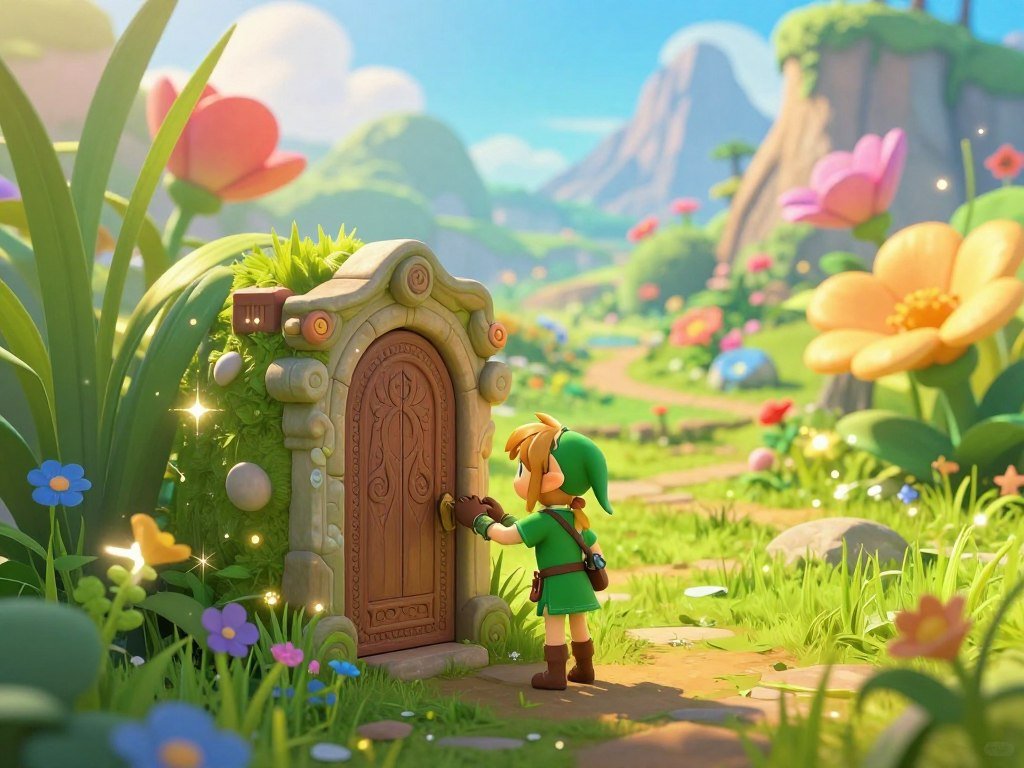
The Minish Cap lets Link shrink to enter tiny spaces and solve puzzles. That power changes how you explore rooms, paths, and hidden corners. Its worldwide sales reached 1,760,000 units.
The Legend of Zelda: The Minish Cap
Link’s shrinking ability gives ordinary places a new scale. A small gap can lead to a hidden route, and familiar spaces can become puzzle areas. The game rewards careful searching, so move slowly when a room seems to hold more than one path.
The Minish Cap works well if you want a self-contained Zelda adventure made for portable play. Its puzzles and secret-filled exploration give you a clear reason to revisit rooms. That structure keeps the focus on Link’s new quest rather than on multiplayer setup.
A Link to the Past / Four Swords
A Link to the Past / Four Swords combines a single-player Zelda adventure with a multiplayer mode. The single-player side gives you a familiar journey through Hyrule. Four Swords adds a group option, changing the pace and focus of the release.
That multiplayer mode needs extra setup compared with simply starting a solo adventure. Check what you need for the people and system you plan to use before choosing it. If your priority is a solo game, The Minish Cap asks less of your setup.
Choose The Minish Cap for a self-contained new adventure, or check the multiplayer setup before choosing Four Swords.
How Do Metroid Fusion and Zero Mission Differ?
Start with Zero Mission for a remake built around exploration, or choose Fusion for a more guided and atmospheric journey. The key difference is direction: Zero Mission leaves more room for route-finding, while Fusion points you forward more often. Both offer action built around connected spaces.
Choose Zero Mission for freer exploration and Fusion for tighter guidance with the SA-X. The SA-X creates a tense threat that shapes how you move through Fusion. Metroid Fusion sold 1,600,000 units worldwide.
Metroid: Zero Mission
Metroid: Zero Mission remakes the original Metroid adventure. You search for routes, collect abilities, and use them to reach places that were once closed. The world gives you more room to decide where to go next.
That exploration makes Zero Mission a strong choice if you enjoy learning a map as you play. You can test a path, find a new ability, and return to an earlier area with fresh options. The structure rewards patience without asking you to follow one narrow route.
Metroid Fusion
Fusion offers more guided progression and a stronger atmosphere of danger. The SA-X stalks you through parts of the game, turning some encounters into tense escapes. The direction helps you keep moving, even when the mood grows uneasy.
Use these questions to choose which experience fits your habits:
- Do you prefer freer exploration and route-finding?
- Do you want a more guided route through the game?
- Do you want a stronger horror atmosphere and SA-X encounters?
If you want a first Metroid adventure with room to explore, start with Zero Mission.
Which GBA RPGs Have Stories Worth Following?
Golden Sun suits players after a fantasy RPG, while Final Fantasy Tactics Advance offers a more unusual story built around a transformed town. Both reward time with their worlds, but their battles feel different. One follows an elemental adventure; the other ties its story to grid-based strategy.
Choose Golden Sun for a conventional fantasy quest or Final Fantasy Tactics Advance for a strategy-led story. Both titles earned notable audiences, with different settings and battle systems. Their sales totals offer one measure of reach, not a verdict on which story you will prefer.
Golden Sun
Golden Sun sends you on a fantasy adventure shaped by elemental powers and Djinn. These beings connect to the game’s elemental systems, giving you ways to shape character abilities. The setup makes team choices part of the story as well as the battles.
Golden Sun sold 1,650,000 units worldwide. It suits you when you want a conventional fantasy RPG with travel, fights, and a clear quest. Djinn add a layer of planning without shifting the game away from its adventure structure.
Final Fantasy Tactics Advance
Final Fantasy Tactics Advance follows four children whose town changes into Ivalice. The new world gives their story an unusual starting point. Its grid-based battles ask you to consider where each unit stands before choosing an attack.
The game sold 1,621,000 units worldwide. Its story and tactical battles suit players who want more than a standard fantasy quest. You will spend time thinking about the battlefield, not just moving through dialogue and exploration.
Choose Golden Sun for its elemental RPG systems, or Final Fantasy Tactics Advance for its mix of story and grid-based battles.
Which GBA Strategy Games Should You Try First?
Choose The Blazing Blade for a character-led strategy story, or Advance Wars for a more direct focus on tactical decisions. Their battles ask different things: Fire Emblem ties units to character growth, while Advance Wars puts the map first. Both reward planning, but their stories and systems feel distinct.
The Blazing Blade follows three young lords caught in a continent-wide conspiracy. It reached North America on November 3, 2003, and earned an 88/100 Metacritic score. Those details make it a clear entry point for players drawn to character-led tactical role-playing.
Fire Emblem: The Blazing Blade
The Blazing Blade asks you to guide a group of characters through a growing political conflict. Unit placement and the risk of losing a character give each battle weight. Development between fights helps you form a team with strengths that fit your approach.
The title belongs to the Fire Emblem series, but its release history has a twist. Fire Emblem: The Binding Blade came out in Japan on March 29, 2002. It did not receive an international release, while The Blazing Blade did reach North America.
This difference matters if you want to follow the series in release order. The Blazing Blade has its own story and was the first Fire Emblem game released in North America. You do not need the earlier Japan-only title to understand the conflict here.
Advance Wars
Advance Wars focuses on map tactics and military units. You move across the battlefield, use terrain, and plan how your forces will meet the enemy. The direct structure makes each turn a clear decision about position, timing, and the next move.
That focus may suit you if you want strategy without as much attention on character growth. Fire Emblem gives its units personal weight, while Advance Wars centers the map and its tactical problems. If the series’ release history matters to you, remember that The Blazing Blade reached North America while The Binding Blade did not receive an international release.
Which GBA Action Adventures Stand Out?
Aria of Sorrow is the exploration-focused pick, while Astro Boy: Omega Factor packs its action into 43 levels. Each has a different rhythm: one builds around searching and enemy abilities, while the other moves through compact stages. They are two strong third-party GBA games for action fans.
Aria of Sorrow pairs a future-set story with exploration, while Astro Boy features frequent boss fights. The games suit players who want action but prefer different structures. One offers a connected world; the other provides a run of distinct levels.
Castlevania: Aria of Sorrow
Castlevania: Aria of Sorrow takes place in 2035 and follows Soma Cruz. He fights forces that want to use him as a vessel for Dracula’s resurrection. The story adds a dark edge to its exploration and battles.
The game earned a 91/100 Metacritic score and reached North America on May 6, 2003. Its connected areas reward players who enjoy searching for routes and gaining new powers. Enemy abilities give you more options as you explore.
Astro Boy: Omega Factor
Astro Boy: Omega Factor has 43 levels, and roughly half include a boss battle. That pace gives the game frequent moments of focused combat. You move through stages rather than following the same sort of connected exploration found in Aria of Sorrow.
The level-based design suits a player who likes clear goals and regular action. Boss encounters break up the stages and test your timing. Its structure makes it easy to see how much of the game remains during a session.
Three details set these action games apart:
- Aria of Sorrow pairs exploration with enemy abilities.
- Its story follows Soma Cruz in a future setting.
- Astro Boy offers 43 levels, with roughly half featuring bosses.
Choose Aria for its dark, future-set story or Astro Boy for a level-by-level action adventure with regular boss encounters.
Which GBA Games Work Well in Short Sessions?
For compact bursts of play, WarioWare offers rapid challenges, while Wario Land 4 and Kirby offer more traditional platforming. The short-session fit differs: one changes tasks every few seconds, while the others let you work through levels. Your choice depends on how much continuity you want.
Wario Land 4 sold 2,200,000 units worldwide, and Kirby: Nightmare in Dream Land sold 2,100,000. Those two platformers provide clear level-based play. WarioWare takes a faster path, switching between tiny challenges in quick succession.
Wario Land 4
Wario Land 4 gives you platforming levels with hazards, movement challenges, and a clear goal. Its play lasts longer than a single microgame, but you can take on one stage at a time. That makes it a good fit when you want a small sense of progress.
The game lets you focus on jumps and movement without keeping up with a rapid stream of new rules. You can concentrate on a level, then stop when you reach a natural break. Its pace feels more traditional than WarioWare.
WarioWare, Inc.: Mega Microgames!
WarioWare, Inc.: Mega Microgames! is built around rapid sequences of microgames. Each challenge gives you a simple task, then quickly moves to the next one. The format works well when you want variety instead of a longer stage.
The quick shifts also make it a game you can pick up for a brief session. Your attention stays on the next task, not on a long story or map. It suits players who enjoy surprises and fast reactions.
Kirby: Nightmare in Dream Land
Kirby: Nightmare in Dream Land remakes Kirby’s Adventure and keeps the familiar level-based platforming style. You move through stages, face enemies, and use Kirby’s abilities. Its clear goals make each level easy to understand.
Kirby works when you want a traditional platforming run with a friendly lead character. The structure gives you more time with each stage than WarioWare’s rapid challenges. Pick WarioWare for quick changes of pace, or choose Wario Land 4 or Kirby when you want a platforming run.
Which Best GBA Games Should You Start With?
If you want one first pick, start with Metroid: Zero Mission; choose a different title when you already know the genre you want. A clear starting point helps when a large library feels hard to sort. The best GBA games for you are the ones whose pace and structure match your available time.
This is a curated set of 20 picks, not an exhaustive 100-title ranking. The platform’s sales list contains 40 titles confirmed to have sold or shipped at least one million units. Use that scale as context, then narrow your choice by the kind of play you want.
| Reader preference | First pick | Concrete reason |
|---|---|---|
| New to the library | Metroid: Zero Mission | Exploration with clear goals |
| Exploration | The Minish Cap | Shrinking opens new puzzle routes |
| A longer RPG | Golden Sun | Fantasy quest with Djinn systems |
| Short play bursts | WarioWare | Rapid sequences of microgames |
The table gives you four routes into the library, not a single order to follow. If you already know you want role-playing, Golden Sun gives you a longer commitment than a quick challenge. If you want to explore, The Minish Cap builds its puzzles around changing your view of familiar spaces.
You can also use the Nintendo DS and DS Lite as systems that play GBA games. For another set of genre-based picks, see these Nintendo DS game recommendations. The DS library offers a next step if you want games beyond the handheld’s own releases.
Let your preferred play style make the shortlist, then try one game before committing to a longer series.
How Do GBA Remakes and Ports Differ From Original Games?
A GBA release can be an original handheld adventure or a revised version of a game first made for another system. The difference matters when you want a new story or a portable take on a familiar one. The Game Boy Advance launched in 2001, and its library includes both kinds.
A port adapts an existing game, while an original GBA title was made for the handheld. A remake reworks an older game, while an enhanced port may add or adjust features. These labels help you understand what kind of experience a release offers.
Remakes and enhanced ports
Super Mario Advance 2 and Super Mario Advance 4: Super Mario Bros. 3 are GBA versions of earlier Mario games. They let you play known adventures on a portable system. A remake may change more of the original game, while a port aims to carry it to new hardware.
The exact changes depend on the release. Some versions adjust controls or presentation, and others may include added content. Check the specific game rather than assuming every portable version changes things in the same way.
Original handheld adventures
The Minish Cap and Golden Sun are original handheld adventures made for the GBA. Their design centers on portable play rather than bringing an earlier game to the system. You get stories and mechanics created for this library.
Before choosing a version, use this short checklist:
- What content changed from the earlier release?
- How do the controls and screen presentation compare?
- Does the portable format suit the way you want to play?
Before choosing a port, check whether its changes improve the experience you want from a portable version.
Which GBA Games Suit Kids and Casual Players?
Kirby is a friendly platforming starting point, while WarioWare and Mario Kart suit casual play in very different ways. The best fit depends on the player, not a broad age label. Kirby offers level-based action, WarioWare offers short challenges, and Mario Kart centers on racing.
WarioWare’s microgames last about five seconds, and the game sold 1,100,000 units worldwide. That makes it easy to try one quick round, though its rapid changes may not suit every player. For a child, check the game’s tone and challenge level first.
Short, simple play sessions
WarioWare suits brief rounds because its microgames last about five seconds. Mario Kart: Super Circuit offers a different casual option through short races. One tests quick reactions across changing tasks; the other asks you to steer and race.
Those formats give you choices for different kinds of downtime. A player who enjoys quick surprises may prefer WarioWare, while a racing fan may choose Mario Kart. Neither style needs the same focus as a longer story or strategy game.
Easy entry points for younger players
Kirby: Nightmare in Dream Land is a straightforward platformer, but its fit depends on the child. Check the game’s tone and challenge for that individual player. A familiar character does not mean every child will enjoy the same level of difficulty.
Parents can use three checks before handing over a game:
- How much reading does the game ask for?
- Does the challenge level suit the child?
- Does the child enjoy this genre?
For a wider family game choice, review family gaming advice alongside each game’s rating and content details. The best GBA games in 2025 still play according to their design, while modern access and your preferences guide the choice. Match the choice to the player’s age, patience, and favorite kind of play, not to a blanket label of “kid-friendly.”
Conclusion
A good first pick is the one that fits the kind of play you want today. A remake can be as satisfying as an original handheld adventure when its format suits your taste. Consider whether you want a quick session, a story, or room to explore.
For more group options beyond the handheld, browse these multiplayer Switch game ideas. Then choose one title that matches your taste, check that the version suits your setup, and give it a first session.