What happens when a client walks in at 9 a.m. and the only coffee option is a stale pod machine? Nothing good. For a small business, the coffee setup is part of the first impression, and a pour over brewer that can handle a steady trickle of cups without babysitting is worth more than it costs. The catch is that “pour over” covers everything from a $30 glass cone to a $540 commercial batch brewer, and picking wrong means either burnt coffee or a machine that quits by month three.
This roundup narrows the field to specific machines that make sense for a small office, studio, clinic, or café counter. Each pick gets a clear job description, one honest limitation, and a price only where a published source states it. The shortlist below is built for buyers who want to decide today, not read a coffee science textbook first.
Comparison Table: Seven Pour Over Machines for Small Teams
| Machine | Best for | Brew style | Capacity | Standout detail |
|---|---|---|---|---|
| Ratio Eight | Design-forward offices | Automatic pour over | Up to 40 oz | Plastic-free brew path, glass and stainless |
| Ratio Six | Small teams wanting one-button ease | Automatic pour over | Not stated | Precise temperature and water-flow control |
| BALMUDA The Brew | Flavor-focused small offices | Automatic pour over | Not stated | Precise temperature control |
| APOXCON Auto Pour Over | Teams that want manual control too | Auto plus manual | 1 L | Built-in gram scale, spiral watering |
| BUNN VP17-3 | Self-serve break rooms | Pourover batch | 12 cups | Multiple warmers, low profile |
| Bunn 4275.0031 | Catering and busy kitchens | Pourover batch | 14.7 L | 1,660 W, polished stainless |
| SYBO 12-Cup (two carafes) | Tight budgets, light duty | Drip with pour over basket | 12 cups per side | Dual carafes and warmers |
Ratio Eight: The Counter Statement That Also Brews Well
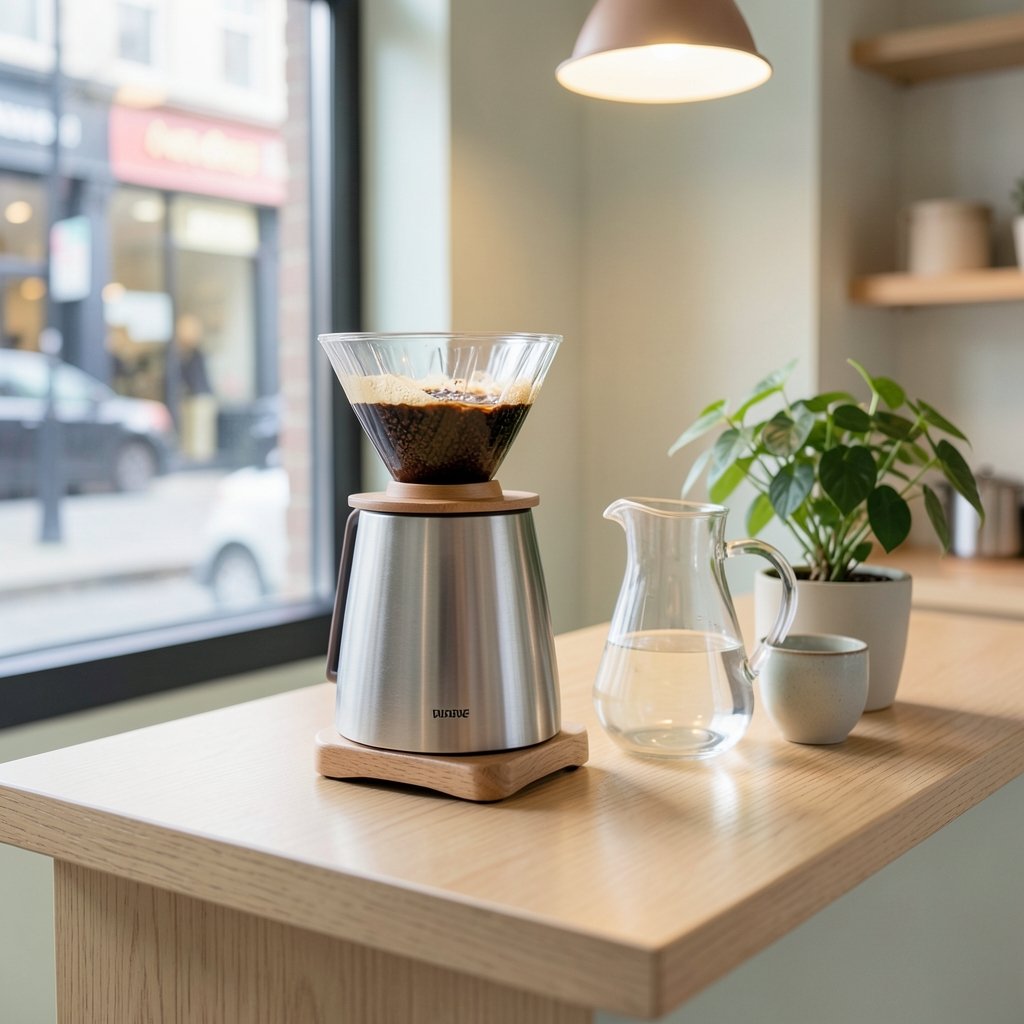
The Ratio Eight is the flagship brewer from Ratio Coffee Machines, and it is built for businesses where the coffee bar is visible to clients. It pairs a plastic-free brew path with glass and stainless steel, adds dual recipe modes, and finishes with solid hardwood accents. Capacity runs up to 40 ounces, which covers a four-to-six person team without a second round.
What it does well is remove the ceremony. One button starts a brew that mimics a hand pour over, and the materials look like something you chose on purpose rather than inherited from a break room. The limitation is the one that comes with any design-led machine: it is a counter centerpiece, not a volume workhorse, so a 20-person office will empty that 40-ounce carafe fast. Ratio backs its machines with a five-year warranty, which matters for a business writing a check. Check the official Ratio page for current pricing, since this article does not quote it.
Ratio Six: One-Button Pour Over for Teams That Just Want Coffee
The Ratio Six is the practical sibling. It brings together one-button pour over brewing, precise temperature control, and water-flow control for consistent results day after day, according to Ratio Coffee Machines. The footprint is narrower than the Eight at 13.5 by 6.75 by 14.25 inches, and it uses a double-wall stainless steel thermal carafe instead of handblown glass.
That thermal carafe is the real office argument. Coffee that sits on a hot plate turns bitter within the hour, and a thermal carafe keeps a batch drinkable long enough for the 10 a.m. stragglers. The limitation: capacity is not published in the source material, so anyone brewing for more than a handful of people should confirm the batch size before ordering. For a small studio or a two-room office, this is the least fussy path to a genuinely good cup. If the team also runs on software, pairing a low-maintenance coffee routine with tools like the best ai payroll apps for small business keeps the back office as calm as the kitchen.
BALMUDA The Brew: Temperature Precision in a Small Package
BALMUDA The Brew earns its spot on flavor control. The machine’s selling point is precise temperature control, which is the variable most cheap brewers get wrong. Water that is too cool under-extracts and tastes sour; water that is too hot scorches the grounds. A brewer that holds a steady temperature removes the most common reason office coffee tastes thin.
This pick suits a small team where one or two people genuinely care about the cup and the rest just want it to be decent. The limitation is that it is a single-cup-at-a-time mindset machine, so it rewards a workflow where people brew as they arrive rather than a batch-and-pour routine. Buyers should verify current capacity and pricing on the manufacturer’s page, because published roundups do not agree on the details.
APOXCON Auto Pour Over: The Flexibility Pick
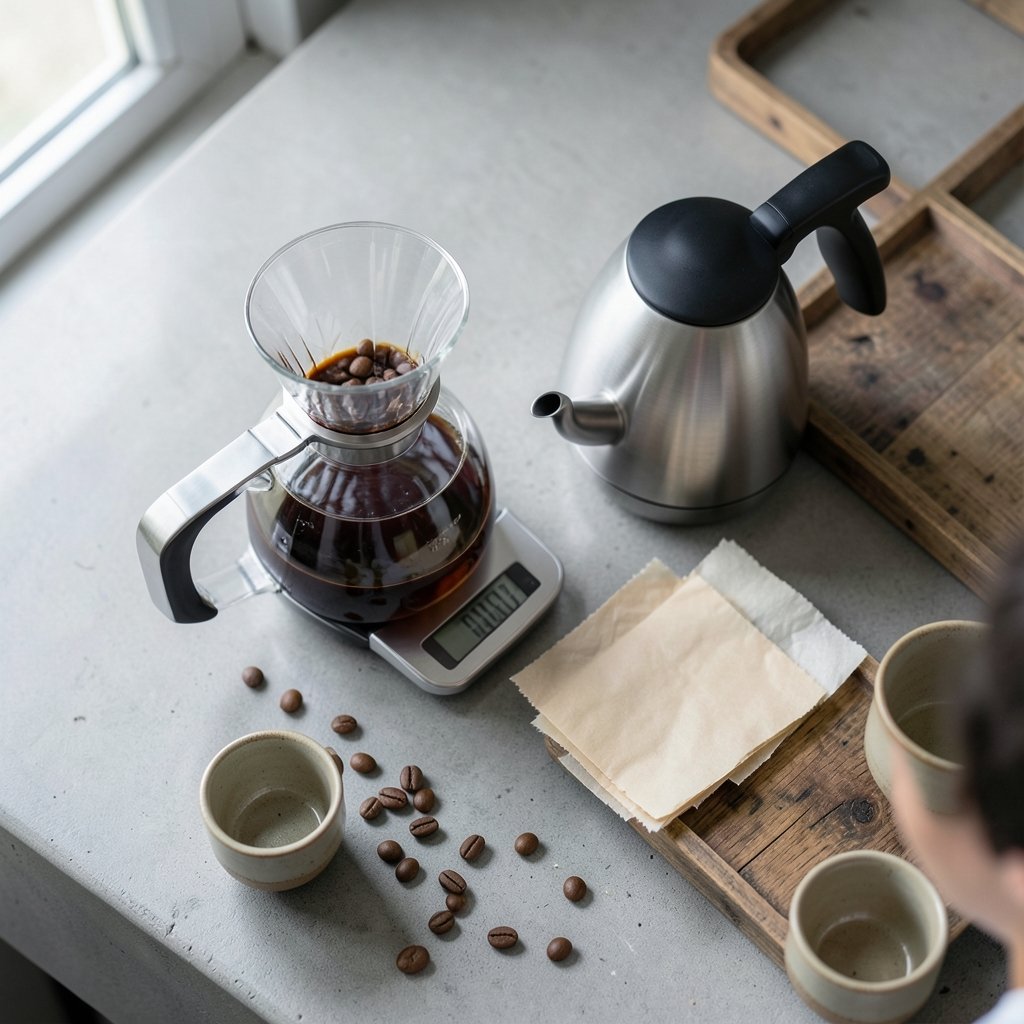
The APOXCON Drip Coffee Maker Auto Pour Over is the only machine in this shortlist with both automatic and manual modes. Hit a button for a preset recipe, or take full control of water flow and volume. It also includes a built-in electronic scale that measures to the gram, which means no separate scale on the counter and no guessing at the coffee-to-water ratio.
The patented spiral watering design aims to copy hand pour over technique for even extraction, and the 1-liter capacity handles both a solo cup and a small carafe. Every part that touches coffee is plastic-free, using borosilicate glass and stainless steel. The limitation is that flexibility invites fiddling: give a curious employee manual mode and someone will spend 15 minutes dialing in a brew while a client waits. It suits a business with one or two coffee enthusiasts and a clear house recipe posted on the wall.
BUNN VP17-3: The Self-Serve Break Room Standard
The BUNN VP17-3 12-cup low-profile pourover commercial coffee maker is built for higher-volume drip service that needs multiple warmers instead of espresso shots. In a busy self-serve setup, the fully automatic format takes routine decisions off the plate: fill it, and it brews.
This is the machine to pick when the goal is “nobody has to think about coffee.” Multiple warmers mean one pot can brew while another serves, which is the actual bottleneck in most break rooms. The limitation is the flip side of automation: it is a batch brewer, not a precision pour over, so the cup is consistent and good rather than remarkable. It also assumes a steady crowd, since a 12-cup batch brewed for three people wastes coffee all day. For a shop with a customer-facing waiting area, though, this is the quiet workhorse.
Bunn 4275.0031: For Serious Volume and Catering
The Bunn 4275.0031 is a different animal. It is a large-capacity pour over drip machine built from polished stainless steel, drawing 1,660 watts to handle serious volume in commercial settings. It carries a 14.7-liter capacity and a 4.5-star rating across 552 reviews, and it lists at $540 at roughly 25.6 pounds. The source describes it as a workhorse unit best suited to small cafés, office kitchens, or catering setups that need a pour-over-style batch brewer with substantial reservoir capacity.
The limitation is important: it is a manual, button-operated commercial unit with no smart connectivity and no dishwasher-safe parts. It also is not for home users who want a compact or programmable machine. If a business hosts events, runs a café counter, or feeds a 50-person floor, this is the machine that will not flinch. If the team is six people in a shared office, it is overkill by a wide margin.
SYBO 12-Cup With Two Carafes: The Budget Dual-Brewer
The SYBO 12-cup commercial drip coffee maker with two carafes sits in the same operational tier as other two-carafe units: twelve-cup batches, dual carafes, stainless construction. The dual warmer setup handles the one-brewing, one-serving rotation that keeps coffee moving during a morning rush.
For a small business on a tight equipment budget, this is the pragmatic choice. The limitation is build quality relative to price. Reviewers note that lighter-duty machines with basic warming plates show wear faster than stainless commercial construction under sustained daily cycling, and the SYBO’s parts supply is its own, so replacement carafes come from the same manufacturer. Buy it for a two-to-eight-person office that brews two pots a day, not for a café that brews twenty.
How to Choose Without Overthinking It
Start with cups per hour, not cups per day. A team that drinks coffee in one 30-minute window needs batch capacity and multiple warmers. A team that trickles in all morning needs a thermal carafe and a machine that brews on demand. Those are different machines, and buying for the wrong pattern is the most common mistake.
Next, decide who cleans it. Every machine on this list needs descaling and daily rinsing, and the ones with more parts take longer. A brewer with a washable basket filter eliminates paper filter costs over time, which is a real budget line for a business brewing daily. A machine nobody wants to clean becomes a machine nobody uses.
Then check the brew path materials. Glass and stainless steel cost more and last longer; light-duty plastics and basic warming plates are fine for light use but will show wear under sustained daily cycling. If the machine sits in a client-facing area, materials are also a design decision.
Finally, match the machine to the warranty and parts situation. A five-year warranty on a design-led brewer and a commercial parts supply on a batch brewer solve different problems. Neither is better in the abstract. For businesses layering technology into operations, the same logic that applies to coffee hardware applies to service providers, whether that is deciding if outsourcing WordPress development is worth it for a small business or weighing a coffee subscription against buying beans locally.
One practical tip that saves real money: buy the grinder before the upgrade. Freshly ground beans in a mid-range brewer beat stale pre-ground beans in a flagship machine every single time, and a burr grinder costs less than the jump from a budget brewer to a premium one. The second tip is to standardize the recipe. Post the ratio and the grind setting on the wall so the machine produces the same cup no matter who fills it, and so a new hire does not reinvent the process on day one.
Conclusion
The best pour over coffee maker for a small business in 2027 depends on one question: does the team drink coffee in a burst or a trickle? For a design-forward office that wants one-button pour over with a plastic-free brew path, the Ratio Eight or Ratio Six is the clean answer. For flavor obsessives, BALMUDA The Brew and the APOXCON cover precision and flexibility respectively. For self-serve break rooms and cafés, the BUNN VP17-3 and the Bunn 4275.0031 handle volume without drama, and the SYBO two-carafe model covers tight budgets. Pick the machine that matches the traffic pattern, confirm current pricing on the manufacturer’s page, and spend the leftover budget on a grinder and good beans. That combination beats any single upgrade.
Frequently Asked Questions
Is an automatic pour over machine as good as brewing by hand?
For most small businesses, yes. Automatic pour over machines control water temperature and flow, which are the two variables hand brewing gets wrong most often. The APOXCON even includes a built-in gram scale and a manual mode for teams that want to dial in a recipe. Hand brewing can produce a slightly more nuanced cup, but it also requires several minutes of undivided attention per order, which rarely fits a working counter.
How many cups per hour can a small business pour over setup handle?
It depends on the machine. A single-cup automatic brewer handles roughly one cup every few minutes, while a 12-cup batch brewer like the BUNN VP17-3 serves a rush in one pour. The practical rule is to count how many people arrive in the same 30-minute window and buy for that peak, not for the daily total.
Do I need a commercial machine or will a home brewer work?
A home brewer works for a two-to-four-person office with light use. Once a machine cycles daily for a year, lighter-duty plastics and basic warming plates show wear faster than stainless commercial construction. If the machine runs every weekday for a team of eight or more, a commercial-grade unit pays for itself in fewer replacements.
What is the real cost of paper filters over a year?
It adds up quietly. A washable basket filter eliminates paper filter cost over time, which is one reason reviewers flag it as a practical detail. For a business brewing several pots a day, a reusable filter pays back within months and removes a recurring supply order from the to-do list.
How often does a pour over machine need descaling?
Most manufacturers recommend descaling on a schedule tied to water hardness, and some machines ship with descaling powder and a carbon water filter that needs replacing every three months. That filter is an ongoing cost the simpler machines do not have. Follow the manual’s interval and use filtered water to stretch the time between deep cleans.
Which machine is best for a client-facing office?
The Ratio Eight is the strongest fit if the coffee bar is visible. It pairs a plastic-free brew path with glass, stainless steel, and hardwood accents, and brews up to 40 ounces at the touch of a button. If the priority is keeping a batch hot for late visitors instead of looks, the Ratio Six and its double-wall stainless thermal carafe are the more practical pick.