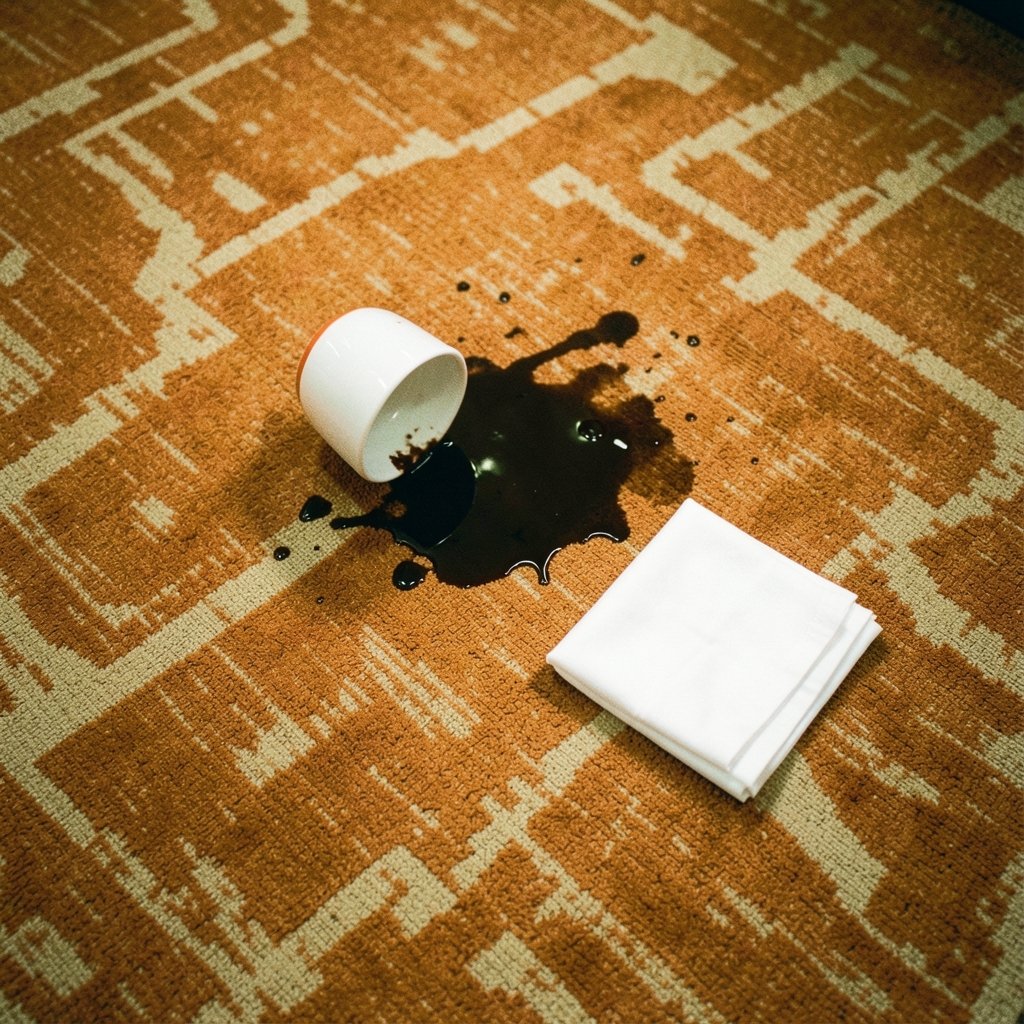
A cup slips. The dark liquid arcs through the air in what feels like slow motion. By the time it lands, you’re already calculating whether the carpet is ruined. Here’s the good news: it almost certainly isn’t. Coffee stains are one of the most fixable carpet disasters, provided you understand one thing — the clock is running, and how you spend the first two minutes matters more than anything you do afterward.
This guide walks through exactly what to do, in the order you should do it, plus the mistakes that turn a five-minute fix into a permanent shadow on your floor.
What You Need Before You Start
Gather supplies first. Running to the kitchen mid-clean wastes the most valuable time you have.
- Clean white cloths or paper towels (white, so dye doesn’t transfer)
- A bowl of warm water
- Liquid dishwashing detergent, the plain kind without bleach or added moisturizers
- White vinegar
- A spoon
- A vacuum
- Optional: an oxygen-based stain remover or a spot-cleaning machine
A quick word on cloths: old bath towels work well because you’ll go through several. Colored cloths can bleed dye onto damp carpet, so stick with white.
Step 1: Blot Immediately, Don’t Rub
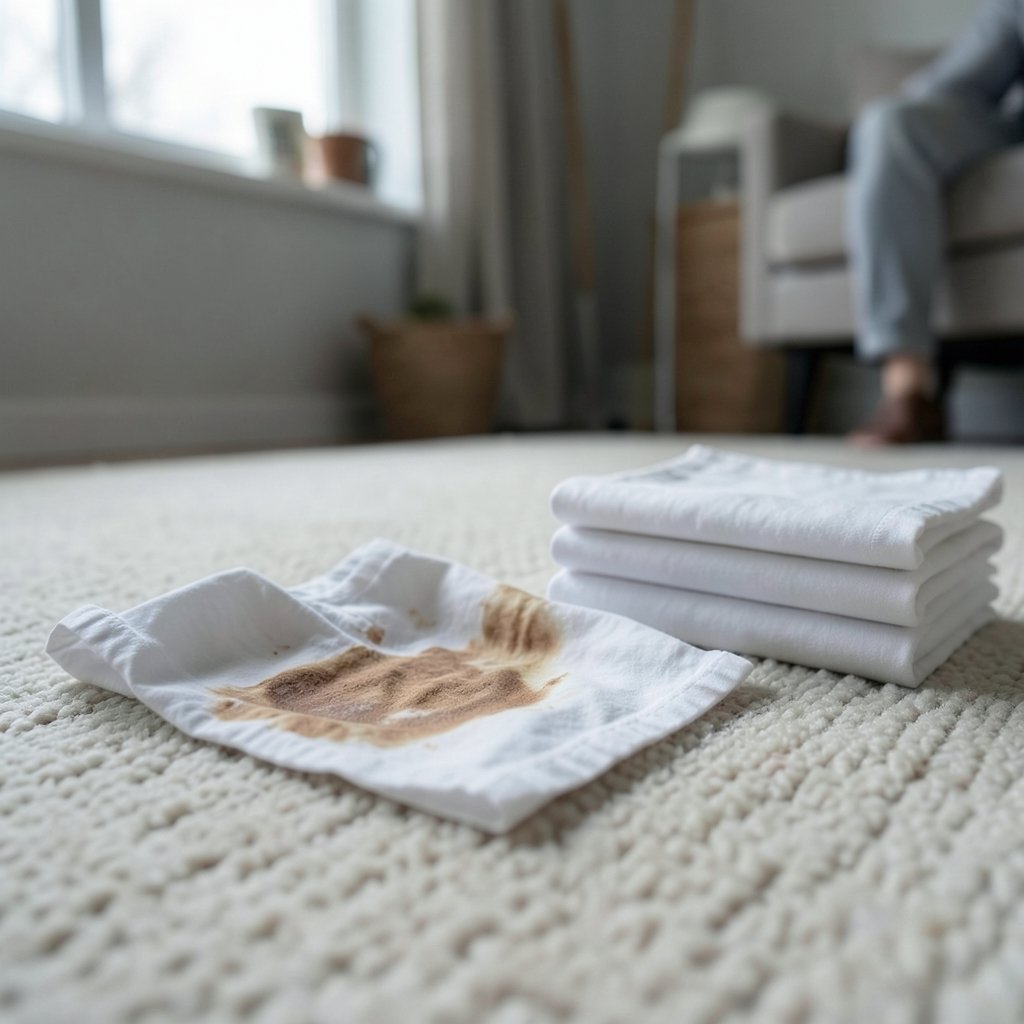
Press a clean white cloth or paper towel straight down onto the spill and hold it. The goal is to pull liquid up out of the fibers, not push it around the surface.
Expected result: The cloth comes away brown and the stain looks lighter but still visible. That’s normal. Coffee contains tannins, natural compounds that behave like dye, and hot coffee opens up carpet fibers so pigment penetrates fast. You will not blot it all out.
The single biggest mistake people make here is rubbing. Rubbing spreads the stain sideways and grinds pigment deeper into the pile. It can also fray the fiber tips, which leaves a fuzzy patch that looks dirty even after cleaning. Press. Lift. Repeat with a fresh section of cloth until no more liquid transfers.
Step 2: Mix a Simple Cleaning Mixture
For most carpets, a mild cleaning mixture handles fresh and moderately set stains. Combine:
- 1 tablespoon liquid dishwashing detergent
- 1 tablespoon white vinegar
- 2 cups warm water
Stir gently until mixed. Don’t whip it into foam — suds are hard to rinse out and leave sticky residue that attracts dirt later.
Vinegar helps here because it’s mildly acidic, which works against the tannins in coffee. Dish soap lifts the oily, milky residue that black coffee alone doesn’t leave behind. Together they cover both problems.
One caution: test the cleaning mixture on a hidden patch of carpet first, like a corner inside a closet. Wait a few minutes and check for color change. Wool and some natural fibers are more sensitive than synthetic ones.
Step 3: Apply and Blot Again
Dampen a clean cloth with the cleaning mixture — don’t pour it directly onto the carpet, or you’ll soak the backing and risk delamination. Press the damp cloth onto the stain and hold for 30 seconds. Then blot with a dry cloth.
Expected result: After two or three rounds, the stain fades noticeably. Fresh spills often disappear entirely at this stage.
Work from the outside edge of the stain inward. This is a small habit that prevents the stain from creeping outward as you press.
Step 4: Rinse With Clean Water
Fill a cloth with plain warm water, wring it out so it’s damp rather than wet, and press it onto the treated area. Blot dry. Repeat once or twice.
Expected result: No soapy feel remains when you touch the spot. This step matters more than people think. Leftover detergent acts like a magnet for dust, and the spot turns gray within weeks — which makes people believe the stain came back when really it’s fresh dirt sticking to residue.
Step 5: Dry and Vacuum
Lay a dry white towel over the area and press down firmly, or stand on it for a minute. Then let the carpet air dry completely, ideally with a fan or open window. Once dry, vacuum the spot to lift the carpet pile back up.
Expected result: The fibers fluff back up and the area blends with the surrounding carpet. Damp carpet that dries flat looks matte and obvious, so don’t skip the vacuum.
What to Do About a Dried, Old Stain
Found a stain you missed days ago? The approach changes slightly. Scrape off any crusty residue with the rounded edge of a spoon, then vacuum the loosened debris. Dampen the area with warm water to soften the fibers, then work through steps 2 to 5 as normal. Old stains may need several rounds, and patience beats aggression every time.
For older, tougher marks, an oxygen-based stain remover is often more effective than dish soap alone. Oxygen formulas break the stain down chemically rather than just lifting it mechanically, and the difference is visible as the mark fades. A spot-cleaning machine goes a step further by flushing water through the pile and extracting it along with the loosened pigment — useful when coffee has worked deep into a thick carpet.
Matching the Method to Your Carpet
Not every carpet tolerates the same treatment. Here’s how the common types compare.
| Carpet type | Best approach | Watch out for |
|---|---|---|
| Synthetic (nylon, polyester, olefin) | Dish soap and vinegar mixture, oxygen booster for old stains | Very little — most tolerate repeated treatments |
| Wool | Mild detergent only, blot gently, dry quickly | Vinegar in strong concentrations; over-wetting can cause shrinkage |
| Light-colored carpet | Standard mixture, then a few drops of hydrogen peroxide on lingering marks | Peroxide can bleach; test first and never use on dark or colored carpet |
| Dark or brightly colored carpet | Standard mixture only | Hydrogen peroxide and other bleaches will strip color |
| Loop pile (berber) | Blot only, never scrub | Snagging and fuzzing at the loop tips |
| Area rugs with natural fibers (sisal, jute) | Minimal water, professional cleaning if severe | Water damage and browning; these rarely forgive DIY soaking |
The hydrogen peroxide trick deserves a warning label. It works well on a stubborn mark on a cream carpet. On a navy carpet, it leaves a permanent pale spot that no cleaner will fix. If you’re unsure, skip it.
Common Mistakes That Make It Worse
Most failed stain removals trace back to one of a handful of errors.
Rubbing instead of blotting. Covered above, but it’s the number one culprit. Friction spreads pigment and damages fiber.
Using hot water on a set stain. Hot liquid is what drove the coffee into the fibers in the first place. Warm or cool water is safer for cleaning.
Over-wetting. Pouring the cleaning mixture directly on the carpet pushes moisture into the backing and underlay. That traps moisture, which can lead to odor and, in bad cases, mold. Damp cloths only.
Skipping the rinse. Sticky detergent residue attracts dirt and creates a new stain in a week or two.
Using the wrong household products. Some cleaning advice suggests bleach, ammonia, or all-purpose sprays. Bleach strips color. Ammonia is unnecessary and harsh. Stick to the mild cleaning mixture unless the carpet manufacturer says otherwise.
Cleaning a coffee stain with a steam cleaner at high heat. Heat can set tannins rather than release them. If you use a machine, follow the spot-cleaning instructions and keep the temperature moderate.
It’s also worth knowing that coffee isn’t the only kitchen liquid with this problem. The same tannin chemistry shows up in tea, red wine, and fruit juice, which is why the same blot-rinse-blot routine handles all of them.
When the Stain Is Really About Something Else
Here’s a pattern worth naming. Sometimes a “coffee stain” that keeps reappearing isn’t a stain at all — it’s a fresh spill happening in the same spot. If your morning routine involves a machine that misbehaves, the carpet is the symptom, not the problem. A coffee maker that overflows its filter basket will quietly dribble onto the counter and down to the floor every single brew, and no amount of carpet cleaning will stop it. Fix the source and the mystery stains stop.
The same logic applies to the coffee itself. A grinder with misaligned burrs produces uneven particles that cause erratic extraction and overflowing baskets — one more way a small equipment problem ends up on your carpet. And if you’re in the market for new gear and want to eliminate the plastic-contact question entirely, it’s worth reading up on coffee makers without plastic water contact before you buy.
For anyone who prefers a slower, more controlled brew that’s less likely to end up on the floor, a pour over setup keeps the coffee in a carafe rather than a travel mug balanced on a couch arm. There are solid options in the under-$300 pour over range if you want something that brews well without the spill risk of a rushed morning. Single-serve machines have their own trade-offs, covered in this guide to the best Keurig coffee makers, and they tend to be tidier for people who drink one cup at a time.
None of that helps the stain in front of you right now, but it’s the difference between cleaning your carpet once and cleaning it every week.
The Chemistry, Briefly
Coffee stains persist because of tannins, the same class of compounds that darken tea and wine. When hot coffee hits carpet, the heat relaxes the fibers and the pigment slips inside the yarn rather than sitting on top. That’s why a stain that’s been sitting overnight is dramatically harder to lift than one you catch in the first minute — the pigment has had time to bind.
This is also why temperature matters in both directions. Heat got the stain in, so heat isn’t the tool that gets it out. And it’s why blotting beats scrubbing: you’re trying to draw pigment back out of the fiber, and capillary action does that better than friction ever will.
Conclusion
Removing a coffee stain from carpet comes down to speed and restraint. Blot immediately with a white cloth, mix a mild mixture of dish soap and vinegar in warm water, apply it with a damp cloth rather than pouring, rinse thoroughly, then dry and vacuum. Fresh spills usually vanish in one pass. Older stains take repetition, and the occasional stubborn mark responds to an oxygen-based remover or a spot-cleaning machine.
The mistakes are predictable, too: rubbing, over-wetting, skipping the rinse, and reaching for bleach. Avoid those and your carpet has a very good chance of coming through without a trace. And if the same spot keeps getting stained, look up from the floor — the real fix might be sitting on your kitchen counter.
Frequently Asked Questions
Does cold water or hot water work better on a coffee stain?
Warm water is the practical choice for preparing the cleaning mixture, but avoid hot water on a set stain. Hot liquid is what allowed the coffee to penetrate the fibers in the first place, and heat can help bind tannins rather than release them. Cool or lukewarm water for rinsing is fine and safer for wool and natural fibers.
Can I use vinegar alone to remove a coffee stain?
Vinegar alone helps because its mild acidity works against coffee’s tannins, but it doesn’t address the oily residue that milk or cream leaves behind. Pairing one tablespoon of white vinegar with one tablespoon of liquid dish soap in two cups of warm water covers both problems in a single step. Always test on a hidden patch first.
How long can a coffee stain sit before it becomes permanent?
The sooner you treat it, the better the outcome, and a stain caught within minutes usually lifts completely. A stain left overnight is significantly harder because the pigment has had time to bind to the fibers. Even old stains are often removable with repeated treatments, but the effort goes up sharply with time.
Is hydrogen peroxide safe for removing coffee stains from carpet?
Only on light-colored carpets, and only after testing a hidden area. Hydrogen peroxide can bleach fibers, so on dark, navy, or brightly colored carpet it may leave a permanent pale patch that’s worse than the original stain. On a cream or white carpet, a few drops can lift a lingering mark.
Why does the stain seem to come back after I clean it?
Two common reasons. First, leftover detergent residue wasn’t rinsed out, and it attracts dirt that looks like a returning stain. Second, the original spill is still happening — a leaking or overflowing coffee maker will keep marking the same patch of carpet no matter how well you clean it. Rinse thoroughly, then check the equipment.
Can I clean a coffee stain with a steam cleaner?
Be cautious. High heat can set tannins rather than release them, and too much moisture pushed into the carpet backing can cause odor or worse. If you use a machine, use it as a spot cleaner with moderate temperature, follow the manufacturer’s instructions, and make sure the area dries completely afterward.