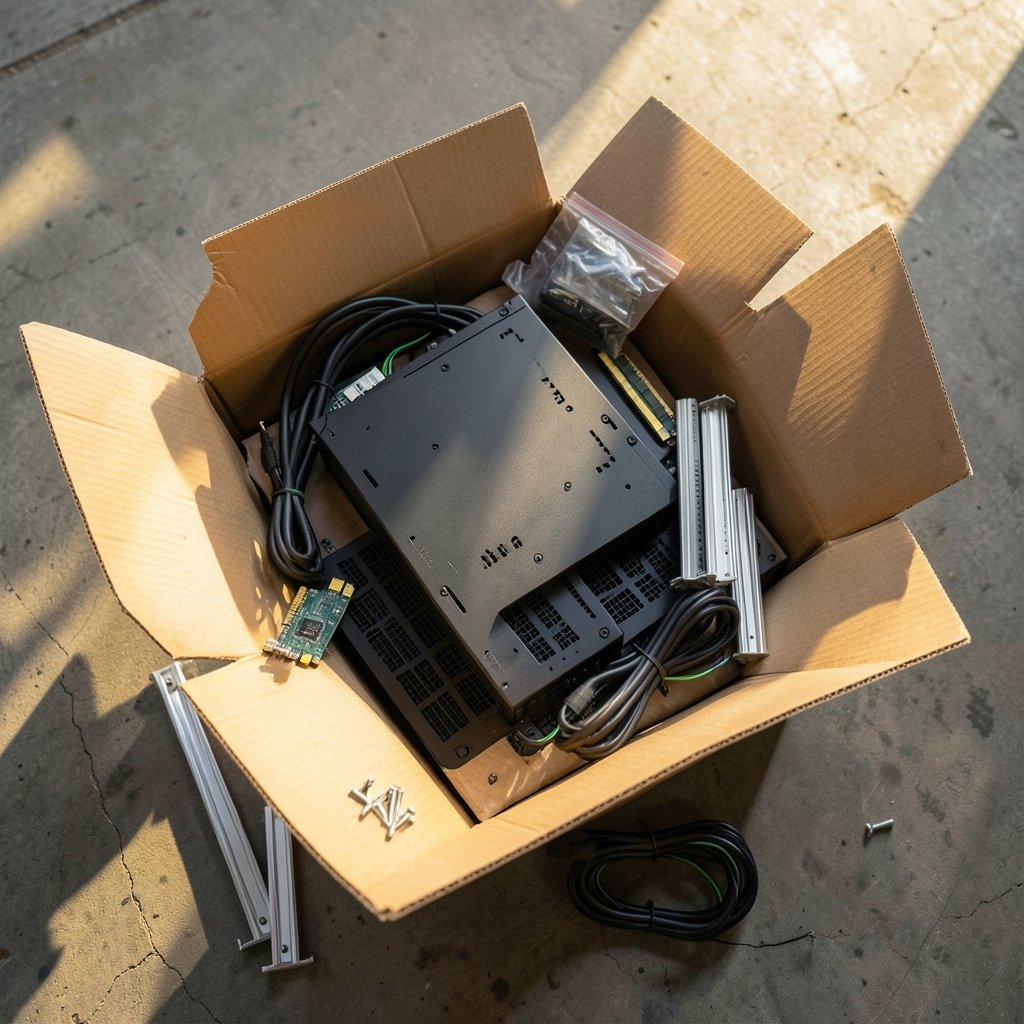
What if a hospital could stop buying scanners, pumps, and sterilizers one at a time, and instead pay one predictable fee for equipment that arrives, gets maintained, and gets replaced on schedule? That is the basic promise of managed equipment services, usually shortened to MES. It is a contract model, not a product. A supplier takes responsibility for a defined package of equipment across its whole working life, and the buyer pays for availability rather than ownership. (Which game localization services offer free trial)
The model has grown well beyond hospitals, but healthcare is where it is most visible and most debated. This article explains what MES contracts actually contain, how the money works, where the model tends to break down, and how to tell whether it suits an organization at all. (Game localization services indie developers actually works)
What Are Managed Equipment Services?
Managed equipment services are long-term contracts in which a provider supplies, maintains, and often replaces equipment on the buyer’s behalf. The buyer gets working equipment and agreed service levels. The provider carries much of the operational risk.
A Welsh procurement notice describes the arrangement plainly: MES lets trusts enter a service contract that provides new equipment, incorporates existing equipment, and includes maintenance to cut downtime, increase safety, and reduce risk. The same notice notes that routine maintenance “isn’t always done by Trusts due to capacity, capability, limited resource/processes to manage.” That is a key point. MES is often as much about filling a skills and staffing gap as about financing.
The scope can be narrow or enormous. At the narrow end, a single department’s imaging suite. At the wide end, a hospital’s entire medical device inventory, from X-ray devices and MRI scanners to endoscopes, patient-monitoring systems, and surgical lights.
Why Organizations Choose the MES Model
The case rests on a few practical problems that most equipment-heavy organizations recognize.
Predictable cost. Equipment bought outright creates lumpy capital spending and surprise repair bills. A managed contract converts much of that into a recurring payment. One public-sector framework notes that the contract “spreads the cost of funding innovation through new and replacement equipment.”
Maintenance that actually happens. Preventive maintenance is easy to defer when staff are stretched. A contract with downtime penalties makes deferral expensive for the provider instead of invisible for the buyer.
Access to specialist technicians. A project manager quoted in healthcare technology reporting framed the appeal as a thought experiment: what if everything in your facility were under warranty, covering parts and labor, with a pool of highly qualified manufacturer technicians waiting for your call? That is essentially the MES pitch.
Lifecycle management. Equipment does not fail all at once; it ages unevenly. A managed contract plans for refresh and disposal rather than reacting to breakdowns.
What a Managed Equipment Services Contract Typically Includes
Scope varies by sector, but most contracts bundle the same building blocks. The table below shows what buyers usually get and what they usually give up.
| Contract element | What the buyer receives | What the buyer gives up |
|---|---|---|
| Equipment supply | New devices, plus existing equipment folded in | Choice of individual models and brands |
| Maintenance | Planned servicing, repairs, parts, labor | Control over who does the work and when |
| Uptime commitments | Agreed response and repair times | Tolerance for slow fixes |
| Lifecycle planning | Scheduled replacement and decommissioning | The option to keep equipment running longer |
| Monitoring and reporting | Usage data, service records, performance reports | Some visibility into the provider’s internal costs |
| Staff training | Vendor training for clinical and technical staff | In-house ownership of some technical knowledge |
The inclusion of existing equipment matters more than it sounds. A contract that only covers new purchases leaves the buyer running two maintenance regimes at once. A contract that absorbs the installed base is harder to price but far more useful.
How the Money Works
MES pricing is usually built from four components: the capital cost of equipment spread across the term, the maintenance and parts provision, a risk margin for downtime guarantees, and the cost of lifecycle replacement. Contracts commonly run for many years. One NHS framework notes that contracting with a supplier for up to 20 years “can be a daunting prospect,” which is a fair summary of the emotional reaction most finance directors have when they first see a term sheet.
That length is not accidental. The provider needs time to recover equipment costs and earn a return on the service obligation. The buyer gets cost certainty in exchange for flexibility.
Three pricing traps show up repeatedly in practice:
- Underpriced refresh cycles. The contract promises replacement equipment but does not define the specification or the trigger. Five years in, the “equivalent” replacement is noticeably less capable than what was promised.
- Exclusions buried in schedules. Consumables, certain repairs, and out-of-hours callouts sit outside the monthly fee. The predictable bill becomes predictable plus extras.
- Indexation clauses. Annual increases tied to a broad inflation measure can outpace the buyer’s own budget growth over a long term.
Anyone modeling a contract should build the total cost of ownership across the full term, including exclusions and indexation, rather than relying only on the headline monthly figure. The same discipline applies to any long service agreement; a breakdown of what drives database consulting services cost and real rates shows how hidden line items quietly reshape a budget.
MES Beyond Healthcare
Healthcare dominates the conversation, but the model is spreading. Industrial cleaning equipment is now sold on a fully managed basis, with a single monthly payment covering the machine, annual servicing, breakdown cover, parts, and compliance documentation, with no capital outlay. Distribution and logistics firms have launched managed service suites aimed at helping organizations track and optimize technology assets across facilities. The common thread is equipment that must run reliably and where a breakdown has real operational or compliance consequences.
In emerging markets, the model has been used as a form of public-private collaboration. Under these arrangements, equipment manufacturers sell devices and agree to service them under multiyear contracts that bind them to service and performance standards and to train hospital staff to use and maintain the equipment. Some also install monitoring systems that track how equipment is being used. For under-resourced settings, that can improve planning and shift performance risk onto the party best placed to manage it.
The Risks Buyers Underestimate
MES is not a free lunch, and the failure modes are well documented in procurement circles.
Loss of in-house capability. If the vendor maintains everything, the buyer’s own biomedical or maintenance team can atrophy. When the contract ends, the organization may be less capable than before it started.
Lock-in. Long terms plus proprietary equipment make switching expensive. Buyers should negotiate exit provisions, data ownership, and handover support before signing, not after.
Scope creep in reverse. Providers sometimes interpret “routine maintenance” narrowly. Defining response times, spare parts availability, and escalation paths in the contract schedule is essential.
Governance drift. A 15-year contract signed by one leadership team will be inherited by several others. Without a standing contract management function, performance quietly erodes. One framework explicitly includes professional services covering ongoing contract and lifecycle management, compliance, and governance support for exactly this reason.
Change that outpaces the contract. Clinical practice, technology, and regulation all shift. A contract that cannot flex to accommodate changing needs becomes a constraint rather than an enabler. Vendors are responding: one UK provider rebranded its MES offering as “transformation services,” with its chief executive saying the company treats technology as an enabler rather than an outcome.
How to Decide Whether MES Fits
A few diagnostic questions separate good candidates from poor ones.
- Is the equipment standardized and predictable in its lifecycle? MES suits commodity and imaging equipment better than fast-moving research instruments.
- Does the organization lack maintenance capacity or specialist skills? If so, the model adds real value.
- Can the buyer write a tight specification and manage a long contract? If not, the savings will leak.
- Is capital constrained but operating budget available? MES shifts spending between those buckets.
- Is flexibility more valuable than certainty? If the organization is changing fast, a long lock-in may hurt.
For organizations already running digital infrastructure, the same build-versus-buy logic appears in backend decisions. A comparison of Unity gaming services, PlayFab, and Beamable for backend selection covers similar trade-offs between managed convenience and control.
Practical Tips That Actually Work
From the pattern of what goes wrong, a few habits consistently help.
Model the whole term, not the first year. Include indexation, exclusions, and refresh specifications. Compare against a realistic in-house scenario, not a fantasy one where nothing ever breaks.
Write the equipment specification into the contract. “Equivalent replacement” needs a defined baseline, or it means whatever the provider decides it means.
Keep some capability in-house. Even a thin internal team that can verify work, audit service records, and challenge invoices protects the buyer’s position.
Set up governance on day one. Named contract owners, quarterly performance reviews, and a documented escalation path. Contracts do not manage themselves.
Pilot before scaling. Start with one department or equipment category. Learn how the provider behaves when something breaks at 2 a.m. before committing the whole estate.
Check the procurement route. Public bodies often have frameworks that provide tested terms and procurement expertise for complex purchases. Using one can shorten timelines and reduce legal risk. The same principle applies when commissioning specialist vendors; knowing what digital marketing services cost, with real numbers behind the quotes, keeps negotiations grounded.
Conclusion
Managed equipment services work best when the buyer treats them as a long-term operating partnership rather than a financing trick. The model genuinely solves real problems: unpredictable capital spending, deferred maintenance, thin technical staffing, and aging equipment that nobody owns the refresh plan for. It also creates new problems if the contract is vague, the term is long, and nobody is watching performance after year three.
The organizations that get value from MES tend to share three traits. They specify precisely, they keep enough internal expertise to verify what they are paying for, and they govern the contract actively for its whole life. Get those right, and managed equipment services can turn a sprawling equipment estate into something close to what that project manager imagined: everything covered, everything maintained, and no surprises.
Frequently Asked Questions
What does managed equipment services mean in simple terms?
It means paying a provider a regular fee to supply, maintain, and eventually replace a defined set of equipment, instead of buying each item and arranging maintenance separately. The buyer gets working equipment and agreed service levels; the provider handles the operational burden.
How long do managed equipment services contracts usually last?
Terms vary widely, but multiyear agreements are standard because the provider needs time to recover equipment costs. Some public-sector frameworks are built around contracts running up to 20 years, which is why exit terms and flexibility clauses deserve close attention before signing.
Is MES only used in healthcare?
No. Healthcare is the most visible sector, covering imaging devices, operating theatre equipment, endoscopes, and patient monitoring. The model has also spread to industrial equipment, facilities technology, and laboratory operations, anywhere equipment reliability and compliance carry real consequences.
What are the main disadvantages of managed equipment services?
The recurring risks are loss of in-house maintenance skills, long-term lock-in, vague refresh specifications, exclusions that sit outside the monthly fee, and weak contract governance over a long term. Most of these are manageable through careful specification and active contract management.
Can existing equipment be included in a managed services contract?
Yes, and it often should be. Procurement guidance for MES arrangements explicitly describes contracts that provide new equipment while incorporating existing equipment, which avoids running two separate maintenance regimes side by side.
How should an organization compare MES against buying outright?
Build a full-term total cost of ownership for both options, including maintenance, parts, staff time, downtime, indexation, and replacement. Then weigh certainty against flexibility. MES usually wins on predictability and skills access; outright purchase usually wins on control and long-run cost if the organization has strong maintenance capability.