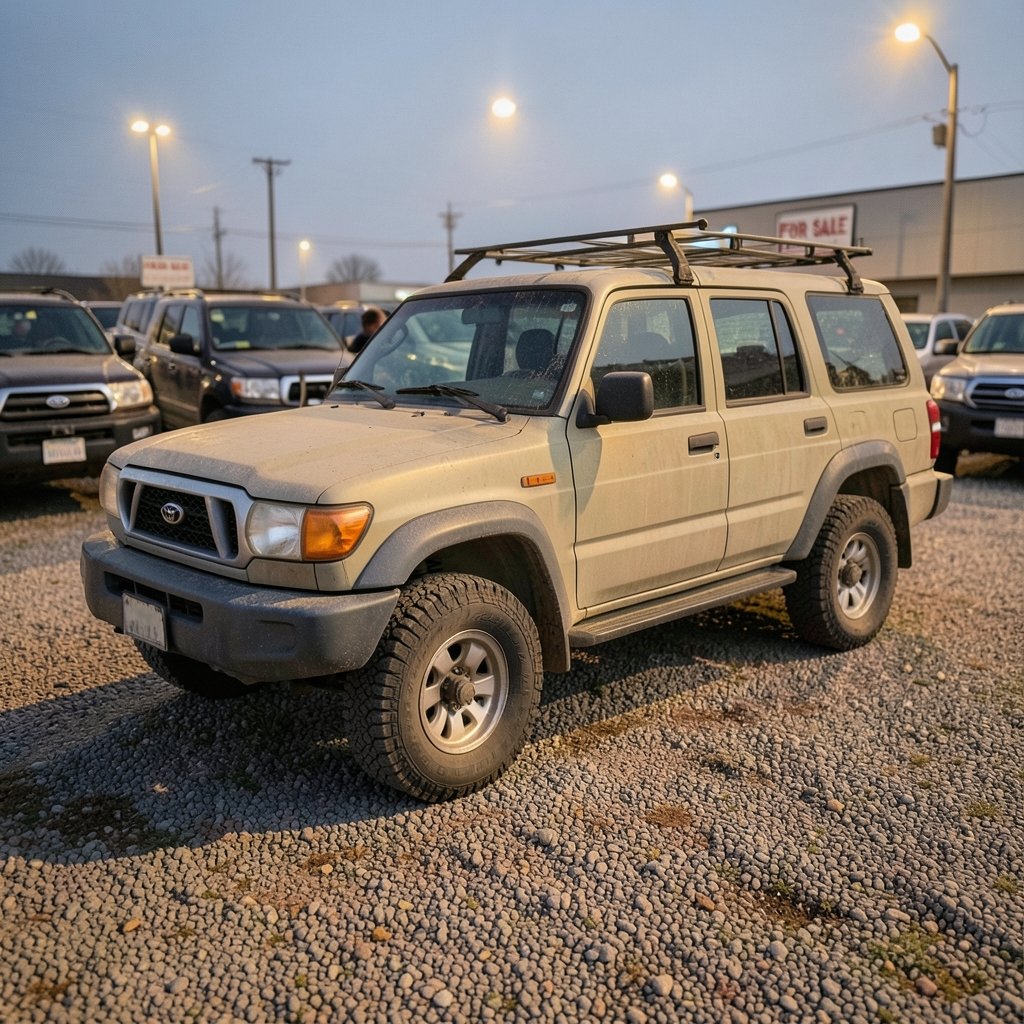
Is a used Toyota 4Runner the rare SUV that rewards you for buying one with 100,000 miles on the clock? Plenty of shoppers think so, and the market data backs up the enthusiasm. The 4Runner has been sold since 1984 across six distinct generations, and the current sixth generation arrived for the 2025 model year. That long run means the used market spans everything from $5,000 project trucks to nearly new SUVs at $70,000 and up. The trick is knowing which slice of that range fits your life, your budget, and your tolerance for rust and rattles.
Why the 4Runner Holds Value So Well
Most vehicles depreciate like a dropped phone. The 4Runner behaves differently. Body-on-frame construction, a reputation for durability, and steady demand from off-roaders and overlanders keep resale prices high. That is good news if you already own one and frustrating news if you are shopping.
Look at real listings and the pattern is obvious. A 2015 Limited with 104,000 miles was listed around $27,990, while a 2016 SR5 with just 45,000 miles sat near $33,590. A 2023 model with 57,000 miles was priced at $45,990. Even a 2025 SR5 with 34,000 miles showed up at $40,990. These are not bargain-bin numbers for vehicles with serious mileage.
The practical takeaway: the 4Runner is a poor choice if your only goal is cheap transportation. It is a strong choice if you plan to keep the vehicle for a decade, drive it hard, and sell it later without taking a bath. Buyers who want maximum metal for minimum money should also scan broader used car deals before committing to one model.
Know the Generations Before You Shop
The generation you pick determines almost everything else: engine, reliability quirks, price, and parts availability. Here is the short version.
| Generation | Years | What Defines It |
|---|---|---|
| First | 1984–1989 | Compact truck roots, sold as the Hilux Surf in Japan |
| Second | 1990–1995 | Four-door body, more family-friendly |
| Third | 1995–2002 | Upscale shift, still tough |
| Fourth | 2003–2009 | Optional V8, best towing |
| Fifth | 2010–2024 | Longest run, huge parts supply |
| Sixth | 2025–present | New platform, hybrid option |
Two details matter more than the rest. First, the fourth generation offered a V8, and that version carried a maximum towing capacity of 7,300 pounds, the best of any 4Runner. Second, the fifth generation ran for roughly 15 years, which means an enormous pool of used examples and cheap, widely available parts.
If you want something collectible, the 40th Anniversary Edition is worth knowing about. Only 4,040 were built, so it stands out in a parking lot and holds value accordingly.
The Third Generation: Simple and Cheap
Third-gen trucks show up constantly at auction. A 2000 SR5 4WD with a five-speed manual and 83,000 miles drew bidding attention, and its sale prep included a new timing belt, water pump, thermostat, and drive belts. That list is your shopping checklist in miniature. On the 3.4-liter V6, the timing belt is a maintenance item, not a lifetime part. If a seller cannot show records, budget for the job immediately.
These trucks are simple, repairable, and honest. They are also 25-plus years old, so rust, worn suspension bushings, and tired interiors are the norm rather than the exception.
The Fourth Generation: The V8 Sweet Spot
The 2003–2009 trucks are where value hunters often land. A 2004 SR5 V8 that stayed with one California owner until recently showed just 56,000 miles, finished in Galactic Gray Mica with a sunroof, roof rails, running boards, a receiver hitch, and the power-retractable tailgate window that 4Runner fans love. That spec sheet explains the appeal: V8 torque, real towing capability, and a body that still feels modern enough for daily duty.
The catch is fuel economy. A 4.7-liter V8 drinks like it means it. If you commute 60 miles a day, do the math before you fall for the rumble.
The Fifth Generation: The Safe Default
For most shoppers, the 2010–2024 trucks are the sensible answer. Parts are everywhere, independent shops know them, and the aftermarket is enormous. You will pay for that convenience. Prices for clean, lower-mileage fifth-gens routinely land in the $30,000 to $46,000 band depending on year, trim, and miles.
Trim choice matters more than year here. SR5 is the volume seller. TRD Off Road adds real hardware for trail use. TRD Pro commands a premium that only makes sense if you will actually use the suspension and tires. Limited leans luxury with a different front end and more chrome.
The Sixth Generation: Nearly New, Nearly Full Price
The 2025 redesign brought a new platform and a hybrid powertrain option. Used examples already exist, but the savings are thin. A 2025 SR5 with 34,000 miles at $40,990 or an i-FORCE MAX TRD Pro with 12,000 miles at $73,590 shows how little depreciation you capture. Buying new may be the smarter move if this generation is your target.
What to Check Before You Hand Over Money
Inspection separates a good 4Runner from an expensive lesson. Work through these in order.
- Frame and underbody rust. This is the number one killer. Crawl underneath with a flashlight. Flaking metal and soft spots end the conversation.
- Timing belt history on older V6 models. The 3.4-liter needs documented belt service.
- The rear window. The power tailgate window is a signature feature and a common failure point. Test it fully up and down.
- Four-wheel-drive engagement. Shift into 4WD, including low range, on a dirt surface. Listen for grinding.
- Service records and title status. A clean title in the seller’s name with a clean history report is the baseline.
- Suspension and steering. Worn bushings and leaking shocks are common on high-mileage trucks.
One more habit worth building: check the seller as closely as the truck. Enthusiast auctions often surface long-term single-owner vehicles with documented care, like that 2000 SR5 that stayed with its original owner until recently. Those listings take more effort to find but usually beat a random lot truck.
If you are cross-shopping family SUVs, the same discipline applies elsewhere. A used Subaru ascent check before you buy one walks through the inspection points that matter on a three-row crossover, and many of them transfer directly to any used vehicle purchase.
Common Mistakes Buyers Make
The first mistake is paying TRD Pro money for an SR5 lifestyle. If your toughest terrain is a gravel driveway, the premium trim is wasted cash. Buy the trim that matches your actual use.
The second is ignoring fuel costs. The V8 and the older V6 are thirsty, and the difference between 15 and 20 mpg over 15,000 miles a year is real money.
The third is skipping the pre-purchase inspection to save $150. On a vehicle this old and this expensive, that fee is the cheapest insurance you will ever buy. Find a shop that knows body-on-frame trucks and pay them to be skeptical on your behalf.
The fourth is buying the first clean one you see. Inventory is deep. Compare at least five listings with similar miles and options before you negotiate. Prices vary more than the trucks do.
What You Will Pay, Realistically
Used pricing spans a wide arc. High-mileage older trucks trade in the low thousands, mid-generation examples with six-figure odometers sit in the high teens to high twenties, clean fifth-gens cluster in the low thirties to mid forties, and near-new sixth-gens push past $45,000 toward $74,000 for hybrid TRD Pro models.
That spread means the 4Runner works for very different budgets, but only if you match expectations to money. A $12,000 truck will need work. A $35,000 truck should not, and you should walk away from anything that does. Buyers planning around a specific model year should also read what Toyota tacoma 2027 buyers can realistically expect because the truck and SUV markets move together, and new-model pricing shapes used values across the board.
Conclusion
The used Toyota 4Runner earns its reputation, but it does not hand out discounts. Buyers get durability, resale strength, and genuine off-road ability in exchange for high asking prices and thirsty engines. The smart play is to pick a generation that fits your budget, inspect the frame like your wallet depends on it, and refuse to overpay for capability you will never use. Do that, and a 4Runner with 100,000 miles on it can be one of the most sensible vehicles you ever own.
FAQ
How many miles is too many on a used 4Runner?
There is no hard ceiling, but the frame matters more than the odometer. A rust-free truck with 180,000 documented miles is often a better buy than a 90,000-mile example with a rotting underbody. Focus on maintenance records, rust, and how the truck was used rather than a single mileage number.
Which 4Runner generation is the most reliable?
The third and fifth generations have the strongest reputations for long-term durability, and the fifth generation benefits from a 15-year production run that made parts cheap and plentiful. The fourth-generation V8 is also well regarded, though it costs more at the pump.
Is the V8 4Runner worth the extra fuel cost?
It depends on towing. The fourth-generation V8 delivered a maximum towing capacity of 7,300 pounds, the best of any 4Runner. If you tow a trailer regularly, the V8 earns its fuel bill. If you do not, the V6 is the more sensible daily choice.
What should I inspect first on a used 4Runner?
Start underneath. Frame rust is the most expensive problem you can inherit, and it is often hidden by plastic cladding. After that, check the timing belt records on older V6 models, test the power rear window, and confirm that four-wheel drive engages in both high and low range.
Are high-mileage 4Runners expensive to maintain?
Routine costs are moderate because parts are widely available and independent shops know the platform. The bigger risks are deferred maintenance and rust repair. A truck with documented service history is far cheaper to own than a low-mileage one with no records.
Should I buy a used sixth-generation 4Runner or a new one?
Compare carefully. A 2025 SR5 with 34,000 miles was listed near $40,990, and a hybrid TRD Pro with 12,000 miles near $73,590. When used prices sit that close to new, the warranty and history of a new vehicle often win. Shop both before deciding.
The sixth-generation question deserves one more note. Because the redesign is so recent, most used examples are still covered by factory warranty, and that coverage transfers to you. Ask the seller for the in-service date, which sets the warranty clock, along with the model year. Also confirm whether the hybrid battery carries its own longer coverage, because that changes the long-term math on an i-FORCE MAX truck. For a nearly new vehicle at a nearly new price, those details are the difference between a smart purchase and an expensive one.
One last piece of advice applies to every generation. Drive the truck the way you actually will. If you commute on highways, take it on a highway. If you tow, bring the trailer. If you plan to wheel it, find dirt. A 4Runner hides worn suspension and tired brakes well on a short, gentle test drive, and a twenty-minute loop at real speeds tells you more than any listing photo ever will. Pair that drive with the inspection list above, negotiate from comparable listings rather than emotion, and the used 4Runner rewards you with years of honest service. That is the whole case for buying one, and it is a strong one.