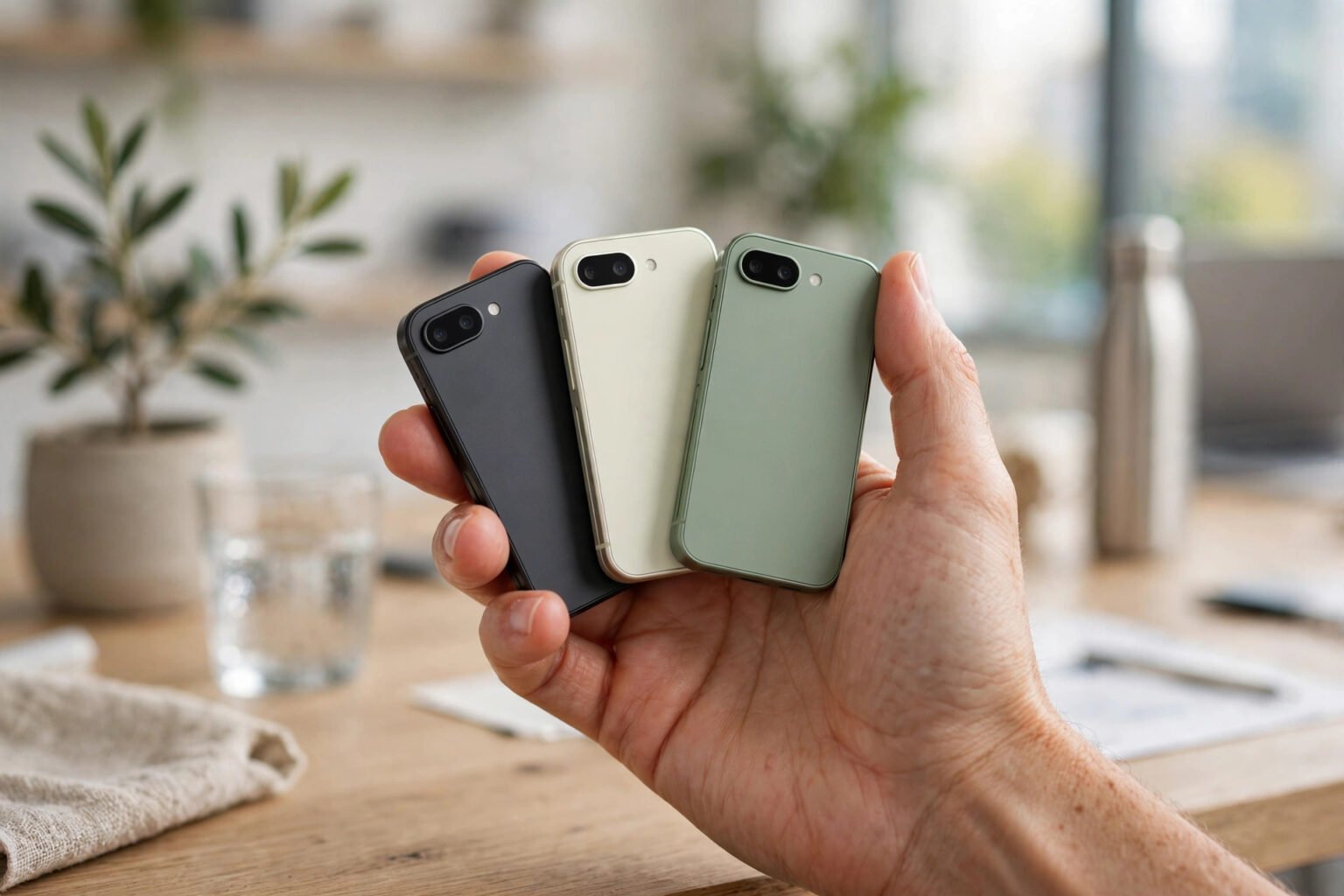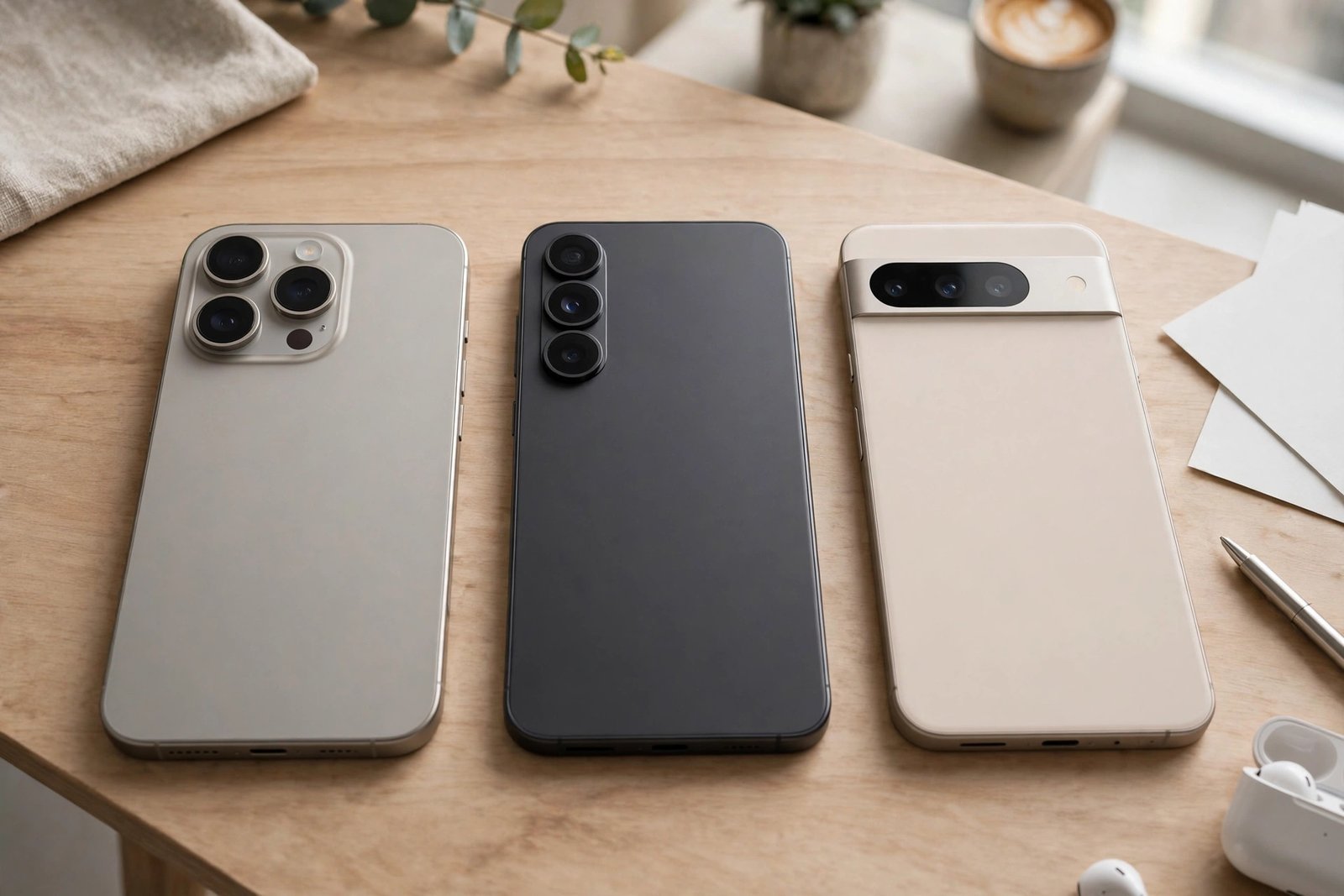
The best smartphones 2027 has to offer are no longer separated by a wide gap in quality. Whether you spend under $400 or choose a flagship, you can now expect a bright display, a capable camera and software support that lasts for years. The real question is which trade-offs matter to you, because the best phone for a keen photographer is rarely the best phone for someone who simply wants a device that lasts all day and feels effortless to use.
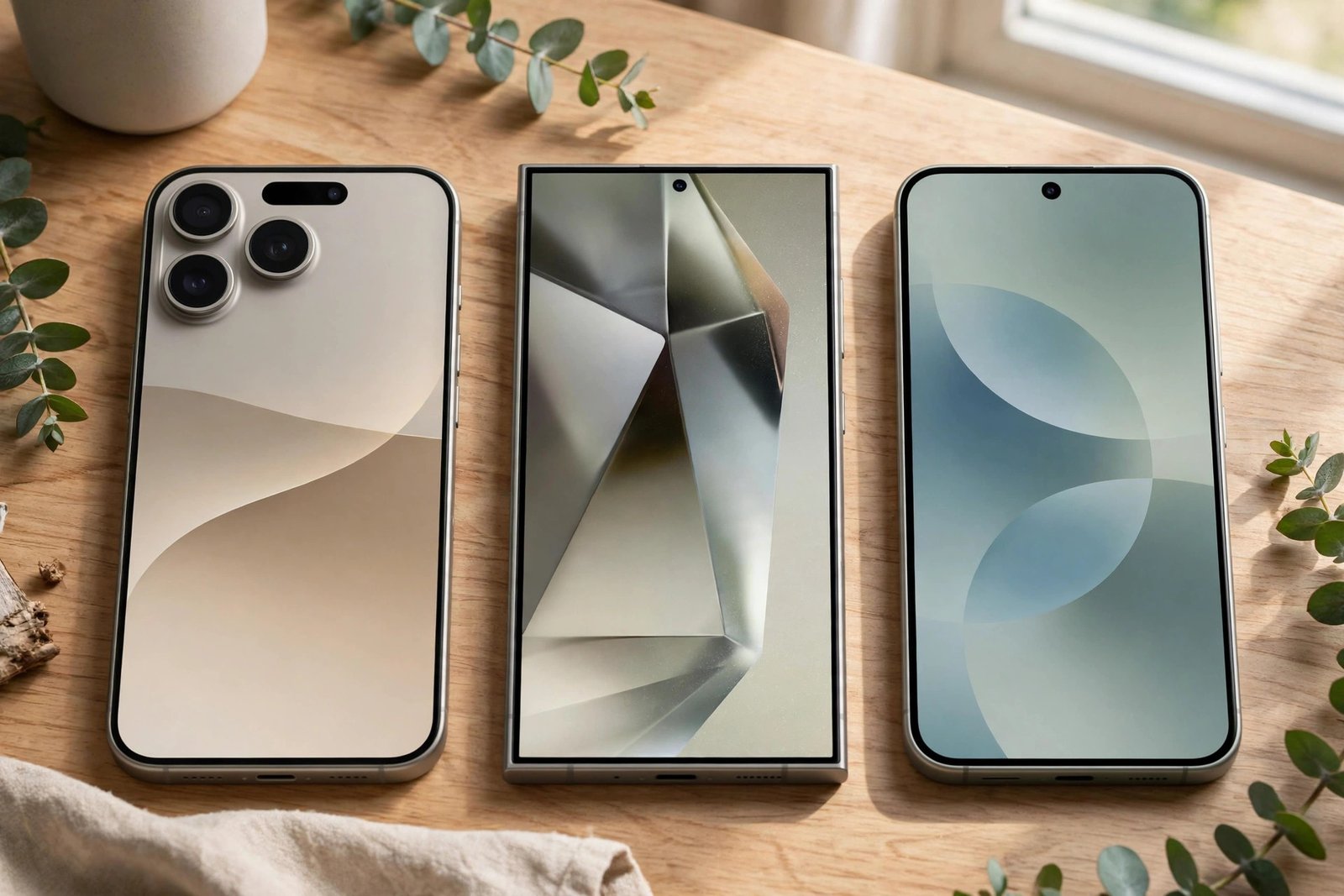
Our short answer is that the iPhone 17 range suits most Apple users, the Galaxy S26 range suits most Android users, and the Pixel 10 range suits people who value clean software and clever photo tools. If you are happy in Apple’s system, start with the iPhone 17. If you prefer Android, start with the Galaxy S26 or the Pixel 10.
This guide compares the leading 2027 phones on display quality, camera reliability, battery life, performance, software updates and long-term value, focusing on models that are widely available and well supported.
Key takeaways
- The iPhone 17, Galaxy S26 and Pixel 10 ranges cover most buyers in 2027, with clear strengths rather than a single outright winner.
- Camera quality now depends more on processing and consistency than on headline specifications.
- Battery life varies more by screen size and usage than by brand, so choose the size that matches your day.
- Buy for software support and storage first; both affect how long a phone stays fast and useful.
- A mid-range phone is the sensible pick if you mainly browse, message, stream and take everyday photos.
How to choose the best smartphone in 2027
Start with your current system. If your photos, messages, watch and laptop already sit inside Apple or Google services, switching systems adds friction that no single feature fully offsets. Staying put usually means a smoother move, easier transfers and accessories that keep working. Switch only when a specific feature, such as a folding display or a particular camera system, is worth relearning your daily habits for.
Next, decide what you actually do with your phone. Heavy camera users should prioritise a reliable main camera, useful zoom and video stabilisation. Commuters and travellers should prioritise battery life and a display that stays readable outdoors. Gamers should prioritise sustained performance, cooling and a high refresh rate display. Most other people should prioritise comfort in the hand, storage and a screen they enjoy looking at for hours.
Storage deserves more attention than it usually gets. A 128GB phone can feel tight once photos, video and apps accumulate, especially over four or five years. If you record a lot of video or keep large games installed, 256GB is the safer starting point.
The best smartphones of 2027 at a glance
iPhone 17 — the best iPhone for most people
Best for: most Apple users who want a dependable flagship without paying for Pro features.
The standard iPhone 17 is the most straightforward recommendation in Apple’s 2027 range. It pairs a bright, smooth display with the latest A-series chip and a versatile dual-camera system. It handles everyday photography well, records steady video and stays responsive through demanding apps. For most buyers, it offers the best balance of price, performance and polish in the iPhone line-up.
Its main limitation is that it lacks the extra telephoto reach and advanced camera controls of the Pro models. If you regularly photograph distant subjects or shoot professional video, the Pro is worth the step up. For everyone else, the standard model covers the essentials with room to spare.
iPhone 17 Pro and Pro Max — the best iPhone for cameras and power users
Best for: photographers, videographers and power users who want Apple’s strongest hardware.
The Pro models add a more advanced camera system, a larger display option in the Pro Max, stronger sustained performance and extra features aimed at creators. The telephoto camera makes a genuine difference for portraits and distant subjects, and the video tools suit people who edit on their phone or produce content regularly. Battery life on the Pro Max is also a step up, which matters on long shooting days.
The trade-off is price and size. The Pro Max is a large, heavy phone, and its advantages only pay off if you use them regularly.
Galaxy S26 — the best Android phone for most people
Best for: Android users who want a complete flagship with strong cameras and a polished display.
The Galaxy S26 is Samsung’s most balanced flagship in 2027. It offers a vivid high refresh rate display, a flexible triple-camera system, fast performance and Samsung’s broad set of software features. It is also one of the easiest Android phones to live with, thanks to wide accessory support and long software support. For readers weighing the Android side of the market, our guide to the best Android phones compares the leading options in more depth.
Its camera system is versatile rather than specialised, which is a strength for everyday use. The main camera handles low light well, the ultrawide suits landscapes and groups, and the telephoto covers portraits and zoom. If you want the strongest zoom or the largest screen, the Ultra model is the step up.
Galaxy S26 Ultra — the best Android phone for power users
Best for: power users who want the largest screen, the strongest zoom and a built-in stylus.
The S26 Ultra is Samsung’s most capable phone, with a large display, a powerful camera system and the S Pen for note-taking and precise input. It suits people who use their phone as a work tool, watch a lot of video or want the best zoom Samsung offers. The large battery and fast charging also help it keep up with heavy days.
It is a big phone, and its price reflects its position at the top of the range. Buy it because you will use the screen, the cameras and the stylus.
Pixel 10 — the best phone for clean software and smart photos
Best for: people who want clean Android, clever photo tools and a phone that feels simple to use.
The Pixel 10 stands out for software rather than raw hardware. Google’s clean version of Android is easy to navigate, and its photo processing produces pleasing results with little effort. Features that tidy up photos, transcribe audio and summarise information are genuinely useful in daily life, and the phone receives prompt updates directly from Google. Readers who want a closer look at the camera question can read our best camera phones guide.
The Pixel’s hardware is capable rather than showy, and its battery life is solid for a phone of its size. If you want the most versatile camera hardware or the brightest display, Samsung’s flagships have an edge.
Best smartphones 2027: comparison table
| Phone | Best for | Display | Camera focus | Battery | Software |
|---|---|---|---|---|---|
| iPhone 17 | Most Apple users | Bright, smooth OLED | Reliable everyday photos and video | All-day use | iOS with long support |
| iPhone 17 Pro / Pro Max | Creators and power users | Bright, smooth OLED, larger Pro Max option | Telephoto, Pro video tools | Strong, best on Pro Max | iOS with long support |
| Galaxy S26 | Most Android users | Vivid high refresh rate display | Versatile triple camera | All-day use | Android with long support |
| Galaxy S26 Ultra | Power users, large-screen fans | Large vivid display | Strong zoom, S Pen | Large battery, fast charging | Android with long support |
| Pixel 10 | Clean software fans | Smooth OLED | Smart processing, easy photos | Solid all-day use | Clean Android, prompt updates |
Table: the leading 2027 flagships compared on the factors that matter most in daily use.
Use this table as a starting point, not a final verdict. A photographer should weight the camera column heavily, a commuter should weight battery and display, and a buyer who keeps a phone for five years should weight software support above all.
A practical checklist before you buy
- Check your system first: stay with Apple or Android unless a specific feature justifies switching.
- Choose your size honestly: a larger phone gives you a bigger screen and battery, but a smaller phone is easier to carry and use one-handed.
- Pick enough storage: 256GB is the safer choice if you record video, keep games installed or plan to keep the phone for years.
- Test the camera in real light: take a few indoor and low-light shots, not just bright outdoor scenes.
- Confirm update support: buy a current model with several years of updates ahead of it, not a discounted older phone with limited support left.
If you are torn between two phones, score each one on the points that affect your day. The phone that wins on your top three priorities is usually the right one. For battery-focused buyers, our best phones for battery life guide ranks the longest-lasting options separately.
Frequently asked questions
What is the best smartphone in 2027 for most people?
For most people, the iPhone 17 or the Galaxy S26 is the safest choice. The iPhone 17 suits Apple users, while the Galaxy S26 suits Android users. Both offer strong cameras, bright displays, all-day battery and years of software support. Choose based on the system you already use.
Is the iPhone 17 Pro worth it over the standard iPhone 17?
It is worth it if you use the telephoto camera, shoot a lot of video or want the largest screen and longest battery life in the Pro Max. If you mainly take everyday photos, browse and message, the standard iPhone 17 covers your needs and costs less.
Which phone has the best camera in 2027?
There is no single winner, because camera quality depends on what you photograph. The iPhone 17 Pro and Galaxy S26 Ultra lead on versatile hardware and zoom, while the Pixel 10 Pro leads on effortless processing and smart editing. Try each one with the subjects you photograph most.
How much storage should I buy in 2027?
Most buyers should choose at least 256GB if they plan to keep the phone for several years. Photos, video, apps and downloads accumulate faster than most people expect, and a larger capacity avoids the hassle of constantly clearing space.
Should I buy a flagship or a mid-range phone?
Buy a flagship if you want the best camera, the brightest display and the longest support. Buy a mid-range phone if you mainly browse, message, stream and take everyday photos, and would rather keep the saving. Mid-range phones in 2027 are far more capable than they were a few years ago.
The bottom line
The best smartphone in 2027 is the one that fits your system, your hands and your daily habits. For most Apple users that is the iPhone 17, with the Pro models reserved for creators. For most Android users it is the Galaxy S26 or the Pixel 10. Start with the system you already use, choose the size and storage that suit your day, and test the camera in real light before you commit.