The best fitness trackers with heart rate monitors do far more than count steps. They watch your pulse around the clock, flag unusual spikes, and track how hard you train and how well you recover. The short answer is that the Fitbit Charge 6 is the best choice for most people, at $159.95 with built-in GPS, an ECG app and a seven-day battery, while the Garmin Vivosmart 5 is the strongest option if you want to avoid subscriptions altogether.
Heart rate is the most useful number a wearable gives you: it shapes training zones, sleep scores, stress readings and recovery advice. Not every tracker measures it equally well, though. This guide compares six of the strongest options, with honest notes on accuracy, battery life and ongoing costs that rarely make the headline price.
Key takeaways
- The Fitbit Charge 6 is the best all-round pick: built-in GPS, an ECG app and a seven-day battery for $159.95.
- The Garmin Vivosmart 5 costs $149.99, keeps every feature free of subscriptions, and borrows GPS from your phone.
- Whoop 5.0 offers the deepest recovery data, but needs a $199–$359-a-year membership and has no screen.
- Wrist heart rate is reliable at rest and during steady exercise, but less so in high-intensity intervals; a chest strap is best for zone-based training.
- The Xiaomi Smart Band 9 measures heart rate well for around $60, with battery life in weeks, not days.
How accurate is wrist heart rate, really?
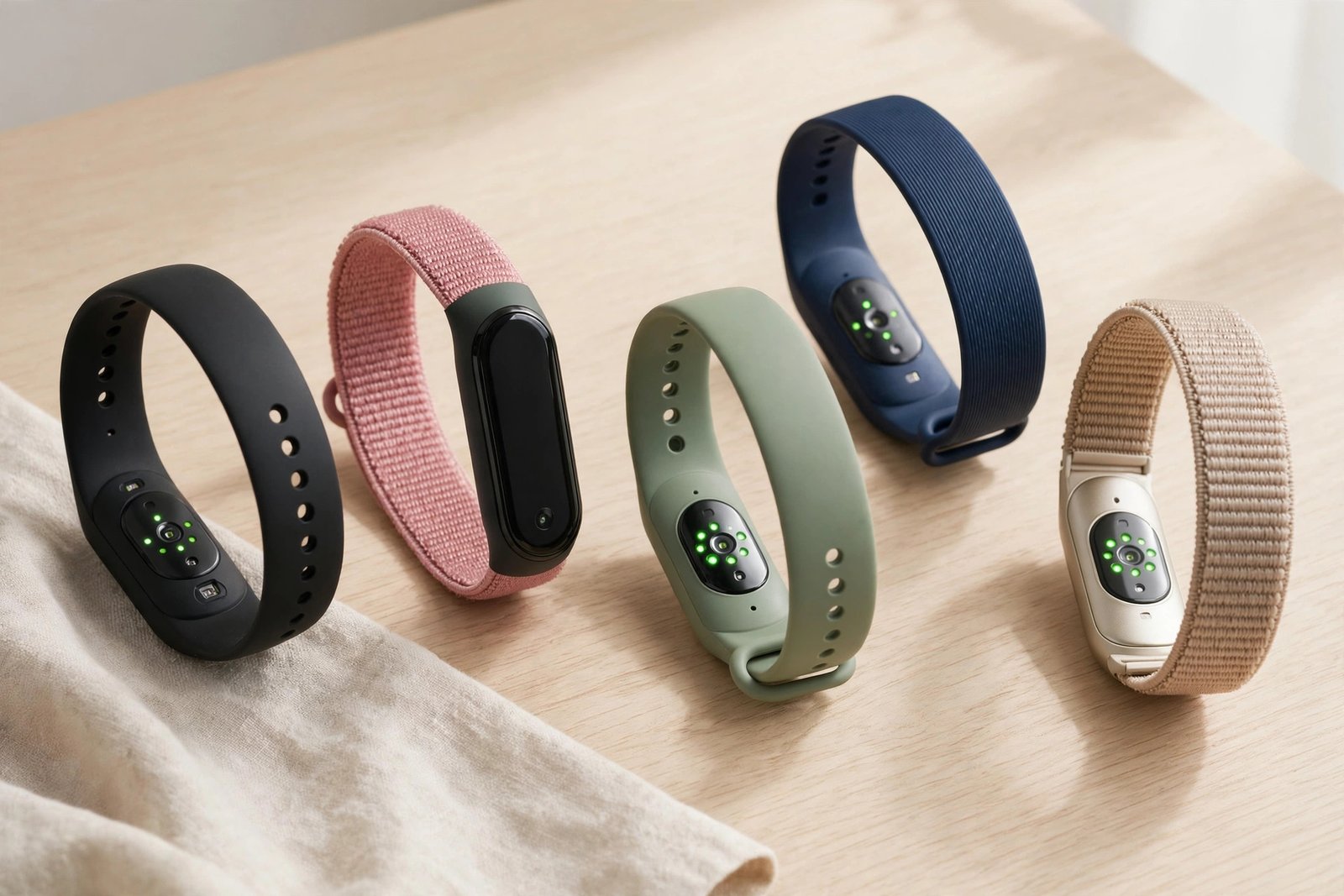
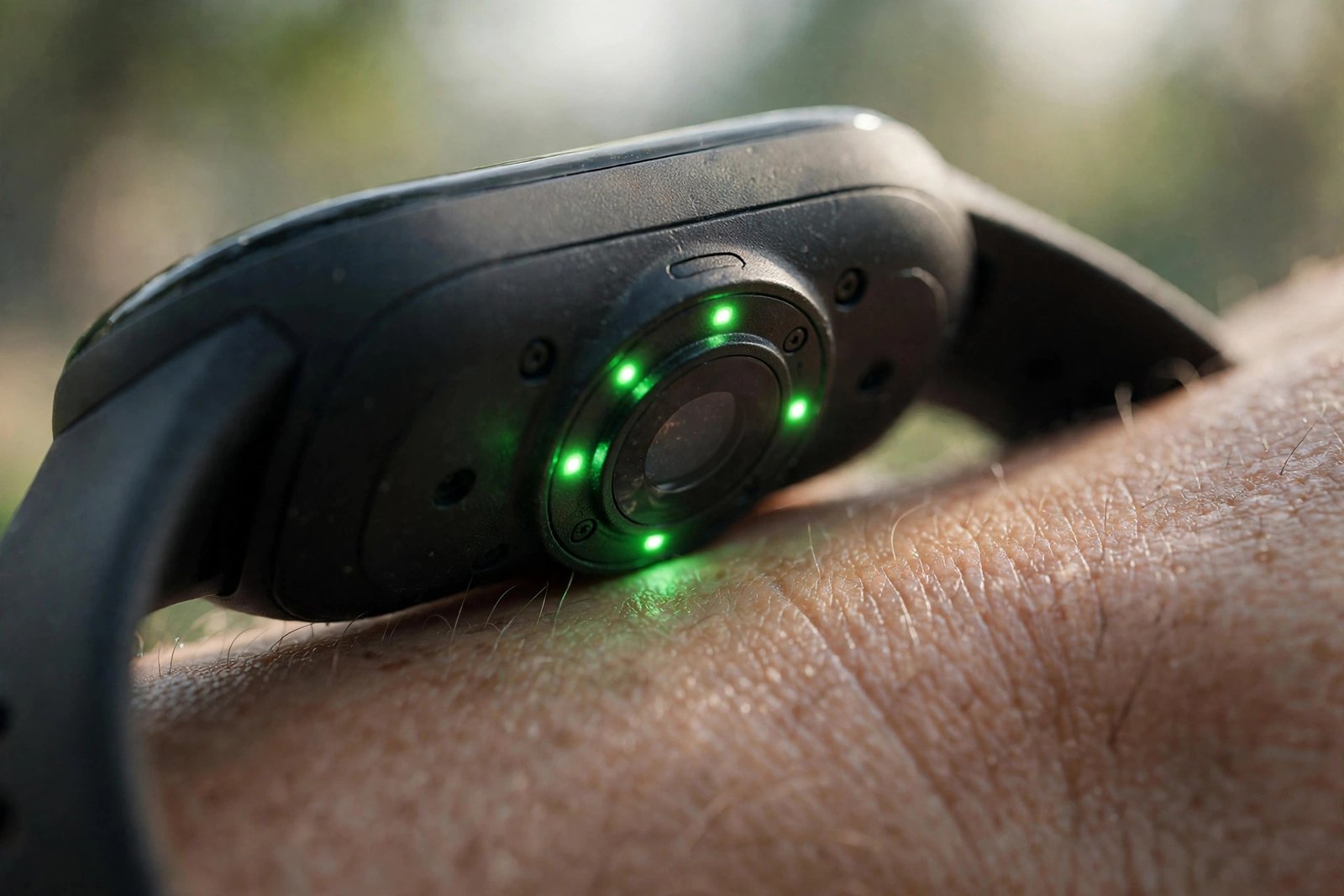
Every tracker here measures heart rate the same way: photoplethysmography (PPG), in which green LEDs shine light into the skin and a sensor reads the reflected light to detect each heartbeat. For resting heart rate it is accurate to within a couple of beats per minute on most modern devices, which makes it useful for tracking fitness, sleep and recovery trends.
Accuracy drops during intense exercise, when rapid heart rate changes and wrist movement make the sensor’s job harder; published research has recorded error rates of roughly 10 to 20 percent during high-intensity intervals. At a heart rate of 160 beats per minute, that can mean an error of 15 to 20 beats. For general activity and sleep tracking, that margin matters little. For athletes training in precise heart rate zones, a chest strap remains the more accurate choice.
Best fitness trackers with heart rate monitors compared
| Tracker | Price | Battery | GPS | Screen | Subscription |
|---|---|---|---|---|---|
| Fitbit Charge 6 | $159.95 | Up to 7 days | Built-in | AMOLED touchscreen | Optional |
| Garmin Vivosmart 5 | $149.99 | Up to 7 days | Connected (via phone) | OLED touchscreen | None |
| Whoop 5.0 | $199–$359 per year | 14+ days | None (uses phone data) | None | Required |
| Xiaomi Smart Band 9 | Around $60 | Up to 21 days | Connected (via phone) | 1.62-inch AMOLED | None |
| Withings ScanWatch 2 | Around $349 | Up to 30 days | Connected (via phone) | Analogue + small OLED | None |
| Apple Watch SE 3 | Around $249 | Around 18 hours | Built-in | Retina touchscreen | None |
Table: The six trackers in this guide at a glance. Prices are typical US list prices and change often; check before buying.
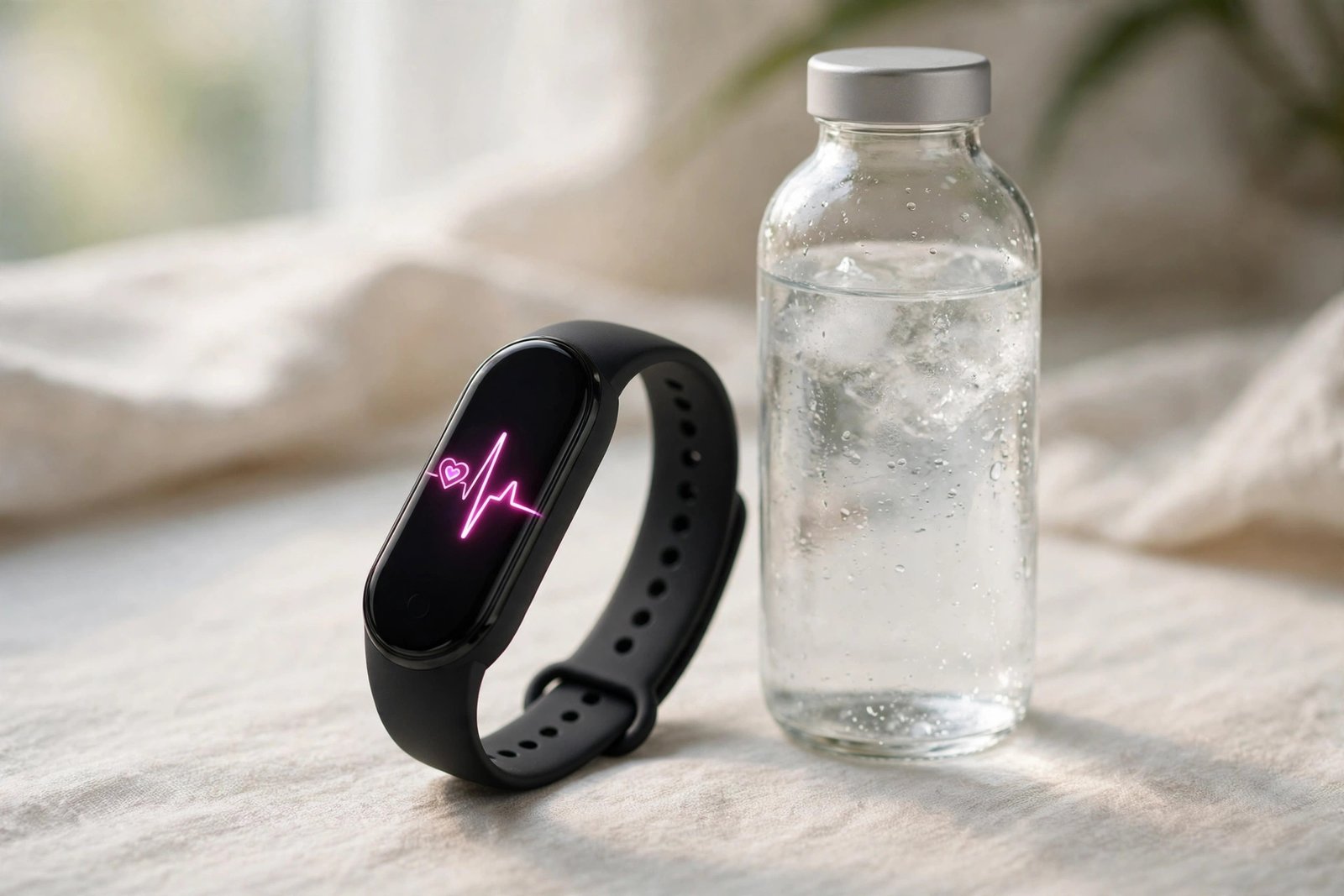
1. Fitbit Charge 6
Best for: most people
The Charge 6 is the tracker most people should buy. Its sensor logs your pulse every second during workouts and around the clock otherwise, pairing it with heart rate variability tracking, an ECG app and a stress management score. Built-in GPS maps runs and rides without your phone, and the seven-day battery covers a full week. The main compromise is the app: the most detailed stress and sleep breakdowns sit behind a premium plan at $9.99 a month after a trial, though core tracking works without it.
2. Garmin Vivosmart 5
Best for: tracking without a subscription
The Vivosmart 5 is the pick for anyone who wants to buy a tracker once and never pay again. Its Elevate sensor samples heart rate every second, with high and low alerts you can set, plus Body Battery energy scores, all-day stress tracking and Pulse Ox blood oxygen readings. The OLED touchscreen is 66 percent larger than its predecessor’s, with a physical button for mid-workout use. Battery life is rated at up to seven days, though all-day blood oxygen monitoring can cut that to three or four days. The trade-off is GPS: the Vivosmart 5 has no built-in chip, so outdoor runs and rides use your phone’s GPS. For runners who want dedicated GPS in a watch, our guide to the best running watches with GPS covers stronger options.
3. Whoop 5.0
Best for: recovery and serious training
Whoop takes a different approach from every other tracker here: there is no screen, no step count and no notifications. The 5.0 measures heart rate, heart rate variability, respiratory rate, blood oxygen and skin temperature around the clock, then turns that data into daily strain and recovery scores that tell you how hard to train. Hardware is included with the membership: $199 a year for One, $239 for Peak and $359 for Life, which swaps in the Whoop MG band with on-demand ECG and blood pressure insights. Battery life is rated at 14 or more days, and Peak and Life include a PowerPack that charges the band on your wrist. Stop paying and the band stops recording, so Whoop only makes sense if you will act on the recovery data most days. If a screenless tracker appeals but you want it on a finger, our round-up of the best smart rings covers the closest alternatives.
4. Xiaomi Smart Band 9
Best for: budget buyers
The Smart Band 9 is the best evidence that good heart rate tracking no longer costs three figures. Its upgraded sensor tracks heart rate, blood oxygen, stress and sleep around the clock, and independent testing found its pulse readings comparable to devices costing several times more. The 1.62-inch AMOLED display reaches 1,200 nits, so it stays readable in sunlight, and the band covers more than 150 sport modes. Battery life is the headline: up to 21 days of typical use, charging fully in around an hour. At 15.8 grams without its strap, and with an aluminium alloy case, it feels far more expensive than its roughly $60 price. The compromises are modest: GPS comes from your phone and there is no ECG. Budget shoppers may also want our guide to the best smartwatches under $100.
5. Withings ScanWatch 2
Best for: health monitoring in a classic watch
The ScanWatch 2 looks like an ordinary analogue watch, which is exactly the point. Beneath the traditional hands sit a small OLED display and medical-grade sensors: optical heart rate, a single-lead ECG, SpO2 and temperature. It tracks heart rate around the clock, records ECG readings on demand, and monitors sleep and blood oxygen overnight. Battery life is up to 30 days, the longest here by a wide margin, and the hybrid design suits a suit as well as gym kit. The price, around $349, puts it at the premium end of this list, and its sport tracking is more limited than Garmin’s or Fitbit’s. For discreet, long-term health monitoring rather than training data, no other tracker pairs a classic look with this depth of sensing.
6. Apple Watch SE 3
Best for: iPhone users who want a full smartwatch
The Apple Watch SE 3 is the only full smartwatch on this list, and it earns its place on heart rate alone. Its sensor tracks your pulse continuously, with high and low heart rate notifications, irregular rhythm alerts and an ECG app, all feeding into the Health app on your iPhone. Built-in GPS, fall detection and a bright Retina display make it a capable training companion, and it handles calls, messages and payments from your wrist. The weakness is battery life: around 18 hours, which means charging every day and wearing it overnight only if you top it up in the evening. At around $249 it is the most expensive non-subscription option here. For iPhone owners who want one device that does everything, it is the most capable heart rate tracker you can buy.
How to choose: a quick decision framework
- Start with your phone. iPhone owners get the most from the Apple Watch SE 3; Android users will be happier with the Charge 6 or Vivosmart 5.
- Decide on subscriptions first. If you refuse to pay monthly, rule out Whoop and Fitbit Premium, and lean towards Garmin or Xiaomi.
- Match the battery to your habits. To track sleep nightly, choose a tracker that lasts at least a week; daily charging kills sleep tracking.
- Be honest about GPS. If you run without your phone, built-in GPS is essential; if your phone is always with you, connected GPS is fine.
- Check the fit. A loose band is the most common cause of bad readings. Wear it snugly, a finger’s width above the wrist bone, and tighten it for workouts.
- Think about what you will act on. A recovery score only helps if you change your training because of it. If you just want resting heart rate and daily activity, buy simpler.
Frequently asked questions
Are fitness trackers with heart rate monitors accurate?
For resting heart rate and steady-state exercise, yes: modern optical sensors are typically accurate to within a few beats per minute. Accuracy falls during high-intensity intervals and activities with lots of wrist movement, where errors of 10 to 20 percent have been recorded.
Do I need a subscription for heart rate tracking?
No. The Garmin Vivosmart 5, Xiaomi Smart Band 9, Withings ScanWatch 2 and Apple Watch SE 3 include all of their heart rate features with no subscription. Fitbit charges for its most detailed breakdowns, and Whoop only works while you pay.
Which fitness tracker has the best heart rate sensor?
Independent testing rates Garmin and Fitbit’s sensors among the most consistent, with Xiaomi’s performing well for its price. No wrist sensor matches a chest strap during intense exercise, so wearing the band correctly matters more than the brand.
Can a fitness tracker detect heart problems?
The Fitbit Charge 6, Withings ScanWatch 2 and Apple Watch SE 3 include ECG apps and irregular rhythm notifications with regulatory clearance. They can flag possible issues, but they are not a diagnosis, and any concerning reading should be checked with a clinician.
Is the Fitbit Charge 6 or Garmin Vivosmart 5 better?
The Charge 6 wins on features, with built-in GPS and an ECG app; the Vivosmart 5 wins on cost of ownership, with no subscription. Choose the Charge 6 if you run without your phone, the Vivosmart 5 if you want to pay once and be done.
The bottom line
The best tracker is the one that fits your habits, not the one with the longest spec sheet. For most people that is the Fitbit Charge 6: accurate heart rate, built-in GPS and a week of battery for $159.95. If subscriptions put you off, the Garmin Vivosmart 5 gives you the same core tracking for $149.99 with nothing more to pay. Budget buyers should start with the Xiaomi Smart Band 9; recovery-focused athletes should look at Whoop 5.0. Whichever you choose, wear it snugly and every day, and give it two weeks before judging the data: trends matter more than any single reading. Fitness trackers are not medical devices, and their readings should never replace advice from a clinician.