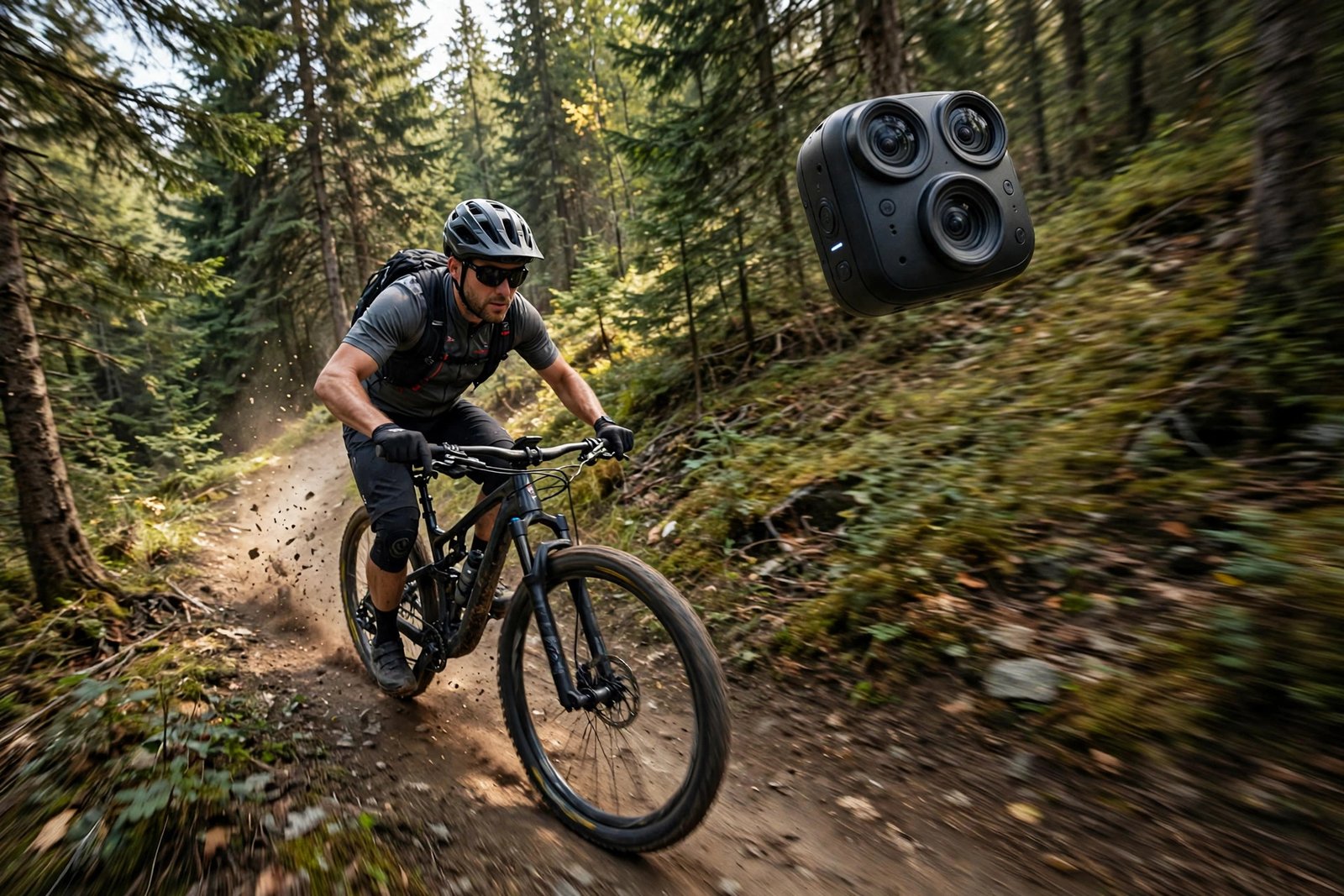
The Insta360 X5 review for creators comes down to one question: does a 360 camera still earn its place in a creator’s kit when a phone already shoots good video? For creators who film travel, sport or vlogging — anything where the action happens all around them — the answer is yes, and the X5 is the strongest 360 camera Insta360 has made.
Launched in April 2025 at $549.99, the X5 records 8K 360-degree video at 30 frames per second from dual 1/1.28-inch sensors, captures 72MP 360 photos, and adds user-replaceable lenses, a dedicated low-light PureVideo mode and InstaFrame mode, which records a flat video and a 360 video at the same time. It is the first 360 camera that feels like a primary camera rather than a novelty.
Key takeaways
- Dual 1/1.28-inch sensors are 144% larger than the X4’s, and the low-light improvement is the biggest upgrade.
- 8K 30fps 360 video, 5.7K at 60fps and 4K at 120fps cover most creator needs, with 4K 60fps in single-lens mode.
- Lenses are user-replaceable for the first time, fixing the 360 camera’s oldest weakness.
- InstaFrame records a ready-to-share flat video and a full 360 file at once.
- The camera is waterproof to 15 metres without a housing, and the battery lasts up to 185 minutes in 5.7K Endurance Mode.
What the X5 is, and who it is for
The X5 is a pocketable 360-degree action camera: two fisheye lenses, one on each side, capture everything around it at once, stitched by software into a single spherical video. The point is not the spherical video itself — it is that you can reframe after the fact, picking the angle, the subject and the moment in editing, instead of aiming the camera while you ride, ski or walk through a market.
A vlogger can film a walk-and-talk and choose the framing later; a travel creator can pull a dozen shots from one clip; a cycling creator can mount it once and get front, rear and side angles from the same ride. If you film static talking-head content at a desk, a 360 camera will not help you — but if you film the world moving around you, it changes what you can deliver.
The X5’s headline upgrade is its sensor: dual 1/1.28-inch sensors, 144% larger than the X4’s 1/2-inch sensors, gather more light. That matters more than the resolution number, because 360 video has always been weakest in low light, where noise and soft detail made evening and indoor footage hard to use. The X5 is the first camera in the series where low-light footage is genuinely usable.
Image quality: where the X5 actually improves
The X5 records 8K 360 video at 30fps, supersampled from 11K capture, alongside 5.7K at 60fps and 4K at 120fps. In single-lens mode it records up to 4K at 60fps, and photos are 72MP in 360 mode. Those numbers look similar to the X4 on paper, and in bright daylight the difference is modest — the improvement shows up when the light drops.
PureVideo is Insta360’s dedicated low-light mode, built on a triple AI chip system — one 5nm AI chip and two Pro Imaging chips — that handles noise reduction and image processing. In practice it cleans up evening streets, dim interiors and blue-hour landscapes that would have been noisy mush on the X4. It is not magic — a large-sensor camera will still beat it in the dark — but it moves the X5 from “avoid low light” to “usable with care”, a meaningful shift for travel creators who cannot choose their shooting hours.
Active HDR is available at 5.7K and 60fps, and it is the mode to use for high-contrast scenes such as riding from shade into bright sun. The 8K mode is best understood as a reframing tool: the extra resolution means the flat video you export after reframing holds more detail. If you only ever export in 1080p, 5.7K at 60fps will often serve you better, with smoother motion and smaller files.
Stabilisation is FlowState, Insta360’s software stabilisation, and it remains excellent. Footage from a chest or handlebar mount comes out smooth without a gimbal, and the horizon lock keeps the horizon level even when the camera tilts. You do not need to keep the camera level, because the software fixes it afterwards.
InstaFrame and the editing workflow
The X5’s most useful new feature for busy creators is InstaFrame. It records two files at once: a flat video that follows a fixed direction or a selfie view, ready to share with no editing, and a full 360 video you can reframe later. Need a quick clip for social media today and a polished edit tomorrow? InstaFrame gives you both from one take.
That matters because the traditional complaint about 360 cameras has always been the editing time. Reframing in the Insta360 app or in Insta360 Studio on desktop is powerful but slow, and creators who tried a 360 camera once often gave up at this step. InstaFrame removes the obligation: treat the X5 like a normal camera when you are in a hurry, and use the 360 file only when a shot deserves it.
The app is the other half of the workflow. The Insta360 app offers AI-powered reframing, automatic editing templates, and quick exports for vertical video, which is how most creator content is now consumed. Editing on a phone is genuinely practical for short clips, though longer projects are easier in the desktop Studio software. Budget time to learn the reframing workflow before a paid shoot — your first edit will be slower than your tenth.
Durability, battery and waterproofing
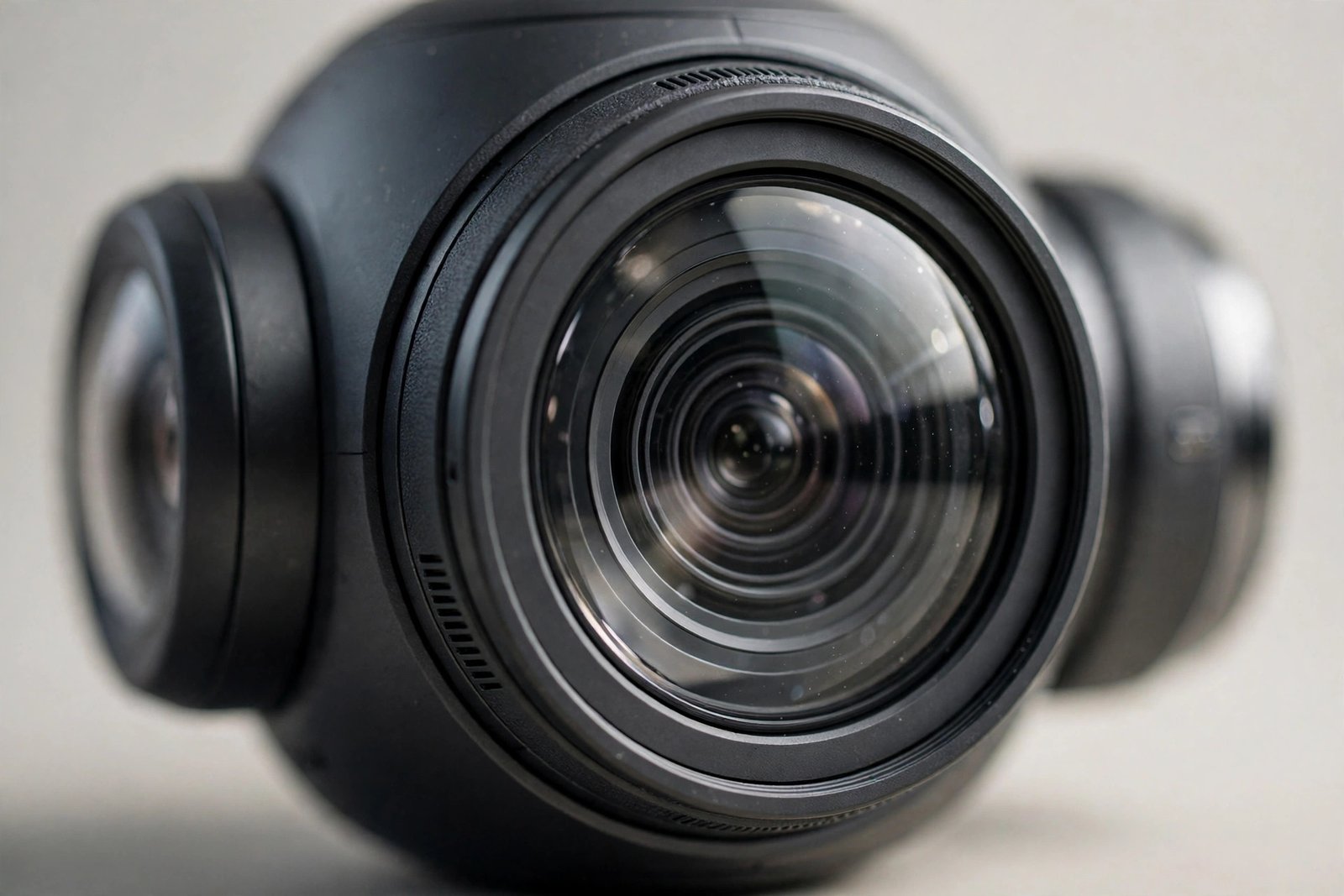
The X5 fixes the 360 camera’s oldest weakness: scratched lenses. On every earlier X-series camera, a scratched lens meant a repair or a replacement, because the bulging fisheye lenses are exposed and easy to damage. On the X5, the lenses are user-replaceable with a separate Lens Replacement Kit, and the swap is designed to be done in the field — a major improvement for creators who mount a camera on a bike or a helmet.
The camera is waterproof to 15 metres without a housing, up from 10 metres on the X4, with a multi-layer steel mesh wind guard that improves audio in wind. The 2.5-inch touchscreen is covered with Gorilla Glass.
Battery life is rated at up to 185 minutes recording in 5.7K in Endurance Mode, from a 2,400mAh removable battery, and the camera can charge to 80% in about 20 minutes with a suitable charger. Real-world life is shorter at 8K, so carry a spare for a full day of filming. A removable battery is a genuine advantage over sealed ones: a spare costs little and weighs less than a power bank.
How the X5 compares
| Camera | Sensors | 360 video | Waterproof | Battery |
|---|---|---|---|---|
| Insta360 X5 | Dual 1/1.28-inch | 8K 30fps | 15 m | 2,400mAh, up to 185 min |
| Insta360 X4 | Dual 1/2-inch | 8K 30fps | 10 m | 2,290mAh, up to 135 min |
| DJI Osmo 360 | Dual 1-inch | 8K 30fps | 10 m | Up to 100 min at 8K |
Caption: The Insta360 X5 compared with its predecessor and its closest rival. Battery figures are manufacturer estimates at different settings.
Against the X4, the gains are sensor size, low-light quality, replaceable lenses and battery life — the resolution headline is the same, but the footage is better. Against DJI’s Osmo 360, the X5’s sensors are slightly smaller, but its battery life and mature editing software count in its favour.
How to decide: a checklist for creators
Work through these questions before you buy — they separate the creators who will use a 360 camera every week from those who will use it twice and put it in a drawer.
- Do you film action that happens all around you? Travel, cycling, skiing, motorcycling, water sports and walk-and-talk vlogging are the X5’s natural territory; desk-bound talking-head content is not.
- Do you film in low light? If you shoot evenings, interiors or winter afternoons, the larger sensors and PureVideo mode are the reason to choose the X5 over the X4.
- Will you reframe, or do you need ready-to-share video? If you hate editing, InstaFrame mode and the app’s auto-editing make the X5 practical; if you love editing, the 360 files give you more to work with.
- Do you already own 360 accessories? The X5 uses the same mounting thread as earlier X-series cameras, so most mounts carry over — but cases and lens guards are model-specific, so check compatibility.
- How will you store the footage? 8K 360 files are large, so budget for fast microSD cards and plenty of hard-drive space. Our guide to the best CFexpress cards for photographers covers high-speed camera storage, and the best laptops for 4K video editing covers machines that can handle 8K files.
- What is the current price? The X5 launched at $549.99, and Insta360 has since announced the X6. Check the current price before buying, and compare it with the X4, which remains capable at a lower price.
Our guide to the best camera tripods for travel covers the mounts and supports that pair well with a 360 camera.
The drawbacks, honestly stated
No camera is without compromises, and the X5 has three worth knowing. First, 8K files are enormous, and editing them needs a capable computer and fast storage. Second, the X5’s single-lens mode is good but not the best action camera available; if you never use 360 mode, a dedicated action camera may serve you better for the same money. Third, the reframing workflow still takes time to learn, and InstaFrame only partly removes that cost.
Best for: travel, sport and vlogging creators who want 360 reframing, strong low-light performance and a camera they can repair.
Frequently asked questions
Is the Insta360 X5 good for beginners?
Yes. InstaFrame mode records a ready-to-share flat video with no editing, and the app’s automatic editing templates make short social clips easy. The 360 reframing workflow takes a little learning.
Is the X5 better than the X4?
For low light, durability and battery life, yes — the larger sensors, PureVideo mode and replaceable lenses are genuine improvements. In bright daylight at 8K the difference is smaller, so X4 owners who shoot mostly in daylight may not need to upgrade.
Is the X5 waterproof?
Yes, to 15 metres without a housing. For diving deeper, or for the cleanest underwater stitching, Insta360 sells separate dive cases.
How long does the battery last?
Insta360 rates the 2,400mAh battery at up to 185 minutes in 5.7K Endurance Mode. At 8K, expect considerably less, so carry a spare for a full day of filming.
The bottom line
The Insta360 X5 is the first 360 camera that feels like a serious creator’s tool, not a clever toy. The larger sensors and PureVideo mode fix the format’s low-light weakness, the replaceable lenses fix its fragility, and InstaFrame fixes the editing burden that put creators off. For travel, sport and vlogging creators, it earns its place.
It is not for everyone: if you film at a desk, buy a webcam light and a good microphone instead. If you only shoot in bright daylight and already own an X4, the upgrade is harder to justify. But if you are buying your first 360 camera, or your work takes you into evenings and rough conditions, the X5 is the one to buy.
Your next step is simple: check the current price against the X4 and the newer X6, buy a fast microSD card and a spare battery, and film one project in InstaFrame mode before committing to the full 360 workflow. If the reframing hooks you — and for most creators it does — you will wonder how you filmed without it.