
Jazz can feel like a huge world of music when you are not sure where to begin, but a memorable melody or a steady groove is an easy first step. You can start with familiar songs, singing, a firm beat, or a calm instrumental sound. You do not need music theory before pressing play.
Improvisation means creating or shaping music spontaneously during a performance. That can change how a song unfolds, while its tune or pulse still gives you something familiar to follow. The best jazz albums for beginners offer several ways in, so you can find one that suits your ear and your time.
Key Takeaways
- Start with a melody, voice, groove, or relaxed instrumental sound.
- Choose a first album that matches music you already enjoy.
- Listen for the main theme and how it changes.
- Try one track before committing to a full album.
- Let curiosity, not music theory, guide your first play.
Pick the sound that makes you curious, then listen once without trying to analyze it.
Best Jazz Albums for Beginners: Which Five Should You Try First?
For a quick first shortlist, begin with Time Out, A Charlie Brown Christmas, Kind of Blue, Ella and Louis, or Getz/Gilberto. Each one offers a clear way into jazz, from an easy-to-follow melody to a voice or rhythmic hook. These five picks give you distinct sounds without demanding a deep knowledge of jazz.
The Nash Jazz Club’s beginner list recommends these five albums. The best jazz albums for beginners of all time do not have to be the most demanding or historically complete choices. For your first listen, recognizable melodies, clear grooves, and a welcoming voice can matter more.
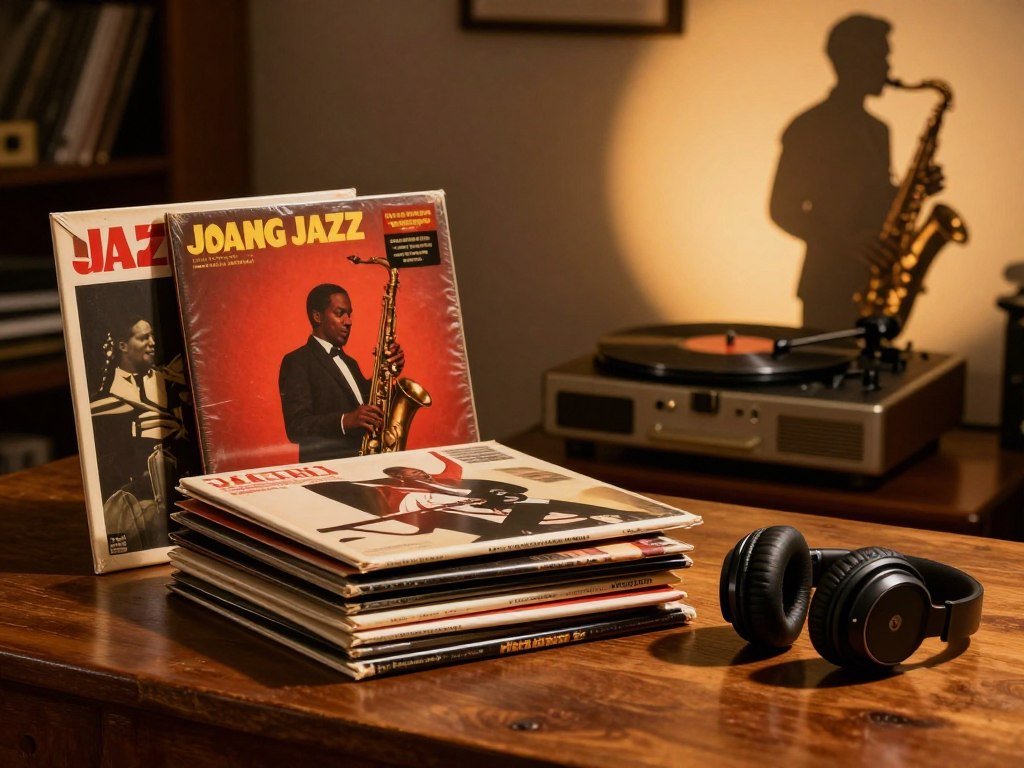
- Time Out by the Dave Brubeck Quartet makes unusual rhythms easy to hear.
- A Charlie Brown Christmas pairs Vince Guaraldi’s jazz with familiar holiday music.
- Kind of Blue by Miles Davis offers a calm, spacious instrumental sound.
- Ella and Louis brings two warm, contrasting voices to familiar songs.
- Getz/Gilberto offers gentle bossa nova, with soft vocals and an easy pulse.
Choose a first album for the sound you want to hear, not for how much history it covers.
A short first listen can help you decide whether an album’s mood, pace, and instruments suit you. No single choice has to represent the whole genre. Each record can simply be your first door into a sound you want to hear again.
Choose just one of the five and listen to its opening track before deciding whether to continue.
Which jazz album fits the music you already like?
A rock fan who wants an immediate pulse can start with The Sidewinder, while a listener who prefers singing can start with Ella and Louis. Your current taste is a useful guide, not a limit on what you might enjoy. Begin with the musical feature you already like hearing.
Jazz albums vary widely in their use of vocals, swing, rhythm, and instrumental color. A listener who enjoys strong drums may want a different first record than someone drawn to a slow song or a familiar melody. You can pick one sound now and follow another later.
Start with vocals and familiar melodies
Vocal jazz centers on singing, and Ella and Louis is a friendly place to hear it. Ella Fitzgerald and Louis Armstrong make familiar melodies feel personal through their distinct voices and relaxed phrasing. The song “Isn’t This a Lovely Day” is a suggested first track.
A familiar tune gives you a clear point to follow, even when a singer changes the melody. If you enjoy songs with lyrics and a warm exchange between singers, this album offers a natural starting sound. The voices can hold your attention before you notice the details around them.
Choose a groove or an instrumental sound
Rock fans can start with the groove-led The Sidewinder, whose bluesy pulse gives the music a firm center. Moanin’ takes a different path, with blues and gospel character in its hard bop sound. Both offer strong rhythms, but their moods and musical colors differ.
Time Out suits listeners curious about rhythmic experiments. Its unusual time signatures change how beats group together, while catchy melodies keep the music approachable. You do not need to count along to enjoy the effect.
Let your first choice reflect the sound you already enjoy, rather than a rule about what a new listener ought to hear.
Time Out makes unusual rhythms easy to hear
The rhythm is the easiest thing to notice first on Time Out, especially when “Take Five” settles into its five-beat pattern. That pulse gives the track a distinctive feel without making its melody hard to follow. Time Out turns odd time signatures into patterns you can hear and remember.
Dave Brubeck Quartet’s Time Out came out in 1959 on Columbia Records. It features “Take Five” and “Blue Rondo á la Turk,” and both make its rhythmic ideas clear. A time signature describes how beats are grouped, such as in sets of three or five.
| Track | Meter | What to listen for |
|---|---|---|
| “Take Five” | 5/4 | A five-beat cycle |
| “Blue Rondo A La Turk” | 9/4 | An unusual repeating rhythmic pattern |
| “Three To Get Ready” | 3/4 | A waltz-like grouping |
“Take Five” uses 5/4 time and became a hit single in 1960. Its repeating five-beat phrase gives you a clear spot to notice when the pattern starts again. The tune feels memorable, not like a counting exercise.
“Blue Rondo A La Turk” uses 9/4 time, while “Three To Get Ready” uses 3/4. Those numbers describe the beat groups, but the shifting pulse is something you can hear. The different patterns give the album a playful sense of motion.
Try tapping along to “Take Five” and notice where the five-beat phrase begins again.
Kind of Blue offers space for melody and improvisation
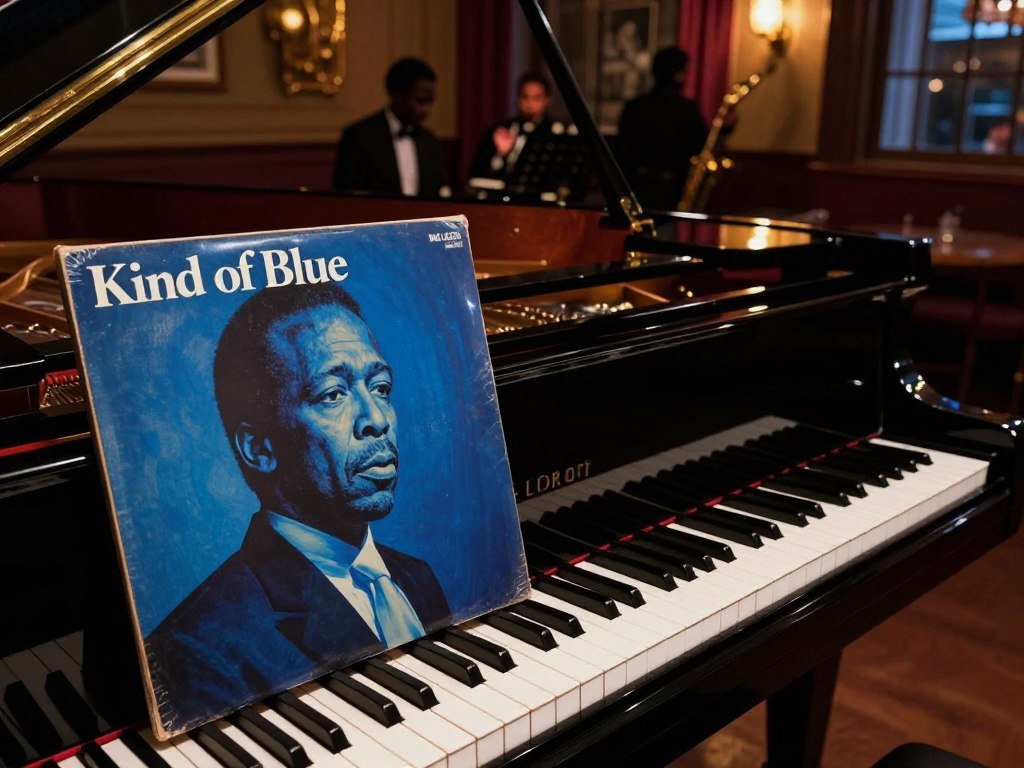
If a relaxed pace helps you hear individual musical ideas, Kind of Blue is the strongest first choice. Its open sound leaves room for each melody to unfold. Modal jazz gives players space to shape longer ideas instead of moving through frequent chord changes.
Modal jazz uses a small number of musical modes, or patterns of notes, to guide a performance. That approach gives musicians room to develop a melody without frequent changes in the chords beneath it. You can hear the result as a spacious, steady sound without learning the theory.
| Track | Listening focus | What a new listener can follow |
|---|---|---|
| “So What” | Recurring theme | The return of the opening idea |
| “Freddie Freeloader” | Blues character | The steady pulse and exchanges between soloists |
| “Flamenco Sketches” | Spacious mood | The way the music changes color |
Miles Davis released Kind of Blue in 1959 on Columbia Records. John Coltrane, Cannonball Adderley, Bill Evans, Paul Chambers, and Jimmy Cobb joined him in the session. Their different instrumental voices make the album especially rewarding to revisit.
Listen for how the main idea returns between solos, then notice how each player shapes a different line around it. You can follow a single instrument without keeping track of every musical detail. That makes the album a comfortable way to hear improvisation at work.
Start with “So What” and follow the main theme as it returns between the solos.
A Charlie Brown Christmas pairs jazz with familiar carols
If familiar holiday melodies make a first listen feel comfortable, Vince Guaraldi’s A Charlie Brown Christmas is an inviting place to start. Recognition helps: carols and Peanuts themes give your ear familiar landmarks. The jazz riffs add a fresh texture to music you may already know.
Released in 1965, the album blends Christmas carols with themes from Peanuts. Guaraldi’s piano turns these well-known tunes into jazz performances, while their melodies remain easy to recognize. That mix can make the record welcoming if you know the songs or the animated specials.
You can choose this album for different moments, depending on what you want from the music:
- A holiday gathering where familiar songs suit the room.
- A quiet seasonal afternoon with music in the background.
- A focused listen to the arrangements and the way the tunes shift.
The Christmas setting makes this a natural seasonal pick, not a requirement for exploring jazz all year. Its familiar themes can still appeal outside the holidays, though some listeners enjoy the album most when the season returns.
Save it for a seasonal listen if that makes the music feel more personal to you.
Ella and Louis makes vocal jazz feel conversational
A familiar standard sung by two clearly contrasting voices can make vocal jazz especially easy to follow. Their phrasing feels like a conversation, even when the singers vary a song’s melody. You can enjoy the songs without knowing their history.
Ella Fitzgerald and Louis Armstrong released Ella and Louis in 1956. Armstrong sings and plays trumpet, while Fitzgerald’s flexible voice moves easily through the songs. The National Endowment for the Arts’ Ella Fitzgerald profile describes her rhythmic flexibility and her work with Armstrong.
The album includes five well-known standards you can use to get to know its sound:
- “A Foggy Day”
- “Tenderly”
- “Moonlight in Vermont”
- “Cheek to Cheek”
- “Can’t We Be Friends?”
A rhythm section of piano, guitar, bass, and drums supports the vocals. Oscar Peterson plays piano, Herb Ellis plays guitar, Ray Brown plays bass, and Buddy Rich plays drums. Their backing gives the singers a steady setting without crowding the songs.
Listen for a phrase that one singer gives to the other, then notice how the reply changes its mood. Their voices sound different, but the shared timing keeps the songs connected. The contrast makes the album easy to follow from one track to the next.
Listen for the way a shared song can feel like a conversation rather than a solo performance.
Getz/Gilberto brings a gentle bossa nova sound
For a first listen that feels gentle rather than forceful, Getz/Gilberto offers an easy-to-follow bossa nova groove. The soft pulse leaves room for the voices and instruments to stand out. Its relaxed feel makes a clear contrast with driving hard bop.
Stan Getz and João Gilberto released Getz/Gilberto in 1964 on Verve Records. Getz’s tenor saxophone plays fluid lines beside Gilberto’s guitar and quiet voice. Their parts meet without pushing the music into a heavy beat.
“The Girl From Ipanema” is the recommended first track, with Astrud Gilberto singing its famous melody. The album helped bring Brazilian bossa nova to a global audience. Its gentle rhythm gives you an easy point to follow as the saxophone and voice trade phrases.
Bossa nova grew from Brazilian music, and this session gives it a close, relaxed jazz setting. You can hear the guitar’s steady pattern beneath the saxophone’s smooth tone. The vocals keep the song’s shape clear, even as the instrumental lines add small changes.
A listener seeking a softer sound may find this a more inviting first step than a forceful ensemble. The album also shows how jazz can meet another musical tradition without losing its own character. Each part has space to breathe.
Listen once for the rhythm and again for how the saxophone answers the vocal lines.
Blue Train gives hard bop a bluesy pulse
If a strong bluesy pulse sounds more appealing than a hushed mood, Blue Train is a good place to begin with John Coltrane. Its forward motion comes from a clear theme and energetic rhythm section. The compact band gives each horn room to make its voice heard.
Released in 1957, Blue Train gives hard bop an accessible entry point through purposeful saxophone playing and a memorable tune. John Coltrane leads on tenor saxophone, supported by trumpet, trombone, piano, bass, and drums. The layered sound stays focused rather than sprawling.
The musicians bring distinct sounds to the ensemble:
- Lee Morgan plays trumpet.
- Curtis Fuller plays trombone.
- Kenny Drew plays piano.
- Paul Chambers plays bass.
- Philly Joe Jones plays drums.
Try hearing each instrument as a separate voice instead of one continuous wall of sound. The horns carry the tune, while piano and rhythm section keep the music moving. That gives you a way to follow the performance without tracking every solo.
“Locomotion” is the recommended starting track. Its theme gives the band a shared idea to return to, and the brisk rhythm keeps the track lively. Once you know the tune, you can hear how the horns bring their own shape to it.
Try “Locomotion” first and listen for how the horns share the tune.
Moanin’ connects gospel, blues, and hard bop
Moanin’ is a strong pick if you want jazz that moves with an unmistakable beat. Its lively pulse connects gospel, blues, hard bop, and swing. That blend gives you several familiar ways into the album.
Art Blakey’s Moanin’ came out in 1959. Its lively sound has blues color and gospel-inflected energy, with a strong beat at its center. If you enjoy music that feels grounded and direct, the band’s rhythmic drive is easy to notice.
| Musician | Instrument | Role in this lineup | Listening cue |
|---|---|---|---|
| Art Blakey | Drums | Rhythmic drive | Hear the pulse |
| Lee Morgan | Trumpet | Horn voice | Follow the melody |
| Benny Golson | Tenor saxophone | Horn voice | Notice the tenor line |
| Bobby Timmons | Piano | Harmonic and melodic support | Listen between horn phrases |
| Jymie Merritt | Bass | Low-end foundation | Follow the beat underneath |
The lineup makes it easy to separate the band’s parts. Blakey drives the rhythm, while the two horns offer contrasting lines. Piano and bass fill out the sound without taking away from the pulse.
“Blues March” is the recommended starting track. Its name hints at the strong beat, while the ensemble shows how swing can shape a grounded blues feel. The song offers a direct way to hear the group’s character.
Start with “Blues March” when you want to hear the band’s rhythmic drive immediately.
The Sidewinder is a groove-led first pick
For a listener who wants a groove to latch onto before following a solo, The Sidewinder is a natural choice. The rhythmic drive and bluesy feel give the album a clear center. A catchy pulse can make the shift into improvisation easier to follow.
Lee Morgan leads the five-player group on trumpet. Joe Henderson plays tenor saxophone, Barry Harris plays piano, Bob Cranshaw plays double bass, and Billy Higgins plays drums. Each role is distinct, so you can focus on one sound at a time.
The album’s groove is a strong first anchor, but the music does not stay fixed in one pattern. The horn lines take the tune in new directions, while the rhythm section holds onto its firm feel. That balance lets a new listener enjoy the beat and still notice changing ideas.
“Totem Pole” is the recommended starting track. Its ensemble setting gives you a chance to hear the instruments work together, then separate as solo lines emerge. The trumpet and tenor bring different colors to the same group sound.
The Sidewinder can suit listeners who want momentum more than a quiet, spacious mood. Its clear rhythmic character offers a natural place to start, even if you do not yet know the names of the players. You can stay with the beat as the band shifts its focus.
Begin with “Totem Pole” and stay with the groove even when the focus shifts to a solo.
Everybody Digs Bill Evans puts the piano trio in focus
A small piano trio can make it easier to hear how jazz musicians respond to one another in real time. The close setting lets piano, bass, and drums share the space. The piano carries melodic ideas while the other instruments shape the rhythmic base.
Bill Evans released Everybody Digs Bill Evans in 1959 with Sam Jones on bass and Philly Joe Jones on drums. This compact group is a piano trio, a small ensemble built around piano, bass, and drums. Each player can add a response without filling every moment.
On “Night and Day,” the piano’s melodic line gives you a clear place to begin. Then listen for how the bass and drums support the phrase without simply copying it. The result is a shared performance, not three instruments doing the same job.
Bill Evans’s light touch and shifting dynamics reward a closer listen. Jazz critic Neil Tesser’s profile of Bill Evans describes his piano sound and collaborative approach to the trio. You can hear that interplay in the way the instruments leave space for one another.
The piano trio offers a different scale from a horn-led group. With fewer instruments, the changes between a piano phrase and a bass or drum response can feel clear. It is a useful way to hear musicians shaping a performance together.
On “Night and Day,” listen for a piano phrase and then notice what the bass and drums add beneath it.
Ellington Indigos introduces the sound of a big band
A big band gives a new listener a chance to hear several instrumental colors working together. The fuller sound comes from sections playing as a group, alongside individual solo voices. That contrast makes the ensemble’s shape easy to hear.
Duke Ellington’s Ellington Indigos came out in 1958 and features “Mood Indigo.” A big band uses sections of instruments to create a broader sound than a small combo. A soloist can then stand out against the larger group.
| Instrument or section | Player or players | What to notice |
|---|---|---|
| Alto saxophone | Johnny Hodges | A lush, vocal quality |
| Baritone saxophone | Harry Carney | A deep, resonant solo sound |
| Brass and reeds | Ellington’s ensemble | Section sound against an individual solo voice |
Johnny Hodges plays alto saxophone, and Harry Carney plays baritone saxophone. Their contrasting tones help you hear the range inside the ensemble. The saxophone section can sound rich as a group, then open space for one player.
“Mood Indigo” is the recommended starting track. Its layered sound gives you a clear chance to hear the band as a whole and then notice a solo voice. The shift helps show how a larger ensemble can move between blended and individual sounds.
Try “Mood Indigo” and focus on the change between the ensemble sound and an individual solo voice.
Three more albums offer different beginner-friendly sounds
If the first ten choices do not match your taste, these three records offer distinct alternatives rather than a single replacement pick. Each route points toward a different voice or instrument. An accessible first listen can come from any era or ensemble setup.
One option puts a contemporary singer at the center; another pairs a vocalist with a trumpeter. The third features a tenor saxophone and two trumpeters. These albums give you a way to follow the sound that interests you most.
Be Good for modern vocal jazz
Gregory Porter’s Be Good is a contemporary vocal jazz album from 2012. Porter sings with a group featuring Chip Crawford on piano, Emanuel Harrold on drums, and Aaron James on bass. The title track is the suggested starting point.
Porter’s voice sits at the center, with piano and rhythm section giving the songs a warm setting. This gives you a modern alternative to older vocal standards. Begin with the title track to hear its mix of singing and instrumental support.
Sarah Vaughan with Clifford Brown for voice and trumpet
Sarah Vaughan with Clifford Brown, released in 1954, brings a singer and a trumpeter together. Vaughan’s voice carries the melody, while Brown’s trumpet adds a bright instrumental line. “April in Paris” is the suggested first track.
The two lead voices give you different ways to follow the arrangement. Vaughan shapes the song through her phrasing, while Brown’s trumpet brings a distinct tone. The track offers a clear first listen if you enjoy both vocals and horn playing.
The Turnaround for tenor saxophone and hard bop
Hank Mobley’s The Turnaround came out in 1965 and offers another path into hard bop. Mobley plays tenor saxophone, with Donald Byrd and Freddie Hubbard on trumpet. Herbie Hancock and Barry Harris play piano.
“East of the Village” is the suggested starting track. Mobley’s tenor and the two trumpets give the session a layered horn sound, while the piano players add another color. It is a useful choice if you want an instrumental album with more than one lead voice.
Choose the album whose featured voice or instrument most interests you, then give its suggested track a focused listen.
What should you listen for on a first jazz album?
You can follow a jazz performance without knowing the names of chords or scales. A few clear details can keep your attention on the music. Listen for patterns and responses instead of judging how well you understand the theory.
A tune often gives you a main idea to hold onto, even as musicians change its shape. You can follow that idea through its returns, the pulse beneath it, or the way one instrument answers another. Those details make active listening feel natural.
Follow a melody as it returns
A theme can return between solos and act as a listening landmark. You may hear the same melody at the start and later in the track, even when a solo has taken it somewhere new. That return helps you reconnect with the main tune.
Improvisation can reshape a melody while keeping recognizable parts of the tune. A soloist may change its notes, timing, or feel, then return to a familiar phrase. You do not need to name the changes to hear the connection.
Feel the beat and the form
The beat gives the music a pulse, while the form describes how its sections fit together. A waltz feel has a different sway from a steady walking beat. A familiar blues pattern can also help you sense when a musical phrase has come around again.
Jazz standards often use a 12-bar blues or a 32-bar song form. These patterns give musicians a shared shape to play within. You do not have to count the bars; noticing a repeated pattern is enough.
Notice how soloists respond
Musicians can answer or develop one another’s ideas as they play. A soloist might echo a phrase, stretch it, or take it in a new direction. Listening for that exchange can make the group feel more like a conversation.
You can follow just one player for a while, then notice how another instrument responds. The bass may hold the pulse, or a horn may pick up a phrase from the lead. This kind of listening keeps a busy track from feeling like one mass of sound.
- Notice the main theme.
- Identify the pulse.
- Follow one instrument.
- Listen for the theme’s return.
If you like listening on headphones, try your familiar music first to judge sound and comfort. A guide to headphones for music listening can help you compare designs for different spaces. Open-back models let sound move through the ear cups, while closed-back designs limit sound leakage.
If one detail catches your ear, replay the same track and listen for that detail alone.
How can you keep exploring after your first ten albums?
The easiest way to keep exploring is to follow one musician or sound that held your attention. A familiar anchor lets you try new recordings without starting from scratch. Expand one step at a time, then compare what you hear.
Choose a player from an album you liked and seek out another recording led by that person. A collaborator can also point you toward a new group or style. This approach gives your listening a clear thread to follow.
Follow the musicians you enjoyed
A musician’s sound can change with a new band, instrument, or period. Following one player helps you hear those changes while keeping something familiar in the music. You might move from a horn-led group to a piano setting or from vocals to an instrumental session.
Louis Armstrong’s Hot Five and Hot Seven recordings cover 1925-1928. They offer an earlier point on a long listening path. If a player’s style caught your ear, another recording can reveal how that sound fits a different group.
Widen the timeline and styles
Top 10 and top 20 lists of the greatest jazz albums can reach beyond an introductory set. Their scope depends on each list’s selection criteria, while a beginner’s shortlist should favor an approachable first listen. Broader lists may include older recordings and later experiments.
Miles Davis’s Bitches Brew came out in 1970, far from his earlier Kind of Blue session. The contrast shows how one musician’s recordings can lead you toward different sounds and eras. You do not need to like every stop along the way.
Use these four steps to build a simple listening path:
- Note a musician you liked.
- Find a recording led by that player.
- Choose a different era or ensemble size.
- Return to the original favorite and compare.
Following a player can also reveal collaborators whose names you have not heard before. Pick one of them as your next lead, or stay with the original musician for another record. A small choice can open several directions without making your listening feel like homework.
Keep one familiar favorite in the mix as you try a new era, ensemble, or sound.
For an easy way to play your next pick, compare free music apps for iPhone. Some offer ads or playback limits, and offline listening depends on the app. A local-file player also needs music files already saved on your phone.
Add one contrasting recording to your next listening session so your exploration expands without losing a familiar anchor.
Conclusion
A good first listen is the one that makes you want to hear what comes next. Your first jazz album is a starting point, not a test of expertise. It can simply show you which sounds make you curious.
Choose one suggested track and play it without multitasking. Notice which musician, melody, or rhythm holds your attention, then let that detail guide your next pick. There is no need to master every style before you enjoy a song.
Put on one track today, follow the sound you enjoy, and let that lead you to another.
FAQ
Do I need to understand music theory before listening to jazz?
No, you can enjoy jazz without understanding music theory. Start by following the melody, pulse, or a theme that you recognize. Those parts give you a way to stay with the music as it changes. Theory can help explain what you hear later, but it is optional. Your own response to the sound is enough to begin.
Why does a jazz song sound different each time musicians play it?
Jazz musicians can reshape melodies and solos through improvisation, so a song may sound different from one performance to another. They often keep familiar parts, such as the main tune or its form, while changing what happens around them. The beat, the players, and their responses can also affect each version. That mix makes a repeated song feel fresh.
Is jazz mostly instrumental, or are vocals important too?
Vocals are an important way to hear jazz, alongside instrumental music. Vocal jazz centers on singing, and a familiar song can make it easy to follow a melody. Ella and Louis is one accessible example, with two contrasting voices sharing standards. You can start with singing, then explore instrumental albums if you want another kind of sound.
Can I listen to A Charlie Brown Christmas outside the holiday season?
Yes, you can listen to A Charlie Brown Christmas at any time of year. Vince Guaraldi’s 1965 recording combines jazz riffs with carols and Peanuts themes, so its music does not depend on the season. The holiday setting may be part of its appeal, though. You can save it for winter or play it whenever the familiar melodies sound inviting.
What is the difference between hard bop and modal jazz?
Hard bop often draws on blues and gospel character, while modal jazz uses modes to create space for melodic development. That means the styles can feel different in both mood and structure. A hard bop record may have a grounded, driving pulse, while modal jazz can leave more room around a melody. You can hear the contrast without knowing music theory.
Should I listen to a whole jazz album or start with one track?
Start with one recommended track, then continue with the album if its sound draws you in. A single song lets you sample the melody, rhythm, and instruments without making a big commitment. If you enjoy the mood or want to hear more from the musicians, play the next track. You can return to the rest of the album later.



