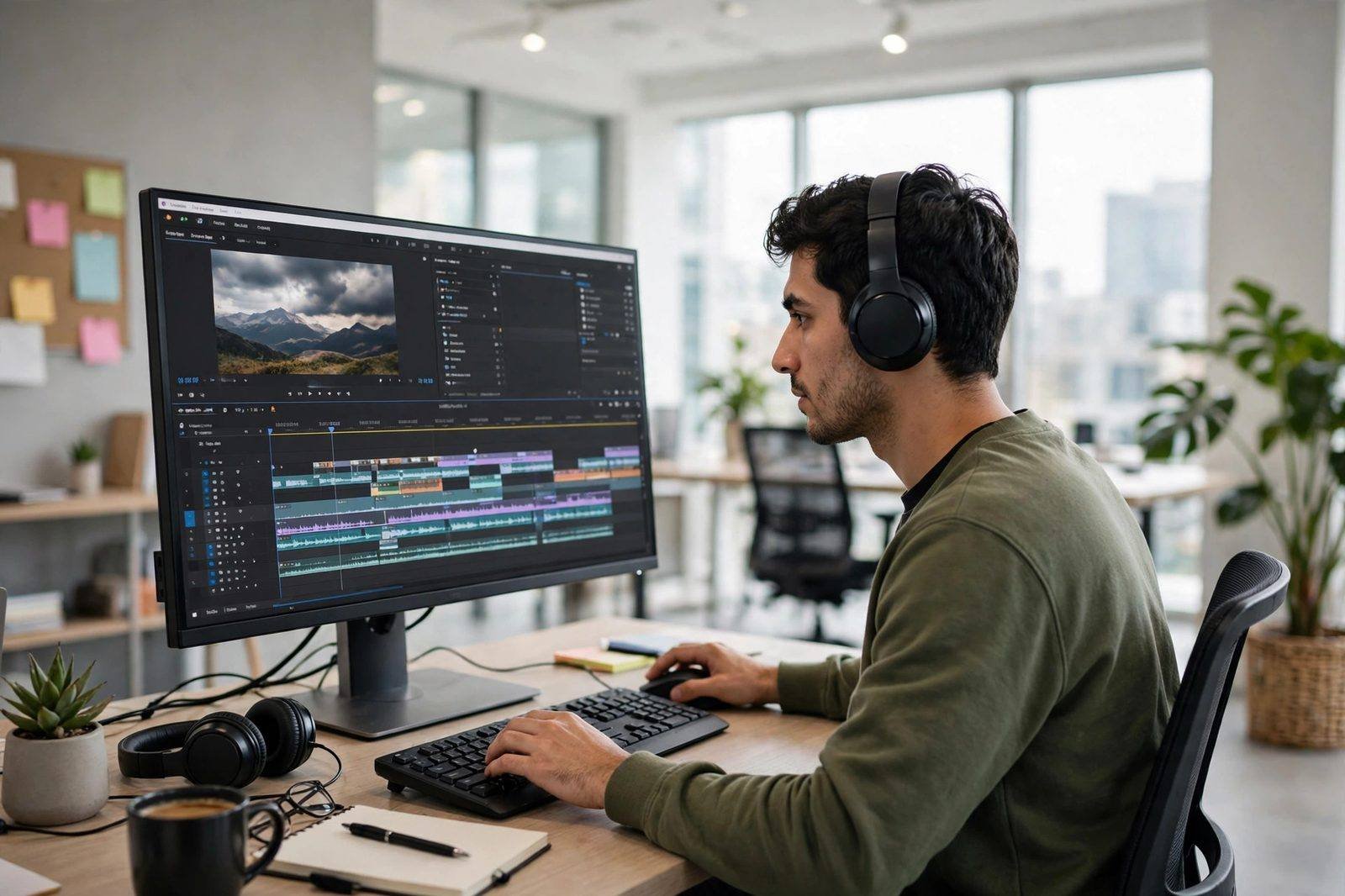
The best video editing software for Windows 2027 has to offer depends on what you edit and how powerful your PC is — but for most Windows users, DaVinci Resolve is the strongest free choice, Premiere Pro is the professional standard, and Filmora is the friendliest option for beginners. Windows is the most flexible platform for video editing: you can build a machine to any budget, choose from the widest range of editors, and upgrade hardware as your projects grow. This guide compares the leading Windows editors on features, performance, price and ease of use, so you can pick the one that fits your PC and your projects.
Key takeaways
- DaVinci Resolve offers professional editing, colour and audio for free on Windows.
- Premiere Pro is the industry standard for professional teams and Adobe users.
- Filmora is the easiest editor to learn, with strong templates and AI tools.
- CapCut is the fastest choice for short-form social videos on Windows.
- Check current pricing — subscription and one-off costs change, and free tiers vary.
What Windows editors need to do well
Hardware flexibility is Windows’ biggest advantage and its biggest complication. The best Windows editors use your graphics card well, support a wide range of GPUs, and scale from a modest laptop to a powerful desktop. Check the system requirements carefully and whether the editor offers proxy editing, because that feature makes 4K workable on mid-range machines.
Format support matters more on Windows than on Mac, because Windows creators use a wider variety of cameras, screen recorders and phones. An editor that opens almost anything without transcoding saves hours. The best Windows editors also handle variable frame rate footage from phones and screen recordings gracefully, which is a common source of sync problems.
Price structure is a real consideration. DaVinci Resolve Studio is a one-off purchase, Premiere Pro is a subscription, and Filmora offers both — and the difference adds up over years. Finally, consider the ecosystem: templates, plugins, stock media and tutorials all save time, and the largest ecosystems belong to the most popular editors.
1. DaVinci Resolve
Best for: Free professional editing, colour grading and audio on Windows.
DaVinci Resolve is the most capable free editor available on Windows. Its free version includes a full non-linear editor, world-class colour grading, Fairlight audio and Fusion effects, all in one application. For Windows users who want professional power without a subscription, it is the best value in the category — and the paid Studio version adds advanced features for a one-off price.
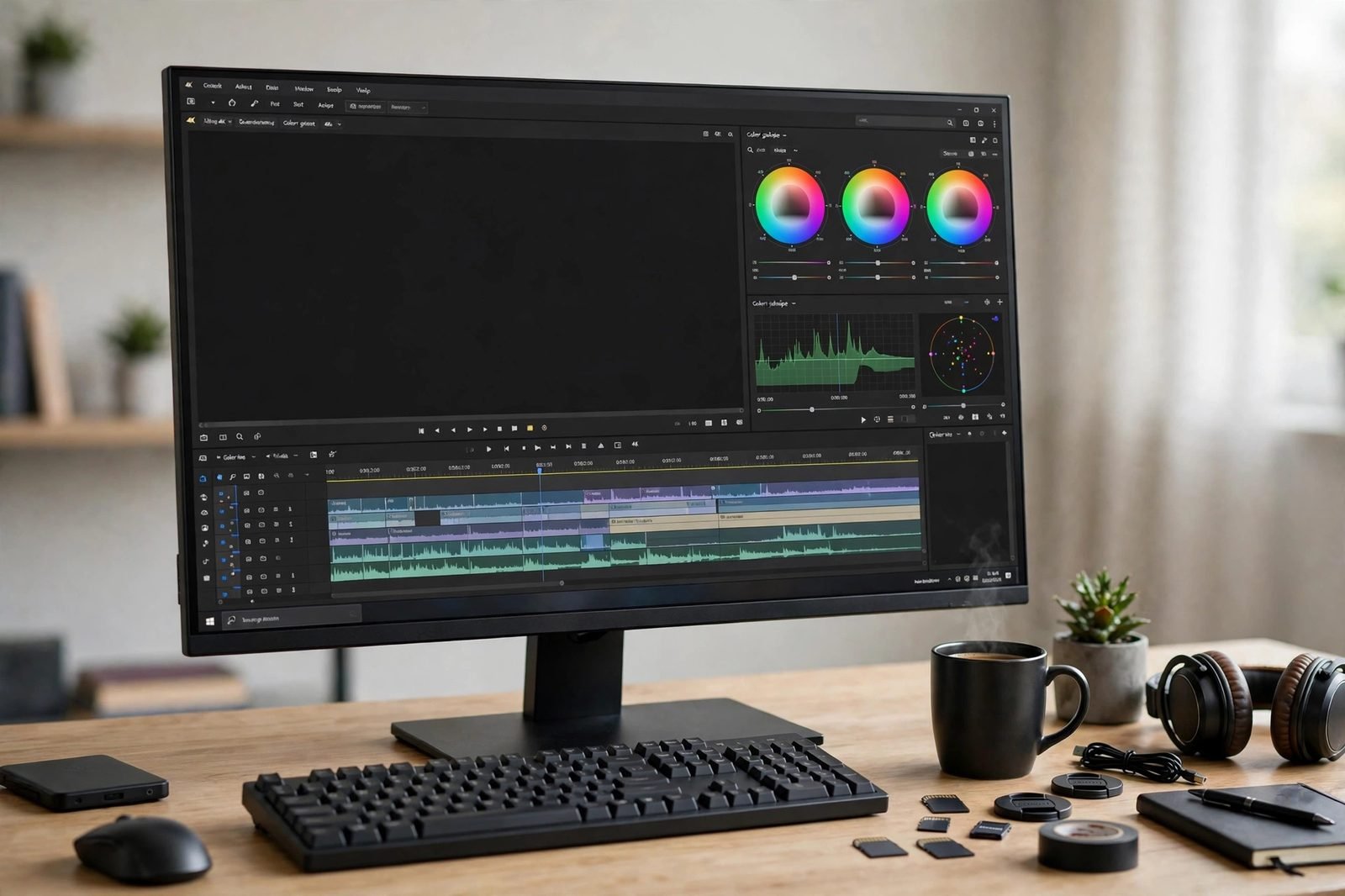
The colour page is the standout. Resolve began as a grading system, and its colour tools remain the deepest available, with scopes, curves and controls that professionals rely on. The editing page is fast and capable, the cut page suits quick assembly, and performance is strong on Windows hardware with a good graphics card.
The learning curve is real: Resolve has separate pages for media, editing, colour, effects and audio, and the interface is dense. It also demands a capable PC for smooth 4K work. But for Windows users willing to learn, no other free editor comes close. Check current pricing for the Studio version.
2. Adobe Premiere Pro
Best for: Professional editing teams and Adobe ecosystem users on Windows.
Premiere Pro is the editor most professional teams use, and its strengths map well to Windows: mature timeline editing, Lumetri colour tools, Essential Graphics templates and deep integration with After Effects, Audition and Photoshop. If your work involves motion graphics, shared team projects or collaboration across platforms, Premiere Pro’s ecosystem saves real time.
Format support is excellent — Premiere Pro opens almost anything — and its proxy workflow handles heavy 4K footage well on Windows hardware. The plugin ecosystem is the largest in the category, adding captioning, effects and automation tools. Premiere Pro also works well with a wide range of graphics cards, which suits Windows users who build their own machines.
The subscription is the main drawback: you pay monthly or annually for as long as you edit. Premiere Pro can also be demanding on hardware, and some users report stability issues on large projects. For professionals and teams, though, it remains the standard. Check current pricing on Adobe’s site.
3. Filmora
Best for: Beginners who want a friendly editor with strong templates.
Filmora is designed for people who want good results without a steep learning curve. Its interface is clean and approachable, its template and effect libraries are extensive, and its AI tools — auto-reframe, silence detection, background removal — handle common jobs quickly. It runs well on Windows, including modest laptops, and the mobile app covers on-the-go editing.
Filmora suits YouTubers, small businesses and hobbyists who need polished videos without professional complexity. The pricing is subscription-based, with a perpetual licence option in some regions, so check current pricing. The free version adds a watermark, which is the main limitation for casual users.
Filmora’s ceiling is lower than Resolve or Premiere Pro: it lacks the depth of colour, audio and effects tools that professionals need, and very large projects can strain it. For its target audience, though, that is a fair trade for an editor you can learn in an afternoon.
4. CapCut
Best for: Fast social videos and short-form content on Windows.
CapCut’s desktop app brings its mobile-first speed to Windows, with templates, auto-captions, trending effects and one-tap tools that turn raw footage into a finished short-form video in minutes. The free tier is generous, and the app syncs with the mobile version, so you can start an edit on your phone and finish it on your PC.
Auto-captioning is the standout feature for social creators, generating styled captions quickly in the bold formats that perform well on TikTok, Reels and Shorts. The template library means you rarely start from a blank timeline, and the music and effects library is convenient. For creators who publish daily short-form content, CapCut is a valuable tool.
The limits are depth and control. CapCut is not built for long-form, heavily graded or complex projects, and some features need a paid plan. It is best used for short-form content and quick turnaround videos, paired with a fuller editor for main projects. Check current pricing for the Pro plan.
5. PowerDirector
Best for: Windows users who want a capable editor with strong AI features.
PowerDirector is a long-running Windows editor that has grown into a serious all-rounder. Its interface is approachable, its template and effect libraries are large, and its AI tools — object detection, background removal, motion tracking, auto-reframe — handle many of the jobs that used to need a professional. It runs well on Windows hardware and supports 4K and high frame rate footage.
PowerDirector suits YouTubers, hobbyists and small businesses who want more power than Filmora without the complexity of Resolve or Premiere Pro. The pricing is subscription-based, with a perpetual licence option in some regions, so check current pricing. The free version adds a watermark.
Its ecosystem is smaller than the leaders’, and its professional colour and audio tools are less deep. For its target audience, though, PowerDirector offers a good balance of power and approachability, and its AI features are genuinely useful.
6. Clipchamp
Best for: Quick edits in the browser and Windows users who want simplicity.
Clipchamp is Microsoft’s video editor, and its strength is accessibility: it runs in the browser and as a Windows app, needs no installation hassle, and offers templates, stock media and simple editing tools that anyone can pick up. It is bundled with some Windows and Microsoft 365 plans, which makes it effectively free for many Windows users.
The editor covers the essentials — trimming, text, transitions, stock footage and audio — and its auto-captioning and text-to-speech features are handy for business videos. For internal communications, training videos and quick social clips, Clipchamp is more than enough.
Its limits are clear: Clipchamp is not a professional editor, and it lacks the colour, audio and effects depth of Resolve or Premiere Pro. Export quality and format options are also more limited. For fast, simple videos, though, its convenience is hard to beat. Check current pricing and what your Microsoft plan includes.
Comparison table
| Editor | Best for | Pricing model | Windows strength |
|---|---|---|---|
| DaVinci Resolve | Free professional editing | Free, paid Studio one-off | Colour grading, GPU performance |
| Premiere Pro | Professional teams | Subscription | Format support, Adobe ecosystem |
| Filmora | Friendly beginner editing | Subscription or perpetual | Templates, AI tools, easy learning |
| CapCut | Quick social videos | Free, paid Pro plan | Auto-captions, templates |
| PowerDirector | Capable all-round editing | Subscription or perpetual | AI features, 4K support |
| Clipchamp | Simple browser editing | Free, Microsoft plans | No install, bundled with Windows |
How to choose: a practical checklist
- Check your PC meets the editor’s requirements, especially graphics card and RAM.
- List your typical projects: short social clips, YouTube videos, client work or films.
- Try the free version or trial on a real project, not a demo file.
- Test proxy editing if you work with 4K footage on a mid-range machine.
- Confirm the editor handles your camera and phone footage without sync issues.
- Compare total cost over two years, including subscriptions and paid upgrades.
- Look at learning resources: tutorials, community and template libraries.
- Decide whether you need team features, cloud sync or just a solo editor.
FAQs
What is the best free video editor for Windows?
DaVinci Resolve is the strongest free editor for serious work, with professional editing, colour and audio tools. CapCut is the best free option for quick social videos, and Clipchamp is the simplest free option for business videos.
Is Premiere Pro or DaVinci Resolve better on Windows?
For professional teams in the Adobe ecosystem, Premiere Pro. For colour grading, value and a one-off Studio purchase, DaVinci Resolve. Both run well on Windows with a good graphics card.
Can I edit 4K video on a mid-range Windows laptop?
Yes, with proxy editing. Most editors in this list let you edit lightweight proxy files and export from the full-resolution originals, which keeps even a modest laptop responsive.
Which Windows editor is best for YouTube?
DaVinci Resolve suits creators who want professional quality for free, Premiere Pro suits growing teams, and CapCut suits Shorts. See our best video editing software for YouTube guide for a focused comparison.
Do I need a dedicated graphics card for video editing?
For 1080p social videos, integrated graphics can be enough. For 4K, effects-heavy or multi-camera projects, a dedicated graphics card makes a real difference to playback and export speed.
Is Filmora or PowerDirector better for beginners?
Both are friendly and capable. Filmora has a larger template library and a gentler interface; PowerDirector has stronger AI features. Try both free versions and pick the one that feels easier.
The bottom line
The best video editing software for Windows in 2027 is the one that fits your PC, your projects and your budget — and DaVinci Resolve, Premiere Pro, Filmora and CapCut cover that range between them. Windows gives you the most choice of any platform, which is a strength as long as you choose deliberately. Start with a free editor, learn the craft of cutting and pacing, and upgrade only when your work demands more. Your next step is simple: pick one editor, check it runs well on your machine, and edit a one-minute video in it this week. The tool matters less than the hours you put into it.