The right AI assistant in 2026 depends less on a single winner than on what you need it to do every day. A token is a small unit of text or other model input that an AI system processes. Your choice matters when you use an assistant for work, research, or development, since each tool handles those tasks differently.
For many users, the decision comes down to a polished general assistant, Google-connected research, or low-cost developer control. A deepseek vs chatgpt vs gemini 2026 comparison can help you narrow the field, but no model leads every task. Accuracy and performance change with the question, the model version, and the tools you use.
Use the assistant that fits your regular work, then check its answers against information you can trust. Keep sensitive work and high-stakes decisions out of any assistant until you have checked its data terms and verified its output.
Key Takeaways
- ChatGPT is a practical general-purpose starting point.
- Gemini fits research tied to Google Search and Google Workspace.
- DeepSeek stands out for low API prices and downloadable weights.
- Model rankings change across benchmarks and tasks.
- Check answers and data terms before relying on an assistant.
DeepSeek vs ChatGPT vs Gemini 2026 Comparison: Which Fits Your Work?
For most people who want one straightforward daily assistant, ChatGPT is the easiest starting choice, while Gemini or DeepSeek wins for a more specific priority. Match the tool to the work you repeat most: general help, Google-connected research, or developer control.
ChatGPT suits broad everyday use, Gemini suits Google-connected workflows, and DeepSeek suits low-cost API work or open-weight control. In October 2026, DeepSeek V4 lagged top frontier models on Arena and Artificial Analysis leaderboards. Low cost and open weights do not make a model the strongest choice by themselves.
| Assistant | Strongest fit | Main trade-off |
|---|---|---|
| ChatGPT | General daily assistance | Plan limits vary |
| Gemini | Google-connected research | Best fit depends on Google tools |
| DeepSeek | Low-cost API and weights control | More setup may fall to developers |
For a broader look at chatbot features and use cases, see this comparison of AI chatbots. A leaderboard can add useful context, but rankings reflect specific tests and model versions.

Choose the assistant that matches your most frequent task, then test it on a real example before moving important work into it.
A short trial often reveals more than a feature list. Use a familiar task with a clear standard for a good result, such as a draft you can compare with your own.
What Is Different About DeepSeek V4?
DeepSeek V4 Preview is a pair of models, not one fixed-size release. Pro and Flash give developers different model options, while downloadable weights offer more control over deployment.
Parameter count alone cannot tell you which version will work better for your task. The right choice also depends on your quality needs, speed goals, and ability to run the model.

DeepSeek-V4-Pro and DeepSeek-V4-Flash
DeepSeek-V4-Pro has 1.6 trillion parameters, while DeepSeek-V4-Flash has 284 billion. Parameters are learned values that help a model process and generate text, but a larger count is not a score for every task.
Pro and Flash are distinct versions, not simple settings for one model. A developer should test each version on the actual prompts and code it will handle, then weigh response quality against operating needs.
Downloadable weights and the MIT license
DeepSeek V4 is available to download and modify under an MIT license. The MIT-licensed weights allow developers to adapt the model, subject to the license terms.
Downloading weights can give a team more control over where and how a model runs. Self-hosting still calls for suitable computer hardware, setup work, maintenance, and technical skill.
That control does not remove the need to plan how the system handles prompts and outputs. Before choosing a version to deploy, check that its capabilities match the task and that your team can support the required infrastructure.
Which Model Leads on the Benchmarks?
There is no single leaderboard result that settles every kind of AI task, but the leading model is clear once you name the test. Each benchmark measures something different, so its top model is a leader for that test, not every use.
Gemini 4 Argon leads Arena text preference, Claude Opus 5.5 leads the Artificial Analysis Intelligence Index, and GPT-5.5 leads the stated AIME 2026 comparison. Those results test different kinds of performance.
| Benchmark | Leading model | Result |
|---|---|---|
| Arena text | Gemini 4 Argon | 1517.2, first in October 2026 |
| Artificial Analysis Intelligence Index | Claude Opus 5.5 | 57.6, first |
| AIME 2026/MathArena | GPT-5.5 | 97.5%, first among 25 models |
Gemini 4 Argon also ranked second in Arena creative writing, with a score of 1515.6. The Arena ranking history shows how leaderboard positions change over time.
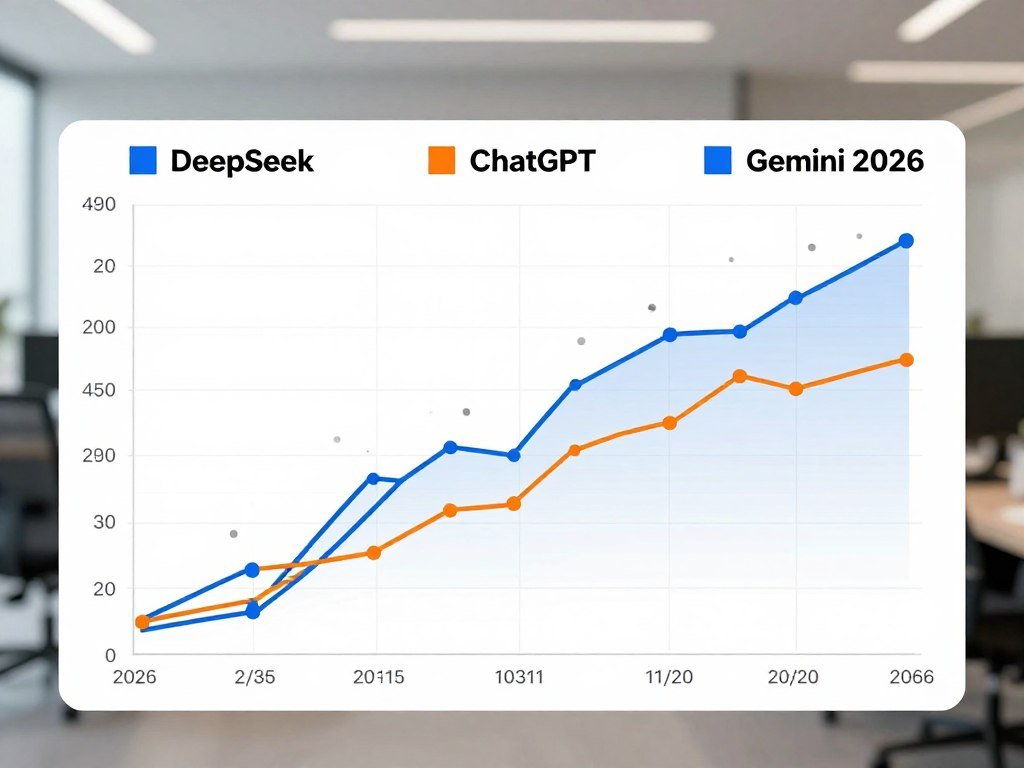
Arena measures user preference, while the Artificial Analysis index combines several tests. GPT-5.5’s AIME result concerns math performance, and it ranked first among 25 models on MathArena.
Generation and test category can change a model’s position. In October 2026, GPT-6 Sol ranked 62nd on Arena’s text board, while GPT-5.6 Sol ranked 21st.
The Arena and Artificial Analysis results are not interchangeable, and neither gives a complete measure of usefulness. Treat a benchmark lead as evidence for that test, not a guarantee that a model will perform best on your own prompt.
How Reliable Are Their Answers?
Gemini 4 Argon had a 15% hallucination rate in the October comparison, but one rate does not settle reliability across every task. Hallucination rate tracks incorrect claims in a test, not every kind of error a user may encounter.
Correction rates, hallucination rates, and app-review sentiment measure different things. A model correction rate shows how often another model judged an answer needed correction. It is not a direct measure of factual accuracy.

In Suprmind’s Q3 2026 Multi-Model AI Divergence Index, another model judged 13.9% of GPT-5.4 answers as needing correction. The same rate was 21.6% for Gemini 3.1 Pro and 21.0% for Grok 4.3.
Claude Opus 5 had an 8.7% correction rate in that index. Those figures compare model judgments under one method; they do not prove that a model is right in every real conversation.
App reviews offer a different view: how people feel about the full product. An analysis of 20,000-plus App Store, Google Play, and Reddit records from January through August 2026 reported net oCX scores of 50.9 for Grok, 26.3 for Claude, 24.3 for ChatGPT, and 11.1 for Gemini.
Reliability, bugs, and crashes appeared in 13.8% of ChatGPT reviews and 15.3% of Gemini reviews. ChatGPT reviews tagged for conversation quality and naturalness averaged 8.65 out of 10.
These reviews can reflect app design, reliability, and crashes as much as model answers. For consequential claims, ask for supporting evidence and verify it against a source you trust.
Which Assistant Writes Best?
If your main job is drafting and revising prose, judge the assistants by how much editing their first draft needs. Writing quality depends on the job: a warm email and a technical report call for different strengths.
Claude tends toward natural long-form prose, while ChatGPT often gives clean, structured drafts. Gemini can write well when the work connects to Google data, and DeepSeek often suits technical, structured writing.
Claude may be a strong fit when you want a thoughtful flow across several pages. ChatGPT can help when you need headings, a clear outline, or a first draft that follows a format.
Gemini can help with writing tied to information already in Google tools. DeepSeek may suit a developer who needs clear technical notes, code explanations, or content with a fixed structure.
Try the same prompts in two assistants, then compare how well each follows your instructions. These four tasks give you a useful range:
- A short email to a colleague.
- A long-form introduction for an article.
- A technical explanation for a new team member.
- A rewrite that follows a detailed voice brief.
The strongest first draft is not always the one you should publish. Check factual details, tone, and how much editing each output needs before choosing a regular writing partner.
Run the same prompt through two assistants and compare the revisions you would actually publish, not just their first paragraphs.
Which Model Is Best for Coding and Agents?
For coding, the useful question is not only which model writes code well, but which one handles your repository and tool workflow. Different tests produce different leaders, and real codebases add their own demands.
GPT-5.5 leads the stated SWE-bench Verified comparison, while Claude Opus 4.7 leads the stated SWE-bench Pro comparison. The results come from separate versions of the coding test.
What the coding benchmarks measure
GPT-5.5 scored 88.7% on SWE-bench Verified, compared with 75.6% for Gemini 3.1 Pro under the comparison’s stated GPQA-proxy methodology. SWE-bench Verified uses 500 human-filtered GitHub issues.
The SWE-bench Verified test details explain how people checked issue clarity, test patches, and whether each task could be solved with the available information.
Claude Opus 4.7 scored 64.3% on SWE-bench Pro, compared with 58.6% for GPT-5.5. Do not treat scores from different SWE-bench versions as if they measured the same test.
GPT-5.5 also scored 78.7% on OSWorld-Verified. No directly comparable OSWorld score for Claude appears in this comparison, so that result cannot settle a head-to-head ranking.
When agentic coding matters
Agentic coding means a model uses tools to inspect or change code, run checks, and work through several steps. DeepSeek says V4 advances agentic tasks and coding, with connections to Claude Code, OpenClaw, and OpenCode.
A coding assistant may need to find the right files, understand project rules, and respond to test failures. A strong result on a benchmark cannot show how well the model will handle every repository or tool setup.
Test the assistant on a contained issue in your own repository and review every change before merging it.
Which One Works Best for Research and Google Workspace?
For a question about current events or a document in Gmail, Gemini’s connection to Google Search and Workspace can reduce the steps between asking and checking. Gemini is the clearest fit when research depends on Google Search or material already in Google Workspace.
Live search can help you find recent information, but it does not make every answer correct. Open cited pages and read the relevant passage before relying on a summary.
Finding current information
Google Search grounding can help Gemini retrieve current information, which matters for changing rules, recent events, and new product details. Search results can still miss context or point to pages that do not support a claim.
Use this quick research check when an answer includes sources:
- Confirm the date of the information.
- Open the cited page and read the relevant part.
- Compare a second reliable source.
- Separate sourced facts from the assistant’s inference.
Working inside Google apps
Gemini connects with Gmail, Google Docs, and Google Drive. That integration can reduce manual copying when you need help with a message, a document, or files already stored in your workspace.
For example, you may ask for a summary of a long document rather than copy its text into another tool. The exact features can depend on your account and the app version you use.
For more ways to match assistants to everyday tools, explore these AI apps for work and life. If the answer affects a decision, verify the underlying page rather than relying on a search summary alone.
How Do They Handle Images, Audio, and Video?
If your task involves more than text, check whether the exact assistant and model can accept the media you plan to use. Media support varies by model version and interface.
ChatGPT offers image generation and voice tools, while Gemini supports image, audio, and video inputs. DeepSeek V4 capabilities depend on the version and deployment you choose.
Image creation and image analysis
Image analysis means asking an assistant to inspect an image you provide. You might ask it to describe a chart, read visible text, or explain what appears in a photo.
Image generation is different: you give the assistant a prompt, and it creates a new image. ChatGPT offers image generation, but you should check which image tools are available in your chosen model and plan.
A tool that can discuss an uploaded image may not be able to create one. These are separate capabilities, so test the feature you need rather than assuming one includes the other.
Audio and video inputs
Gemini supports audio and video inputs, which can help when a task begins with a recording or clip. ChatGPT also offers voice tools, though features can differ across interfaces and versions.
DeepSeek V4 support depends on the specific version and deployment. A workflow that relies on media should be tested with the same file type and task you expect to use.
Try a representative image, audio clip, or video before committing a workflow to a particular assistant.
What Does Context Window Size Change?
A context window is the amount of input a model can consider in one interaction, not a promise that it will understand every detail equally well. A larger window can let you include more text at once.
Gemini 3.1 Pro had a 2.5 million-token context window in the July 2026 update, the largest stated here among commercial models. A token is a small unit of text or other model input processed by an AI system.
What a larger window lets you include
A larger context window can hold more of a long report, a set of notes, or several related documents in one interaction. That can help when the model needs to compare details across a large input.
It does not guarantee perfect recall, accurate analysis, or a useful answer. The model still has to identify the parts that matter and follow your question.
Why more context is not always better
Uploading a large bundle without a clear question can make it harder to get a focused response. Give the assistant the relevant excerpts and say what you want it to find, compare, or explain.
For a long document, ask a focused question and check the response against the relevant passage.
What Do the ChatGPT and Google Plans Cost?
For a U.S. consumer comparing monthly plans, ChatGPT Go starts at $8 and Google AI Plus at $4.99, while the best fit depends on included access and storage. Price is only one part of the choice; usage limits and account needs matter too.
ChatGPT plans range from free access to paid personal and team tiers, while Google AI plans bundle storage with access. Prices below are U.S. monthly rates for 2026.
ChatGPT consumer and business tiers
| Plan | U.S. monthly price | Key term |
|---|---|---|
| ChatGPT Free | $0 | Free plan |
| ChatGPT Go | $8 | Paid consumer tier |
| ChatGPT Plus | $20 | About 160 messages per three hours |
| ChatGPT Pro | $100 or $200 | Price depends on usage tier |
| ChatGPT Business | $20 or $25 per seat | Two-seat minimum |
ChatGPT Business costs $20 per seat monthly with annual billing, or $25 with monthly billing. ChatGPT Enterprise uses custom pricing and annual billing.
The ChatGPT Plus usage guidance sets about 160 messages per three hours, plus 10 full and 15 lightweight Deep Research tasks monthly. Limits can shape whether Plus fits regular research work.
ChatGPT Business contractually guarantees OpenAI will not train on customer data. ChatGPT Plus offers an opt-out toggle, which is a different level of commitment.
Google AI plans and included storage
Google AI Plus costs $4.99 monthly and includes 400 GB of storage. Google AI Pro costs $19.99 monthly and includes 5 TB.
Google AI Ultra starts at $99.99 monthly and includes storage starting at 20 TB. Google AI Pro includes $10 in monthly Google Cloud credits, while Ultra includes $40.
Google says Ultra offers up to 20x access to Gemini compared with non-AI subscribers. That multiplier describes plan limits, not a guaranteed message count.
Before subscribing, compare the limits you will actually use with the monthly charge, not just the plan name.
How Do API Prices Compare?
DeepSeek V4 has the lowest listed input and output rates among these four API options, while the final bill depends on how much text the application sends and generates. Input and output both count toward the cost.
Estimate token use in both directions instead of comparing input rates alone. A token is a small unit of text or other model input that an AI system processes.
| Model | Input price per 1 million tokens | Output price per 1 million tokens |
|---|---|---|
| DeepSeek V4 | $1.74 | $3.48 |
| GPT-5.5 | $5 | $30 |
| Claude Opus 4.7 | $5 | $25 |
| Gemini 3.1 Pro | $2 | $12 |
DeepSeek V4, GPT-5.5, and Claude Opus 4.7 each have a 1 million-token context window. Gemini 3.1 Pro API pricing is listed at $2 per million input tokens and $12 per million output tokens.
An application that reads long files but returns short notes may be input-heavy. A system that writes long answers or reports may use far more output tokens, changing which API costs less.
Estimate your expected volume for prompts, uploaded material, and generated responses. Include repeat requests and any long outputs your product creates, since those can add to the monthly bill.
Estimate both input and output tokens from a representative workload before choosing an API.
What Should You Know About DeepSeek Privacy?
Before submitting confidential material to DeepSeek, check which service receives it and what its policy says it may collect and use. The specific deployment matters, since consumer services and self-hosted models handle data in different ways.
DeepSeek’s policy says its services may collect prompts, uploaded files, photos, voice input, and chat history. The policy also names Hangzhou DeepSeek Artificial Intelligence Co., Ltd., registered in China, as controller of its services.
What DeepSeek’s policy says about data
The policy, last updated February 10, 2026, says DeepSeek uses personal data to develop and improve its services. Those uses include training and improving machine-learning models and algorithms.
Consumer service use is different from running downloaded weights on your own systems. Self-hosting does not automatically guarantee privacy, so check the terms and data flow for the specific deployment.
Use this short privacy check before work data enters an assistant:
- Review the data policy for the service or deployment.
- Exclude sensitive material unless your organization approves it.
- Confirm organizational rules before deployment.
What the U.S. federal order covers
On October 20, 2026, the U.S. ordered federal civilian agencies to stop purchasing DeepSeek products and services and remove them from government IT systems. Exceptions are available by request.
The order also covers third-party products and services built using DeepSeek technology. It applies to federal civilian agencies, not every U.S. individual or business.
DeepSeek data may be processed and stored on servers in China. If you work with federal systems, confirm the applicable agency requirements before using DeepSeek or a product built on its technology.
Which AI Fits Your Existing Tools?
The best integration is the one that removes a step from a workflow you already rely on. Existing tools matter because switching between apps can add work even when an assistant gives a strong answer.
ChatGPT offers built-in tools and custom GPTs, Google centers Gemini on its apps, and DeepSeek connects with developer tools. The right ecosystem depends on the work you need to get done.
Built-in assistants and custom tools
ChatGPT’s ecosystem includes custom GPTs and plugins, which can help you set up tools for a particular task. That may suit you if you want one assistant for several kinds of work.
Google’s approach centers on its apps and connected services. If your daily work already happens there, a tool that fits those habits may save handoffs.
Compare the actions an assistant can take, not just the size of its tool list. A useful connection is one that helps complete a real task without adding extra steps.
API access and developer integrations
Developers may value API access and integrations more than consumer-facing features. DeepSeek V4 connects with Claude Code, OpenClaw, and OpenCode, which matters most if your team already uses those tools.
OpenAI, Google, and DeepSeek each have their own ecosystem. A developer should check how the chosen model fits existing code, deployment, and support workflows.
List the apps and handoffs your team uses most, then check that the assistant supports them in the version you plan to use.
Where Do Claude, Grok, and Perplexity Fit?
Claude, Grok, and Perplexity matter when their particular workflow solves a problem the core three do not handle as conveniently. Each can fit a narrower job better than a broad daily assistant.
Claude fits writing and coding work, Grok fits live X conversation, and Perplexity fits search-led answers. Each alternative can be better for a specific task, but its tools, cost, and data terms still need to suit you.
Claude for writing and coding work
Claude can be a strong alternative for nuanced writing and coding workflows. Anthropic’s Claude Opus 5.5 and Claude Code are named products for people who want a writing assistant or coding support.
If your work involves long drafts or software changes, test Claude on the same task you would give another assistant. The best fit depends on the quality of its output and how well its tools match your process.
Grok for live X conversation
Grok can access real-time posts on X, which may help you follow current social conversation. Posts are not verified facts, so treat them as claims that need context and confirmation.
Perplexity for search-led answers
Perplexity AI is a search-led assistant that can help you find information and discover sources. It suits research where you want to inspect pages behind an answer, rather than rely only on a generated summary.
For more options beyond this comparison, see these ChatGPT alternatives. Choose an additional assistant only when it adds a capability you will use often enough to justify maintaining it.
How Should You Choose Among the Three?
Start with the task you repeat most often, then choose the assistant whose advantage maps directly to it. A real task is the best test, since feature lists do not show how much work an answer saves.
Choose ChatGPT for a general-purpose starting point, Gemini for Google-connected research and workflows, and DeepSeek for low-cost API work or downloadable weights. Claude, Grok, and Perplexity may fit narrower needs.
Use this short process to narrow your options:
- Identify the task you do most often.
- Decide whether integration, open-weight access, or general-purpose polish matters most.
- Test the leading candidate on a real task.
- Check data rules before using sensitive material.
A useful test should have a clear standard. For example, you can compare an assistant’s draft with a version you already approved, or check its research answer against a known document.
Keep your test small enough to review carefully. That makes it easier to spot missing details, weak reasoning, or extra editing work before you rely on the assistant regularly.
Keep a second assistant only if it clearly improves a recurring task that your primary tool handles less well.
Try one candidate at a time, using the same prompt and success measure. That makes the trade-off easier to see than switching between tools without a clear task.
Conclusion
Pick the assistant that fits your most common task, not the one with the loudest claim. ChatGPT is a practical general starting point, Gemini fits Google-connected work, and DeepSeek appeals to developers who value low API cost or open weights.
Those strengths matter only if they help with your own work. A model that looks impressive in a comparison may still need more editing or setup than you want.
Run one familiar, non-sensitive task through your leading option and keep it only if the result saves you time without lowering your quality bar.
FAQ
Which one is more reliable, Gemini or ChatGPT?
Gemini 4 Argon had a 15% hallucination rate in the October comparison, but that does not prove Gemini is more reliable for every task. Hallucination rates, user reviews, and correction rates measure different things. For a factual answer, open the cited material and check whether it supports the claim. Your result can also depend on the model version and question.
What’s the #1 AI right now?
Gemini 4 Argon led Arena text preference, Claude Opus 5.5 led the Artificial Analysis Intelligence Index, and GPT-5.5 led the stated AIME 2026 comparison. Those leaders answer different questions. Arena measures user preference, the index combines multiple tests, and AIME measures math performance. Pick based on the task you need done, not one rank alone.
Which AI is better than DeepSeek?
Gemini can be a better fit for Google-connected research, ChatGPT is a practical general-purpose starting point, and Claude may suit writing or coding workflows. DeepSeek stands out for low-cost API use and downloadable weights. The better choice depends on whether you need a consumer assistant, a connected research tool, or control over model deployment.
Is DeepSeek better than ChatGPT and Claude?
DeepSeek stands out for API cost and downloadable weights, while ChatGPT or Claude may fit general assistance or coding workflows better. A low API price matters most when you build an application and send many requests. Downloadable weights can offer deployment control, but running them takes technical skill and infrastructure. Test the exact model on your own task.
What are the big 3 AI models?
In this comparison, the three assistants are ChatGPT, Google Gemini, and DeepSeek. Claude is another major alternative, especially for some writing and coding tasks. These are product families, not single fixed models, so features and performance can change by version. When you compare them, name the model and task you mean.
Which is better, Grok or ChatGPT or DeepSeek?
Grok fits live conversation on X, ChatGPT is a general-purpose option, and DeepSeek suits low-cost API access or downloadable weights. Grok’s access to social posts can show what people are discussing, but posts are not verified facts. Choose based on the job you repeat most, then check whether the tool’s terms and features suit your use.
What is the best GPT to use right now?
GPT-5.5 is the named model in the API price comparison and the stated AIME 2026 result, but the best option depends on your task and ChatGPT plan. A model used through an API may not offer the same access as a consumer plan. For everyday work, test available ChatGPT access on a task you can judge before paying.
Which is safer to use, ChatGPT or Grok?
There is no blanket safety ranking that applies to every ChatGPT or Grok use. Check each service’s data terms and avoid sensitive inputs unless your organization approves them. Grok can draw on social posts, but those posts may be false or lack context. For important claims, compare the answer with reliable material you can inspect.