Roomba vs Eufy is the robot vacuum comparison most buyers end up making in 2027, because the two brands represent opposite philosophies. Roomba, from iRobot, is the established premium name, built around careful navigation, strong pet-hair pickup and self-emptying docks. Eufy, from Anker, is the value challenger, offering similar headline features for noticeably less money.
That price gap is real, but it does not tell the whole story. A Roomba usually maps a home more precisely, avoids obstacles more reliably and holds its value in a busy household with pets and mixed floors. A Eufy usually cleans quietly, costs less to buy and less to maintain, and its newer flagship models now mop, self-empty and dodge obstacles nearly as well as machines costing hundreds more.
This comparison tests the two brands head to head on cleaning, navigation, mopping, noise, running costs and ease of use, using their current 2027 lineups. Prices below are approximate starting prices, so check current pricing before you buy, since both brands discount heavily during sales events.
Key takeaways
- Roomba wins on navigation and obstacle avoidance, especially in cluttered homes and pet households.
- Eufy wins on value, with comparable cleaning power and quieter operation at a lower price.
- Both brands now offer self-emptying docks and mopping models, so the gap is smaller than it was two years ago.
- Roomba replacement parts and bags cost more over time, while Eufy running costs stay lower.
- Choose Roomba for precision and pet hair, and Eufy when budget and quiet daily cleaning matter most.
At a glance: Roomba vs Eufy
| Feature | Roomba | Eufy |
|---|---|---|
| Starting price | From about $250 | From about $200 |
| Flagship self-emptying model | Roomba Combo j9+, about $899 | Eufy X10 Pro Omni, about $799 |
| Navigation | Camera and lidar mapping, room-by-room control | Lidar mapping on mid-range and flagship models |
| Obstacle avoidance | Strong, including pet waste and cables | Good on flagship models, basic on budget models |
| Mopping | Combo models mop and vacuum in one run | Flagship models mop with rotating pads and auto-washing |
| Noise | Noticeable on carpet boost | Generally quieter, especially on hard floors |
| App and voice control | iRobot Home app, Alexa and Google Assistant | Eufy Clean app, Alexa and Google Assistant |
| Running costs | Higher, bags and filters add up | Lower, washable parts and cheaper spares |
Roomba: the precise, pet-friendly premium pick
Roomba has been refining robot vacuums longer than almost anyone else, and that experience shows in daily use. Its mid-range and flagship models build accurate maps, clean in neat rows rather than wandering, and remember multiple floors. You can send one to a single room, set keep-out zones, and schedule different rooms on different days, all from an app that rarely confuses a hallway for a bedroom.
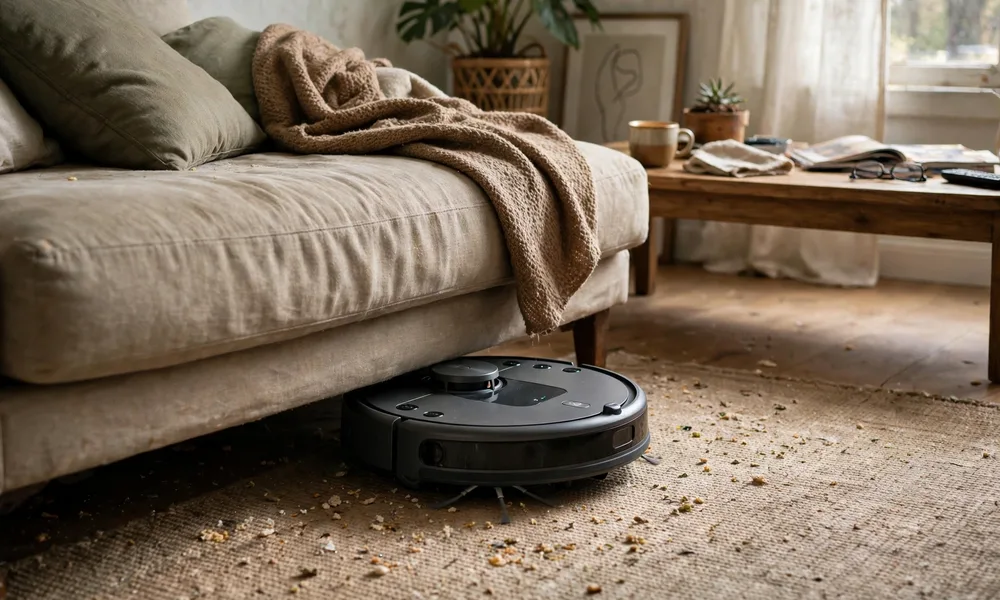
Cleaning performance is where Roomba earns its premium. Its dual rubber brush rolls resist hair tangles far better than bristle brushes, which matters in homes with long hair or shedding pets. Suction is strong on carpet, and the dirt-detection sensors make the vacuum pass twice over the dirtiest patches instead of gliding past them. In side-by-side tests, Roomba models consistently pick up more embedded pet hair from medium-pile carpet than budget rivals.
Obstacle avoidance is another real advantage. The camera-equipped j-series models recognise cords, socks, shoes and pet waste, steering around them instead of dragging them across the floor. That reliability is the main reason many owners stay loyal: a robot vacuum that needs rescuing every day is not saving anyone time. If you want to compare Roomba against another mainstream rival, our guide to the Roomba vs Shark robot vacuum comparison covers a similar head-to-head in detail.
Roomba is not without weaknesses. The brand charges more for the same headline features, and its self-emptying docks need proprietary bags that cost several dollars each. The app is capable but occasionally slow to load maps, and entry-level Roombas without cameras navigate by bumping around, which feels dated next to a lidar-equipped Eufy at the same price. Battery life is solid rather than outstanding, at around 75 to 90 minutes on most models.
Pros: Excellent navigation and mapping, strong pet-hair pickup, reliable obstacle avoidance, durable build quality, good customer support.
Cons: Higher prices, expensive replacement bags and filters, basic models lack lidar, app can feel slow.
Eufy: the quiet, high-value challenger
Eufy takes a different approach: pack as much as possible into a lower price and keep the machine simple to live with. Its budget RoboVac models are slim, quiet and effective on hard floors, while its newer X-series flagships add lidar navigation, strong suction, rotating mop pads and self-emptying, self-washing docks that rival machines costing twice as much.
On hard floors, Eufy is genuinely hard to beat for the money. Suction on the X10 Pro Omni reaches levels that were flagship-only a few years ago, and the mopping system scrubs rather than simply dragging a damp cloth. The dock washes and dries the mop pads, empties the dustbin and refills the water tank, so the robot can run for weeks with almost no attention. For flats and homes that are mostly hard flooring, that combination is compelling.
Noise is a quiet Eufy strength. Most Eufy models run noticeably quieter than equivalent Roombas, which matters if you work from home or run the vacuum at night. The slim profile also helps: many Eufy models are under 3 inches tall, so they slide under beds and low sofas that taller Roombas cannot reach. The Eufy Clean app is straightforward, with scheduling, suction levels and no-go zones that work well once the map is saved.
Where Eufy falls short is polish. Budget models navigate by random or gyroscopic patterns and can miss spots in larger homes. Obstacle avoidance on cheaper models is basic, so cables and small items need to be picked up first. Carpet cleaning is good but not quite at Roomba level for deep pet hair, and Eufy has a shorter track record, so long-term parts availability is less certain. For larger homes, it is worth checking our roundup of the best robot vacuums for large homes before deciding on a single-brand shortlist.
Pros: Excellent value, quiet operation, slim design fits under furniture, strong mopping on flagship models, low running costs.
Cons: Budget models navigate randomly, weaker deep-carpet pet-hair pickup, basic obstacle avoidance on cheaper models, shorter brand track record.
The verdict: which robot vacuum should you buy?
Roomba wins this comparison for homes with pets, thick carpet and clutter. Its navigation is more precise, its obstacle avoidance is more trustworthy, and its brush design handles hair better. If you want a robot vacuum you can schedule and forget, and you are willing to pay for that confidence, Roomba is the safer choice.
Eufy wins for buyers who want the best cleaning per dollar. On hard floors and in smaller homes, a mid-range Eufy cleans nearly as well as a Roomba costing hundreds more, runs quieter and costs less to maintain. The X10 Pro Omni is the standout value flagship of 2027, offering self-emptying and auto-washing mops at a price Roomba struggles to match.
The honest answer is that both brands are good, and the wrong choice is usually buying the cheapest model from either range. A budget Roomba without mapping frustrates quickly, and a budget Eufy in a large pet household will miss hair that a Roomba would catch. Spend at the mid-range or above, and match the model to your floors.
How to choose between Roomba and Eufy
Start with your floors. Mostly hard floors with a few rugs points to Eufy, where you get strong suction and mopping for less. Mostly carpet, especially medium or thick pile, points to Roomba, where the dual rubber brushes and dirt detection make a visible difference. Homes with pets should lean Roomba for hair handling and obstacle avoidance, while quiet operation and night-time cleaning favour Eufy.
Next, measure your furniture. If your sofa and bed sit low, check the robot height before buying, since a few millimetres decide whether the space under the bed ever gets cleaned. Then look at the dock: self-emptying is worth paying for if anyone in the house has dust allergies, because it keeps the bin sealed, but budget for the ongoing cost of bags on Roomba models. Eufy docks on flagship models wash mop pads as well, which is a genuine time saver. A broader comparison of vacuum brands can help here, and our Dyson vs Shark vacuums guide shows how the same trade-offs play out across traditional vacuum cleaners.
Finally, check current pricing before you commit. Both brands run frequent sales, and a flagship Roomba discounted by 30 percent changes the value calculation completely. Prices quoted here are approximate starting prices, so confirm the current price and what is included in the box, since docks and spare parts are sometimes sold separately.
Checklist: before you buy a robot vacuum
- Measure clearance under beds and sofas against the robot height.
- Check whether the model has lidar or camera mapping, not random navigation.
- Confirm the dock type and the ongoing cost of bags, filters and mop pads.
- Test noise expectations: run it while working from home if possible.
- Check app features, including room selection, schedules and keep-out zones.
- Confirm warranty length and spare-parts availability for your exact model.
Frequently asked questions
Is Roomba better than Eufy?
Roomba is better at navigation, obstacle avoidance and deep carpet cleaning, especially with pets. Eufy is better value and quieter, and its flagship models match Roomba on hard floors and mopping. The better brand depends on your floors and budget.
Which robot vacuum is best for pet hair?
Roomba is the stronger pick for pet hair, thanks to its dual rubber brush rolls and dirt-detection sensors. Eufy flagship models also handle pet hair well on hard floors, but they need more frequent brush cleaning on carpet.
Do Eufy robot vacuums mop well?
Yes, the newer X-series Eufy models mop well, with rotating pads, decent downward pressure and docks that wash and dry the pads. Budget Eufy models only drag a damp cloth, which is fine for light dust but not stuck-on marks.
Are Roomba self-emptying docks worth it?
For allergy sufferers and busy households, yes. The dock empties the bin into a sealed bag, so you handle dust far less often. The trade-off is the recurring cost of replacement bags, which adds up over a year.
How long do Roomba and Eufy robot vacuums last?
With regular filter and brush replacement, both brands typically last four to six years. Batteries usually need replacing after two to three years of heavy use, and both brands sell replacements.
Can either vacuum clean multiple floors?
Yes, both Roomba and Eufy mid-range and flagship models save multiple floor maps. Neither robot can climb stairs, so you still need to carry it between floors or buy one per floor.
The bottom line
Roomba vs Eufy in 2027 is a choice between precision and value. Roomba is the better cleaner for pet owners, carpeted homes and anyone who wants the most reliable navigation available. Eufy is the smarter buy for hard floors, smaller homes and buyers who want flagship features without the flagship price.
If your budget stretches to a mid-range model or above, pick Roomba for pets and carpet, and Eufy for hard floors and quiet daily cleaning. Either way, buy a model with proper mapping, check current pricing, and measure your furniture first, because those three decisions matter more than the brand name on the lid.