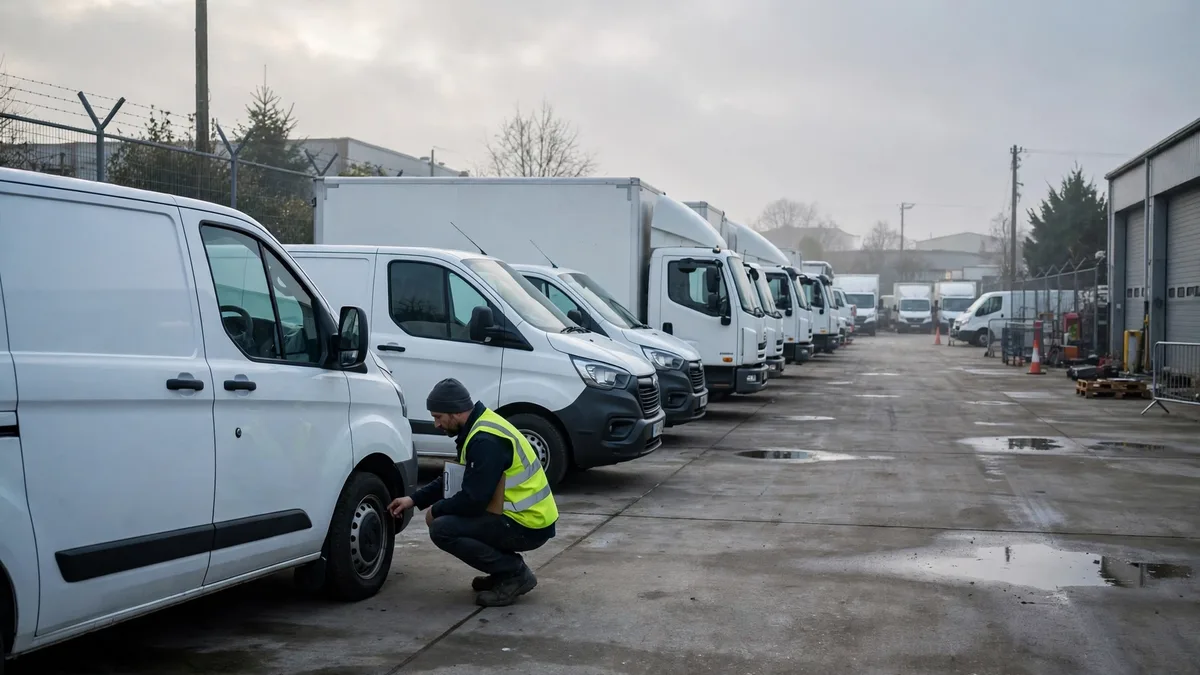
Top fleet management software in 2027 helps a business run its vehicles like a system instead of a set of phone calls and paper logs. The best fleet management software in 2027 tracks every vehicle live, schedules maintenance before breakdowns, watches driver behaviour, and turns fuel, mileage, and repair costs into numbers a manager can act on. For a business with five vans or five hundred trucks, that visibility turns a cost centre into a controlled operation.
What matters most is which problem costs you the most. Some fleets lose money on fuel and idling, others on unexpected repairs, and others on compliance paperwork and driver safety. The tools below cover all three, and their strengths differ: Samsara leads on all-round tracking and safety, Geotab leads on data depth, and Fleetio leads on maintenance. Every starting price quoted is approximate, so check current pricing before you buy.
The shortlist runs from full platforms such as Samsara, Geotab, and Verizon Connect to focused tools such as Fleetio for maintenance and GPS Trackit for simple tracking. Eight tools made the cut, each strong in a different part of fleet work.
Key takeaways
- Samsara is the best overall fleet management platform, combining live tracking, safety cameras, and maintenance in one dashboard.
- Geotab is the best choice for data-heavy fleets that want deep reporting and third-party integrations.
- Fleetio is the best pick when maintenance scheduling and repair costs are the main problem.
- GPS Trackit is the best value for small fleets that need simple, affordable live tracking.
- Always trial with your own vehicles, because GPS accuracy, hardware install effort, and driver app quality vary more than the feature lists suggest.
At a glance: the shortlist
| Product | Best for | Starting price | Standout limit |
|---|---|---|---|
| Samsara | All-round fleet operations | Custom quote | Hardware cost per vehicle |
| Geotab | Data and reporting | From about $20 per vehicle, per month | Setup needs configuration |
| Verizon Connect | Large mixed fleets | Custom quote | Contract terms vary |
| Motive | Compliance and safety | From about $30 per vehicle, per month | Camera plans cost extra |
| Fleetio | Maintenance management | From about $4 per vehicle, per month | No native GPS tracking |
| GPS Trackit | Small fleets on a budget | From about $15 per vehicle, per month | Basic reporting |
| Azuga | Driver safety and rewards | From about $25 per vehicle, per month | Smaller integration library |
| Teletrac Navman | Field service fleets | Custom quote | Interface feels dated |
Samsara — Best overall
Samsara is the most complete fleet platform on this list. It combines GPS tracking, dash cameras with AI safety alerts, maintenance scheduling, fuel reporting, and compliance tools in a single dashboard.
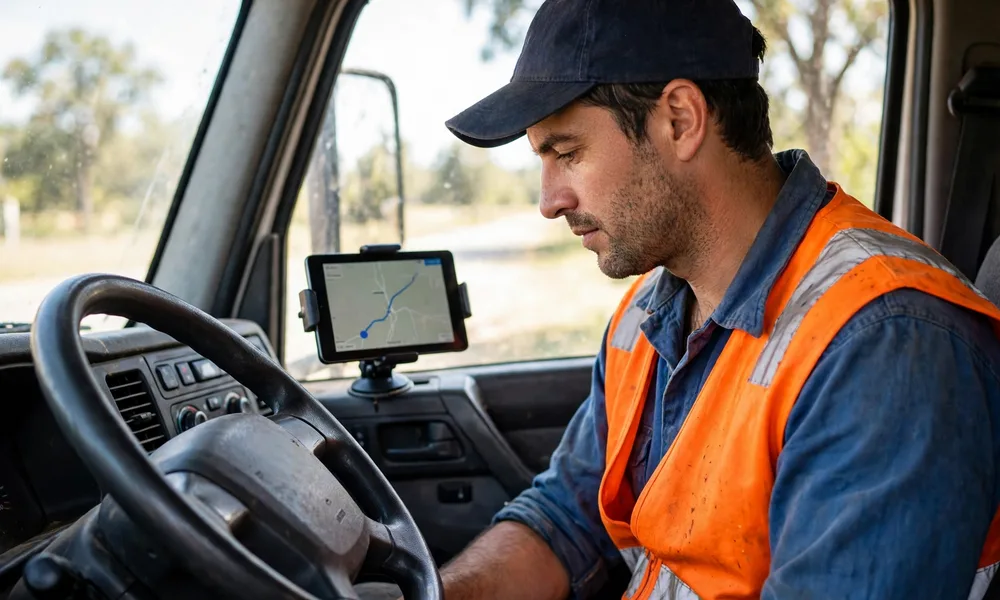
Its camera system is the standout: it flags harsh braking, speeding, and distracted driving in real time, and the footage helps settle insurance claims quickly. The hardware is proprietary, adding cost per vehicle, though installation is usually a plug-in job. Pricing is by custom quote. For a broader view of how AI is changing this space, see our roundup of the best AI tools for fleet management.
Pros: Strongest all-round feature set; excellent safety cameras; clean, modern dashboard.
Cons: Custom pricing; hardware cost per vehicle; best value at scale.
Geotab — Best for data and reporting
Geotab is the pick for fleets that live in their data. Its tracking is accurate and fast, and its reporting goes deeper than most rivals, covering fuel use, idling, engine diagnostics, trip history, and driver scorecards in detail. It also supports a large library of third-party integrations, so it slots into an existing setup rather than replacing it.
The system scales from a handful of vehicles to thousands. The trade-off is that the dashboard expects a manager who likes detail: getting the most from it takes configuration, and the out-of-the-box reports can feel dense at first. Starting from about $20 per vehicle per month, check current pricing as plans change.
Pros: Deepest reporting and analytics; huge integration library; accurate tracking.
Cons: Needs configuration to shine; interface can feel busy; support tiers vary.
Verizon Connect — Best for large mixed fleets
Verizon Connect is built for large fleets that mix trucks, vans, and specialist vehicles. It covers GPS tracking, route optimisation, dispatch, driver hours, and maintenance, with strong coverage across North America and Europe.
Its route planning is a genuine strength, cutting empty miles and missed delivery windows for field service and delivery fleets. Pricing is by custom quote and contracts are typically multi-year, so it suits established fleets rather than small teams testing the waters.
Pros: Proven at large scale; strong routing and dispatch; good compliance tools.
Cons: Custom pricing; multi-year contracts common; onboarding takes time.
Motive — Best for compliance and safety
Motive, formerly KeepTruckin, is strongest where compliance and driver safety matter most. Its electronic logging device handling is solid, its driver app is easy to use, and its safety cameras flag risky behaviour with clear coaching reports.
The platform also covers GPS tracking, fuel, and maintenance, so it works as a general fleet system, not just a compliance tool. Camera plans cost extra on top of the base price, which starts from about $30 per vehicle per month, so budget for that if safety footage matters to you.
Pros: Excellent compliance and ELD tools; good driver app; strong safety coaching.
Cons: Camera features cost extra; pricing varies by plan; some reports need setup.
Fleetio — Best for maintenance management
Fleetio takes a different angle: it manages the vehicles themselves, not just where they are. It schedules servicing, tracks repair history and costs, manages parts inventory, and handles inspections and fuel cards.
It does not include native GPS tracking, so most buyers pair it with a tracking tool such as Geotab or Samsara, and the integrations for that are well built. Starting from about $4 per vehicle per month, it is also the cheapest entry point on this list, which makes it an easy add-on even for small fleets.
Pros: Best maintenance scheduling and cost tracking; very affordable; good inspections app.
Cons: No native GPS tracking; needs a partner tool for live location; limited routing.
GPS Trackit — Best value for small fleets
GPS Trackit is the simplest, cheapest way to know where your vehicles are. It offers live tracking, geofencing, speed alerts, and basic reports from about $15 per vehicle per month, with no long contract required in many plans. A small business with five to twenty vans can be up and running in days.
The reporting is basic compared with Geotab or Samsara, and there is no built-in camera or deep maintenance system, but for a fleet that mainly needs to answer “where is the van?” it does the job well. Check current pricing, as per-vehicle rates depend on fleet size and contract length.
Pros: Affordable and simple; fast setup; no long contract on many plans.
Cons: Basic reporting; no cameras; limited maintenance tools.
Azuga — Best for driver safety and rewards
Azuga stands out for how it handles drivers. Its safety scoring, coaching, and rewards programme give drivers a reason to drive well, rather than just a list of things they did wrong.
Azuga also covers GPS tracking, maintenance reminders, and fuel reporting, so it works as a general fleet platform for small and mid-sized fleets. It starts from about $25 per vehicle per month. Its integration library is smaller than Geotab’s, so check that your fuel card and accounting tools connect before you commit.
Pros: Best driver coaching and rewards; solid tracking; good for safety culture.
Cons: Smaller integration library; pricing varies by features; less depth for very large fleets.
Teletrac Navman — Best for field service fleets
Teletrac Navman is a long-standing name in fleet tracking, and it remains strong for field service businesses where job scheduling matters as much as vehicle location. It combines tracking, dispatch, job management, and driver behaviour monitoring, so a service business can assign jobs, route technicians, and prove arrival times from one system.
The platform is reliable and well proven, though the interface feels dated next to Samsara or Motive. Pricing is by custom quote.
Pros: Strong job and dispatch tools for field service; proven reliability; good driver behaviour monitoring.
Cons: Custom pricing; dated interface; less modern camera options.
How to choose
Start with the cost that hurts most. If fuel and idling eat your margin, prioritise tracking accuracy and fuel reporting, which points to Geotab or Samsara. If breakdowns and repair bills are the problem, start with Fleetio. If compliance paperwork or insurance claims keep you up at night, Motive or Samsara with cameras is the answer. Buying the wrong strength is the most common mistake in fleet software.
Next, trial with your own vehicles. Install the hardware on three or four vehicles for two weeks and measure GPS accuracy, how easy the driver app is, and how quickly the dashboard answers a real question. Hardware install effort varies a lot between vendors, and a system drivers hate will not get used. Coordinating drivers, dispatchers, and office staff is a people problem as well as a software one, so our guide to the best project management software for logistics teams helps with the handoffs between them.
Finally, check the total cost per vehicle, including hardware, installation, camera plans, and contract length. A low monthly price can hide a hardware bill or a three-year lock-in. Get the full quote in writing, confirm cancellation terms, and make sure your trip and maintenance history exports cleanly.
Checklist: before you pay
- Trial the hardware on your own vehicles for at least two weeks before signing.
- Confirm the system covers your vehicle types, including vans, trucks, and any specialist vehicles.
- Check the full per-vehicle cost, including hardware, cameras, and installation.
- Test the driver app yourself, since adoption depends on drivers liking it.
- Confirm trip, fuel, and maintenance history exports in a usable format.
- Ask who provides support, in which hours, and whether it is included in your plan.
Frequently asked questions
What is fleet management software?
Fleet management software tracks vehicles, drivers, fuel, and maintenance from one system. It typically covers live GPS tracking, driver behaviour, servicing schedules, fuel reporting, and compliance, helping a business cut costs and run its vehicles safely.
How much does fleet management software cost?
Most platforms charge per vehicle per month, roughly $15 to $30 for tracking-led tools, with maintenance-only tools from about $4 per vehicle. Enterprise platforms such as Samsara and Verizon Connect use custom quotes.
Do I need dash cameras?
Not always, but they help. Cameras cut insurance disputes, coach risky driving, and protect drivers from false claims.
Can fleet software track driver behaviour?
Yes. Most platforms score speeding, harsh braking, rapid acceleration, and idling, and many add phone-use detection through cameras. The best systems turn that into coaching, not just penalties.
Does fleet software work for small fleets?
Yes. Tools such as GPS Trackit and Fleetio are built for small fleets and priced per vehicle, so even a five-van business can start cheaply.
How hard is it to install fleet tracking hardware?
Most modern devices plug into the vehicle’s diagnostic port and take minutes per vehicle. Hardwired cameras take longer and may need a workshop visit. Rollouts also touch drivers and shift planning, so our guide to the best HR software for logistics is useful when the change affects staffing.
The bottom line
For most fleets, Samsara is the strongest all-round choice, with Geotab close behind for data-heavy operations and Motive leading on compliance. Small fleets get the best value from GPS Trackit for tracking and Fleetio for maintenance, while Azuga suits teams focused on driver safety culture and Teletrac Navman suits field service businesses.
Whatever you choose, trial it on your own vehicles before you commit. The right one is the one your drivers accept and your managers check every day, and the only way to know is to run it on real routes.