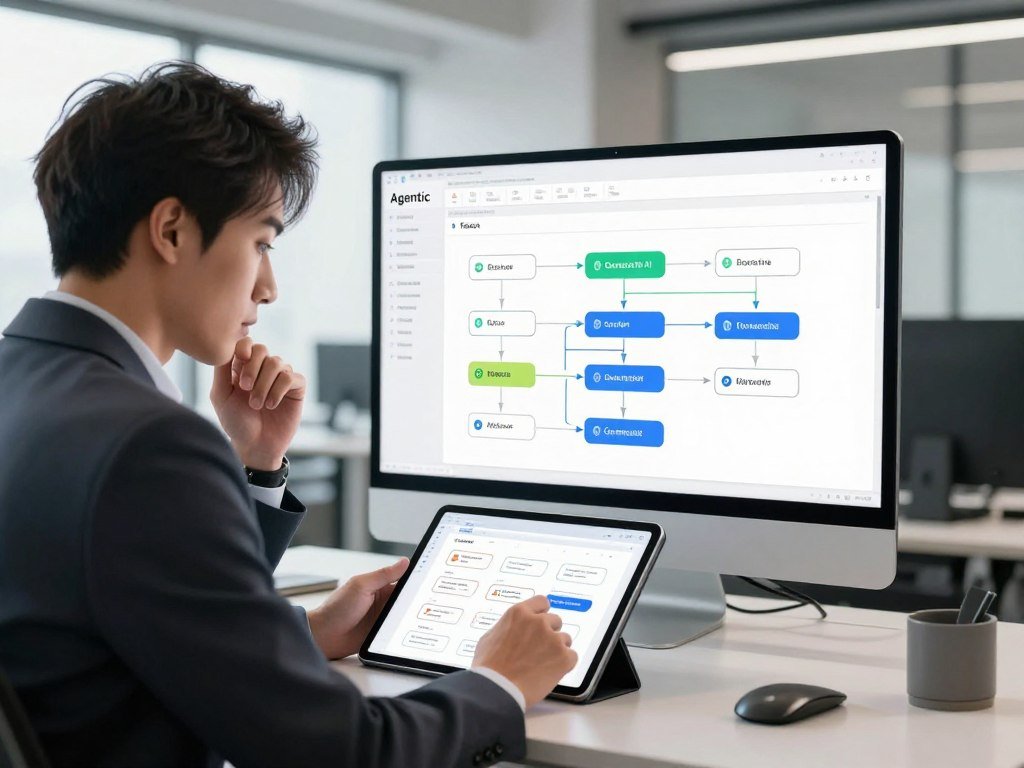
Generative AI creates an answer or asset; agentic AI can use that capability while carrying a task through multiple steps. For you, the difference affects how much work a tool can handle, what it can access, and when you need to step in. A prompt-led tool might draft a reply for you. A goal-driven system might gather details, prepare a reply, and route it for approval. Some products combine both approaches, but more autonomy calls for suitable oversight. This comparison explains what each approach does and how to match it to your work, business needs, and productivity goals. The right starting point is the work you need done, not the label attached to an AI tool.
Key Takeaways
- Generative AI creates content from prompts.
- Agentic AI pursues goals through decisions, tools, and actions.
- An AI agent is a component, not always a whole system.
- One workflow can combine content generation and goal-directed action.
- Match the approach to the task and set suitable oversight.
What Are Generative AI, AI Agents, and Agentic AI?
A language model can generate text, but it is not automatically an AI agent or an agentic system. The distinction matters because these terms describe different parts of artificial intelligence: a model, a software component, and a broader system. An LLM, or large language model, can generate or interpret language. It may be one part of a system that uses tools and takes steps toward a goal.
An LLM is not the same as agentic AI, and an AI agent is not necessarily the whole system. A useful way to understand “GenAI vs AI agent vs agentic AI” is to separate what creates content from what takes action. The terms can overlap in one product, but they do not mean the same thing.

Generative AI creates outputs from prompts
Generative AI creates content in response to prompts and context. Its outputs can include text, images, audio, video, and code. You can ask it to draft a message, explain a report, or create an image from a written description. The user sets the task, and the model returns an output for review or use.
An LLM is one kind of model used for language tasks. It can write text, answer questions, or interpret instructions. The term “LLM vs generative AI vs agentic AI” compares different things: an LLM is a model type, generative AI describes a capability, and agentic AI describes a wider way to pursue goals.
An AI agent is a goal-directed component
An AI agent is a software component that takes in information and acts toward a goal. It may use a model to interpret a request, then use a tool to retrieve data or change a record. One agent could search a knowledge base, while another checks an order status.
That explains “LLM vs AI agent vs agentic AI”: an LLM can supply language skills, while an agent can use tools to complete a task. An agent may still rely on people or other systems for direction, access, and approval.
Agentic AI coordinates actions toward an objective
Agentic AI describes a system or approach that plans steps, uses tools, checks results, and can act through other systems. An agentic system may use one agent or coordinate multiple specialized agents through an orchestration layer. It can also include dynamic task breakdown, persistent memory, and coordinated autonomy.
A beginner’s guide to agentic AI explains how these parts fit together. Research on AI agents and agentic systems also describes multi-agent collaboration and task decomposition.
Use “AI agent” for the acting component and “agentic system” for the wider setup that coordinates goal-directed work.
The terms are most useful when they tell you which part performs a job. Use “AI agent” for the acting component and “agentic system” for the wider setup that coordinates goal-directed work.
Agentic AI vs Generative AI: Key Differences
Ask the same system first to draft a follow-up email and then to send it, and the difference becomes visible. One creates the message; the other can coordinate a set of actions around it. The key distinction is whether the task ends with content or continues toward a goal.
Generative AI is suited to content creation, while agentic AI is suited to goal-oriented action. Both can use a model, but they differ in interaction, tool use, and typical output. The table compares their usual roles in practical terms.
| Dimension | Generative AI | Agentic AI | Practical difference |
|---|---|---|---|
| Primary aim | Creates a draft from a prompt | Pursues a goal across steps | Content versus task completion |
| Interaction pattern | Responds when asked | Can act between user prompts | One response versus ongoing work |
| Tool use | May work from prompt context | Can use connected tools | Text input versus outside systems |
| Typical result | Output for a person to use | Actions or completed workflow | Reviewable content versus changed records |
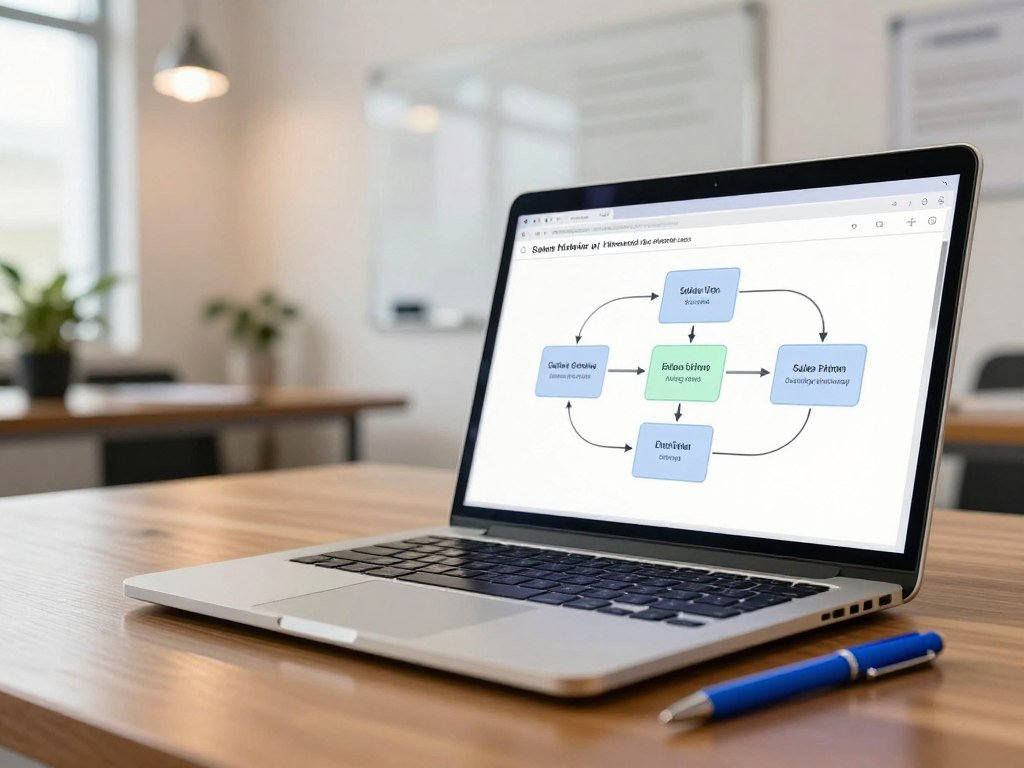
Agentic AI vs generative AI examples are easiest to understand when both handle the same sales follow-up task. A generative tool drafts an email for a representative to send. An agentic workflow can retrieve CRM details, generate a draft, request approval, send it through an API, and update the CRM.
The sales follow-up sequence shows how a content output can become part of a wider workflow. That difference changes the work left for you: a draft needs someone or something to carry out the next step.
A generated draft still needs a person or connected workflow to carry out the next action.
How Does an Agentic System Turn a Goal Into Actions?
Give an agent the goal of finding a suitable flight, and it needs to gather live options before it can apply the traveler’s constraints. The goal starts the process, but current data and clear rules shape the result. An agentic workflow is a coordinated sequence of steps in which an AI system uses information, tools, and feedback to pursue a goal.
A common operating cycle is perceive, plan, and act. The system receives a goal, checks its context, and breaks the task into smaller steps. It may use external datasets, web searches, APIs, or other agents to fill gaps before choosing an action.

For a flight search, the system might first identify the travel dates and budget. It then retrieves live options and filters them by price, schedule, or class. If no flight meets the rules, it can revise the search or ask you which constraint may change.
An API, or application programming interface, lets software exchange information or request actions. The Australian government’s agentic AI background describes how agents can use tools, memory, feedback, and human oversight. Model Context Protocol offers a standard way for AI applications to connect with external services and data.
After a tool call, the system checks the result against the goal. It may continue, change its plan, or ask for help when the result is unclear. Memory and feedback can support this work, but they are system features, not automatic properties of every LLM.
An LLM may provide language and reasoning, while the agent framework manages state and actions. The framework tracks the goal, available tools, prior results, and next step. Tool access should be limited to the data and actions the task actually requires.
Where Does Generative AI Fit Best?
A first draft of an email, report, or image is a strong fit when the desired result is an output for a person to review. It works well with clear prompts and a defined content goal. Generative AI can create new material or change existing content without taking over the steps that follow.
Use it when the task ends with a useful content asset. The model can work from instructions and context you provide, but its response is not proof that every fact is correct. When accuracy matters, a person should check names, figures, claims, and source material.

Drafting and transforming content
Generative AI can draft emails, reports, meeting notes, proposals, and documentation. You can ask for a warmer tone, a shorter version, or a format suited to a specific audience. It can also translate material or adapt it for a new reading level, region, or channel.
Brainstorming is another practical use. A prompt can ask for campaign themes, interview questions, or headings for a help page. Treat the results as options, then choose and edit the ideas that fit your audience and facts.
For SEO work, AI can help with research, content drafts, and page edits, while people remain responsible for accuracy and decisions. A practical guide to AI for SEO covers those uses and limits.
Summarizing and interpreting information
A model can summarize a long report, pull out listed themes, or restate technical material in plain language. It can compare passages you provide and help you see where two documents differ. That can save reading time, but it should not replace checking important details in the original.
Prompt context is information the model can use during a task. Providing a new file or instruction does not mean the model has changed its underlying training. That distinction matters when you share updated facts or want a response based on a particular document.
Creating code, images, and other media
Generative AI can suggest code, explain an error, or help write a test. Developers still need to review the code and confirm that it behaves as intended. A model can also create images, audio, and video from prompts or supplied material.
ChatGPT, DALL·E, Midjourney, and Gemini are examples of generative AI products. Image tools differ in style, editing, and control, so choose one based on the asset you need. A comparison of AI image generators can help you assess common options.
Generated media can contain errors, including odd details or inaccurate text inside an image. Check the finished asset before sharing or using it in business materials. Use generative AI alone when the work ends with a useful draft, summary, or other content asset.
What Can Agentic AI Do in a Workflow?
A flight-planning request is not just a writing task if the system has to retrieve current options and apply the traveler’s rules. Tool use changes the job: the system must gather information, make choices, and respond when an option fails. Agentic systems can help when a goal spans several tasks or tools.
They fit work that needs decisions across steps, not just a single output. Examples include customer requests, document research, software work, and trip planning. The system’s actual reach depends on its tools and the actions it is allowed to take.
Customer service and business operations
An agent can review a customer request, find the matching policy, check an order, and prepare a response. It can also route the case when the answer needs a specialist. Similar workflows can update records or flag stock changes when connected systems provide the needed data.
A Dynamiq multi-agent legal research assistant for an insurance client used an IBM Granite classifier to route incoming questions. It sent complex cases to a research agent, cutting contract review time from 90 minutes to 45 minutes. That result shows how a focused workflow can divide work between specialized parts.
Research, software, and professional tasks
Research systems can gather material, sort it by relevance, and prepare a report for review. A legal research workflow might route a simple question to a classifier and send a complex one to a specialist agent. In software work, an agent can write code, run tests, inspect failures, and revise its next step.
Those actions depend on connected tools and a defined goal. A test result may reveal a code issue, but a person still needs to decide whether the change meets the project’s requirements.
Travel and other personal coordination
A travel workflow can retrieve flight data through an API and filter options by rules such as price or class. A broader trip-planning workflow can check weather, compare flights, verify visa validity, and adapt the plan when a constraint is not met.
A flight-planning workflow can follow these four steps:
- Retrieve live flight data for the traveler’s dates.
- Filter results against price, class, and schedule rules.
- Check related constraints, including weather or visa validity.
- Present options or ask for confirmation before booking.
For a personal trip, the system can make a useful shortlist without making the final choice. Treat bookings, payments, and other consequential actions as approval points unless the workflow has explicit authority to proceed.
How Do Generative and Agentic AI Work Together?
A sales follow-up can combine both approaches: one drafts the message while the other coordinates the work around it. Each part has a clear job: a generative model creates content, and an agentic workflow handles connected steps. This lets one system use language skills without treating a draft as permission to act.
Generative AI can serve as a content-creating capability inside an agentic system. In a sales workflow, the system retrieves CRM details, sends those details to a model, and gets a draft email. It then routes that draft for approval, sends the approved message through an API, and updates the CRM record.
The model handles the writing task, while the agentic workflow tracks the goal and next steps. A representative can check the draft before it reaches a customer. The record update gives the team a history of the completed action.
A single workflow may also route different subtasks to specialized models. One model might interpret a customer’s request, while another drafts a response. The system can select a model based on the work, available data, or required output.
That approach can help when teams use several models for different jobs. In one reported measure, 78% of companies used two or more LLM model families. The share using three or more rose from 36% to 59% in one quarter.
Multiple models do not remove the need for clear task boundaries. The content-generating step should stay distinct from the permissions that allow the workflow to take action. Keep the content-generating step separate from the permissions that allow the workflow to take action.
How Should You Choose Between Them?
Start with generative AI when the deliverable is content, and consider agentic AI when completing the goal requires coordinated actions. The shape of the task is a better guide than a product label. A short draft usually needs less orchestration than a changing process across several systems.
Choose the simplest approach that can complete the work well. Robotic process automation, or RPA, is often a better fit for stable, rule-based processes. Agentic AI suits work that needs judgment or must adapt as conditions change.
| Task profile | Best starting point | Reason |
|---|---|---|
| Create or transform content | Generative AI | The task ends with a content output |
| Repeat a stable rule-based process | Robotic process automation | Fixed rules can handle repeat steps |
| Manage a changing multi-step workflow | Agentic AI with human approval gates where needed | The system must respond to decisions and exceptions |
Agentic workflows are most useful when a goal requires decisions across multiple steps or systems. A bounded content task usually needs less setup. A steady process with clear rules may work better with basic automation than with an agent that plans each action.
Use this checklist before choosing an approach:
- Define the outcome you need.
- Count the steps and systems involved.
- Identify the decisions and exceptions in the process.
- Set the level of human approval.
A practical business AI plan can help you shape a pilot around a real process. Do not add autonomous orchestration to a stable process that straightforward rules already handle well.
What Risks and Readiness Checks Matter?
A system that can alter records or send messages needs stronger controls than one that only produces a draft. More ability to act brings operational risks alongside the familiar risk of wrong content. A mistaken answer can mislead a reader; an unintended action can change a record or contact a customer.
Before deployment, check access, oversight, audit records, and task success. Gartner predicted that more than 40% of agentic AI projects would be canceled by 2027 because of costs, unclear business value, and inadequate risk controls. Weak integrations can add delays or cause a system to act on incomplete data.
A February 2026 review identified hallucination and brittleness in AI agents, plus emergent behavior and coordination failure in agentic AI systems. These issues can appear when a model misreads information or agents behave in ways the system designer did not expect.
Production readiness also depends on API orchestration, approval gates, audit trails, and task success rates. Planning, external API calls, persistent memory, feedback loops, and guardrails help teams build agentic platforms. Yet roughly 5% of enterprise agentic AI projects reach production, with security reviews, observability, and integration cited as common barriers.
A research review of agentic AI risks describes hallucination, brittleness, emergent behavior, and coordination failure. Teams also need a clear way to see what the system did and why. Without observability, it is harder to find a failed tool call or explain a wrong result.
Use these four readiness checks before a launch:
- Grant least-privilege access to data and tools.
- Set thresholds for human approval.
- Keep action logs that people can audit.
- Measure task success against a defined goal.
Business plans also need useful measures. Thirty-five percent of professionals at organizations with a named AI strategy say day-to-day work does not reflect it. Only 18% of organizations track any AI ROI metrics. Test the system on realistic exceptions and confirm that every consequential action can be reviewed or stopped.
What Do Adoption and Benchmarks Tell Us?
Adoption forecasts and benchmark rankings describe different things: one signals expected deployment, while the other compares measured model performance. Neither settles fit for a particular workflow. As of October 29, 2026, BenchLM’s agentic category listed 63 supported models and 71 estimated models.
Benchmark scores are snapshots tied to a category and its evidence set, not proof that one model is best for every workflow. BenchLM’s agentic score is relative to its current evidence set, not a raw percentage from one test. Its rank-confidence coverage for point estimates has not been validated.
| Measure | Model | BenchLM result |
|---|---|---|
| Agentic rank 1 | Claude Opus 5.5 | 90.0, Supported |
| Agentic rank 2 | Claude Fable 5.1 | 80.7, Supported |
| Agentic rank 3 | Claude Opus 5 | 78.8, Supported |
| Top open-weight model | Ling 3.1 Flash | 65.47 overall |
| Fastest measured model | Gemini 3.5 Flash-Lite | 461 tokens per second |
GPT-6 Astra had the largest useful context window at 1.05 million tokens. On BenchLM’s agentic software-engineering and terminal-task benchmark, GPT-5.5 scored 82, GPT-5.3 Codex scored 77.3, and GPT-5.4 scored 75.1.
The October 2026 agentic leaderboard weighted BrowseComp, GDPval-AA, and Terminal-Bench 2.1 at 8% each. OSWorld-Verified and Terminal-Bench 2.0 each counted for 7%, while AutomationBench and JobBench each counted for 6%. The mix shows why results depend on what a benchmark tests.
Adoption measures are different again. In 2026, Gartner expected task-specific agents in 40% of enterprise applications, up from less than 5% in 2025. McKinsey reported that 62% of organizations were already using AI agents when its 2026 adoption figures were discussed. A separate professional measure found 74% use AI several times a week, and most expect agentic AI to be central to their workflow by 2030.
Match any benchmark result to the task you need done and validate it in your own workflow.
Benchmarks can help narrow a model list, but they cannot replace a test using your data, tools, and success measures. Match any benchmark result to the task you need done and validate it in your own workflow.
Conclusion
Choose the approach that matches the shape of the work: a content deliverable or a goal that requires a sequence of actions. Generative AI fits work that ends in content, while agentic AI fits goals that require coordinated decisions and actions. A combined system can use both when a workflow needs content and follow-through.
Start with one bounded workflow rather than changing a whole business process at once. Set the system’s permissions, name the result you want, and pick a measure that shows whether the pilot helped. That measure might track task success, time saved, or review effort.
Pick one contained task, define what success means, and decide which actions need your approval before the pilot begins.
FAQ
Can a generative AI model be part of an agentic system?
Yes, a generative AI model can be part of an agentic system. It can draft text or interpret instructions while the agentic framework tracks the goal, manages tools, and selects next steps. For example, a model can prepare a customer reply, while the wider system routes it for review and records the result.
Is an AI agent the same as an agentic AI system?
No, an AI agent is a component, while an agentic AI system is the wider setup. The system may include one agent, supporting software, and tools, or it may coordinate several agents. Calling the whole setup an agent can hide which part makes decisions and which part controls access to outside systems.
Does agentic AI always need multiple agents?
No, one agent can pursue a goal without help from other agents. Multiple agents are useful when a task divides into specialized work, such as sorting questions, researching complex cases, and preparing a summary. Coordination adds extra moving parts, so a single agent may suit a smaller or simpler workflow.
Can generative AI use tools?
Yes, generative AI can use tools when a product or framework connects it to them. Tool access alone does not make a system agentic. The system also needs to pursue a goal across steps, track results, and decide what to do next. A tool that only answers one request still has a narrower role.
Is agentic AI safe for sending customer emails?
Agentic AI can send customer emails when its access and workflow allow that action, but start with scoped permissions and human review. Keep a person’s approval between the draft and the send until testing shows the workflow behaves as intended. Review the message, recipient, and CRM details before granting wider authority.
Which should a small team try first?
A small team should start with generative AI for a bounded content task. It can test a draft, summary, or code suggestion without connecting many systems. Consider an agentic pilot when a recurring task spans steps or tools and has clear controls. Keep the first trial small enough to review each result.



