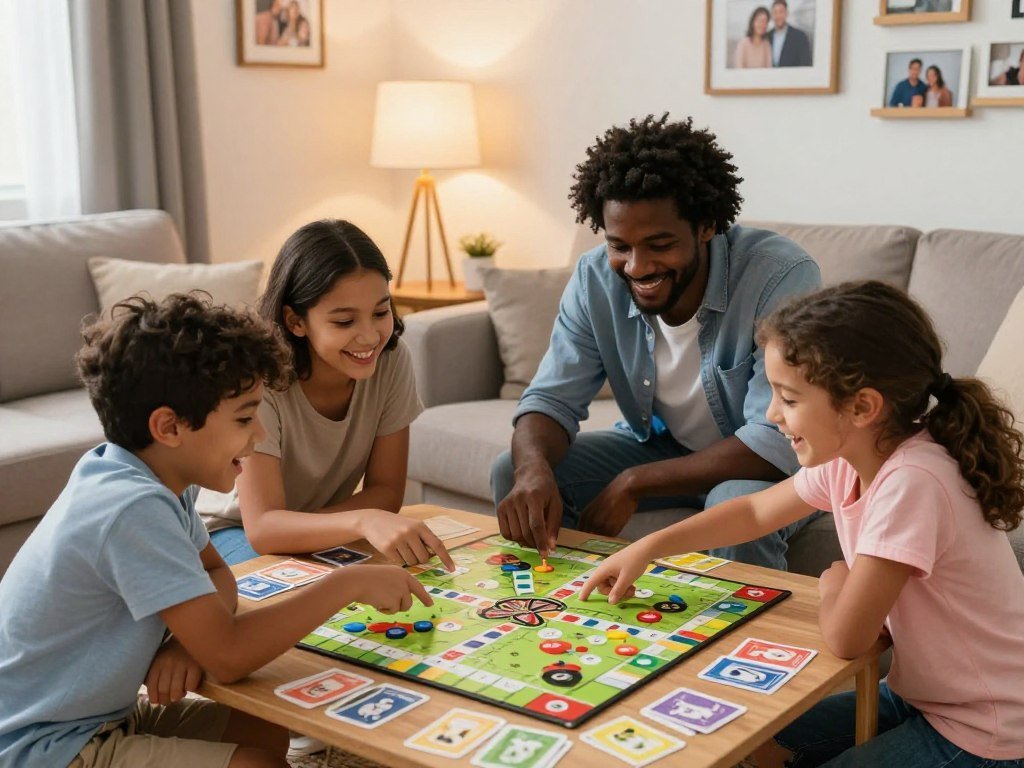
A good family game night gives younger players a way in and gives older players a reason to stay at the table. The best family board games for all ages balance an easy start with choices that keep adults interested.
Ages, reading confidence, and patience for competition can differ widely in one family. A cooperative game is a game in which players work toward a shared win or loss instead of competing against one another. The right mix can bring screen-free fun to game nights, with quick turns, deeper choices, and shared goals.
Look for a game kids can join without making adults feel stuck. A great family game gives everyone something to notice, plan, or laugh about, even when players bring different skills to the table.
Key Takeaways
- Start with the youngest player who will play independently.
- Check the listed player count and play time.
- Match the group’s mood for competition or shared goals.
- Reading comfort and attention matter as much as age.
- Choose decisions adults and older kids can enjoy, too.
Choose for the youngest person who will play independently, then look for enough decisions to keep the rest of the table interested.
How do you choose a game for a mixed-age family?
The easiest first filter is whether the youngest player can follow the rules with the amount of help your family wants to give. Start there, then weigh player count, play time, and how much direct competition your family enjoys.
A box age is a starting guide, not a promise about reading skill or attention span. Families with 4-year-olds should seek a clearly suitable age label, rather than assume a game rated 7+ or 8+ will fit.
For a four-year-old, choose a game labeled for that age; adult help does not make a 7+ or 8+ label a promise of fit.
For the search “best board games for kids ages 4 and up,” focus on games with a suitable age label and simple rules. An adult may still need to guide a young player through a turn.
In 2026, these board games list different age ranges, player counts, and play times:
| Game | Listed age | Players | Play time |
|---|---|---|---|
| Ticket to Ride | 8+ | 2-5 | 45-60 minutes |
| Carcassonne | 7+ | 2-5 | 35-45 minutes |
| Smoothie Wars | 12+ | 3-8 | 45-60 minutes |
Play can help kids practice turn-taking, communication, problem-solving, and resilience. It can also build number recognition, counting, subitizing, or quickly recognizing small amounts, and matching.
A family game can also support learning without feeling like a lesson. This family board game guide offers more ways to compare age fit, session length, and group size.
For a child who is not yet reading comfortably, favor clear visual cues and an adult-ready explanation over a tempting age label.
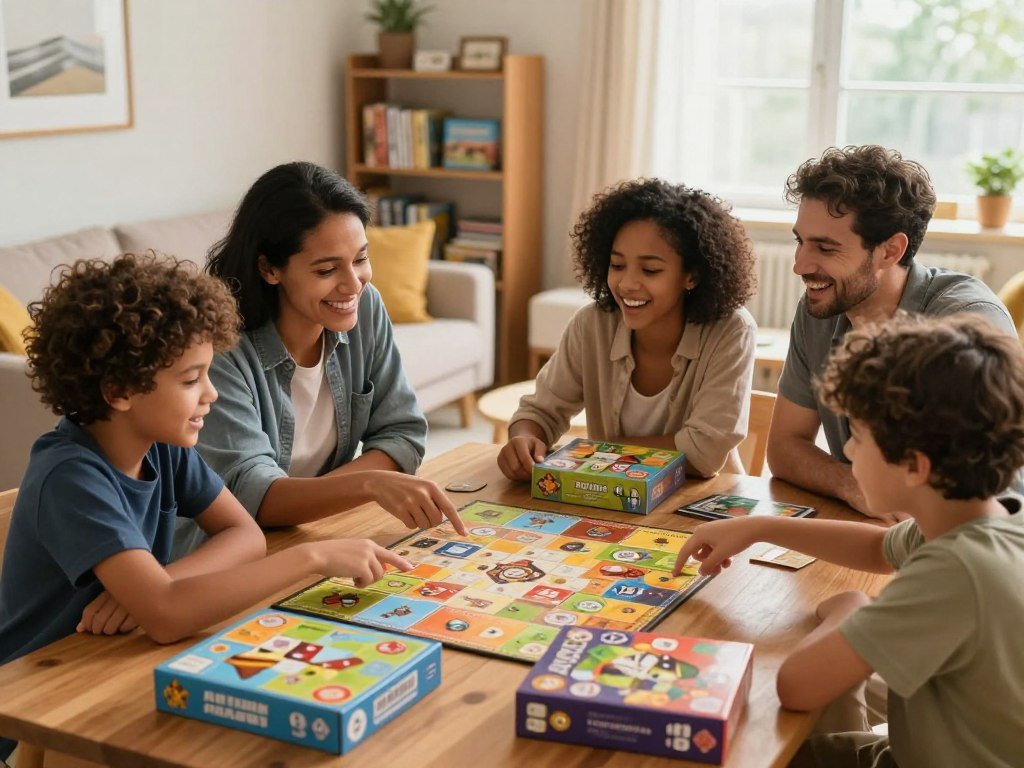
Which are the best family board games for all ages?
A strong all-ages shortlist includes accessible tile and route games alongside more focused strategy and cooperative choices. These ten picks suit different family game styles, rather than forming a popularity ranking.
For adults seeking a game with more thought, try the strategic or cooperative options below. A useful older list, including one from 2020, should be checked against the edition’s current age, player-count, and play-time details.
Easy-to-approach picks for mixed ages
- Ticket to Ride: Build train routes through a map, with a clear goal and tactical route choices.
- Carcassonne: Place landscape tiles to grow a shared map, with optional follower placement.
- Frosted Blooms: Choose garden layouts and score both the landscapes and gaps between tiles.
- Got Five: Use information at the table to work out your own five hidden numbers.
- Market Fresh: Stack produce crates and look for ways to score points.
These board games offer visible pieces and distinct turns, so new players can follow what others are doing. The list also gives a family game collection a mix of spatial choices and number play.
Picks with more strategy or a cooperative twist
- Smoothie Wars: Make business choices about fruit, locations, and prices across a week of turns.
- Wingspan Pocket: A standalone card game in the Wingspan universe for players who like focused play.
- Las Vegas: Roll dice and assign them to casinos to compete for rewards.
- Carnuta: Manage resources as you make potions in a compact strategy game.
- The Lord of the Rings: The Two Towers Trick-Taking Game: Take on shared story goals through card play.
For other ways to compare ages, group sizes, and play styles, see this guide to board games for kids and adults. It can help you spot a great game for the people who gather at your table.
Treat the ten picks as a starting shortlist, then let your group’s appetite for competition make the final cut.
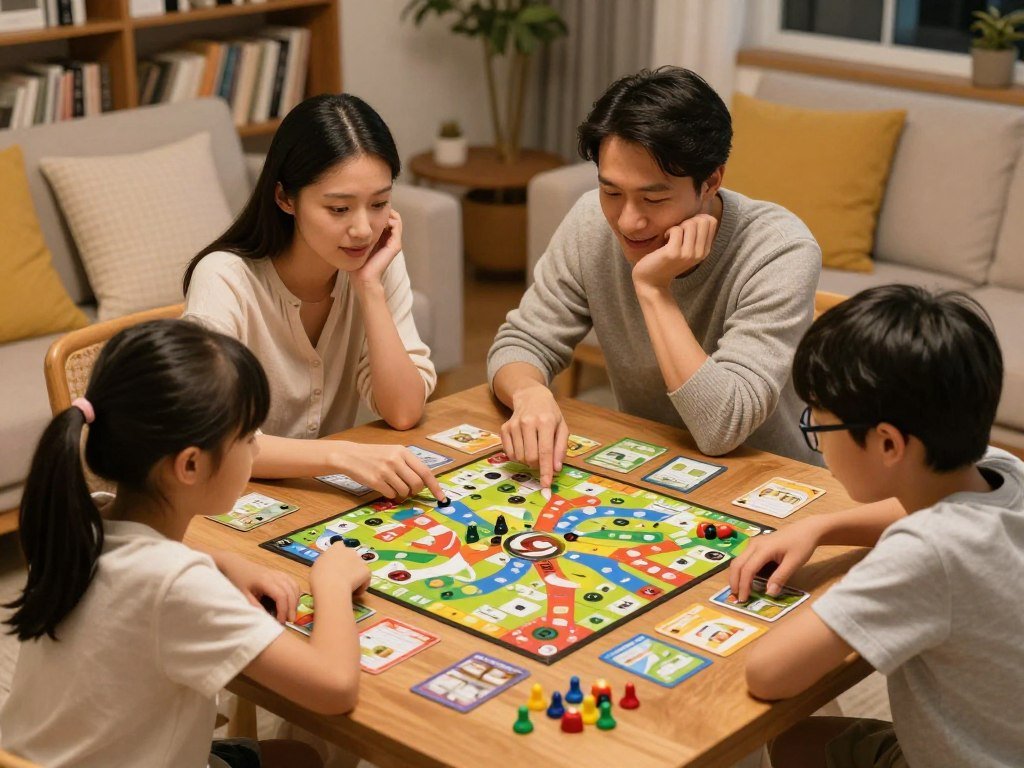
Which games suit younger school-age kids?
Games with visible pieces and a clear turn structure can make it easier for younger school-age children to follow what is happening. Tile placement, matching, and short choices can help kids join in, though number recognition and reading still affect the fit.
Ticket to Ride asks players to build train routes across a map. Players compete to claim routes, rather than directly sabotaging another player’s plans.
Carcassonne gives each player a simple turn: draw a tile, place it, then optionally place a follower. That pattern can help a child see how a choice changes the map.
Frosted Blooms is listed for ages 8+ and scores chosen landscapes as well as gaps between garden tiles. Got Five, also listed for ages 8+, asks players to identify their own five numbers using information visible to others.
Wingspan Pocket is a standalone card game in the Wingspan universe, listed for ages 9+. Market Fresh, listed for ages 8+, has players stack produce crates to score points.
Las Vegas is listed for ages 8+ and uses dice. Players assign them to casinos as they compete for rewards, so children can practice number choices while watching the results.
These examples are listed for ages 8+ to 9+, so they are not recommendations for 4-year-olds. If your family also plays digital titles, this family games guide for Nintendo Switch covers age and skill fit.
- Check the symbol or number demands.
- Notice how much reading the rules and turns require.
- See whether a child has time to decide before play moves on.
Before play, check whether the child must read, recognize numbers, or track several choices without help.
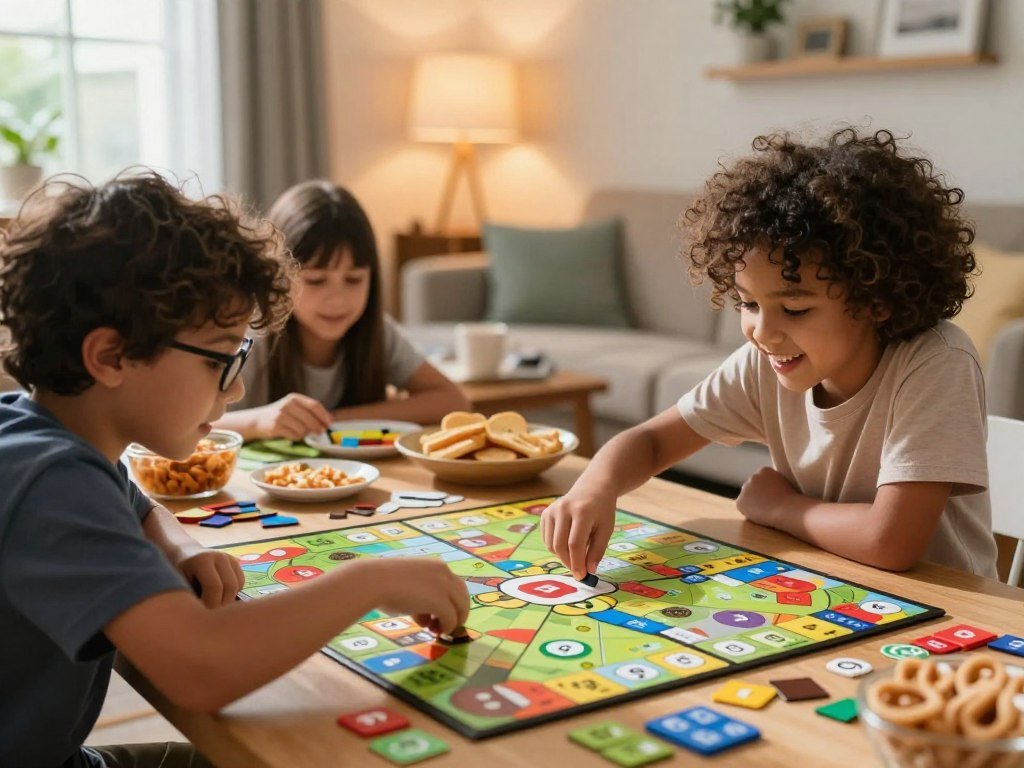
What keeps 10-year-olds and older kids engaged?
Older kids often stay engaged when each turn offers a choice that can change their next move. Planning and tactics give players more to think about than simple matching.
Smoothie Wars turns business choices into a sequence: players buy fruit, choose locations, set prices, and compete through a week represented by game turns. Each move can shape what a player tries next.
Toy Battle is a two-player contest with quick rounds, tactical challenges, and multiple battle maps. It can suit kids who enjoy a direct challenge and want a game built for two players.
Quest for El Dorado combines deck-building with racing and exploration. Players can weigh their card choices against the need to move across the map.
It’s a Wonderful World centers on strategic card drafting and engine-building, where choices help shape later play. It supports solo play or a group, giving one game room for different table sizes.
“10-year-old” is not a skill level. Reading confidence, willingness to plan, and comfort with direct competition all affect whether game features feel fun or frustrating.
If your child has a short window to play, these games for a quick break offer ideas for matching a game to available time and energy.
Ask the child whether they would rather plan a route, outthink an opponent, or build a longer strategy before choosing.
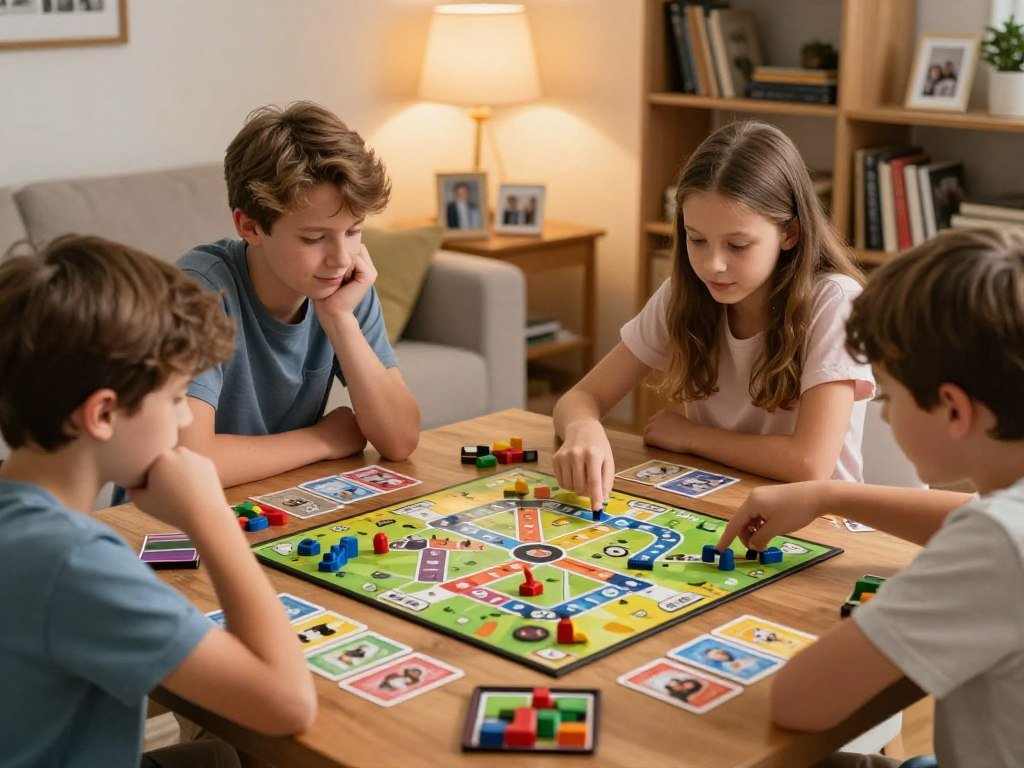
Which cooperative games help families work together?
A cooperative game is a good choice when your family wants to solve a shared problem instead of competing for an individual win. Shared goals can suit groups that prefer teamwork or want adults to coach during play.
Players share one win-or-loss outcome in a cooperative game. When everyone can see the same information, an adult’s hints can feel like part of play, not an unfair edge.
Shared goals with quiet communication
Take Time asks players to cooperatively place cards around a clock without talking. The quiet rule makes players look for clues in the cards and the changing layout.
The Lord of the Rings: The Two Towers Trick-Taking Game supports 1-4 players, takes 20 minutes, and is listed for ages 10+. It is standalone, while continuing the narrative of The Fellowship of the Ring: Trick-Taking Game.
Players control one or more story characters, each with individual goals and abilities. They work together on missions tied to each chapter, giving the group several small problems to solve.
For another take on cooperative games on Steam, consider how digital teamwork compares with shared table play.
Story campaigns and app-supported teamwork
Cozy Stickerville is listed for ages 10+ and builds a village through a campaign of 10 games. Players add more than 800 stickers over the campaign.
Cozy Stickerville’s rules depend on reading, so children playing without adult help may need strong reading skills. A family review recommends age 10+ for independent play.
Boss Fighters QR is listed for ages 10+ and uses an app to track cooperative boss battles during a campaign. The app follows the battles while players work as a team.
For a child playing without adult help, check reading demands as carefully as the age label.
Which games fit a two-player or solo table?
Start with the player count, since a game that cannot seat everyone is an easy mismatch. Solo play is available in Ace of Spades and Everdell Emerland, while Carnuta suits a group of 2-4.
These listings make it easier to compare the age range and play time before choosing a card game or board game:
| Game | Listed age | Players | Play time |
|---|---|---|---|
| Carnuta | 10+ | 2-4 | About 25 minutes |
| Everdell Emerland | 10+ | 1-4 | 30-120 minutes |
| Ace of Spades | 10+ | 1-2 | 45 minutes |
Ace of Spades supports 1-2 players, and players use poker hands to defeat 12 demons. Carnuta supports 2-4 players and takes about 25 minutes, with players managing resources to make potions.
Everdell Emerland supports 1-4 players, with a listed play time of 30-120 minutes. Its wider time range may suit a longer session better than a quick card game.
For a lighter option with table talk and player interaction, try Cover Your Assets. Flip 7 With a Vengeance adds draw-or-stop tension: players race to 200 points, but repeating a number makes them bust.
Dino Racer uses cards to move dinosaurs, then has players draft cards to show which dinosaurs they are betting on. Hanami uses area majority, as players place tiles around sites; players can learn it in 10 minutes and play in under an hour.
A two-player games guide can help when your table often has just two people. Dice, cards, and tile layouts each create a different feel for that smaller group.
If the group includes a solo player, verify that solo play is supported rather than assuming a two-player mode covers it.
How can you make a family game night work for everyone?
A smoother game night starts with agreement on how long the group wants to play and whether everyone wants to compete. A shared plan can make the first turn easier for kids and adults alike.
Try these four steps before opening the box:
- Agree on a play-time limit.
- Choose competitive or cooperative play together.
- Have one adult explain the first turn.
- Pause after a round to check whether the rules are clear.
Marvel United is a cooperative game featuring Marvel heroes. Ghost Fightin’ Treasure Hunters gives players a different shared task: collect treasures while managing a ghost threat.
A welcoming game night gives every player a clear plan before the first turn begins.
Adults playing without kids may still prefer lighter choices. An age rating alone does not ensure that everyone will enjoy a game’s style or pace.
If you want a digital option for another night, browse free Steam games for groups. Keep the choice tied to the group’s mood, since screen-free play may be the goal tonight.
A game collection does not need to cover every mood at once. A clear stop time can help little ones know what to expect, while adults can save a longer game for another evening.
Keep a shorter backup option ready if attention or energy drops.
Conclusion
The best pick for your table is the one everyone can understand and still wants to play again. Choose for the youngest independent player, while keeping enough satisfying choices for adults and older kids.
That balance matters more than choosing a game because its box seems right for one age. A game should fit the players who are actually sitting down, including their patience for planning, reading, and competition.
Before the next game night, ask each player to name one thing they want from the game, then choose a box that meets the group’s shared priorities.
FAQ
Can a family game be fun for adults and young kids at the same time?
Yes, a family game can work for adults and young kids when the basic turn is easy to follow but still offers meaningful choices. Adults can help explain the turn while letting children make their own moves. A cooperative game may suit a family that prefers a shared win over direct competition.
Does a game’s age recommendation mean a child can play without help?
No, an age recommendation does not guarantee a child can play without help. Reading demands, attention, and past game experience all affect the fit. Cozy Stickerville’s rules depend on reading, so a child may need adult support even when the age label seems suitable.
Which family games work for a group of six or more?
Smoothie Wars supports 3-8 players, so it can seat a group of six or more. Check the listed player range for any other game before setting it out. A game for five players will not fit six people unless someone is happy to watch instead.
What are good games for a family with only two players?
Ace of Spades supports 1-2 players, while Ticket to Ride and Carcassonne each support 2-5. That makes all three possible choices for two people, though their play styles differ. Check the age label and play time as well, especially when a child is one of the players.
Can a cooperative game still challenge adults?
Yes, cooperative games can challenge adults through chapter missions, individual character goals, or campaign progress. Players may need to coordinate their choices while working toward one shared outcome. The group can also raise the challenge by limiting hints, if everyone already knows the rules.
How do you choose between a card game and a board game for family night?
Choose based on the interaction your group likes and the space available on the table. A quick card game can suit a short session, while tile or map games create a visible layout that changes during play. Also consider whether players want a compact deck or more pieces to handle.