A great DS game can be a fast race, a grid puzzle, or a story that keeps you thinking after you close the system. If you are choosing for the first time, this range of picks can help you find a fit for your mood, your play style, and the time you have.
These top ranked DS games are a curated selection, not a strict ranking. The order does not claim one game is objectively better than another. Instead, the picks cover racing, puzzles, rhythm, action, role-playing games (RPGs), and story-driven adventures, with different ways to play. A stylus flick is a quick swipe of the DS stylus across the touch screen that registers as a gesture.
Some games suit short breaks, while others ask you to follow a longer story or learn a new control style. Think about whether you want buttons, touch controls, or a mix before choosing. The best fit depends on what you enjoy doing, not on a single score or rank. Pick by the kind of play you want most, not by expecting one title to suit every player.
Key Takeaways
- Choose a game by its main activity and control style.
- Mario Kart DS offers quick races and solo challenges.
- Touch-focused games work best with precise input.
- Longer RPGs suit players who want character growth.
- Age ratings, reading comfort, and interests matter for kids.
Mario Kart DS
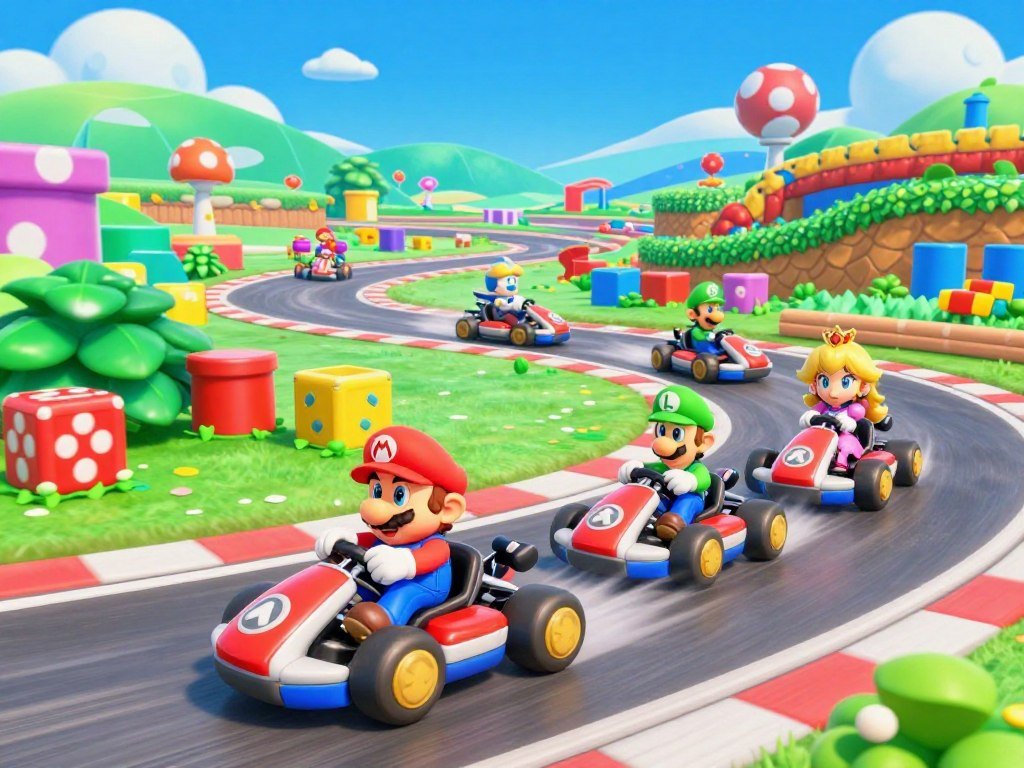
Mario Kart DS is the most flexible pick here for a player who wants a short race without giving up solo challenges. The quick matches make it easy to fit a game into a break, while several modes give you reasons to return.
Released in 2005, Mario Kart DS introduced online play to the Mario Kart series. Solo play includes missions and Battle mode against computer-controlled opponents, so you can keep playing when no other racers are nearby. Its mix of races and challenges also makes it a handy choice for players who want a clear goal each time they start.
| Mode | Main activity | Solo option |
|---|---|---|
| Grand Prix | Race through a course | Yes |
| Missions | Complete driving challenges | Yes |
| Battle | Pop balloons or collect coins against bots | Yes |
A Grand Prix run gives you a familiar race format, while missions ask you to handle specific driving tasks. Try one when you want more than a quick lap. The range of solo modes means that a spare moment can become a race or a focused challenge.
Solo races and missions
A race suits a short break because each course gives you a finish line and a simple aim. Missions change that rhythm with tasks that test how you steer, turn, and use items. That change can make the same driving feel fresh without asking you to learn a different game.
The series gained online play with this entry, an important step for Mario Kart players. An IGN review of Mario Kart DS discusses its solo modes and multiplayer features. You can also compare its style with other Nintendo DS game picks if you are weighing several kinds of play.
Multiplayer and replay sessions
Multiplayer adds a social reason to return, but the solo modes stand on their own. Choose a course when you want a quick contest, or pick a mission when you want a more exact task. Try a mission when a standard race starts to feel too familiar.
A quick race fits a short break, while a mission gives that same session a different goal.
Super Scribblenauts and Other DS Games to Emulate
Super Scribblenauts is a strong fit for players who like solving a prompt by trying unexpected combinations of words. Its open-ended puzzles invite you to think beyond the first answer that comes to mind.
The sequel added adjectives, letting you change the qualities of objects you create. That gives you more ways to answer a puzzle, since a solution can depend on how an object behaves. Super Scribblenauts also addressed control problems that affected the first game, making its word-based gameplay easier to handle.
The game was released on October 12, 2010, and ranks 25th among Nintendo DS games in one all-time list. Those details give a sense of its place in the series, but the central appeal is still experimentation. A strange prompt can reward a stranger word choice.
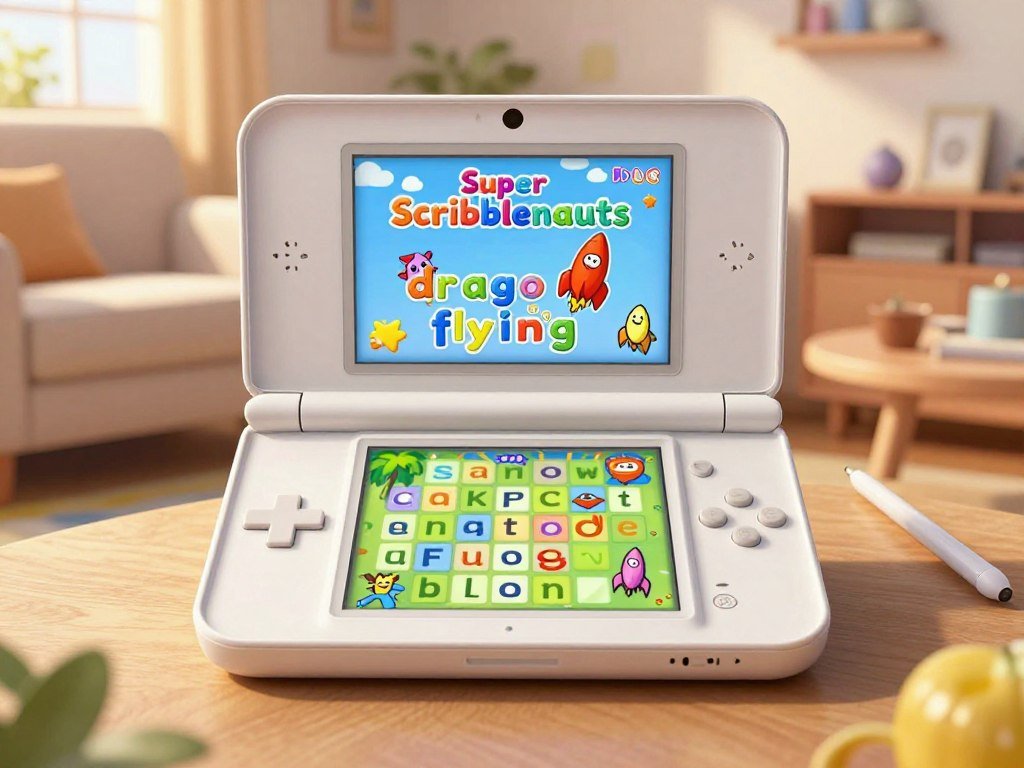
Touch-focused DS games are most comfortable to emulate when the emulator can map taps and stylus gestures to a mouse, touch screen, or other precise input. Check these parts of the setup before a longer session:
- Check that touch-input mapping works for the game.
- Test whether quick gestures register reliably.
- Confirm that both DS screens are easy to view.
Some DS games rely on tapping, while others need quick movement across the screen. A setup that handles only buttons can make those actions frustrating. Advice on choosing a Nintendo DS emulator can help you compare screen layouts and touch input.
For more picks that depend on the handheld’s controls, see these DS games by play style. Super Scribblenauts suits players who like testing ideas rather than following one fixed answer. Test a few rapid touch gestures before settling into a long puzzle session.
Top Ranked DS Games for Rhythm Fans: Rhythm Heaven
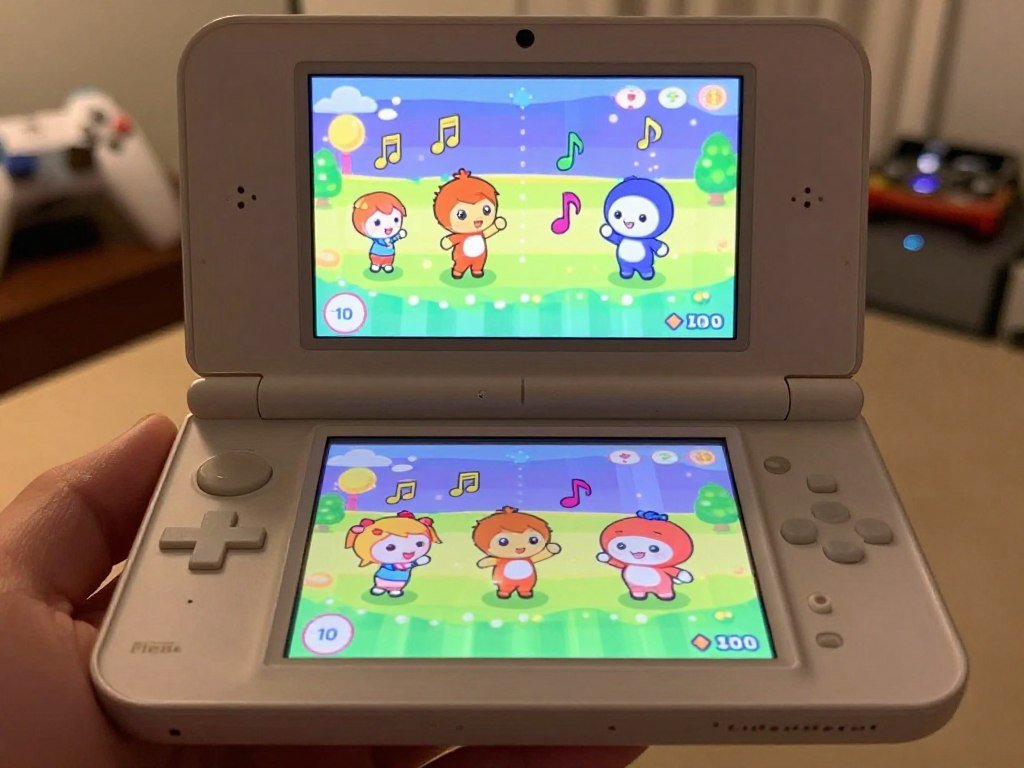
Rhythm Heaven is the pick for players who want the touch screen to turn simple musical timing into a test of attention. Its short rhythm scenes ask you to watch, listen, and respond at the right moment.
An all-time Nintendo DS ranking contains 25 games and weighs innovation, use of DS features, and progress within a game’s franchise. Those measures explain what a ranking values, but they do not replace your own taste. In that list, Rhythm Heaven sits at number 24.
What top 25 DS games of all time lists can tell you
A top 25 DS games of all time list can offer context for how people assess a game’s design. Its criteria may favor fresh ideas or clever use of the handheld, even when another player cares more about story or challenge.
Rhythm Heaven was released on April 5, 2009. Its place in a ranking can help you compare its design with other games, but personal fit matters more than the number. A music game works best when its timing feels satisfying to you.
Rhythm Heaven’s tap-and-flick play
You tap and flick the stylus on the touch screen to match actions shown on screen. Each scene gives you a small task, and the music helps signal when to act. The controls are easy to understand, but keeping the beat takes attention.
Instead of steering or building a long battle plan, you focus on the next cue. That gives the game a different pace from a racing title or an RPG. Try a few stages before you decide whether its timing suits your hands and ears.
Players who enjoy music and quick reactions may find the controls click quickly. Others may prefer a game with more room to pause and plan. Give the rhythm a few stages to click before deciding whether its timing suits you.
Best DS and GBA Games for Castlevania Fans
Portrait of Ruin is the Castlevania pick for players who want action and the option to switch between two characters. Its two-character setup gives combat and exploration a different feel from games centered on one hero.
Released on December 5, 2006, Castlevania: Portrait of Ruin ranks 23rd among Nintendo DS games in one ranking. Players can switch between Jonathan Morris and Charlotte Aulin. The two characters give you different ways to approach a challenge, so switching is part of the action rather than a story detail alone.
The Castlevania series has three Game Boy Advance entries and three DS entries. If you want to play the DS games in release order, the sequence is:
- Castlevania: Dawn of Sorrow
- Castlevania: Portrait of Ruin
- Castlevania: Order of Ecclesia

That list gives you a clear route through the DS releases. You can also play Portrait of Ruin as its own action-adventure, especially if character switching sounds fun. Its place in the series does not force you to start with the first DS game.
For the broader question of the best DS and GBA games, think about whether you want to follow one system’s releases or sample the series across both. The six handheld entries offer a defined set of choices, with three games on each system. If playing the DS trilogy in release order matters to you, start with Dawn of Sorrow.
Kirby: Mass Attack for Kids Who Like Touch Controls
Kirby: Mass Attack is a natural starting point for a child who likes directing characters with touch controls. The group of Kirbys gives each touch action a visible purpose on the screen.
Released on September 19, 2011, Kirby: Mass Attack ranks 22nd among Nintendo DS games in one all-time list. Players use touch controls to direct a squad of Kirbys through its challenges. That control style may suit a child who enjoys guiding several characters at once, but it will not fit every young player.
| Game | Touch-screen task | What the player guides |
|---|---|---|
| Kirby: Mass Attack | Touch to control multiple characters | A squad of Kirbys |
| Kirby: Canvas Curse | Draw paths with the stylus | Kirby along a route |
| The Legend of Zelda: Phantom Hourglass | Use an all-touch control scheme | Link and his actions |
These games show how touch input can lead to very different kinds of play. Kirby: Canvas Curse asks you to draw paths, while Phantom Hourglass uses touch for Link’s actions. Mass Attack instead puts a small group under your direction.
For a younger player, interests, reading comfort, and the game’s age rating matter more than a broad age label. One child may enjoy repeated challenges, while another may prefer a simple story or familiar characters. Adults can also watch how the player responds to the game’s pace.
It helps to match the game to the child in front of you, rather than assuming all kids like the same controls. Touch play can feel direct, but its challenges still vary by title. Check the individual game’s age rating and challenge level before handing it to a younger player.
Dragon Quest IX: Sentinels of the Starry Skies
Dragon Quest IX is the pick for players who want a fantasy journey to occupy more than a handful of short sessions. This long-form RPG centers on a party, battles, and character growth over time.
Released on July 11, 2010, Dragon Quest IX ranks 21st among Nintendo DS games in one ranking. Its appeal comes from building a party and taking that group through a fantasy story. Expect a longer commitment than a quick race or a single puzzle, with progress tied to battles and character development.
Players drawn to RPGs may enjoy:
- Building a party to face different threats.
- Following a story across a fantasy world.
- Improving characters for tougher battles.
Chrono Trigger is another DS RPG option, though its original version appeared on SNES in 1995. It offers a different route for players interested in a classic story-driven role-playing game.
Advance Wars is a strategy-battle alternative, not another fantasy RPG. Its appeal comes from planning moves and reading the battlefield, rather than following a party through a fantasy world. That distinction can help you choose between story-focused character growth and tactical battles.
Dragon Quest IX is a better fit when you want to invest in characters and see how a longer adventure unfolds. Its world and battles give you a steady reason to keep moving forward. Choose it when character growth and a long adventure matter more than a quick match.
Picross DS
Picross DS is the best fit here for a player who likes turning clues into a precise visual answer. Its numbered grids make logic the main challenge, rather than quick reactions.
Released on July 30, 2007, Picross DS ranks 20th among Nintendo DS games in one ranking. Players use the clues around a grid to decide which boxes to fill. The aim is to reveal a pixel picture by working out which squares belong, one line at a time.
Solving numbered grids
Each number gives a clue about a row or column. You use those clues to mark boxes, then check how the lines fit together. The pleasure comes from making a sound deduction, not from tapping faster than the screen changes.
A grid can feel hard at first when several lines remain uncertain. Smaller puzzles give you room to learn how the clues work before the picture grows more complex.
When three dimensions or mixed puzzles fit better
Picross is one kind of logic puzzle, while other games change the puzzle surface or add varied tasks. Compare these options:
| Game | Puzzle surface | Player action | Result |
|---|---|---|---|
| Picross DS | Numbered grid | Fill selected boxes | Pixel picture |
| Picross 3D | Rectangular block | Remove cubes using clues | A three-dimensional shape |
| Pic Pic | Three puzzle formats | Follow each format’s rules | A completed picture |
Professor Layton is a neighboring choice if you prefer a story and varied brainteasers over repeating a grid format. Its puzzles offer a different rhythm, with each challenge tied to a broader adventure.
Picross DS keeps your attention on the clues and the pattern they form. If you like careful deduction, a completed picture can feel earned. Start with a smaller puzzle if the numbered clues feel overwhelming at first.
999: Nine Hours, Nine Persons, Nine Doors
999 is the pick for players who want their puzzle choices tied to a tense, branching mystery. Its escape-room decisions connect problem-solving with the fate of a group of trapped characters.
Released on November 16, 2010, 999 ranks 19th among Nintendo DS games in one ranking. The protagonist is trapped on a ship with eight other characters, and the story can reach six endings. Those six endings make choices and revisits to earlier scenes part of the experience, not just a way to see the same plot twice.
Escape-room decisions
The ship setting gives puzzles a sense of pressure, since the characters face danger while trying to escape. You move through scenes, make decisions, and see how the story responds. This structure suits players who like connecting clues with character choices.
Some decisions may lead to a route that leaves questions unanswered. Remembering what you chose can help you make sense of a new branch when you return to an earlier scene.
How branching endings reward another playthrough
Six endings give the story room to change direction. A replay can show how a choice affects later scenes, and a different route may reveal information that was not clear before.
Ghost Trick is another DS mystery-adventure, with a very different premise. A ghost manipulates objects while investigating a death, so its central idea focuses on changing events through objects rather than escaping a ship.
999 works best if you enjoy stories that ask you to notice details and weigh decisions. The puzzles help create tension, while the branches give you a reason to revisit key moments. Keep track of key choices if you want to understand how one route differs from another.
Phoenix Wright: Ace Attorney
Phoenix Wright: Ace Attorney suits players who would rather catch a contradiction than win a fight. Its case-building loop rewards close reading, careful questions, and attention to small details.
Released on October 11, 2005, Phoenix Wright: Ace Attorney ranks 18th among Nintendo DS games in one ranking. The gameplay moves from crime-scene investigation to suspect questioning, then to exposing lies in witness testimony. Observation and reasoning drive the action instead of real-time combat.
To build a case, follow this sequence:
- Inspect the crime scene for useful evidence.
- Question suspects to learn what they know.
- Challenge a witness when testimony conflicts with the evidence.
The shift from investigation to court gives each case a clear shape. You gather details, then test how those facts fit what a witness says. Evidence matters when it connects to a specific claim, so choosing the right item is part of the challenge.
The characters help give each case its own mood, while the courtroom turns careful listening into a dramatic moment. Players who like stories built through dialogue may find the pace engaging. If you prefer fast battles, the focus on reading and logic may feel slow.
Pay attention to testimony as it unfolds. A small mismatch between a statement and the evidence can change how you understand a case. Pay close attention to testimony, since a small inconsistency can be the clue that changes a case.
The Legend of Zelda: Spirit Tracks
Spirit Tracks is a Zelda choice for players willing to trade conventional movement for a stylus-led train journey. Its train travel gives navigation a distinct role in the adventure.
Released on December 7, 2009, The Legend of Zelda: Spirit Tracks ranks 17th among Nintendo DS games in one ranking. Phantom Hourglass introduced an all-touch control scheme for the DS Zelda series, and Spirit Tracks follows that approach. The train makes route planning and navigation a central part of travel, rather than a simple way to move between places.
The stylus controls may feel less familiar if you expect Link to move with traditional buttons. Your comfort with touch controls can shape how quickly the adventure feels natural. The train also changes the pace, giving travel its own place in the game.
Players who enjoy this version of the series may also like comparing it with other Zelda adventures by play style. Spirit Tracks has a distinct control approach, so your favorite Zelda game may depend on whether you enjoy stylus input.
The adventure suits fans open to a different way to guide Link. Its train routes make movement feel planned, while the touch screen shapes how you interact. Give its control scheme a short trial before deciding whether it suits your usual way of playing Zelda.
Mario & Luigi: Bowser’s Inside Story
Bowser’s Inside Story is the most offbeat RPG pick for players who want humor and a changing point of view. Its role shifts move the story between Bowser and the brothers working inside him.
Bowser is playable for a large portion of the game, while Mario and Luigi help him from inside his body. Fawful serves as the antagonist. The game changes what you control as the story moves between Bowser and the brothers, giving its RPG play a less familiar structure.
| Game | Story setup | Distinctive play focus | Best fit |
|---|---|---|---|
| Bowser’s Inside Story | Mario and Luigi work inside Bowser | Control Bowser and the brothers | Players who like role shifts |
| Dragon Quest IX | Fantasy party journey | Party-based RPG progression | Players seeking a long quest |
| The World Ends With You | Story set in Shibuya | Dual-screen battles and character customization | Players seeking an unconventional RPG |
The contrast makes it easier to choose what kind of role-playing game you want. Dragon Quest IX centers on a party quest, while The World Ends With You uses an unusual battle system and setting. Bowser’s Inside Story instead finds much of its charm in its strange premise.
Bowser’s sections and the brothers’ work inside him keep the story moving between different characters. The split also gives the game a comic tone, since the heroes and the large, grumpy Bowser do not share the same view of events.
Players who want a familiar heroic quest may prefer a more traditional RPG. This one asks you to enjoy its odd setup and its switches between characters. Choose it for its premise and character switches, not for a conventional hero’s journey.
The World Ends With You
The World Ends With You is the pick for players who want an RPG that makes the DS’s two screens part of the challenge. Its unusual battles demand attention across both displays.
Set in Shibuya, the game gives its city setting a strong role in its identity. Its battle system uses both screens, unlike a standard single-screen RPG. You manage action on two screens during combat, which can feel demanding until the system becomes familiar.
Fighting across two screens
Using both screens asks you to track more than one part of a fight. It may take time to understand how to manage the action and respond to threats. Players who enjoy learning a complicated system may find that challenge rewarding.
The battles give the DS hardware a clear role in play, rather than treating the second screen as extra space. This approach makes the game stand apart from more familiar RPGs, but it can also feel busy at first.
How pins, food, and clothing shape play
Pins, food, and clothing all contribute to how you build and manage characters. These choices give you ways to shape your approach, while the Shibuya setting adds a specific look and mood.
That mix of customization and demanding combat gives the RPG its own identity. Music, characters, and the city add to its style, but the two-screen battles remain its most unusual feature.
Choose this game if you like testing your focus and learning a system that asks for practice. A standard single-screen fight may feel simpler, but this design offers a different kind of challenge. Expect to spend some time learning its battle system before its unusual design feels natural.
Pokémon HeartGold and SoulSilver
HeartGold and SoulSilver are the Pokémon picks for players who want a Johto adventure with a link to the Game Boy Color era. These remakes bring back a familiar region with an added companion device.
The games remake the Game Boy Color adventures set in Johto. The Pokéwalker comes with the games as a companion device, giving players another way to engage with their Pokémon outside the main adventure. The pair suits players drawn to Johto and the older Game Boy Color games.
These games may fit you if you are:
- Drawn to the Johto region.
- Interested in collecting and training Pokémon.
- Curious about the Pokéwalker feature.
The two versions share the same core appeal as remakes of the Johto games. Choose between them based on your preferred version, rather than assuming one is better without a clear reason. The setting and added feature matter more than a blanket claim about which game wins.
Players looking across the series can compare other Pokémon games from classic to modern. HeartGold and SoulSilver are a strong match if revisiting Johto sounds more appealing than starting in a newer region.
The games suit players who enjoy collecting and training Pokémon at a steady pace. The Pokéwalker adds a separate feature to consider when choosing a version. Choose the pair if the remake setting and Pokéwalker appeal to you more than trying a newer region.
Elite Beat Agents
Elite Beat Agents is a strong pick for players who want rhythm challenges wrapped in an animated story. Its energetic songs ask you to tap and trace patterns along with the music.
Released on November 6, 2006, Elite Beat Agents is rated E10+ and has a Metascore of 87. Those are useful reference points, not a personal verdict on whether you will enjoy it. Your rhythm performance can change the story’s outcome, with three possible endings.
| Game | Rhythm input | Story framing |
|---|---|---|
| Elite Beat Agents | Tap and trace patterns | Agents help people through comic crises |
| Rhythm Heaven | Tap and flick to match screen actions | Short rhythm scenes |
| Osu! Tatakae! Ouendan | Tap targets to the beat | Cheerleaders encourage people through problems |
The story scenes give each song a comic problem for the agents to help solve. Your timing matters to the performance, and the result can affect how that scene ends. That tie between play and story gives the music a clear purpose.
Rhythm Heaven offers short scenes built around musical actions, while Ouendan uses cheerleaders to encourage people through problems. Elite Beat Agents combines tapping and tracing with its animated agent stories. The three games share music, but their stories and inputs differ.
Players who enjoy both rhythm challenges and comic scenes may find this mix appealing. If you only want a timing test, a story-focused approach may feel like extra flavor rather than the main draw. It works best when you enjoy both keeping the beat and seeing how performance changes the scene.
Grand Theft Auto: Chinatown Wars
Chinatown Wars is the DS choice for players who want a crime story and a top-down open-world view. Its distinct presentation sets it apart from home-console entries in the series.
Released in 2009, Grand Theft Auto: Chinatown Wars uses a top-down view. It also includes touch-screen mini-games that make use of the handheld’s interface. The game’s crime setting makes it a different fit from lighter adventure and puzzle picks.
The top-down camera changes how you see the city and its action. Rather than aiming for a direct visual match with a console game, this entry uses a view suited to the handheld. Touch-screen mini-games add interactions built around the DS interface.
That design gives Chinatown Wars a clear identity among the games here. Players looking for a crime story may enjoy its setting, while those who want a lighter tone may prefer another kind of adventure.
Choose Chinatown Wars for its distinct setting and handheld-specific interactions, not as a substitute for a console game’s graphics.
The top-down view is a major part of the experience, not a small change in camera angle. The touch-screen mini-games also make the interface part of play. Choose it for its distinct setting and handheld-specific interactions, not as a substitute for a console game’s graphics.
Conclusion
A good first choice is the game whose central activity sounds fun before you know anything else about it. Your best games depend on whether you want racing, puzzles, rhythm, action, or a longer story.
Think about how much time you have and which controls feel natural to you. That simple check can narrow a wide range of DS games to one clear option. Choose one genre that fits your mood, then start with the matching game from this list.
FAQ
Can a Nintendo DS play Game Boy Advance cartridges?
Yes, the original Nintendo DS and DS Lite can play Game Boy Advance cartridges through their GBA cartridge slot. DSi models do not have that slot, so they cannot run those cartridges. Check which DS model you own before buying a GBA game. The slot also lets compatible games use their own cartridge data while you play.
Do Nintendo DS cartridges work in a 3DS?
Yes, most standard Nintendo DS game cards work in a 3DS. Games that need DSi-specific features are an exception, since those functions may not work as intended on a 3DS. A standard DS card fits into the system’s game-card slot. This backward compatibility does not mean that every feature from every DS model carries over.
Can a DS play a 3DS cartridge?
No, a Nintendo DS cannot run 3DS game cards. The 3DS can play most standard DS cards, but the reverse does not work because DS systems cannot read 3DS games. The two systems use different game-card formats. If a game box says Nintendo 3DS, you need a 3DS-family system to play it.
Can I use a finger instead of a stylus on DS touch-screen games?
Yes, many DS touch inputs can register a finger, but a stylus usually gives you better precision. Small targets and quick gestures are easier to hit with the narrow tip of a stylus. A finger may cover more of the screen and make exact movement harder. Try the control style that feels comfortable for the game you are playing.
What is a good DS game for short play sessions?
Mario Kart DS is a good choice for short play sessions because you can start a quick race or choose a solo mission. A race gives you a clear activity with a finish line, while a mission offers a brief driving challenge. Both options work when you have only a little time and want a focused game.



