
What if the biggest cost of the AI boom isn’t measured in dollars or chips, but in water? That’s the question driving a viral 2026 figure: AI cooling water use of 222 billion liters. It sounds alarming. It also deserves a hard look before you repeat it.
This article unpacks where that number comes from, why water estimates for AI are so messy, and what the major tech companies actually report. Along the way, you’ll learn how to read water-use claims critically, spot common mistakes, and understand what genuinely matters for the future of data centers.
Where the 222 Billion Liters Figure Comes From
Let’s be direct: the 222 billion liters figure is not confirmed by any single authoritative source. It is not a number that appears in Google’s or Microsoft’s environmental reports, and it is not part of the International Energy Agency’s widely cited “Energy and AI” analysis from April 2025.
What likely happened is a familiar pattern in tech journalism. Someone took a broad estimate of global data-center water consumption, attributed all of it to AI, and rounded up. The result is a headline-friendly number that spreads faster than the underlying methodology.
To put it in perspective, 222 billion liters equals about 222 million cubic meters, or roughly 58.6 billion U.S. gallons. That is a real, measurable volume. The question is whether it accurately describes AI’s footprint, and for now, the honest answer is that nobody has published a verified figure at that scale.
That doesn’t mean AI water use is trivial. It means the number needs scrutiny, not repetition.
What We Actually Know From Company Disclosures
The most reliable data comes from the companies themselves, because they are legally and reputationally motivated to report accurately.
Google’s 2024 Environmental Report disclosed roughly 6.1 billion gallons of data-center water consumption for 2023. Microsoft’s 2024 sustainability report disclosed about 7.8 million cubic meters for the same year. Both figures cover entire data-center fleets, not AI workloads alone.
| Company | Reported Water Use | Year Covered | Scope |
|---|---|---|---|
| ~6.1 billion gallons | 2023 | All data centers | |
| Microsoft | ~7.8 million m³ | 2023 | All data centers |
| IEA “Energy and AI” | Discusses water impacts | April 2025 | Global analysis |
Notice what’s missing: an AI-only breakdown. Neither company separates chatbot queries from cloud storage or YouTube streaming. That gap is exactly where inflated estimates breed.
The GPT-3 Water Estimate That Started the Conversation
The number most often cited in AI water debates comes from a 2023 arXiv paper, “Making AI Less Thirsty,” by researchers including Li, Yang, Islam, and Ren. They estimated that training GPT-3 in Microsoft’s U.S. data centers could consume roughly 700,000 liters of clean freshwater.
That’s a modeled estimate, not a metered measurement. It matters because it gave journalists a concrete anchor. But a model is only as good as its assumptions about cooling efficiency, local climate, and energy mix. When those assumptions get stretched across an entire industry, the result can balloon into figures like 222 billion liters without anyone checking the math.
Why Water Estimates for AI Are So Hard to Compare
Here’s the trap most people fall into: comparing water numbers from different studies as if they measure the same thing. They usually don’t.
Water use for AI splits into at least three boundaries:
- On-site cooling (Scope 1). Water evaporated at the data center itself, typically in cooling towers.
- Off-site electricity generation (Scope 2). Power plants use water to generate the electricity that data centers consume.
- Supply chain (Scope 3). Water embedded in manufacturing chips, servers, and buildings.
A study counting only Scope 1 will look tiny next to one counting all three. Neither is wrong, but mixing them creates false comparisons. This is the single most common mistake in AI water coverage, and it’s why you’ll see wildly different figures for what sounds like the same thing.
The second common mistake is treating training and inference as one category. Training a large model is a one-time event. Inference, meaning every query users make, runs continuously and scales with adoption. As AI usage grows, inference likely dominates long-term water consumption, yet most viral figures focus on training.
The Energy-Water Connection Nobody Explains Clearly
Water and electricity are inseparable in data centers. Cooling systems consume power, and power generation consumes water. That link is why the IEA’s “Energy and AI” report treats the two as a single story rather than separate ones.
The practical implication is simple. Any efficiency gain in cooling reduces both electricity demand and water use simultaneously. That’s why operators invest heavily in cooling innovation, from evaporative systems to direct-to-chip liquid cooling and immersion tanks.
For readers tracking the economics of this buildout, the scale of AI investment provides useful context. Analysts have mapped a McKinsey AI value curve projecting $2.52 trillion in value against $850 billion in cost and risk, and water infrastructure is part of that cost equation. Efficiency isn’t just an environmental talking point. It’s a line item.
How Data Centers Actually Manage Water
Walk through the practical side and the picture gets less scary and more interesting.
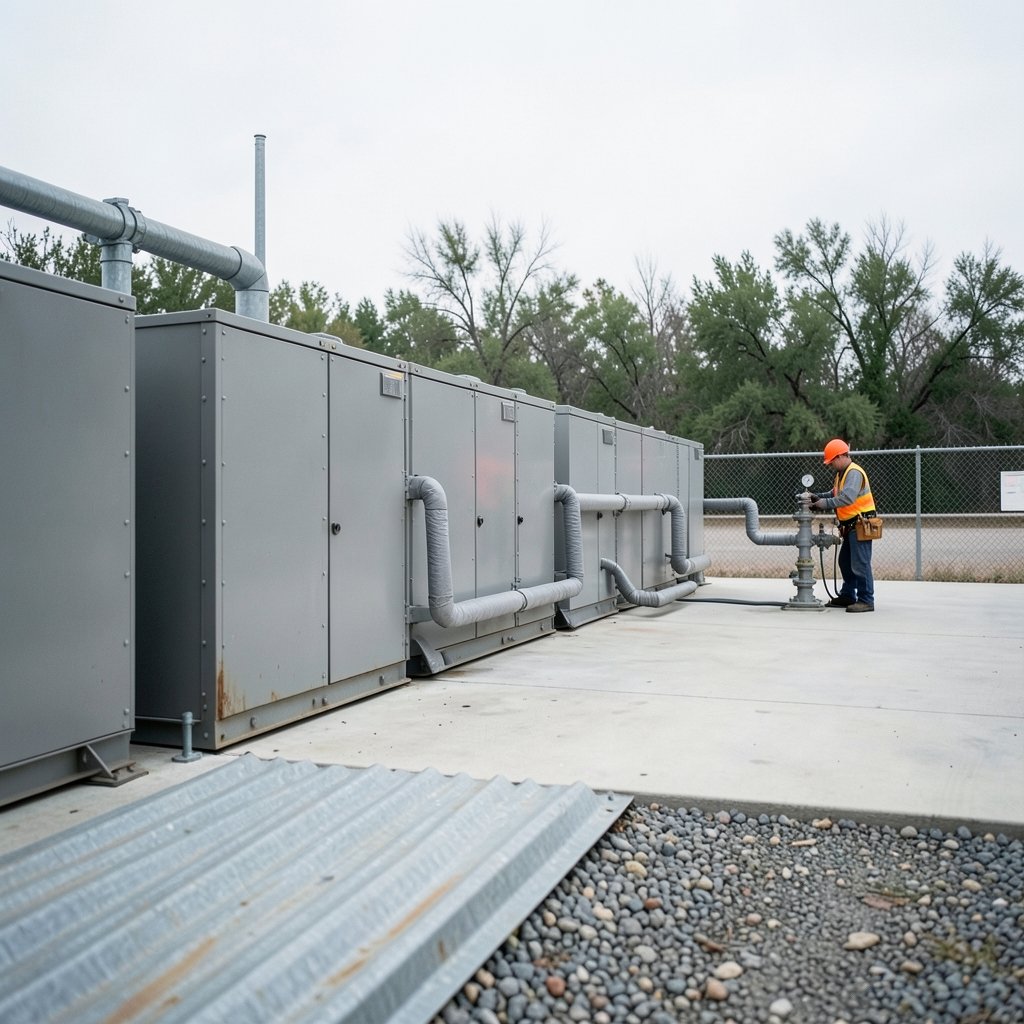
Modern hyperscale facilities increasingly rely on closed-loop cooling, which recirculates water instead of evaporating it. Some operators site facilities in cooler climates to reduce cooling load entirely. Others use treated or reclaimed water rather than potable supplies, which matters enormously in water-stressed regions. (Water cooling)
What actually works, according to operators and efficiency specialists:
- Liquid cooling for high-density AI racks. Air cooling struggles with the heat density of GPU clusters, so direct-to-chip systems are becoming standard.
- Water usage effectiveness (WUE) tracking. This metric, liters per kilowatt-hour, lets operators benchmark facilities against each other.
- Local water-stress mapping. Siting decisions increasingly weigh watershed health as well as land cost.
What doesn’t work is treating water use as a single global number. A data center in a rainy region has a very different impact than one drawing from an aquifer in a drought zone. Context is everything, and that’s precisely what a headline figure like 222 billion liters strips away.
Why the 2026 Timing Matters
The year 2026 carries weight because AI infrastructure spending is hitting a peak, and hardware decisions made now will lock in water consumption patterns for years. Consider the broader tech sector: chip supply deals and platform bets are reshaping which companies control compute. Reports on a Nintendo Switch 2 Lite and Samsung 8LPU+ chip rumor show how semiconductor capacity is being fought over across consumer and data-center markets alike.
On the regulatory side, disclosure pressure is rising. The European Union’s energy efficiency rules and various U.S. state-level reporting requirements are pushing operators to publish facility-level water data. That transparency is the best antidote to inflated claims, because verified numbers replace estimates.
Meanwhile, consumer electronics keep normalizing high-performance computing in daily life. Guides to the best phones in 2026 now routinely discuss on-device AI, which shifts some inference workloads away from data centers entirely. That’s a quiet but significant factor in long-term water projections that most viral figures ignore.
How to Read AI Water Claims Critically
If you encounter a dramatic water statistic, run it through a quick checklist before sharing it. (WaterSense)
| Question | Why It Matters |
|---|---|
| What boundary is counted? | Scope 1, 2, or 3 changes results dramatically |
| Is it measured or modeled? | Models carry assumption risk |
| Does it separate AI from other workloads? | Most data-center figures don’t |
| What region and water stress? | Location determines real impact |
| Who published it, and when? | Primary sources beat secondary reports |
This checklist won’t give you a single number, but it will keep you from repeating one that doesn’t hold up. In practice, the most defensible statements are narrow ones: this facility, this year, this measured volume.
The Bigger Picture: Efficiency as the Real Story
Here’s the counterintuitive takeaway. The AI industry’s water footprint is growing, but its water intensity per unit of computing is falling. New cooling designs, better chip efficiency, and smarter siting all push in the same direction.
The risk isn’t that AI secretly uses 222 billion liters. The risk is that bad numbers crowd out good analysis, and good analysis is what drives accountability. Companies respond to accurate scrutiny, not to viral exaggeration.
For a sense of how fast the underlying hardware changes, look at adjacent markets. Coverage of Tesla’s robotaxi, Semi, and Roadster hardware bets illustrates how physical infrastructure and compute demand move together. Every autonomous system, every model update, every inference call adds to the load. Understanding that load honestly is more useful than any single scary statistic.
Conclusion
The 222 billion liters figure is best understood as a warning sign, not a verified fact. It points to a real and growing issue, AI’s water consumption, while overstating what anyone has actually measured. The credible data we have comes from company disclosures like Google’s and Microsoft’s environmental reports, and from analyses like the IEA’s April 2025 work, none of which confirm that number.
What should stay with you is the method. Ask what boundary a figure counts. Ask whether it’s measured or modeled. Ask whether it isolates AI from everything else running in a data center. Those questions turn a scary headline into something more valuable: an accurate understanding of how the AI boom touches the world’s water, and where genuine efficiency gains are already happening.
Frequently Asked Questions
Is the 222 billion liters figure for AI cooling water use verified?
No. No major company disclosure or authoritative study confirms that exact figure. It appears to be an aggregated or estimated number that attributes broad data-center water use to AI specifically. Treat it as unverified until a primary source document is published.
How much water does AI actually use?
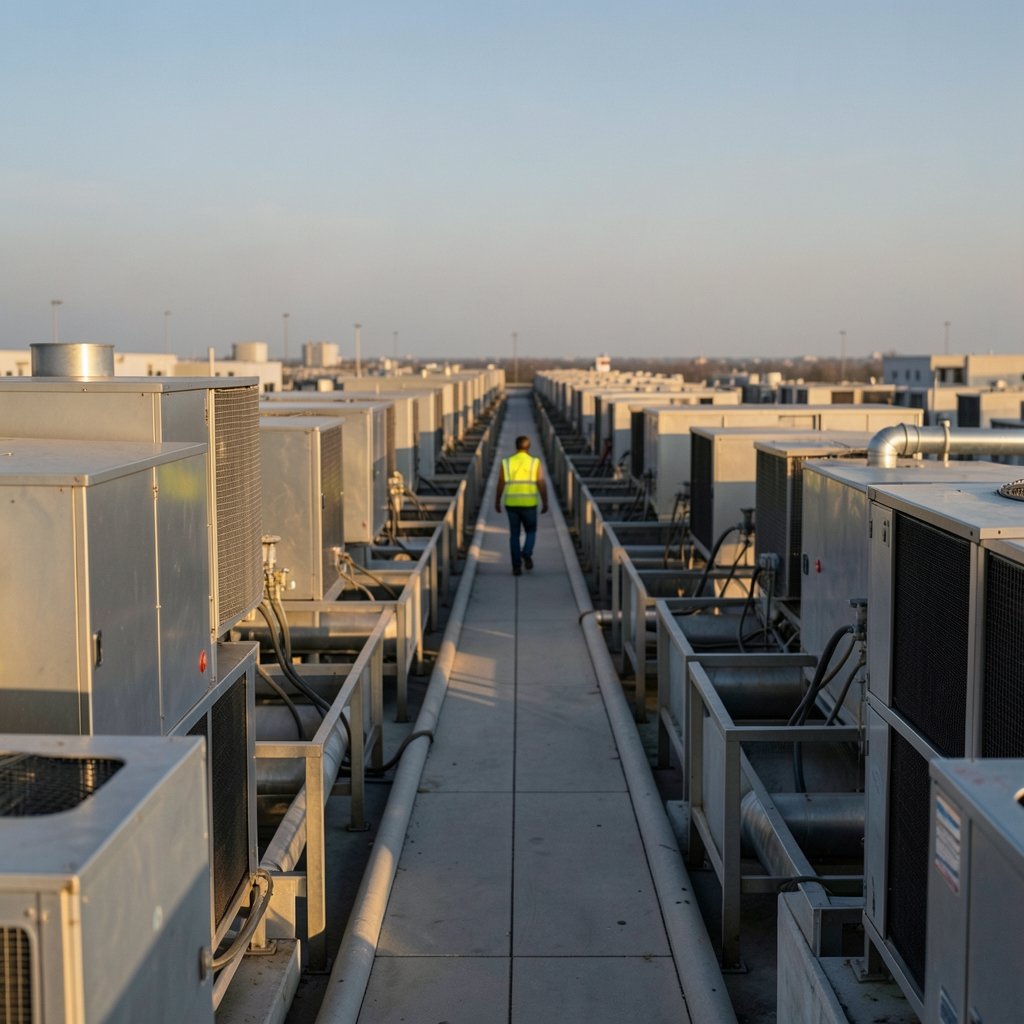
There is no single reliable answer because most disclosures cover entire data centers, not AI alone. Google reported about 6.1 billion gallons of data-center water use for 2023, and Microsoft reported roughly 7.8 million cubic meters. A 2023 arXiv paper estimated GPT-3 training could consume around 700,000 liters, but that is a model, not a measurement.
Why do different studies give wildly different water numbers?
Because they count different things. Some measure only on-site cooling water, others include water used to generate electricity, and some include supply chains. Mixing these boundaries creates false comparisons. Region and local water stress also change the real-world impact dramatically.
Does AI water use threaten drinking water supplies?
It can in specific locations, particularly where data centers draw from stressed aquifers. That’s why siting decisions and the use of reclaimed or treated water matter so much. Globally, the impact varies enormously by region, which is why a single worldwide figure tells you very little.
What are tech companies doing to reduce water use?
Operators are adopting closed-loop cooling, direct-to-chip liquid cooling for high-density AI racks, and immersion systems. Many track water usage effectiveness and increasingly site facilities in cooler climates or use non-potable water. Efficiency improvements reduce electricity and water consumption at the same time.
How can I tell if a water statistic is trustworthy?
Check four things: what boundary is counted, whether the number is measured or modeled, whether AI is separated from other workloads, and who published it. Primary sources like company sustainability reports and the IEA’s “Energy and AI” analysis are far more reliable than secondary summaries.



